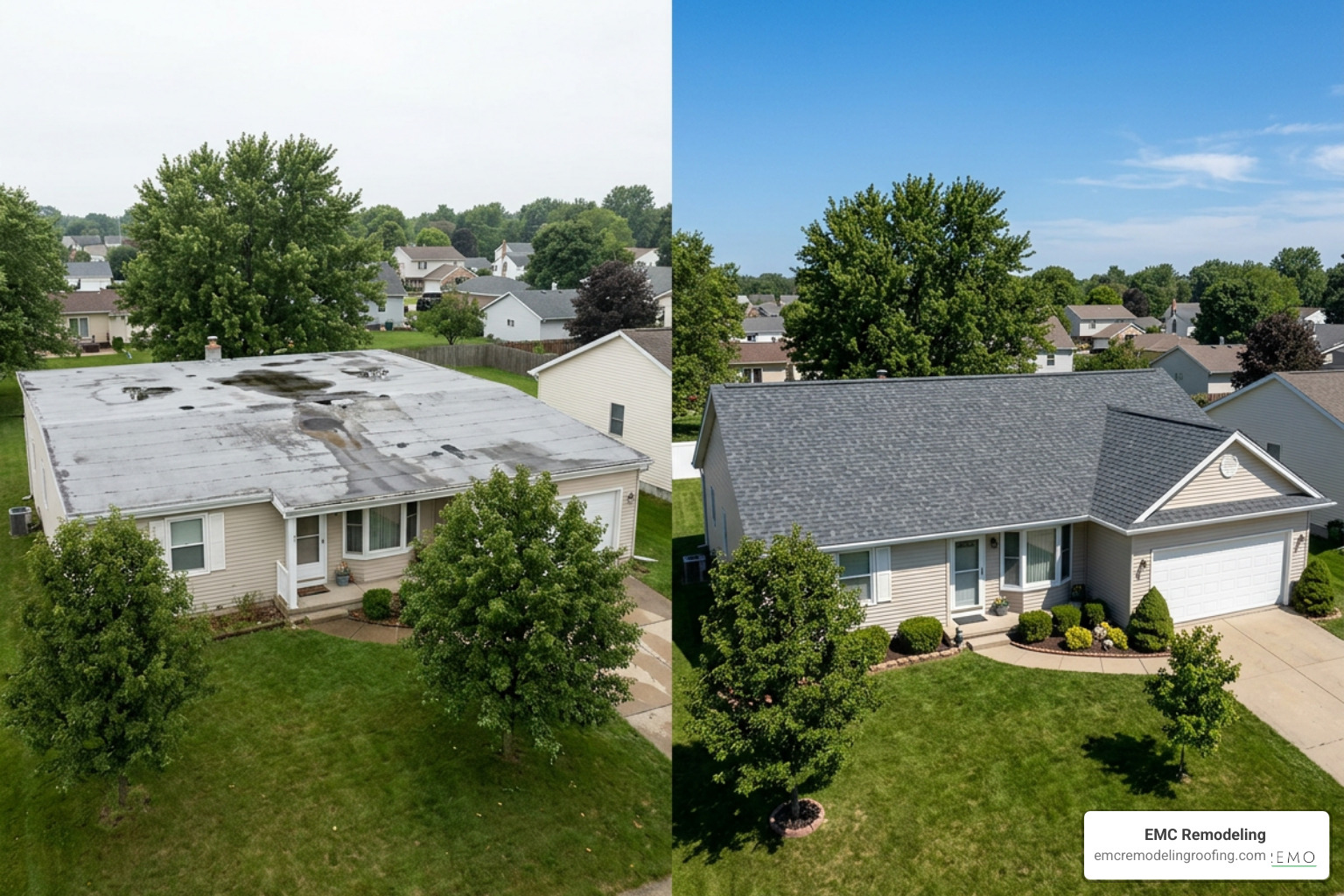
Is Changing a Flat Roof to a Pitched Roof Worth It? Here’s the Short Answer
Changing a flat roof to a pitched roof is one of the most impactful home improvement projects a Central Texas homeowner can make — and for good reason. If you’re dealing with persistent leaks, pooling water, or a roof that needs constant patching, a pitched roof conversion could permanently solve those problems while adding long-term value to your home.
Quick answer for homeowners researching this project:
- Yes, it is worth it in most cases — especially when your flat roof is aging, leaking repeatedly, or uninsurable
- Cost range: $15,000–$50,000+ depending on roof size, materials, and structural work required
- Lifespan improvement: Pitched roofs can last up to 40% longer than flat roofs
- Timeline: Most conversions take 4–8 weeks from permit to completion
- Key benefit: Better drainage, improved energy efficiency, and increased home value
- First step: Always get a structural engineering assessment before any work begins
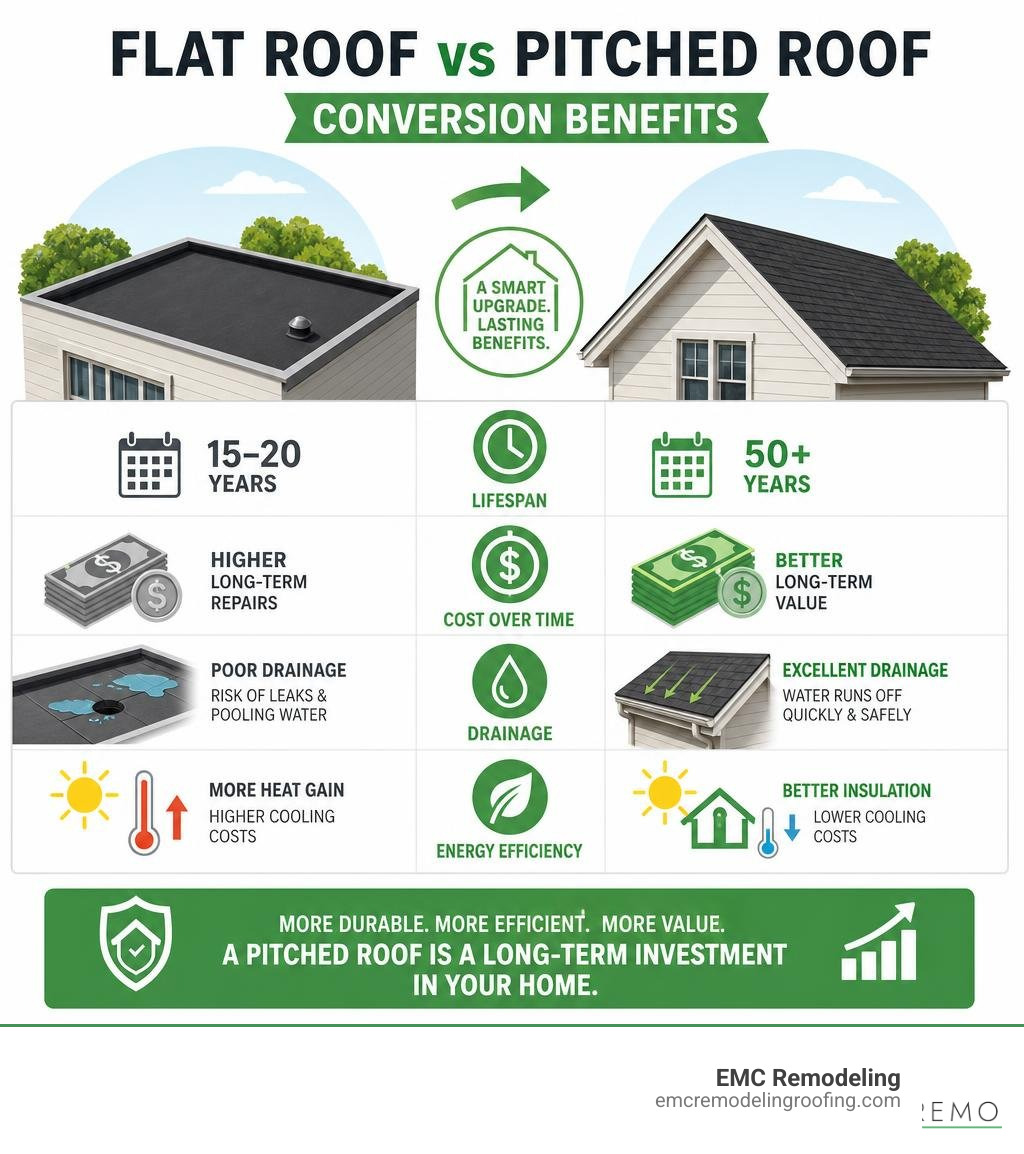
Flat roofs were often installed to cut construction costs — not for longevity. They typically last 15–20 years before chronic problems begin. A pitched roof, by contrast, can last 50 years or more depending on the material chosen.
The decision isn’t just about fixing leaks. It’s about stopping the cycle of temporary repairs that cost more over time than a proper conversion would.
As a Central Texas roofing contractor, we see this situation regularly: homeowners who have spent thousands on patch repairs over the years, only to realize a conversion would have paid for itself. Our roofing services are built around solving exactly these kinds of long-term structural challenges.
I’m Matthew Runyon, President of EMC Remodeling & Roofing, and over my 15+ years in the roofing industry in Central Texas, I’ve overseen numerous projects changing a flat roof to a pitched roof — from small residential extensions to full structural conversions. In this guide, I’ll walk you through everything you need to know to make a confident, well-informed decision.
Simple changing a flat roof to a pitched roof glossary:
Key Considerations Before Changing a Flat Roof to a Pitched Roof
Before committing to a major home transformation, you must weigh several factors. Changing a flat roof to a pitched roof is a structural renovation, not a simple cosmetic swap.
To help you understand the foundational differences, we recommend checking out our guide on choosing between steep and low-slope roofs. Additionally, you can learn more about our general capabilities on our main services page.
Drainage and Ponding Water Issues
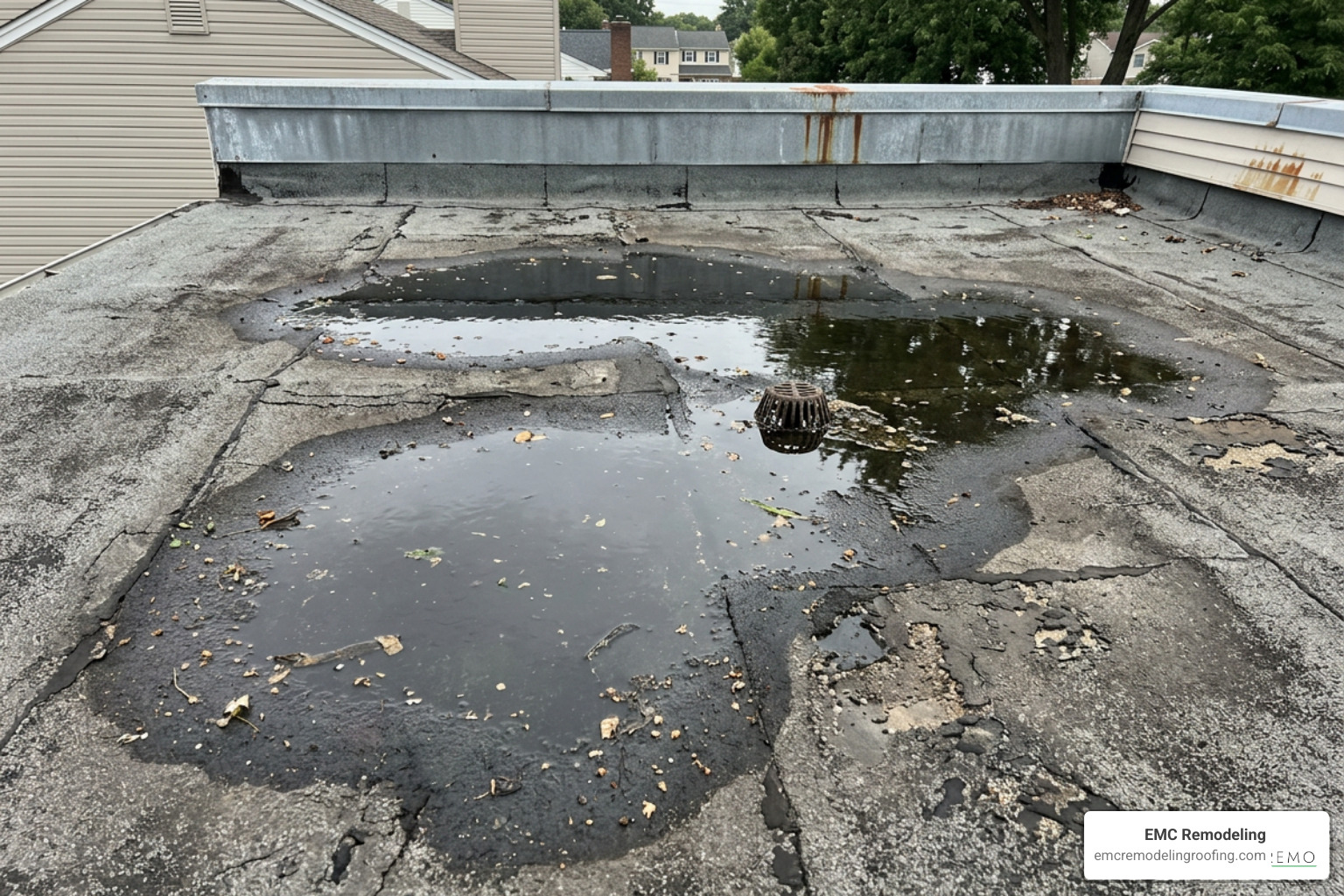
Flat roofs are never completely flat; they rely on a very subtle slope (often 1/4 inch per foot) to direct water toward drains, scuppers, or gutters. However, over time, structural settling can cause low spots where water pools.
Ponding water is defined as standing water that remains on a roof for more than 48 hours after rainfall. This standing water accelerates membrane degradation, weakens seams, and eventually leads to major leaks.
By converting to a pitched roof, you introduce positive gravity-assisted drainage. Rainwater immediately runs off the sides and into a gutter system, preventing moisture from finding small imperfections in the roofing material and causing rot in the underlying wooden deck.
Lifespan and Durability Differences
Pitched roofs possess a significant advantage in longevity. While a standard built-up or modified bitumen flat roof typically lasts 10 to 20 years, a pitched roof easily lasts 25 to 50+ years depending on the material.
Statistically, pitched roofs can have a 40% longer life than flat roofs. This durability stems from their ability to shed water and debris instantly, reducing the chemical wear and tear caused by stagnant water and UV exposure.
Furthermore, pitched roofs offer superior wind and storm resistance in storm-prone areas like Leander and Temple, TX, where heavy downpours and hail are common seasonal threats.
Primary Methods for Roof Conversion

When you decide to transition your roof, you have several structural pathways. The right option depends on your budget, your home’s existing structural integrity, and how you plan to use the newly created space beneath the roof.
For commercial properties or large extensions, you may also want to read about office building roof options from TPO to metal to see how different materials perform. For a deeper look at lightweight metal systems, refer to Metrotile’s guide on flat-to-pitch conversions.
Structural Methods for Changing a Flat Roof to a Pitched Roof
There are three main structural approaches to executing a conversion:
- Tear-Out and Rebuild: We remove the existing flat roof structure entirely down to the ceiling joists, and construct a new pitched roof using prefabricated timber trusses or hand-cut rafters. This method is ideal if you want to create a brand-new vaulted ceiling or functional attic space.
- Build Over the Existing Roof: This method involves leaving the existing flat roof structure intact (provided it is dry and free of rot) and building a new pitched framework directly over it. This is often accomplished using light-gauge steel framing or self-supporting spanning trusses. This minimizes interior disruption and prevents exposing your home to the elements during construction.
- Deadload (Propped Rafter) Systems: A structural framing method where the new rafters are propped directly off the existing load-bearing walls and internal support structures.
Shallow Pitch and Tapered Systems
If you want to solve your drainage issues without significantly altering the exterior height or look of your home, a shallow pitch or tapered system is a highly effective alternative.
Using a tapered insulation system, we install rigid foam insulation boards that are factory-cut with a built-in slope (typically 1/8 inch or 1/4 inch per foot). This creates positive drainage toward your gutters without requiring major structural framing.
Alternatively, we can use wood rafters (often called “sleepers”) of varying heights installed directly over the existing flat roof deck to create a shallow pitch. This preserves your existing soffits and overhangs while ensuring water drains perfectly.
Financial Analysis: Costs and Long-Term Value
Converting a flat roof to a pitched roof is a significant investment. Understanding where your money goes and what kind of return you can expect is critical to determining if the project is right for you.
For context on how these numbers compare to standard roof replacements, explore our ultimate guide to roof rebuild costs.
Cost Factors When Changing a Flat Roof to a Pitched Roof
A typical flat-to-pitched roof conversion costs between $15,000 and $50,000 or more. The final price is heavily influenced by several key variables:
- Structural Framing: Prefabricated trusses are generally more cost-effective than hand-framed rafters, but they require crane access.
- Material Selection: Standard architectural shingles are the most budget-friendly, while standing seam metal or tile options increase the upfront cost but offer much longer lifespans.
- Siding and Trim Extension: When you raise the roof, you create new triangular wall sections (gable ends) that must be enclosed with matching siding, house wrap, and paint.
- HVAC and Vent Adjustments: Plumbing stacks, dryer vents, and heating exhaust pipes must be extended through the new, higher roofline.
- Permitting and Engineering: Structural engineering reports and local municipal building permits are required for major structural alterations.
Return on Investment and Home Value
While the upfront cost is higher than a standard flat roof replacement, a pitched roof conversion offers substantial long-term financial benefits:
- Increased Home Value: A pitched roof dramatically improves your home’s curb appeal and architectural symmetry, making it much easier to sell in competitive markets like Leander and Temple.
- Energy Savings: Pitched roofs create a natural thermal buffer zone (the attic). By adding blown-in cellulose or fiberglass insulation on the attic floor and pairing it with proper ridge and soffit ventilation, you can significantly reduce your summer cooling costs in Central Texas.
- Insurance Eligibility: Many homeowners insurance companies are reluctant to insure older flat roofs, or they charge incredibly high premiums. Converting to a pitched roof often leads to immediate insurance premium reductions.
Structural, Permitting, and Building Code Requirements
You cannot simply build a new roof on top of an old one without verifying that your home can handle the load. Before any hammer swings, we must address local codes and structural engineering limits.
If you suspect your current roof is already struggling under its own weight, read our guide on how to spot a sagging roof.
Engineering Assessments and Load Limits
A pitched roof exerts different physical forces on your home than a flat roof. While a flat roof transfers weight straight down, a pitched roof exerts both downward weight and outward thrust on your exterior walls.
We always partner with a licensed structural engineer to evaluate your home’s foundation, load-bearing walls, and ceiling joists. The engineer will calculate if your existing walls can support the new dead load (the weight of the roof materials) and live load (wind and rain forces) without buckling. In some cases, we must install structural collar ties or support beams to safely distribute these forces.
Local Permits and Texas Building Codes
In Central Texas, municipal building codes are strictly enforced to protect homes from severe weather.
- Permits: Any structural modification that changes the height or shape of a roof requires a building permit from your local city office (such as the City of Leander or the City of Temple).
- Windstorm Compliance (IRC/IBC): Under Texas building codes, new roof structures must be engineered to withstand specific wind loads. We use heavy-duty hurricane straps and structural fasteners to tie your new roof framing securely to your home’s wall plates.
- Insulation and Ventilation Codes: Building codes require specific R-value insulation and a balanced ventilation ratio (typically 1 square foot of ventilation for every 150 to 300 square feet of attic space) to prevent attic heat buildup.
Step-by-Step Conversion Process and Timeline
Knowing what to expect during construction can ease your anxiety and help you plan your daily schedule. For more details on the general steps of a full roof project, see our complete roof replacement guide. You can also read about structural process variations in Central Roofing’s conversion guide.
Phase 1: Demolition and Framing
The first phase focuses on preparing the structure and erecting the new frame.
- Inspection and Prep: We inspect the existing flat roof for any soft spots or rotted decking. If we are leaving the old roof in place, we must cut ventilation holes through the old membrane to prevent moisture from becoming trapped between the two roof layers.
- Framing Installation: We install the new timber trusses or rafters. If using trusses, they are delivered to the site and lifted into place using a crane or specialized lifting equipment, then anchored to the exterior wall plates with metal hurricane ties.
- Gable End Construction: We build out the vertical triangular walls at the ends of the new roof plane, adding sheathing and weather barriers.
Phase 2: Weatherproofing and Material Installation
Once the frame is secure, we focus on sealing the home from the elements.
- Sheathing and Underlayment: We cover the new rafters with high-quality plywood or OSB decking, followed by a synthetic, water-resistant underlayment to protect against wind-driven rain.
- Roofing Material Application: We install your chosen outer material (such as architectural shingles or standing seam metal panels).
- Ventilation and Trim: We install ridge vents, soffit vents, and new gutters to manage airflow and water runoff.
- Siding and Painting: Finally, we install matching siding on the new gable walls and apply paint for a seamless, beautiful finish.
When to Repair or Replace Instead of Converting
Converting your roof is a fantastic upgrade, but it isn’t always the most practical or budget-friendly choice. Sometimes, a high-quality flat roof replacement or a professional repair is the smarter path.
To help you decide, we have resources on comprehensive flat roof repair and our asphalt flat roof repair guide.
| Feature / Consideration | Flat Roof Replacement | Pitched Roof Conversion |
|---|---|---|
| Average Cost | $6,000 – $15,000 | $15,000 – $50,000+ |
| Expected Lifespan | 15 – 20 Years | 25 – 50+ Years |
| Structural Changes | None (Direct replacement) | Major (New trusses/rafters) |
| Curb Appeal Impact | Minimal | High (Alters home profile) |
| Energy Efficiency | Moderate (Insulation boards) | High (Vented attic space) |
| Disruption Level | Low (1-3 days) | Moderate to High (4-8 weeks) |
Flat Roof Repair and Maintenance Alternatives
If a full conversion exceeds your budget, you can still achieve exceptional weather protection by upgrading your flat roof membrane.
- TPO (Thermoplastic Polyolefin): A modern, single-ply reflective roofing membrane that is highly resistant to tears, punctures, and chemical exposure. For properties in Belton, check out our ultimate Belton TX TPO roofing systems guide.
- EPDM Rubber: A highly durable synthetic rubber roofing membrane that excels in resisting extreme temperatures and UV radiation.
- Silicone Roof Coatings: Applying a seamless, liquid-applied silicone coating over your existing flat roof can seal minor leaks, reflect solar heat, and extend the roof’s life by 10 to 15 years at a fraction of the cost of replacement. You can also explore specialized regional services like flat slope roofing in New Braunfels, TX to see how low-slope solutions are handled across Central Texas.
Frequently Asked Questions About Roof Conversions
How long does a flat-to-pitched roof conversion take?
A standard flat-to-pitched roof conversion typically takes 4 to 8 weeks from the initial design phase to final inspection. The active construction phase—where crews are on-site framing and roofing—usually takes 2 to 4 weeks, depending on weather conditions and the complexity of your home’s architecture.
Will a pitched roof conversion improve my home’s energy efficiency?
Yes, absolutely. A pitched roof creates a large attic space that acts as a natural thermal buffer between the blazing Texas sun and your living spaces. By insulating the attic floor with high-R-value blown-in cellulose and ensuring proper ridge and soffit ventilation, you can reduce heat transfer into your home, lowering your summer cooling bills by 20% to 30%.
Do I need to vacate my home during the conversion process?
In most cases, no. If we are building the new pitched roof over your existing flat roof, the interior of your home remains completely sealed and protected, allowing you to stay in your home. There will be construction noise during the day, but your daily routine will experience minimal disruption. If a complete tear-out is required, we will discuss safety protocols and timing with you beforehand.
Conclusion
Changing a flat roof to a pitched roof is a substantial investment, but it is one of the most effective ways to eliminate chronic leaks, slash your energy bills, and dramatically boost your home’s resale value.
At EMC Remodeling, we are a family-operated business in Temple, TX, built on exceptional craftsmanship, direct owner involvement, and 24/7 emergency support. Whether you need a structural conversion in Leander, TX, or flat roof services in Temple, we are your trusted local partner.
If you are ready to explore your options or want to get a professional, honest assessment of your roof, we are here to help.
Contact us today to schedule your expert consultation. You can schedule a professional roof replacement online to get started!
