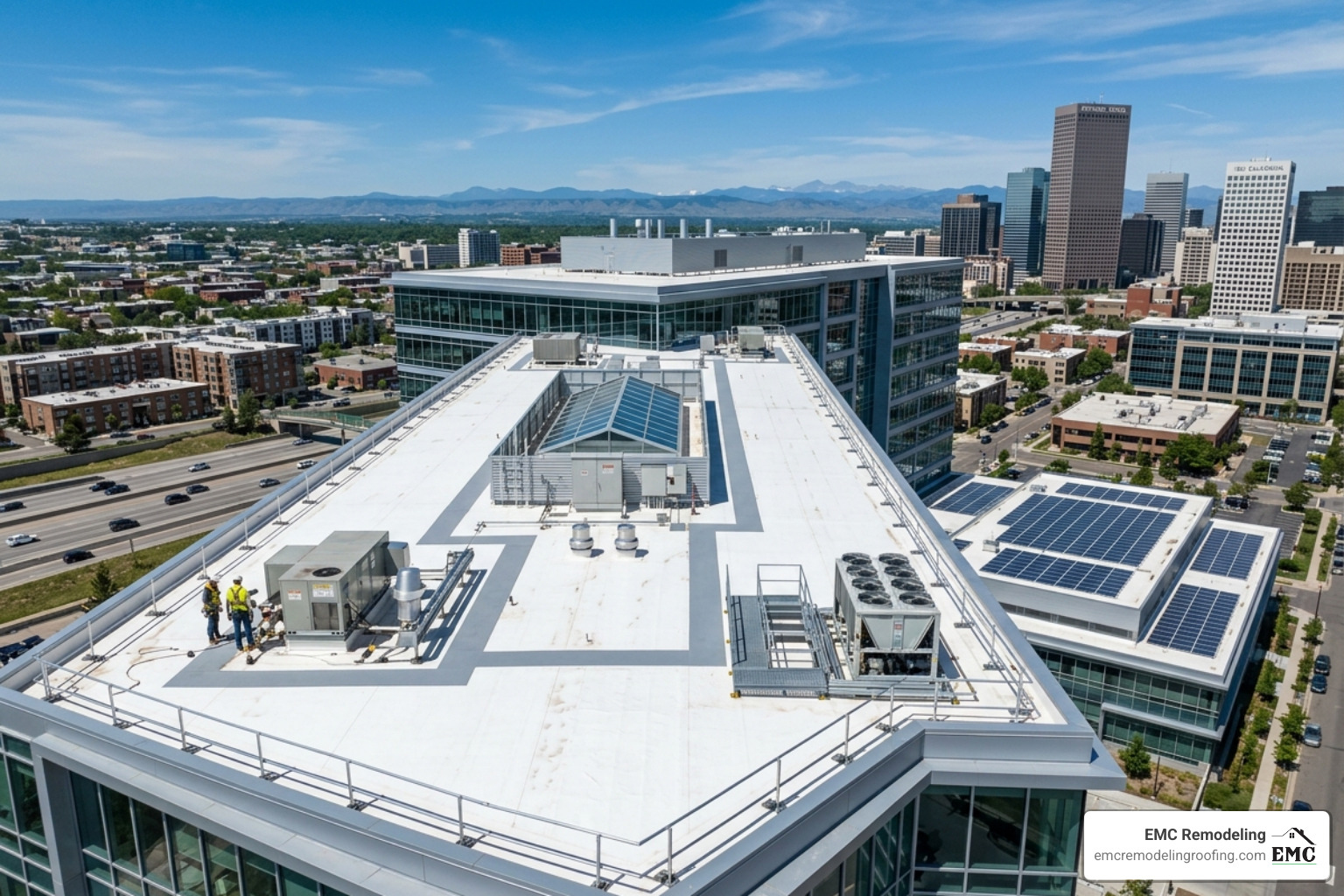
Why Your Office Building Roof Deserves More Attention Than It Gets
Office building roof systems are one of the most critical — and most overlooked — investments a property owner can make. The right system protects your assets, controls energy costs, and can even become a competitive amenity for tenants.
Here is a quick comparison of the most common office building roof systems:
| Roof System | Market Share (New Construction) | Typical Lifespan | Best For |
|---|---|---|---|
| TPO | 40% | 15-25 years | Energy efficiency, UV reflection |
| EPDM | 22% | Up to 40 years | Durability, reroofing |
| Modified Bitumen | 12.4% | 20+ years | High-traffic areas |
| Metal | Varies | 40+ years | Low maintenance, steep or low-slope |
| BUR | Varies | 50+ years | Multi-layer waterproofing |
Every system has tradeoffs. Cost, climate, building height, and how you plan to use the roof all influence which option makes sense. Choosing wrong can mean premature failure, higher energy bills, or expensive repairs down the road.
That is why it pays to understand each option before committing. Our expert commercial roofing services at EMC Remodeling are built around helping Central Texas property owners make exactly that call — confidently and correctly.
I’m Matthew Runyon, President of EMC Remodeling, with over 15 years of hands-on experience helping businesses in Temple and across Central Texas protect their properties with the right office building roof system. In this guide, I’ll walk you through every major option so you can compare systems side by side and make an informed decision.
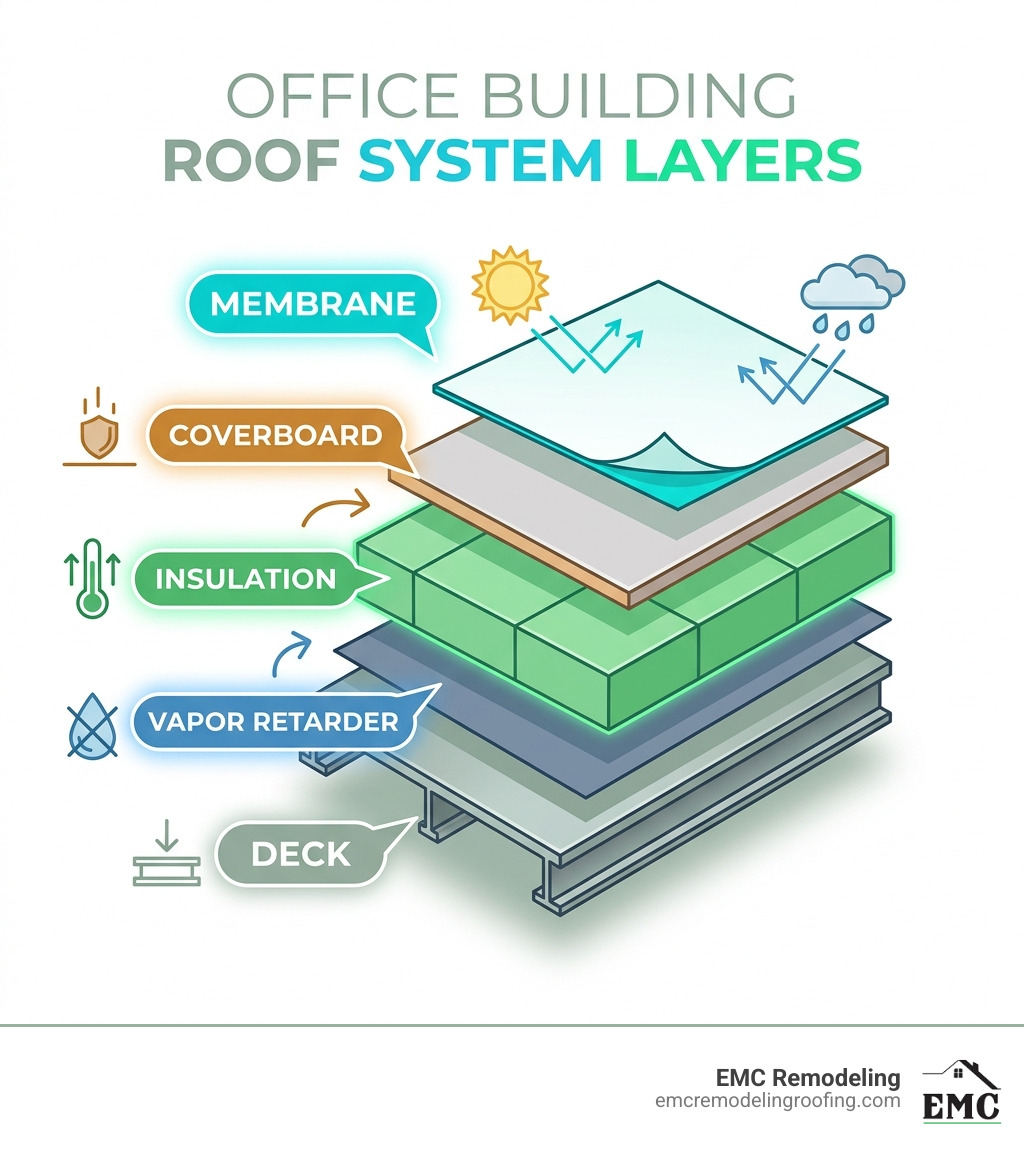
Office building roof definitions:
Most Common Commercial Roofing Systems for an Office Building Roof
When we talk about an office building roof, we are usually referring to low-slope or “flat” roofing systems. While these roofs look simple from the ground, they are complex assemblies of membranes, insulation, and structural components. In the modern market, a few specific materials dominate the landscape due to their proven performance.
TPO (Thermoplastic Polyolefin)
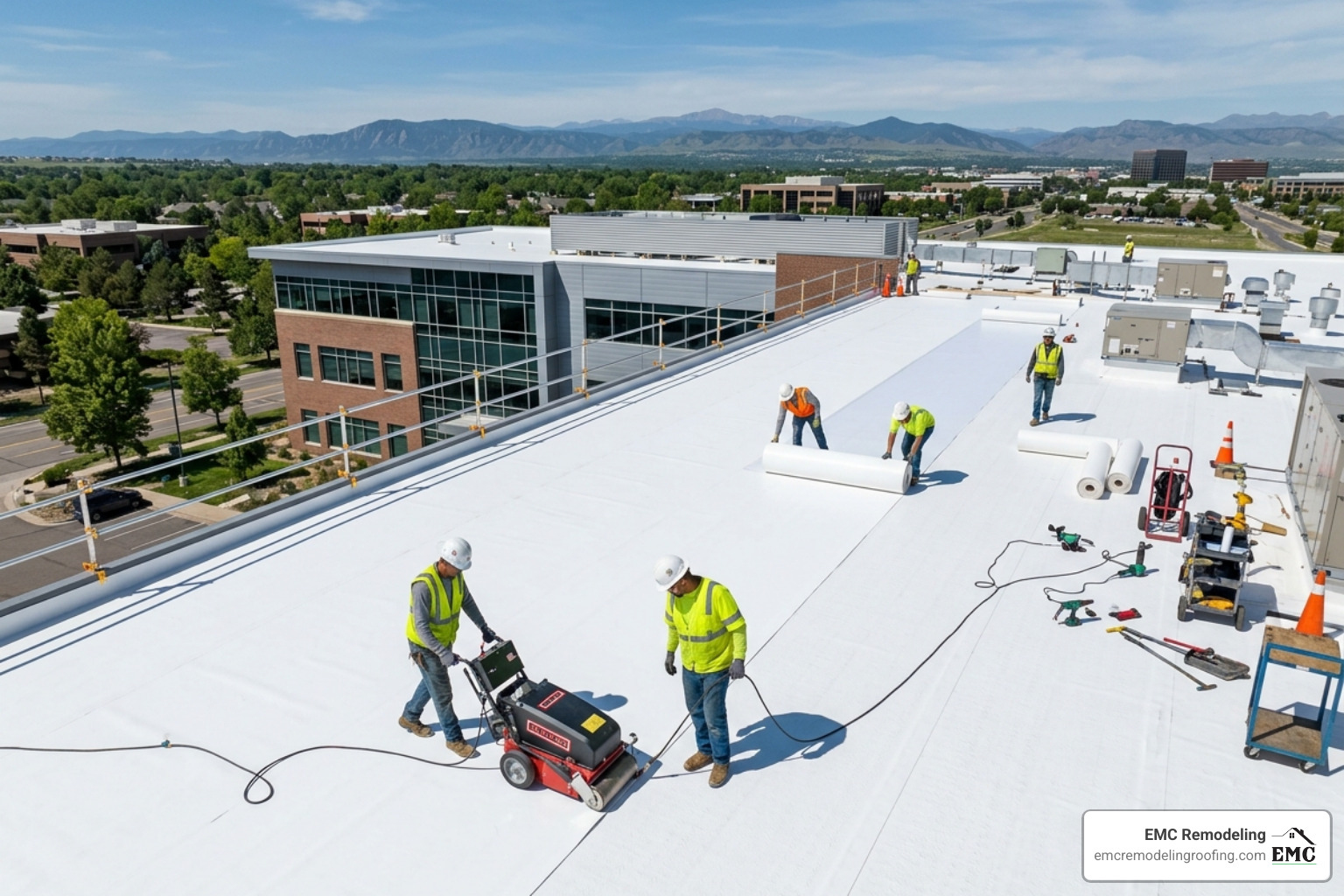
TPO is currently the king of the commercial world, holding a massive 40% market share in new construction and 30% in the reroofing market. It is a single-ply reflective membrane that is exceptionally popular in hot climates like Leander and Temple, TX. Because it is usually white, it reflects UV rays, significantly lowering cooling costs for large office complexes. If you are looking for a detailed breakdown of local options, check out our Commercial Roofing Leander Tx Ultimate Guide.
EPDM (Ethylene Propylene Diene Terpolymer)
Often called “rubber roofing,” EPDM is a time-tested veteran. It captures 22% of the new construction market and 26% of reroofing projects. EPDM is prized for its durability and ability to withstand extreme temperature swings without cracking. While traditionally black, it can be coated to improve reflectivity.
Modified Bitumen (Mod Bit)
Modified Bitumen is an evolution of traditional asphalt roofing, taking about 12.4% of the new construction market. It uses “rubberized” asphalt that is either heat-welded (torched) or cold-applied in multiple layers. This multi-ply approach makes it incredibly tough against foot traffic—perfect for roofs that house heavy HVAC equipment or see frequent maintenance crews.
Built-Up Roofing (BUR)
BUR has been around since the 1800s. It consists of alternating layers of bitumen (tar) and reinforcing fabrics. It is one of the most durable systems available, with some roofs lasting over 50 years. However, the installation process is labor-intensive and involves hot tar, which has led many modern offices to switch to single-ply membranes like TPO.
Comparing Performance: Benefits and Drawbacks of Major Systems
Choosing the right office building roof requires balancing upfront costs against long-term performance. In Texas, we prioritize UV reflectivity and hail resistance, but other factors like fire ratings and puncture resistance are equally important.
| Feature | TPO | EPDM | Metal | Mod Bit |
|---|---|---|---|---|
| UV Reflectivity | Excellent | Poor (unless coated) | Good to Excellent | Moderate |
| Puncture Resistance | Moderate | High | Excellent | Very High |
| Installation Speed | Fast | Fast | Moderate | Slow |
| Fire Resistance | Class A available | Good | Excellent | Good |
| Lifecycle Cost | Low | Low to Moderate | Moderate (High upfront) | Moderate |
TPO: The Energy Saver
The biggest benefit of TPO is its heat-reflective properties. In the scorching Texas sun, a white TPO roof can stay significantly cooler than a dark roof, reducing the “urban heat island” effect. The drawback? Lower-quality TPO formulations in the past struggled with extreme heat degradation, though modern GAF-certified materials have largely solved this.
Metal: The Lifetime Choice
For those searching for Commerical Metal Roofing Contractors Near Me Cedar Park Tx, the draw is longevity. Metal roofs can last 40 to 60 years with minimal maintenance. They are fire-resistant and handle high winds exceptionally well. The primary drawback is the higher initial investment and the potential for noise during heavy rain or hail.
EPDM: The Flexible Veteran
EPDM is incredibly flexible, meaning it expands and contracts with the building. This prevents the “alligatoring” or cracking often seen in older asphalt roofs. However, its dark color can act as a heat magnet unless a white top coating is applied.
Strategic Design: Climate, Installation, and Modern Tools
Designing an office building roof isn’t just about picking a material; it’s about engineering a system. At EMC Remodeling, we often serve as Commercial Roofers In Temple, helping owners navigate local building codes and R-value (insulation) requirements.
Modern tools like the GAF BuildYourRoof software allow us to prototype assemblies virtually. This tool ensures that every layer—from the steel deck to the vapor retarder and the final membrane—is compatible. It even flags potential issues with attachment methods before a single roll of material is delivered to the site.
Climate and Location Impacts on an Office Building Roof
In Central Texas, our roofs face a unique set of challenges:
- Texas Heat: Constant UV exposure accelerates the breakdown of roofing adhesives and membranes. High-reflectivity systems are a must.
- Hail Resistance: Severe storms can puncture thin membranes. We often recommend thicker membranes (60 or 80 mil) or reinforced systems to handle Commercial Storm Damage Restoration needs.
- Wind Uplift: High-rise offices experience higher wind speeds at the corners and edges of the roof. Proper fastening patterns are critical to prevent the roof from peeling off during a storm.
Installation Methods: Adhered vs. Mechanically Attached
The way your roof is attached to the building matters as much as the material itself.
- Fully Adhered: The membrane is glued to the insulation or deck using special adhesives. This provides the best wind uplift resistance and a smooth aesthetic.
- Mechanically Attached: The membrane is fastened using screws and plates. This is faster and more cost-effective but can lead to “fluttering” in high winds.
- Ballasted: The membrane is laid down and held in place by large stones or pavers. This is common in older buildings but less frequent in new construction due to the weight.
- Induction Welding: A modern middle ground where plates are fastened to the deck, and the membrane is welded to those plates using electromagnetic heat.
Sustainability and Amenities: Green Roofs and Sky Gardens
The modern office building roof is no longer just a utility; it is a destination. As companies compete for talent, many are turning their rooftops into employee amenities. This trend is supported by sustainability standards like LEED Gold and WELL Gold, which reward buildings for managing stormwater and providing outdoor space.
According to industry reports, a Rooftop Sky Garden Tops Chicago High-Rise Office Building can act as a “sponge” for rainwater, significantly reducing runoff and the urban heat island effect. These systems come in two main types:
- Extensive Systems: Shallow soil (3-6 inches) with hardy plants like succulents. These are lightweight and require minimal maintenance.
- Intensive Systems: Deep soil that can support trees, shrubs, and walkways. These require significant structural reinforcement but offer the most “park-like” experience.
Incorporating Sky Gardens and Employee Amenities on an Office Building Roof
Transforming a roof into an amenity deck requires careful engineering. One Dynamic Rooftop Renovation Lures a New Type of Workforce by using EPS Geofoam. This lightweight material allows designers to create grade changes, amphitheaters, and planters without exceeding the structural load limits of the building.
For high-traffic amenity decks, we often use:
- Ipe Wood Tiles: Dense, fire-resistant hardwoods that offer a luxury feel.
- Pedestal Pavers: These level the walking surface while allowing water to drain underneath to the actual roofing membrane.
- Fire-pit Lounges: These require specialized non-combustible zones and integrated gas lines, all while maintaining the roof’s watertight integrity.
Maintenance, Coatings, and Lifespan Extension
The best way to protect your office building roof investment is through proactive care. A well-maintained roof can last 5 to 10 years longer than a neglected one. For businesses looking for Commercial Roofing Belton Tx, we recommend a bi-annual inspection schedule—once in the spring and once in the fall.
The Role of Roof Coatings
Roof coatings are a “secret weapon” for extending the life of an aging roof. Instead of a full tear-off, which is expensive and disruptive, a high-quality coating can seal leaks and restore reflectivity.
- Silicone Coatings: Best for flat roofs with “ponding water” issues. Silicone does not break down under standing water and provides a seamless, waterproof barrier.
- Acrylic Coatings: Highly reflective and budget-friendly. These are excellent for reducing energy bills but should not be used on roofs where water sits for more than 48 hours.
Maintenance Checklist
- Clear Debris: Leaves and trash can clog drains, leading to ponding water that degrades the membrane.
- Inspect Flashings: Most leaks occur at “penetrations” like HVAC units, vents, and skylights. Ensure the seals are tight.
- Check Seams: For TPO and EPDM, check that the heat-welded or glued seams aren’t beginning to separate.
- Infrared Surveys: We use infrared technology to detect moisture trapped under the membrane, allowing us to fix small problems before they become structural disasters.
Frequently Asked Questions about Office Building Roofs
What is the average lifespan of an office building roof?
The lifespan depends heavily on the material and maintenance. TPO typically lasts 15-25 years, while EPDM can reach 40 years. Metal roofing is the marathon runner, often lasting 40-60 years. Built-up roofing (BUR) is also incredibly long-lived, with some systems reaching the 50-year mark if properly cared for. Regular inspections and timely repairs are the biggest factors in hitting these maximum lifespans.
How much does a commercial roof coating save compared to replacement?
A roof coating can save a building owner thousands of dollars—often 50% to 70% less than the cost of a full replacement. By applying a coating, you avoid the labor-intensive “tear-off” process and the disposal fees associated with landfilling old materials. Additionally, the increased reflectivity can lead to a 15% to 20% reduction in annual cooling costs, effectively paying for the coating over several years.
What are the signs that an office roof needs immediate repair?
Don’t wait for a waterfall in the lobby. Watch for:
- Water Stains: Yellow or brown spots on ceiling tiles.
- Rising Energy Costs: If your AC is working harder but the building is warmer, your roof insulation might be wet.
- Blisters or Bubbles: This indicates moisture is trapped inside the roof assembly.
- Clogged Drains: If you see “ponding water” (standing water 48 hours after a rain), your drainage system is failing.
- Cracks in Flashing: Visible gaps around rooftop HVAC units are the #1 source of leaks. If you notice these, it’s time to look Beyond The Roof Choosing The Right Commercial Contractor In Temple to find a partner who can stop the damage before it spreads.
Conclusion
Your office building roof is the first line of defense for your business. Whether you are managing a high-rise in Leander or a medical office in Temple, choosing the right system—and maintaining it—is essential for your bottom line. At EMC Remodeling, we bring decades of local expertise to every project.
As a family-operated business based right here in Temple, TX, we pride ourselves on exceptional craftsmanship and direct owner involvement. We don’t just install roofs; we build long-term partnerships with our neighbors. From TPO installations to 24/7 emergency support after a Central Texas storm, we are the roofing companies Temple TX can rely on.
Ready to protect your investment? Let’s talk about the best options for your specific building. Call (254) 931-9313 today for a comprehensive consultation and estimate.
