What Does It Actually Cost to Replace Siding on a House in 2026?
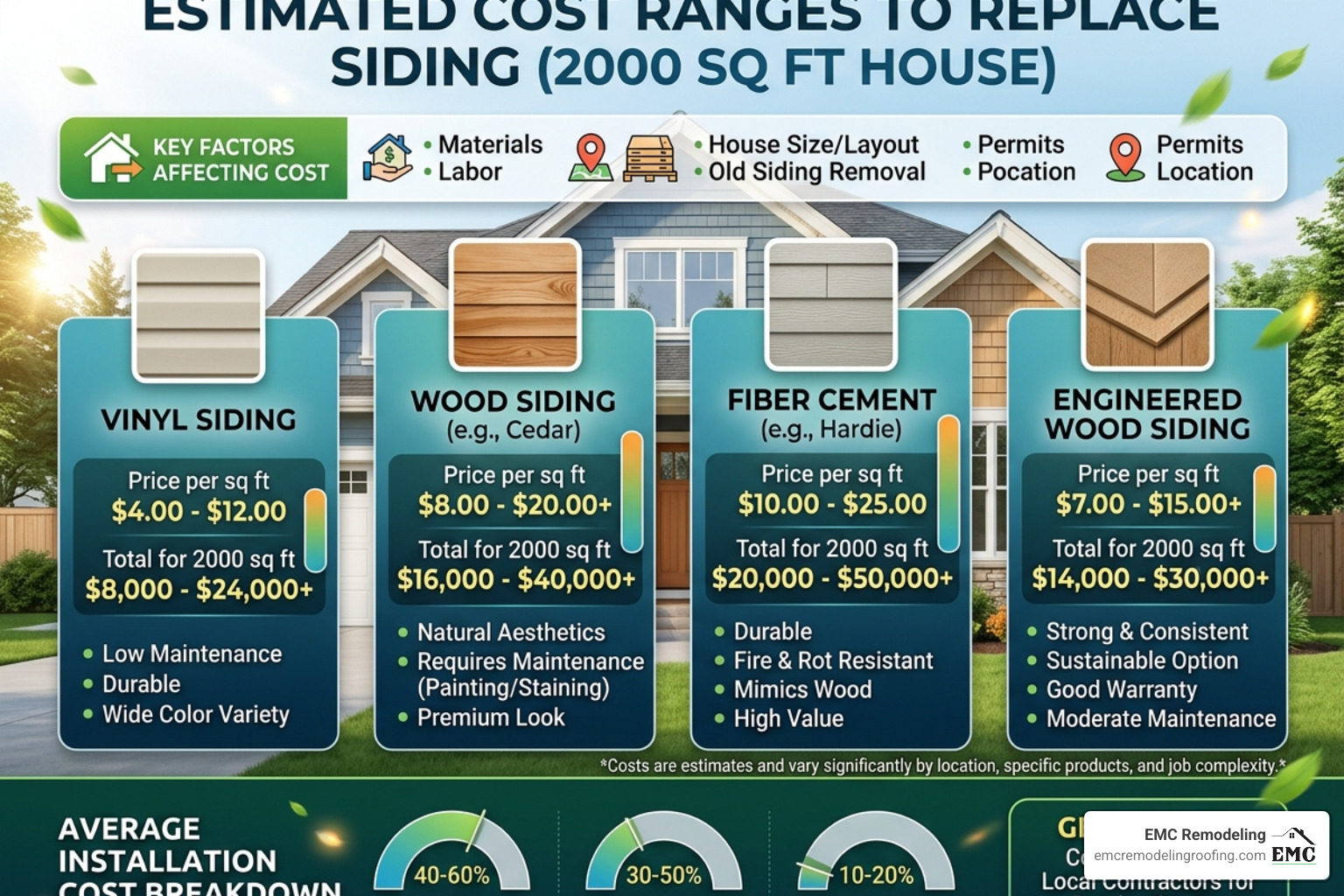
The cost to replace siding on a house typically ranges from $8,000 to $30,000, with most homeowners spending around $12,000 for a standard 2,000 sq ft home. Here’s a quick snapshot to help you budget fast:
| Siding Material | Cost per Sq Ft (Installed) | Avg. Total Cost (2,000 Sq Ft) |
|---|---|---|
| Vinyl | $3–$12 | $7,000–$16,000 |
| Fiber Cement | $6–$13 | $12,000–$26,000 |
| Engineered Wood | $5–$10 | $10,000–$20,000 |
| Natural Wood/Cedar | $7–$14 | $14,000–$28,000 |
| Stucco | $6–$17 | $12,000–$34,000 |
| Stone Veneer | $14–$30+ | $28,000–$60,000+ |
These figures include materials, labor, old siding removal, and basic trim work. Texas homeowners in Central Texas typically land near the national average, though local labor rates and project complexity can shift your final number significantly.
New siding isn’t just a cosmetic upgrade. It protects your home from moisture, improves energy efficiency, and — according to the 2024 Cost vs. Value Report — recoups 80% to 88% of its cost at resale. That makes it one of the highest-ROI home improvements you can make.
For expert exterior remodeling in Temple, TX, it’s important to understand what drives these costs before you call a single contractor. Prices vary widely based on your material choice, home size, design complexity, and whether hidden issues like rotted sheathing or moisture damage are lurking behind your current siding.
One homeowner on a DIY forum described getting quotes between $28,000 and $35,000 for a 2,200 sq ft single-story home — far above the $10,000–$15,000 range he’d seen cited online. His experience isn’t unusual. Real-world costs often exceed generic estimates once you factor in tear-off, trim, soffits, fascia, and job-specific complexity.
I’m Matthew Runyon, President of EMC Remodeling & Roofing, and with over 15 years of hands-on experience in siding installation and replacement across Central Texas, I’ve seen how widely the cost to replace siding on a house can vary — and what separates a fair quote from an inflated one. Let’s break it all down so you can make a confident, informed decision.
Average Cost to Replace Siding on a House in 2026
As of April 2026, the national average for a siding replacement project sits at approximately $12,000, but the range is vast. Depending on the variables, you could pay as little as $5,000 for a small vinyl project or upwards of $50,000 for high-end stone veneer on a large estate.
In the Central Texas market—specifically around Temple and Leander—we see siding replacement costs influenced heavily by the demand for heat-resistant and durable materials. According to Siding Replacement Cost (2026 Pricing), the national range for mid-range siding on a typical 2,000 sq ft home is roughly $17,200, or about $8.60 per square foot installed.
The ROI Factor
Investing in siding is one of the smartest financial moves a homeowner can make. Data from recent Cost vs. Value reports suggests that replacing your siding offers an 80% to 88% return on investment (ROI). This is significantly higher than most interior renovations. Beyond the resale value, new siding can reduce your heating and cooling costs by 10% to 20% if you opt for insulated backing or high-quality house wrap.
Material vs. Labor Intensity
The total price is generally split between materials (40-50%) and labor (50-60%). For more difficult materials like fiber cement or natural stone, labor costs rise because the installation requires specialized tools and more manpower.
| Material | Labor Intensity | Expected Lifespan | Maintenance Level |
|---|---|---|---|
| Vinyl | Low | 20–40 Years | Low |
| Fiber Cement | High | 30–50 Years | Low-Medium |
| Engineered Wood | Medium | 20–30 Years | Medium |
| Natural Wood | Medium-High | 15–30 Years | High |
| Stone Veneer | Very High | 100+ Years | Very Low |
Material Breakdown: Vinyl, Fiber Cement, and Premium Options
Choosing the right material is the biggest decision you’ll make for your budget. While affordable siding solutions exist, you must balance upfront costs with long-term maintenance and durability.
According to How Much Does It Cost to Replace or Install Siding?, homeowners should consider local climate first. In Texas, we prioritize materials that won’t warp in 100-degree heat or crack during a sudden freeze.
Vinyl Siding Replacement Cost per Square Foot
Vinyl remains the most popular choice because it is cost-effective and versatile. The cost to replace siding on a house with vinyl typically ranges from $3 to $12 per square foot installed.
- Economy Grade: $3.50–$5.50 per sq ft. Thinner panels that are easier to damage but very budget-friendly.
- Standard Grade: $4.50–$7.00 per sq ft. This is the “sweet spot” for most vinyl siding projects.
- Premium/Insulated: $7.00–$13.00 per sq ft. These panels are thicker (0.46mm+) and include a foam backing that boosts energy efficiency.
If you are looking for a cheap vinyl siding installation, keep in mind that “cheap” shouldn’t mean “poorly installed.” Even the best vinyl will fail if it’s nailed too tight, preventing the natural expansion and contraction that occurs with Texas temperature swings.
Fiber Cement and Hardie Board Siding Replacement Cost
Fiber cement, often referred to by the brand name James Hardie siding, is the gold standard for durability. It costs between $6 and $13 per square foot installed.
The James Hardie board siding complete guide highlights that this material is fire-resistant, rot-resistant, and insect-proof. For homeowners in Leander or Temple who want a “set it and forget it” exterior, fiber cement is the top recommendation. It mimics the look of real wood but lasts twice as long with significantly less maintenance. We also offer specialized options like 5 inch Hardie siding for a specific architectural aesthetic.
Key Factors Influencing Your Siding Replacement Budget
When you receive a quote, it isn’t just the price of the boards. Several “invisible” factors dictate the final invoice.
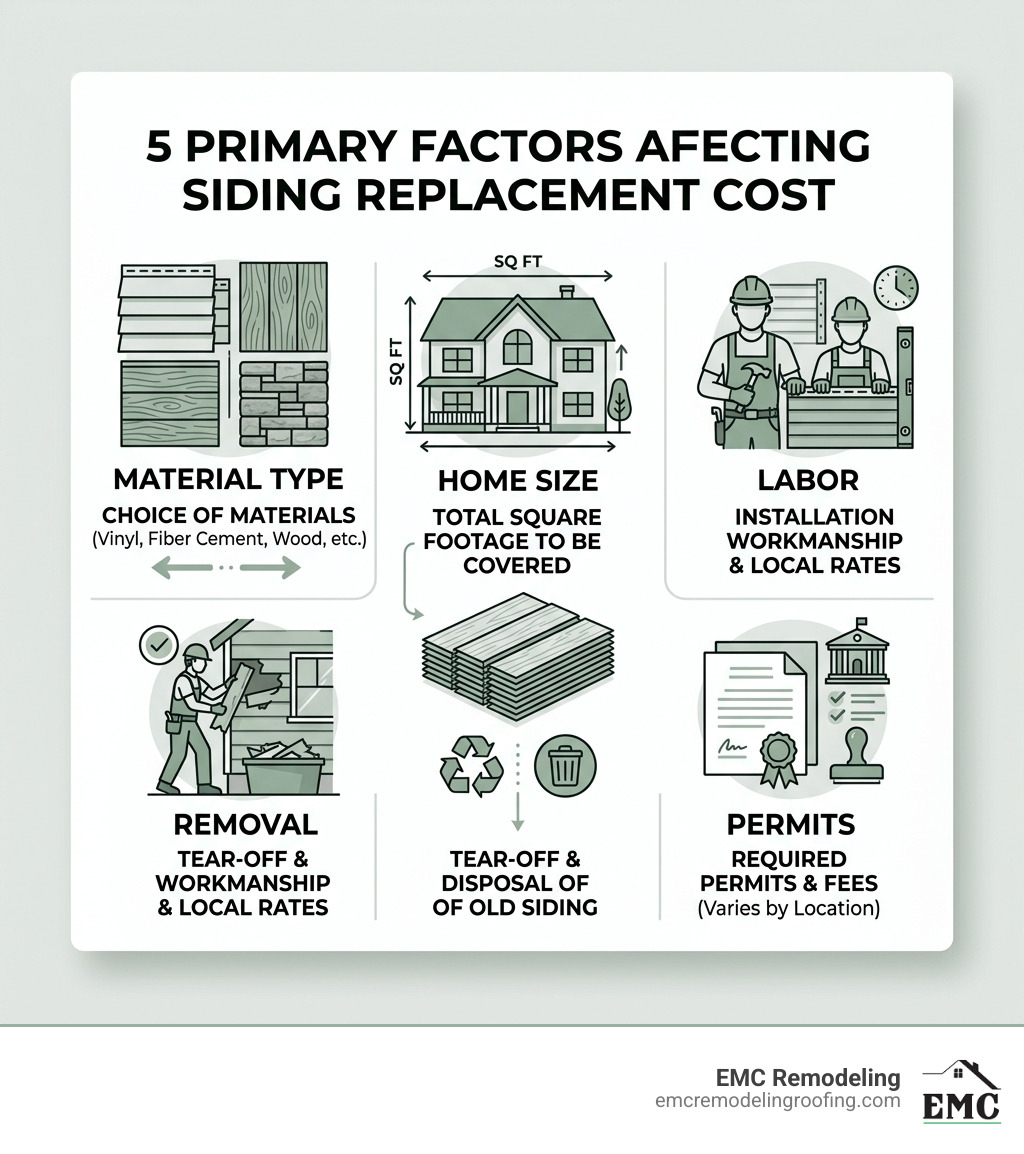
- Labor Rates: Expect to pay $1 to $4 per square foot in labor, or roughly $40 to $80 per hour per worker. Labor typically accounts for 50% to 70% of the total project cost.
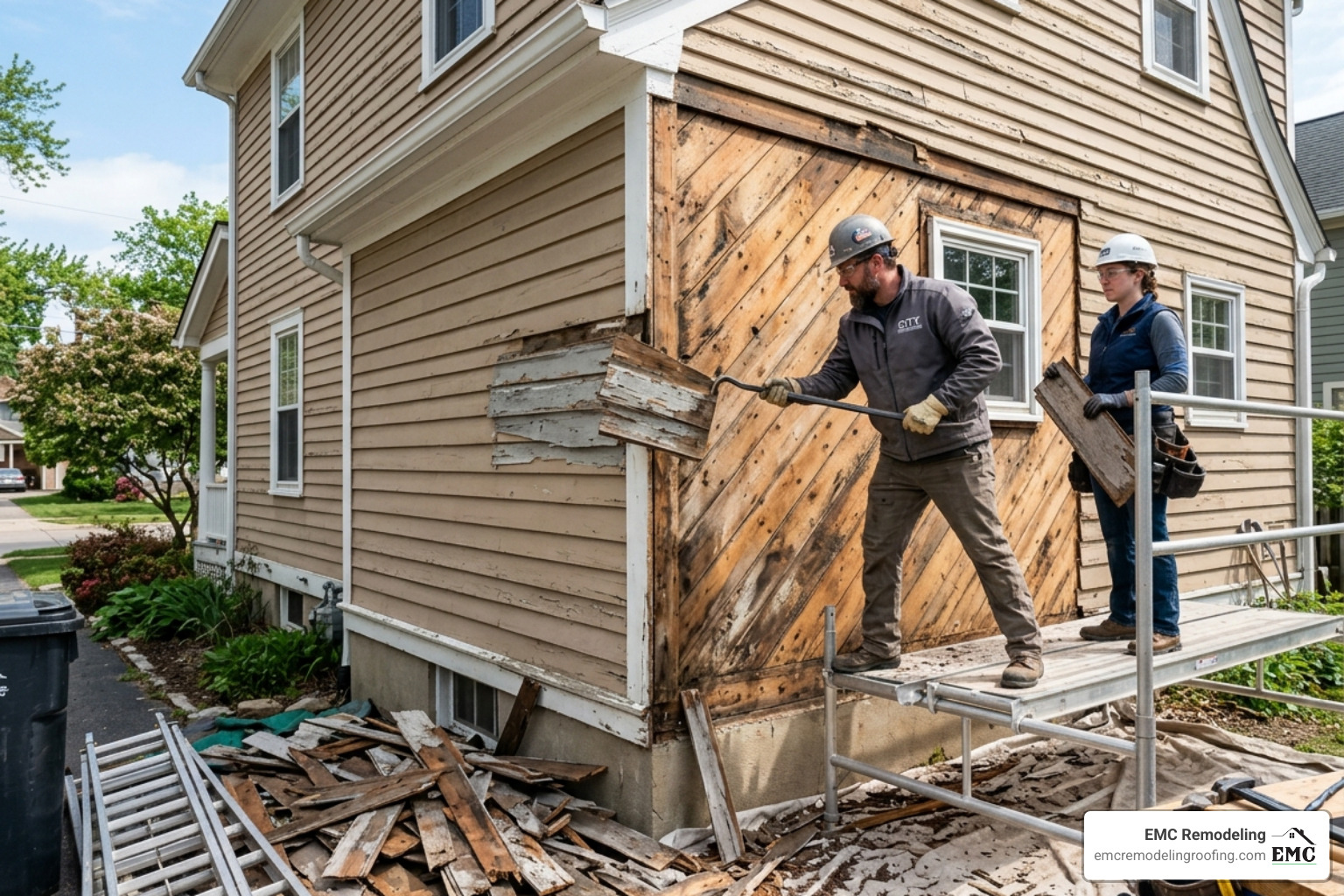
- Removal and Disposal: Tearing off old siding isn’t just manual labor; it’s also about disposal fees. A standard “tear-off” usually costs between $1,000 and $3,000. If your old siding contains hazardous materials like asbestos (common in pre-1970s homes), those costs can skyrocket to $8–$12 per square foot for specialized abatement.
- Moisture Barriers: We never recommend installing new siding without a fresh layer of house wrap. This serves as your home’s primary defense against rot. Replacing the house wrap typically adds $500 to $1,500 to the total.
How House Size Impacts the Cost to Replace Siding on a House
Contractors calculate costs based on “squares”—a unit of measurement equal to 100 square feet of wall surface. It is vital to note that your home’s interior square footage is not the same as your siding square footage.
- 1,500 sq ft Ranch: Typically requires about 1,800–2,000 sq ft of siding. Estimated cost: $12,000–$18,000.
- 2,500 sq ft Two-Story: Typically requires about 3,000–3,500 sq ft of siding. Estimated cost: $24,000–$36,000+.
Design complexity also plays a role. A simple box-shaped house is much cheaper to side than a home with multiple gables, turrets, or dormers. Every corner post and window trim piece adds to the material waste and labor time. For residents looking for siding installation in Georgetown, TX, we always provide a detailed measurement to ensure accuracy.
Additional Expenses: Permits, Trim, and Emergency Repairs
Don’t forget the “extras” that can add 10-20% to your budget:
- Permits: Depending on your municipality in Central Texas, permits can range from $150 to $1,500.
- Soffit and Fascia: If your siding is old, your soffits and fascia probably are, too. Replacing these alongside your siding ensures a uniform look and better ventilation.
- Trim and Gutters: We often recommend siding and gutters be updated simultaneously to ensure proper water shedding.
- Insulation Upgrades: Adding rigid foam insulation under your new siding is the most cost-effective way to improve your home’s R-value.
If you’ve noticed sudden damage, consult our siding repair services guide or reach out for emergency roof and exterior repair if a storm has left your home’s structure exposed.
Strategic Savings and ROI: When to Repair vs. Replace
You don’t always have to replace every board. If the damage is localized—say, a single wall hit by a rogue lawnmower or a small patch of hail—a repair might be more appropriate. Our siding hole repair guide can help you determine if a DIY fix is possible or if you need the pros.
The 30% Rule
A good rule of thumb: if more than 30% of your siding is damaged, warped, or rotting, a full replacement is more cost-effective in the long run. Patchwork on old siding often leads to color-matching issues and hidden moisture problems that persist.
How to Save Money
- Off-Season Scheduling: Most people want their siding done in the spring. If you schedule your project for late fall or winter, you might snag a 10% to 15% discount as contractors look to fill their calendars.
- Multiple Quotes: Always get at least three itemized quotes. Be wary of the lowest bid; it often excludes essential items like disposal or quality house wrap.
- Partial Replacement: If your budget is tight, consider replacing only the most visible sides (like the front of the house) with premium materials and using more affordable options on the sides or back.

If your home has been hit by one of our infamous Texas storms, check out our siding saviors expert tips for storm damage repair. You may be able to file an insurance claim to cover a significant portion of the cost to replace siding on a house.
Frequently Asked Questions about the Cost to Replace Siding on a House
Can you install new siding over existing siding to save money?
While “cover-over” installation can save you $1,000 to $3,000 in removal costs, we generally advise against it. Installing new siding over old can trap moisture between the layers, leading to catastrophic rot in your home’s sheathing. Furthermore, it can void the manufacturer’s warranty and make it impossible to inspect for pests or structural issues. For more on the risks, read about contractor catastrophes and siding damage.
How long does a typical siding replacement project take?
For an average-sized home, the process takes 7 to 14 days. This timeline includes the tear-off, any necessary repairs to the sheathing, installing the moisture barrier, and finally, the new siding and trim. Weather is the biggest variable; heavy rain or high winds can safely delay a crew by several days.
Does insurance cover the cost to replace siding on a house?
Homeowners insurance typically covers siding replacement if the damage was caused by a “covered peril,” such as fire, wind, or hail. It does not cover wear and tear or neglect. If a storm blows through Leander, you’ll want to act fast. See our guides on navigating wind damage siding claims and fixing wind-damaged vinyl siding for a step-by-step walkthrough of the insurance process.
Conclusion
The cost to replace siding on a house is a significant investment, but it is one that pays dividends in curb appeal, energy savings, and structural protection. Whether you are leaning toward the affordability of vinyl or the unmatched durability of James Hardie fiber cement, the key to a successful project is choosing a partner who understands the unique demands of the Central Texas climate.
At EMC Remodeling, we are a family-operated business based right here in Temple, TX. We pride ourselves on exceptional craftsmanship, direct owner involvement, and being a trusted local partner for our neighbors in Leander, Georgetown, and the surrounding areas. From comprehensive siding services to 24/7 emergency support, we are here to ensure your home remains the safest place for your family.
Don’t leave your home’s exterior to chance. Contact us today for a transparent, no-obligation estimate and let us help you transform your home.
