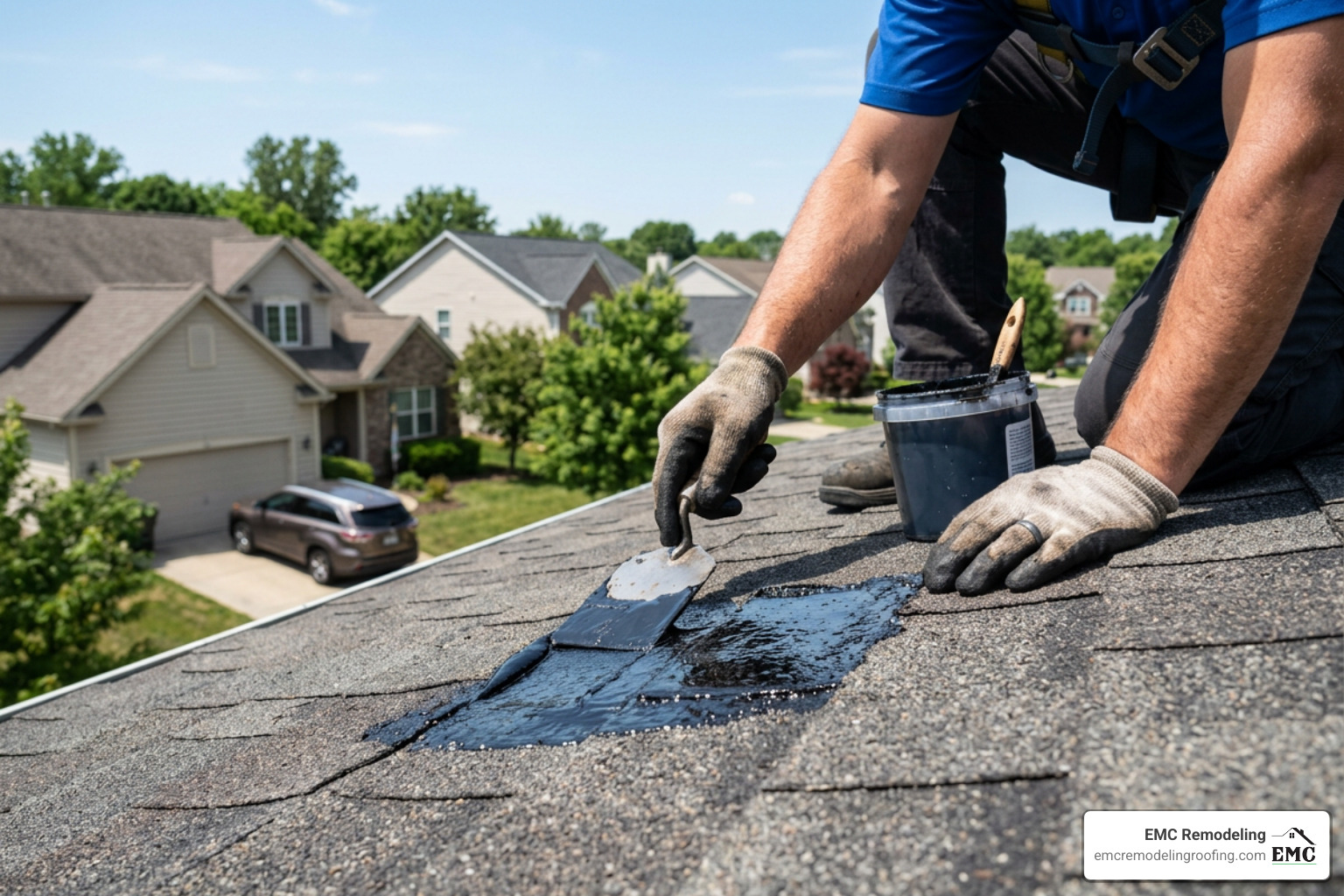
Understanding Roofing Tar Patch: Types and Applications
Roofing tar patch is a fast, affordable way to stop a roof leak before it causes serious damage to your home. Whether you’re dealing with a cracked shingle, a gap around a chimney, or a small puncture in a flat roof, tar-based patching products can seal the problem quickly — often within minutes.
Here’s what you need to know at a glance:
- Best for: Small cracks, nail holes, flashing gaps, loose shingles, and minor flat roof damage
- How long it lasts: Typically 1-3 years depending on climate, product, and application quality
- Top products: Henry 208R Rubberized Wet Patch (2,087 reviews), Gardner Wet-R-Dri, Rust-Oleum Wet Roof Repair
- Apply when: Temperatures are between 40F-120F, on a dry surface (or use a wet patch product for emergencies)
- Not a permanent fix: Large-scale damage, structural rot, or widespread leaks require professional repair
If you have an active leak, getting expert roofing services on the line is always the safest move — but a tar patch can buy you critical time.
Roofing tar patches work by forming a thick, waterproof barrier over damaged areas. They bond to asphalt shingles, metal, flashing, slate, and more. Most products are asphalt-based, though rubberized and polyurethane options offer better flexibility and longevity.
Think of roofing tar as the duct tape of your roof — incredibly useful in a pinch, but not a substitute for a real repair.
I’m Matthew Runyon, President of EMC Remodeling & Roofing in Temple, Texas, and over my 15+ years in the industry, I’ve seen how a well-applied roofing tar patch can prevent a small leak from turning into a costly structural problem. In this guide, I’ll walk you through everything you need to know — from choosing the right product to applying it correctly and knowing when to call in a pro.
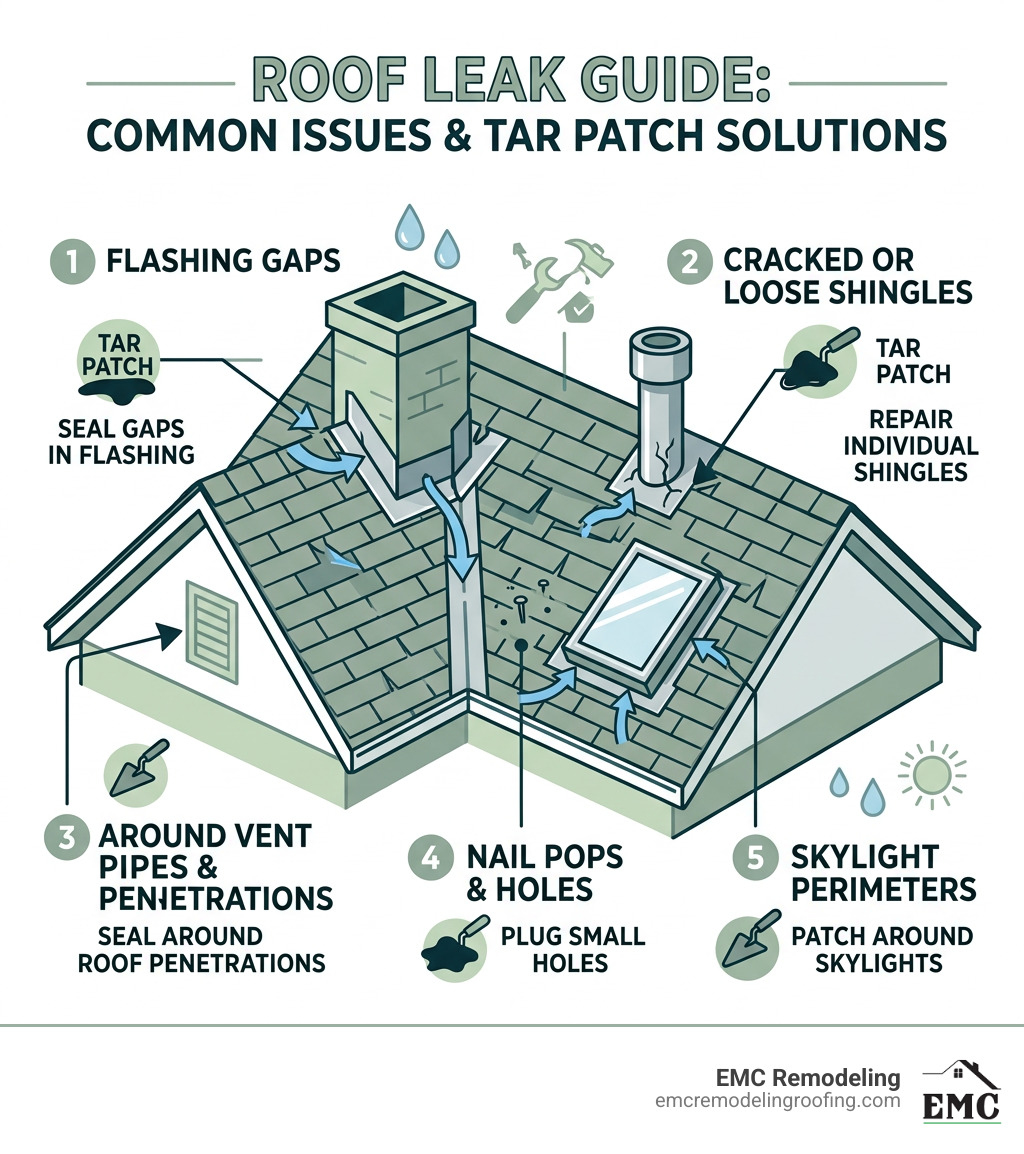
Simple guide to roofing tar patch:
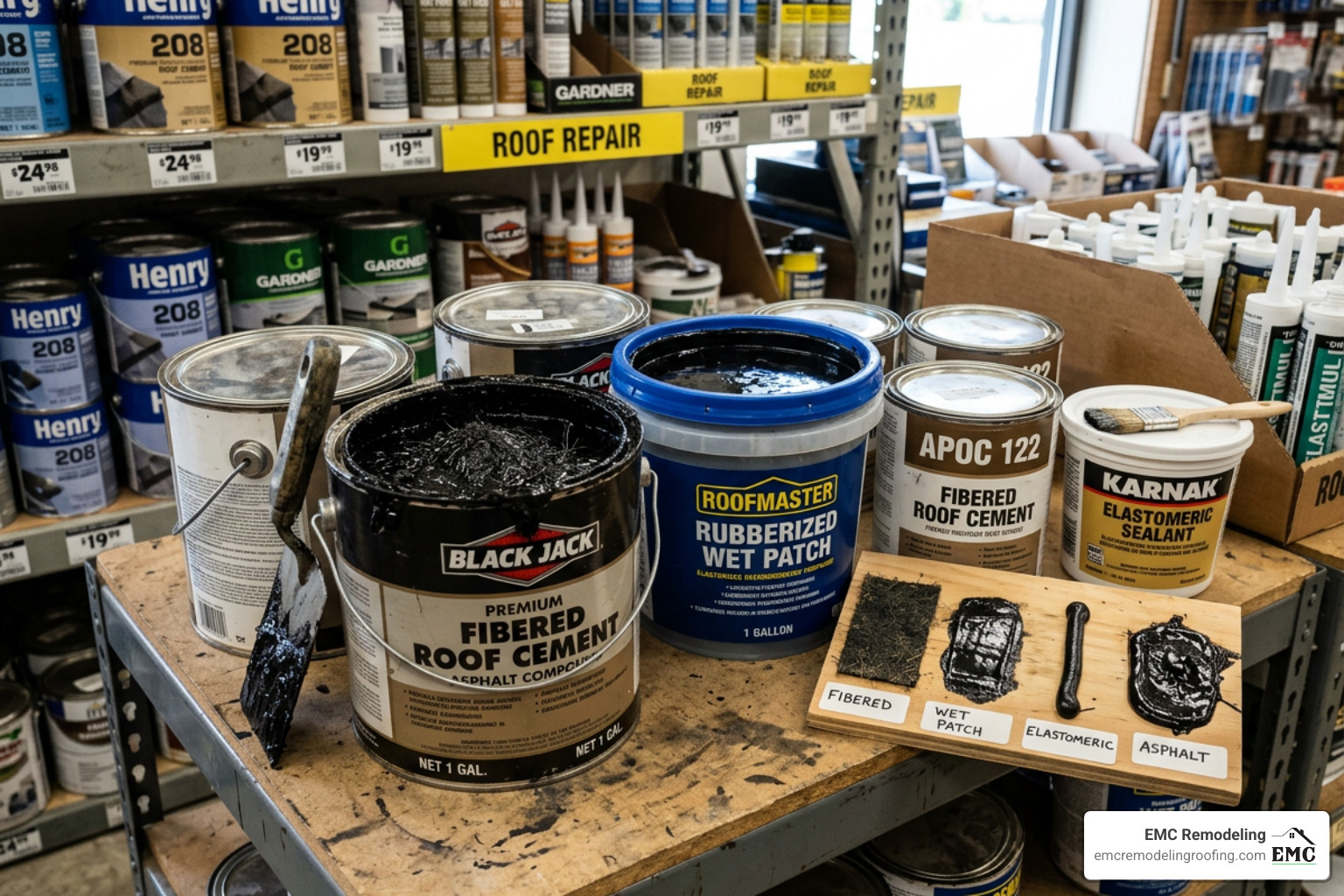
When you walk into a hardware store in Temple or Leander, you’ll see a wall of black buckets and tubes. Choosing the right roofing tar patch depends entirely on your roof type and the weather. At EMC Remodeling, we categorize these into four main groups:
- Asphalt-Based Roofing Cement: This is the traditional “thick stuff.” It’s a heavy-bodied trowel-grade cement used for sealing cracks and holes. It is highly water and UV resistant once cured but can become brittle over many years.
- Rubberized Wet Patch: Products like Henry 208R are modified with SEBS rubber. This allows the patch to remain flexible during the intense Texas heat and cold snaps. Crucially, these can be applied in standing water.
- Fibered Roof Cement: These contain reinforcing fibers (often glass or cellulose) that act like rebar in concrete. They are excellent for larger gaps because the fibers prevent the tar from sagging or running.
- Polyurethane Sealants: While technically not “tar,” products like Loctite PL Polyurethane are often used alongside tar for flashing and joints. They offer a 4.8 out of 5-star rating for their incredible adhesion and 30+ year potential lifespan on small joints.
According to our asphalt roof repair guide 2025, using the wrong material can lead to “alligatoring” — where the patch cracks like lizard skin because it can’t handle the roof’s thermal expansion.
Comparison of Patching Materials
| Feature | Standard Asphalt Tar | Rubberized Wet Patch | Polyurethane Sealant |
|---|---|---|---|
| Best Surface | General Repairs | Wet/Emergency | Flashing/Joints |
| Flexibility | Moderate | High | Very High |
| Wet Application | No | Yes | No |
| Cure Time | 24-48 Hours | 24 Hours | 7 Days |
| Avg. Rating | 4.4 Stars | 4.6+ Stars | 4.8 Stars |
Step-by-Step Guide: How to Apply a Roofing Tar Patch
Applying a roofing tar patch isn’t just about glopping it on. Proper technique ensures the patch lasts three years instead of three months. Follow these steps for a professional-grade DIY fix:
1. Surface Preparation
You cannot bond tar to dirt. Use a stiff wire brush to scrub away loose granules, dust, and old, dried-out sealant. If the area is dry, wipe it with a rag. If you are using a standard (non-wet) patch, the surface must be bone dry.
2. The 3-Course Method
For significant leaks or cracks, we recommend the “3-course method” found in our guide on patching your asphalt roof a step by step guide to fixing leaks:
- Layer 1: Apply a 1/8-inch thick layer of roofing tar patch over the leak, extending 2-3 inches beyond the damage.
- Layer 2: Embed a piece of reinforcing fabric mesh into the wet tar. This prevents the patch from cracking as the house moves.
- Layer 3: Apply a final 1/8-inch layer of tar over the mesh, “sandwiching” it completely.
3. Sealing Shingles and Flashing
If you are re-securing a loose shingle tab, apply a small “spot” of cement about the size of a quarter under the tab. Press down firmly. For nail holes, a small dab of tar followed by a few granules (scraped from the gutter) will camouflage the repair and protect it from UV rays.
4. Cleanup
Tar is messy. Keep a can of mineral spirits or specialized hand cleaner nearby. Clean your tools immediately after use, or the tar will harden into a permanent part of your trowel.
Pro Tip: Refer to the Technical Data Sheet for application specs of your specific brand. For instance, Gardner Wet-R-Dri covers roughly 12-30 square feet per gallon depending on thickness.
Emergency Repairs: Using Wet Patch in Rainy Conditions
In Central Texas, leaks rarely happen when it’s sunny. When a storm hits Temple or Leander, you might need an emergency roof patching solution that works while it’s pouring.
“Wet Patch” products are formulated with special surfactants that displace water. When you spread a rubberized wet patch over a leak in a rainstorm, the tar actually pushes the water out of the way to grab onto the shingle or metal surface.
Key Facts for Emergency Repairs:
- Temperature Range: Most wet patches can be applied from 0°F to 120°F.
- Standing Water: High-quality sealants like Henry 208R work even if the area is submerged.
- Temporary Nature: While effective, wet repairs are considered temporary. Moisture trapped underneath can cause blistering when the sun comes out. We always recommend inspecting these patches once the roof dries out.
Always prioritize safety. Never walk on a steep, wet roof during a lightning storm. If the leak is severe, it is better to call for emergency roof repair services where pros use harnesses and specialized gear. You can check the Safety Data Sheet for wet-surface compounds to ensure you are handling these chemicals safely.
Durability and Limitations of Tar Repairs
While a roofing tar patch is a lifesaver, it has its limits. A well-applied patch typically lasts 1 to 3 years. Several factors influence this lifespan:
- Heat Absorption: Tar is black and absorbs massive amounts of heat. In the Texas sun, this can cause the shingles underneath to “cook,” leading to blistering and premature aging.
- Cracking and Peeling: Over time, the oils in the asphalt evaporate. The patch becomes brittle and may pull away from the surface.
- Coverage Rates:
- Rust-Oleum Wet Roof Repair: Covers ~12 sq. ft per gallon at 1/8″ thickness.
- Kool Seal Storm Patch: Covers ~50 sq. ft per gallon (though 2 coats are recommended).
- Warranty Issues: Be careful! Over-applying tar can sometimes void your shingle manufacturer’s warranty. It can also hide structural issues like deck rot, which is why we suggest reading our asphalt shingle roof repair guide before starting.
If you find yourself patching the same spot every six months, the problem isn’t the tar—it’s the roof. At that point, it’s time to look into more permanent roof repair services.
When to Call a Professional for Roof Repairs
DIY is great for a single loose shingle, but some jobs are too big or too dangerous for a Saturday afternoon. You should put down the trowel and call us at EMC Remodeling at 254-771-3600 if you notice:
- Structural Rot: If the roof feels “spongy” when you walk on it, the wood decking underneath is rotting. No amount of tar will fix a collapsing roof.
- Large-Scale Leaks: If you have water coming through the ceiling in multiple rooms, a patch is just a band-aid on a broken leg.
- Safety Hazards: If the leak is on a two-story section or a steep pitch, don’t risk a fall. We use full fall protection and OSHA-approved safety protocols.
- Warranty Compliance: For newer roofs, a professional repair is often required to keep your warranty valid.
- Granular Loss: If your gutters are filled with “sand” (granules), your shingles are reaching the end of their life.
For a deeper dive into what constitutes a major vs. minor repair, see our complete roofing repair guide. We offer residential roof repair across Central Texas, ensuring your home stays dry without the guesswork.
Frequently Asked Questions about Roof Maintenance
Can I use a roofing tar patch on wet shingles?
Yes, but only if you use a specific “Wet Patch” or “All-Weather” product. Standard roofing cement will not stick to a wet surface; it will simply float on top of the water. Even with a wet patch, it is best to treat this as a temporary fix. For a long-term seal, wait for a dry day and follow the instructions in the ultimate guide to repairing a leaky asphalt shingle roof.
How long does a roofing tar patch last?
In the harsh climate of Temple and Leander, expect a patch to last between 12 and 36 months. Factors like direct sun exposure, the quality of the product used (rubberized vs. standard), and how well the surface was cleaned will determine the exact duration. For more on extending your roof’s life, check our fast roof repair complete guide.
Does roofing tar patch help with granular loss?
It can help protect “bald spots” where granules have fallen off, preventing UV rays from eating through the asphalt. However, you should not coat an entire shingle in tar. If you have widespread granular loss, it’s a sign the shingles are failing. Apply a small amount of sealant to the bald spot and press some loose granules into it to help it blend and provide UV protection, as noted in our asphalt roof repair guide 2025.
Conclusion
A roofing tar patch is an essential tool for any homeowner in Central Texas. Whether you’re in Temple, Leander, or Belton, knowing how to handle a minor leak can save you thousands in interior water damage repairs.
At EMC Remodeling, we are a family-operated business that treats your home like our own. We offer 24/7 support for those times when a DIY patch just isn’t enough. From minor shingle fixes to full replacements, we bring direct owner involvement to every job.
If you’re worried about a leak or aren’t sure if your DIY patch held up, don’t wait for the next big storm. We provide comprehensive emergency roof repair and maintenance to keep your family safe and dry.
Ready for a professional inspection? Visit our roof repair page to learn more and schedule your professional inspection to ensure your home remains protected.
