What to Do When You Need Wind Damage Repair Near Me
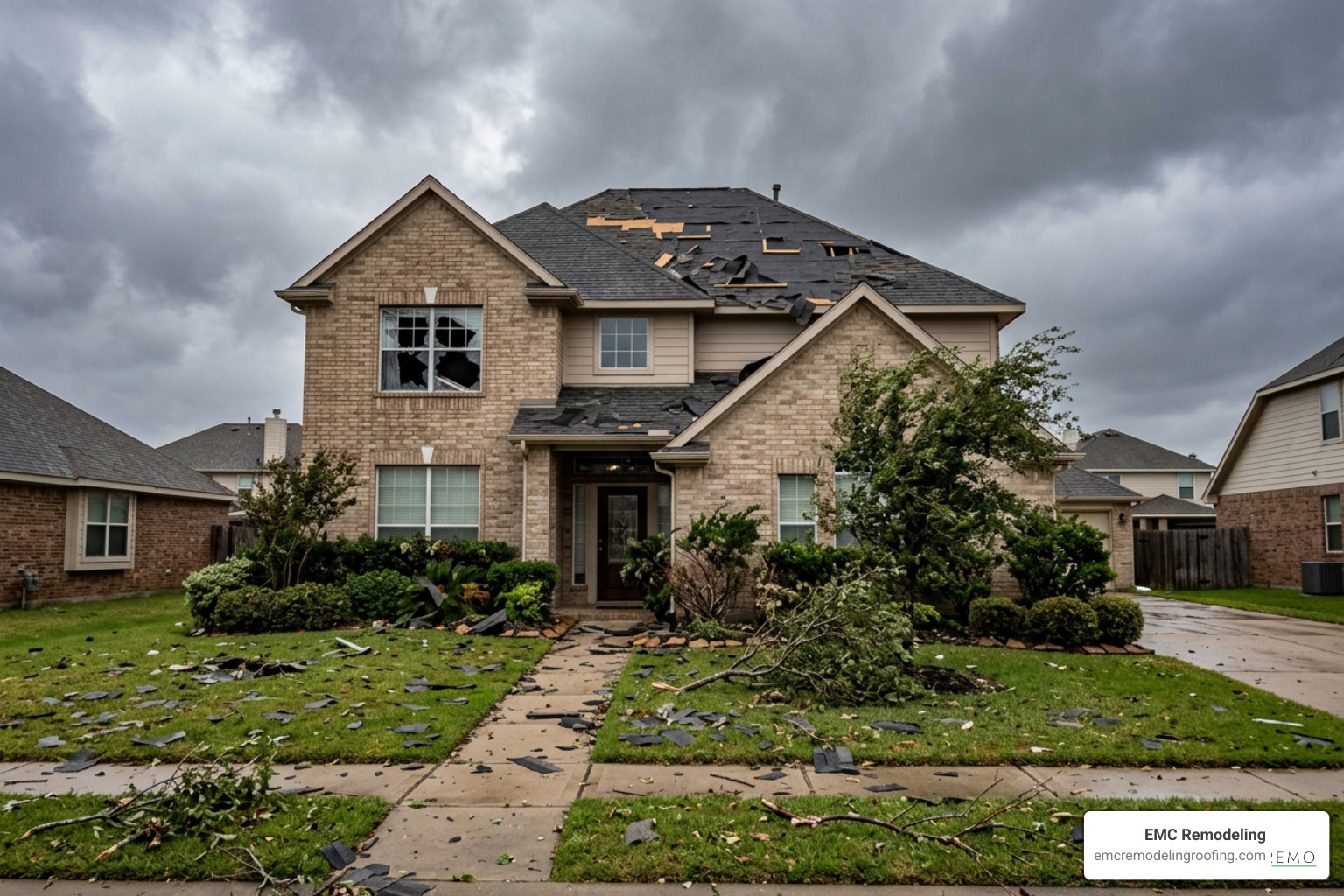
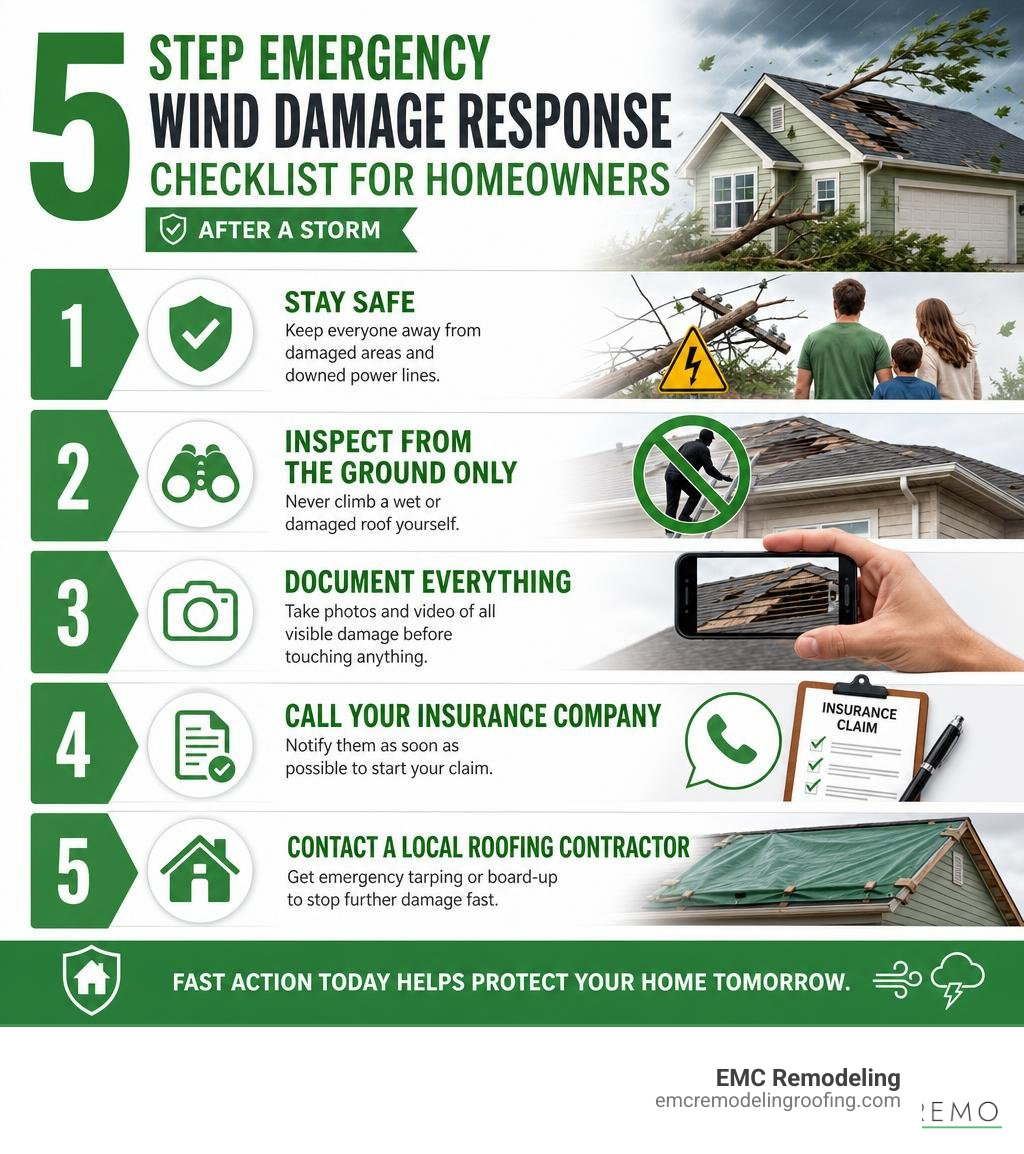
Finding reliable wind damage repair near me after a severe Texas storm is one of the most urgent and stressful situations a homeowner can face. Here is a quick-reference checklist so you know exactly what to do first:
- Stay safe — keep everyone away from damaged areas and downed power lines
- Inspect from the ground only — never climb a wet or damaged roof yourself
- Document everything — take photos and video of all visible damage before touching anything
- Call your insurance company — notify them as soon as possible to start your claim
- Contact a local roofing contractor — get emergency tarping or board-up to stop further damage fast
In times of crisis, partnering with a trusted local specialist like EMC Remodeling means your home gets restored quickly, safely, and with direct owner oversight — not a distant call center.
High winds can strip shingles, tear siding, rip gutters off your home, and let water pour into your attic — sometimes all in a single storm. And the damage is not always obvious right away. According to industry experts, roughly 30% of homeowners underestimate the true severity of wind damage after a storm. What looks like a couple of missing shingles from the street can hide broken seals, soaked insulation, and the early stages of mold growth inside your walls.
This guide walks you through every step — from spotting hidden damage to navigating your insurance claim — so you can handle the process without panic.
I’m Matthew Runyon, President of EMC Remodeling & Roofing, a family-owned company based in Temple, Texas with over 15 years of hands-on experience helping Central Texas homeowners recover from storm events, including wind damage repair near me situations that range from a few missing shingles to full roof replacements. If you have questions at any point, you can reach our team directly at 254-339-8688.
Explore more about wind damage repair near me:
Identifying the Warning Signs of Hidden Wind Damage
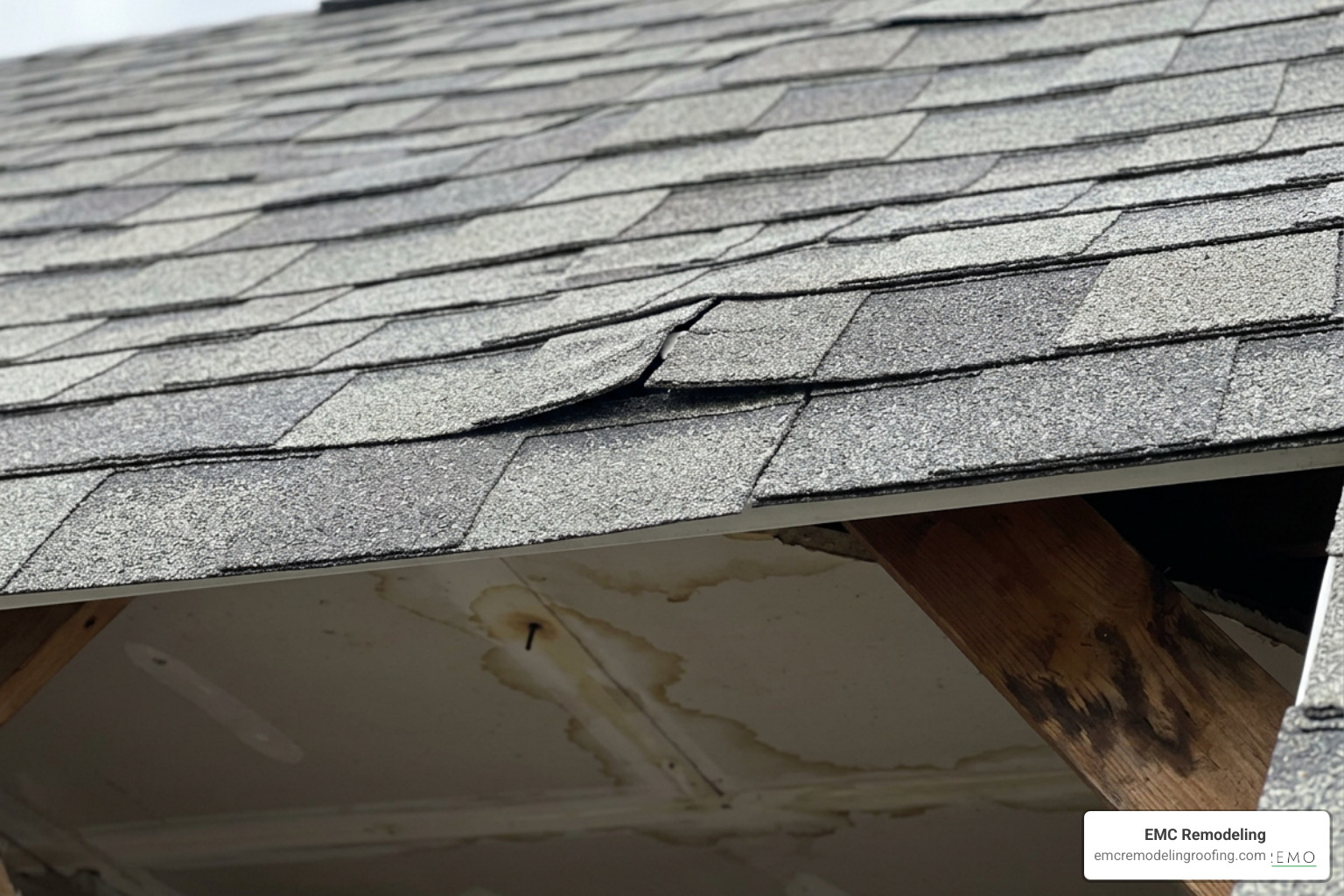
Wind damage does not always announce itself with a giant fallen tree limb or a completely bare roof deck. In fact, some of the most destructive storm damage is incredibly subtle. When strong winds sweep through Central Texas, they create powerful pressure differentials that lift shingles and break their factory-applied adhesive seals. According to the Federal Emergency Management Agency (FEMA), high winds create significant uplift forces on residential roofs, and once this seal is broken, the shingle may settle back down, looking perfectly normal from the ground, but its waterproofing capability is completely gone.
To protect your home from long-term structural issues, you must know what warning signs to look for. Here are the primary indicators of hidden wind damage:
- Creased or Lifted Shingles: When wind lifts a shingle, it often bends it backward, leaving a dark horizontal line or crease where the fiberglass matting has fractured. These shingles are highly susceptible to blowing off in the next minor storm.
- Broken Adhesive Seals: If you can easily lift the edge of a shingle with your finger, its wind seal has failed. This allows wind-driven rain to slide directly underneath the asphalt layer.
- Granule Loss in Gutters: High winds combined with hail strip the protective mineral granules off your shingles. If you notice piles of dark sand-like granules in your downspouts, your roof’s lifespan has been severely compromised.
- Water Stains on Attic Ceilings: Check your attic with a flashlight after a storm. Look for damp roof decking, dripping water, or dark rings on your drywall and rafters.
- Mysterious Creaking or Popping Sounds: If your roof or attic makes unusual creaking or popping noises during windy days, it could indicate structural stress or weakened roof decking fasteners.
Ignoring these subtle issues is a recipe for a financial headache. Water intrusion can quickly rot your roof decking, ruin your insulation, and spark toxic mold growth. Understanding these vulnerabilities is the first step toward safeguarding your home. You can learn how wind and rain impact other exterior components in our guide on Siding Saviors: Expert Tips for Storm Damage Repair.
Immediate Steps: What to Do Right After a Severe Storm
The hours immediately following a severe windstorm are critical. Your primary goal is to stabilize your property and gather the evidence required to secure a successful insurance claim. However, you must prioritize safety above everything else.
Here is the exact sequence of steps you should take immediately after the storm clears:
- Prioritize Safety First: Never walk on a roof that has just been subjected to high winds, heavy rain, or hail. Wet shingles are incredibly slick, and compromised roof decking can collapse under your weight. Additionally, stay far away from any downed utility lines or leaning trees.
- Conduct a Ground-Level Inspection: Walk around the perimeter of your home and inspect your roof, siding, and gutters from the safety of the ground. Use binoculars or the zoom lens on your smartphone camera to get a closer look at the roofline.
- Document Everything Thoroughly: Take high-resolution photos and videos of all visible damage. Capture wide shots of your entire property as well as close-ups of specific issues, such as torn siding panels, dented gutters, broken window seals, and shingles lying in your yard.
- Check for Interior Leaks: Head up to your attic and walk through your upper living spaces. Look for active water leaks, damp spots on your ceilings, or bubbling paint on your walls. Document these interior issues with photos as well.
- Schedule a Professional Assessment: Contact a local, vetted contractor to perform a comprehensive physical inspection. Professional roofers use specialized tools—such as moisture meters, thermal imaging cameras, and drone-assisted inspections—to detect hidden damage that is impossible to see with the naked eye.
Taking these fast, calculated actions will prevent minor leaks from spiraling into massive restoration projects. For a comprehensive breakdown of immediate post-storm actions, read our Emergency Roof Repair Complete Guide.
Choosing the Best Wind Damage Repair Near Me
When a major storm rolls through Temple or Leander, TX, it is often followed by an influx of out-of-state “storm chasers.” These are non-local roofing companies that travel from town to town, knocking on doors and offering quick, cheap repairs. While their pitches can sound incredibly tempting, hiring them is one of the biggest mistakes a homeowner can make.
Out-of-state storm chasers rarely understand local Texas building codes, and they often use subpar materials to maximize their profit margins. Once the work is finished, they collect their check and move on to the next storm-ravaged city. If your roof begins to leak six months later, you will find that their phone numbers are disconnected, leaving you with no way to enforce their “warranty.”
To ensure your home is restored correctly, you should always partner with a local, highly rated contractor. Here is what to look for when evaluating your options:
- A Physical Local Presence: Choose a contractor with an established office and a proven track record in the Temple or Leander areas. Working with a local team ensures they understand regional weather patterns and municipal building codes.
- Verifiable Licensing and Insurance: Your contractor must carry robust general liability insurance and workers’ compensation coverage to protect you from liability during the repair process.
- Strong Workmanship Warranties: Reputable local companies stand behind their labor. Look for contractors who offer multi-year workmanship warranties on top of the manufacturer’s material warranties.
- Direct Owner Oversight: Working with a family-operated business ensures that your project receives the attention it deserves, with direct communication and accountability from start to finish.
Protecting your home means making an informed hiring decision. Avoid common pitfalls by reading our article on Don’t Get Blown Away: Choosing a Top Storm Damage Roof Replacement Contractor.
Emergency Mitigation: Roof Tarping and Board-Up Services
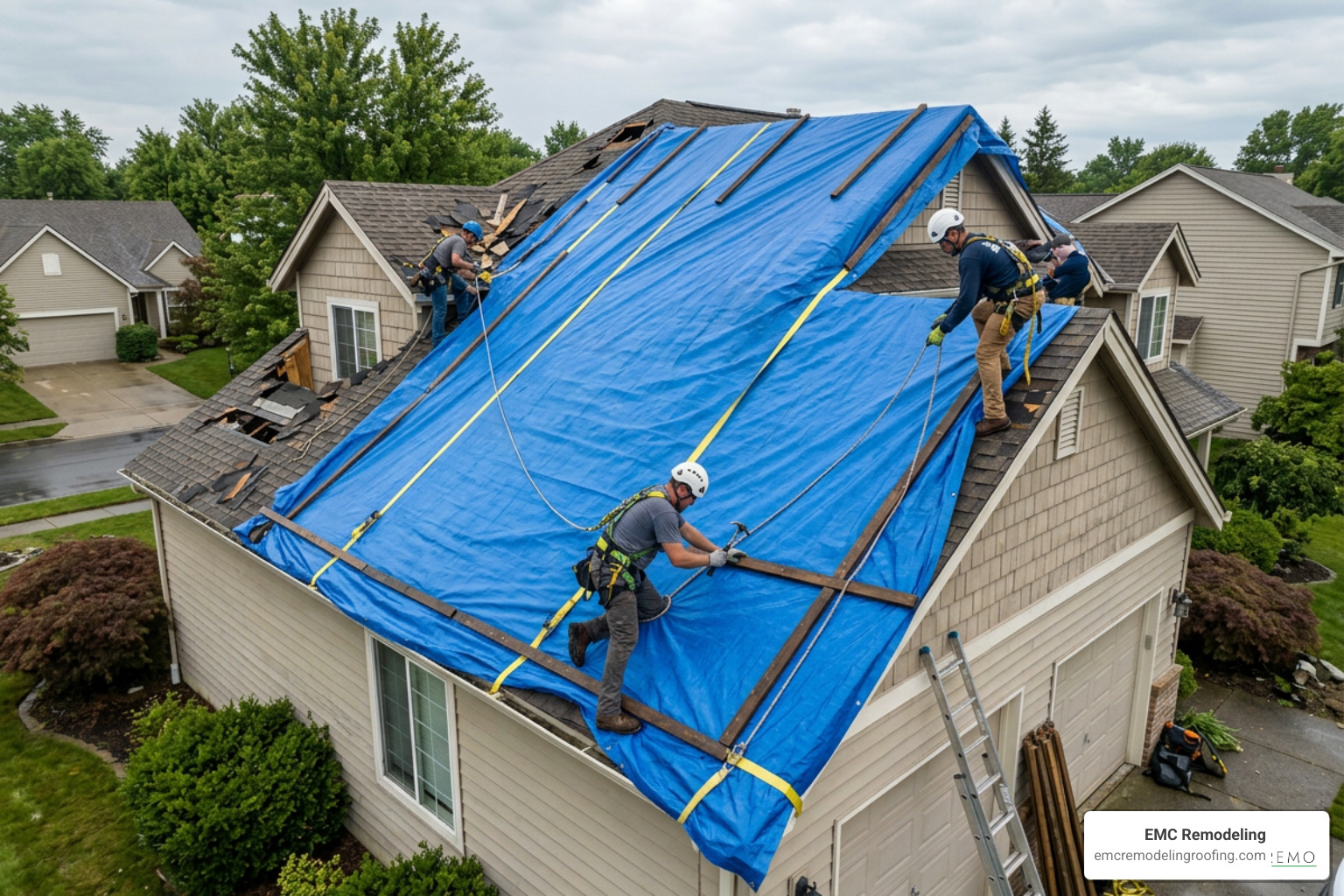
When high winds leave a gaping hole in your roof or shatter your windows, you cannot afford to wait weeks for a permanent repair. You need to secure your home immediately. This initial step is known as emergency mitigation, and it primarily involves professional roof tarping and window board-up services.
Emergency mitigation is not just a smart way to protect your belongings—it is actually a legal requirement under almost all standard homeowners insurance policies. Insurance contracts contain a “mitigation clause,” which states that the homeowner must take reasonable, immediate action to prevent secondary damage after a loss. If you leave a damaged roof exposed to the elements and a subsequent rainstorm ruins your hardwood floors, your insurance carrier can legally deny coverage for the water damage.
By hiring certified storm damage specialists to perform emergency mitigation, you establish a secure, temporary barrier that keeps your home dry and safe. Professional tarping involves securing heavy-duty, UV-resistant tarps to your roof using wooden furring strips. This ensures the tarp will not blow away during subsequent storms, giving you the breathing room you need to plan your permanent repairs. Discover how professional mitigation protects your property value in our article on weathering the Storm with Professional Repair Services.
Why Emergency Tarping is Crucial for Wind Damage Repair Near Me
Leaving wind damage unaddressed—even for a few days—is incredibly risky. Rainwater can quickly seep into your attic, soaking your insulation and destroying its thermal efficiency. Once insulation gets wet, it loses its ability to regulate your home’s temperature, causing your utility bills to skyrocket.
Even worse, water intrusion creates the perfect breeding ground for toxic mold. Mold spores can begin to colonize damp drywall, wood framing, and ceiling tiles within 24 to 48 hours of water exposure. Remediating a severe mold infestation can easily add thousands of dollars to your recovery costs.
The average water damage restoration project costs around $3,500, with severe cases ranging up to $15,000 depending on the source and extent of the water intrusion. Utilizing a 24/7 emergency response service to secure your roof immediately preserves your home’s structural integrity, protects your family’s health, and keeps your repair costs manageable. Learn more about the critical timelines of emergency mitigation in our emergency roof repair complete guide.
Navigating the Insurance Claims Process for Wind Damage
Filing an insurance claim for wind damage can feel like learning a foreign language. However, understanding the basic structure of the process will help you stay calm and in control.
Here is how a typical wind damage insurance claim works:
- File the Claim Promptly: Contact your insurance agent as soon as you confirm storm damage. Provide them with your policy number, the exact date of the storm, and your initial photo documentation.
- Mitigate the Damage: Hire a professional to install temporary tarps or board up broken windows to prevent further issues. Save all receipts for these emergency services, as they are typically fully reimbursable.
- Prepare for the Adjuster’s Meeting: The insurance company will send a claims adjuster to inspect your property and estimate the cost of repairs.
- Review the Claim Scope: Once the adjuster completes their report, they will issue a claim summary and your initial payment (minus your deductible).
To help you understand why professional restoration is always the best path forward, here is a comparison of DIY temporary fixes versus professional wind damage restoration:
| Feature | DIY Temporary Fixes | Professional Wind Damage Restoration |
|---|---|---|
| Safety Risk | Extremely High (falling hazards, structural instability) | Zero Risk to Homeowner (fully insured, trained crews) |
| Waterproofing Quality | Low (tarps often leak or blow away in high winds) | High (industrial-grade tarps, permanent code-compliant repairs) |
| Insurance Approval | Hard to leverage; repairs may not meet carrier standards | Fully documented, itemized estimates accepted by adjusters |
| Warranty Protection | None | Multi-year workmanship and material warranties |
| Property Value Impact | Can lead to secondary damage and lower home value | Restores or improves curb appeal and structural integrity |
Navigating these claims requires precision. For specific advice on siding-related wind claims, check out our guide on Don’t Get Swept Away: Navigating Wind Damage Siding Claims.
Maximizing Your Claim with Professional Wind Damage Repair Near Me
Insurance adjusters are busy, and they frequently miss subtle, high-altitude damage during a quick visual walk-through. They might overlook broken shingle seals, creased siding panels, or compromised flashing.
To ensure you receive a fair payout that covers the true cost of your repairs, you should always have your trusted local roofing contractor present during the adjuster’s inspection. We can walk the roof alongside the adjuster, pointing out hard-to-spot issues and providing drone imagery or thermal data to support the claim.
We provide detailed, itemized estimates using industry-standard estimating software, making it easy for your insurance carrier to approve the full scope of work. Whether you need a partial repair or a full roof replacement, we work directly with your carrier to streamline the paperwork. Read our comprehensive guide on residential storm damage restoration complete guide to understand how to maximize your recovery.
Frequently Asked Questions About Storm Restoration
How long does wind damage repair typically take?
The timeline for wind damage repair depends entirely on the severity of the storm and the extent of the damage. Minor repairs—such as replacing a few blown-off shingles or securing a loose piece of fascia—can typically be completed in a few hours.
However, if your home requires a full roof replacement or extensive structural reconstruction, the project will generally take 1 to 2 days of active labor once materials are delivered. Factors that can extend this timeline include severe weather delays, municipal permitting requirements, and the time it takes for your insurance company to approve the repair estimate.
Does homeowners insurance cover wind damage repairs?
Yes, standard homeowners insurance policies almost always cover wind damage repairs. This coverage includes damage caused by tornadoes, severe thunderstorms, hurricanes, and straight-line winds. Your policy will cover repairs to your roof, siding, gutters, windows, and even interior water damage caused by a wind-created opening.
That you will still be responsible for paying your policy’s deductible before your insurance coverage kicks in. Additionally, it is wise to review any specific windstorm or hurricane deductibles that may apply to your policy.
Can wind damage cause issues beyond the roof and siding?
Absolutely. High winds exert incredible pressure on your entire home. Beyond your shingles and siding, wind can pull gutters away from the fascia board, causing improper drainage and water pooling around your foundation.
Strong gusts can also break the thermal seals on double-pane windows, reducing your home’s energy efficiency and causing the glass to fog up. In severe cases, wind can cause subtle structural shifting, leading to cracked interior drywall, misaligned door frames, and compromised structural framing.
Conclusion
Dealing with wind damage to your home is undoubtedly stressful, but you do not have to navigate the recovery process alone. By staying safe, documenting the damage, and partnering with a trusted local contractor, you can restore your home quickly and efficiently.
EMC Remodeling is your premier, family-operated storm restoration partner in Temple, TX, and Leander, TX. We pride ourselves on exceptional craftsmanship, direct owner involvement, and rapid 24/7 emergency support to protect your home when you need it most. Whether you need an emergency tarp-up, professional roof repair, or a complete roof installation, we are here to guide you every step of the way.
Don’t let storm damage disrupt your peace of mind. Visit our professional storm damage repair page to schedule your comprehensive, hassle-free roof inspection.