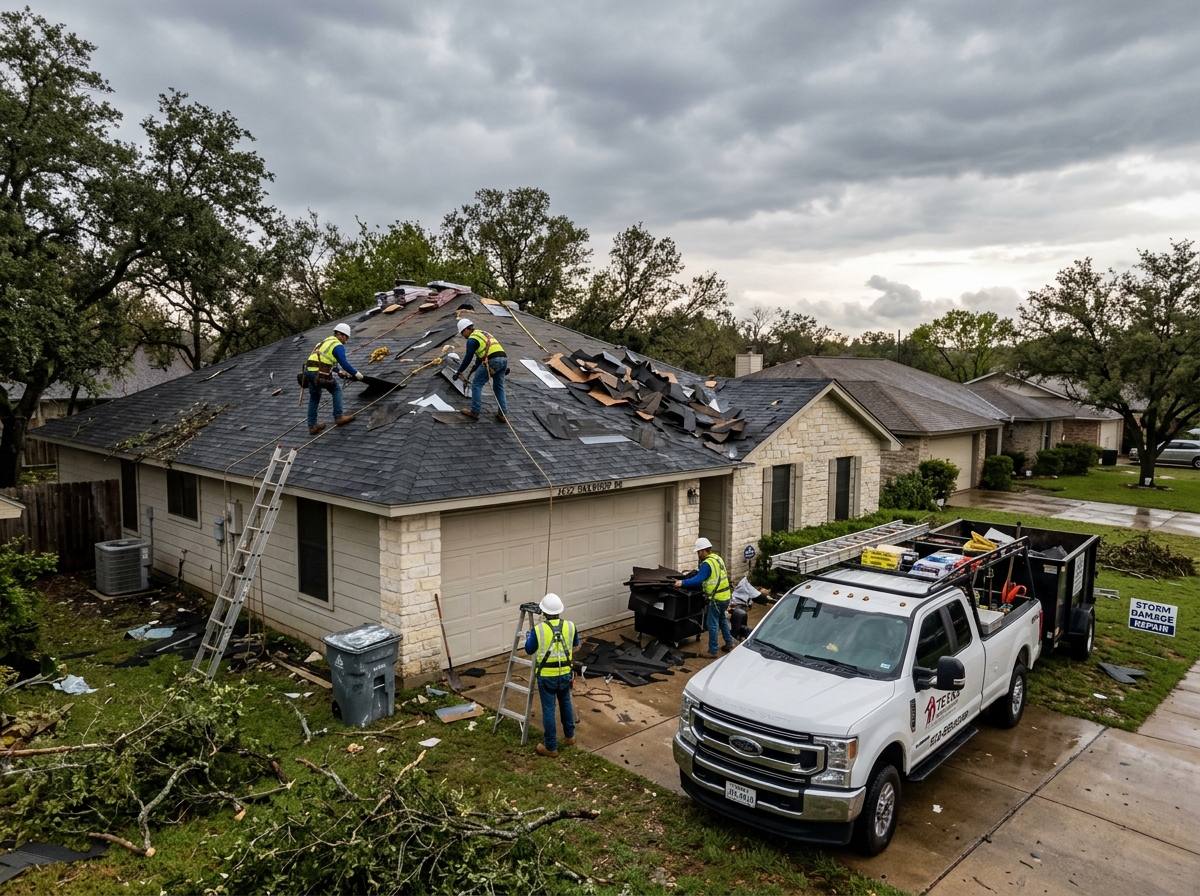
When Storms Strike: What Every Central Texas Homeowner Needs to Know
Storm damage repair services are professional restoration solutions that address structural, roofing, and water damage caused by severe weather events like hail, high winds, flooding, and ice.
Quick answer — what to do after storm damage:
- Stay safe — avoid downed power lines and unstable structures
- Document everything — photograph all visible damage before touching anything
- Call a professional — contact a licensed contractor for an emergency inspection
- Secure the property — get temporary tarping or board-up services to stop further damage
- File your insurance claim — act promptly, as most policies require claims within 365 days
Severe weather doesn’t give you much warning. One hailstorm, one strong wind event, one night of heavy rain — and your home can go from safe haven to a costly repair project overnight. In Central Texas, these events aren’t rare. They’re a regular part of life.
The stakes are high. Mold can begin forming within 24 hours of water intrusion. Delaying repairs — even by a day or two — can turn a manageable fix into a major structural problem. That’s why knowing how to evaluate and choose the right expert roofing and remodeling contractor before or immediately after a storm is so important.
This guide is built for homeowners and property managers in Central Texas who want straight answers: what storm damage actually looks like, what professional repair services cover, how the insurance process works, and what separates a reliable contractor from one who will leave you worse off.
I’m Matthew Runyon, President of EMC Remodeling & Roofing, and with over 15 years delivering storm damage repair services across Central Texas, I’ve seen how the right response in the first 24 hours can save homeowners tens of thousands of dollars. Let’s walk through everything you need to know to protect your home and make smart decisions after a storm.

Key terms for storm damage repair services:
Unmasking the Damage: A Comprehensive Look at Storm Impacts on Your Home

When a major weather event rolls through Temple or Leander, the damage isn’t always as obvious as a fallen tree on a roof. Often, the most insidious problems begin as small compromises in your home’s exterior envelope. Understanding the different ways storms attack your property is the first step in a successful recovery.
Severe weather events annually cause billions of dollars in property damage across the United States. In Texas, we primarily deal with three heavy hitters: high-velocity winds, large-diameter hail, and torrential rain. Each leaves a unique “fingerprint” on your home. For instance, wind might peel back shingles, while hail creates localized impact points that weaken the waterproofing layers.
To help you visualize the differences, we have compiled a comparison of how different storm types affect your property:
| Damage Type | Primary Targets | Key Characteristics | Risk Level |
|---|---|---|---|
| Hail | Roofing, Siding, Gutters | Dents, “bruises” on shingles, granule loss | High (Hidden leaks) |
| Wind | Shingles, Siding, Fencing | Lifted/missing shingles, creased tabs | Moderate (Structural exposure) |
| Flood/Rain | Foundation, Basement, Attic | Water stains, mold, wood rot | Extreme (Structural integrity) |
If you suspect your home has been hit, our Residential Roof Storm Damage guide offers a deeper dive into what to look for on specific roofing materials.
Beyond the Obvious: Spotting Hail and Wind Damage on Your Roof
Hail and wind are the primary culprits in most storm damage repair services requests. Nationally, hail damage alone accounts for over $1 billion in insured losses every year. In Central Texas, hailstones can range from pea-sized to softball-sized, and the impact is devastating.
When hail hits an asphalt shingle, it knocks away the protective mineral granules. This isn’t just a cosmetic issue; those granules protect the underlying bitumen from UV rays. Without them, the shingle will brittle and crack within months. Look for “bruised” spots that feel soft to the touch, similar to a bruise on an apple.
Wind damage presents differently. High gusts create a vacuum effect that lifts shingles. Even if the shingle settles back down, the seal is broken. If you see shingles that are missing, curled at the edges, or have horizontal creases near the top, you likely need Hail Damage Roof Repair or wind restoration. Remember to also check your gutters for deep dents and your flashing for cracks, as these are common entry points for water.
The Silent Threat: Understanding Ice Dams and Water Intrusion
While we don’t get the snow of the North, Central Texas does experience “ice days” that lead to ice dams. An ice dam occurs when heat from your attic melts ice on the upper parts of the roof; the water then runs down and refreezes at the colder eaves. This creates a dam that traps liquid water, forcing it up under the shingles.
Water intrusion is a “silent threat” because it often happens behind walls or in attic corners where you won’t see it until a stain appears on the ceiling. If water intrusion isn’t addressed within 48 hours, repair costs can escalate by 30-50% due to the rapid onset of mold and wood rot. This moisture compromises attic insulation, reducing your home’s energy efficiency and significantly diminishing your property’s overall safety and market value.
Act Fast, Save More: The Imperative of Immediate Professional Repair
Time is the enemy after a storm. Delaying storm damage repair services by even a day or two can lead to secondary damage that insurance may not fully cover if they deem you were negligent in “mitigating the loss.”
We emphasize 24/7 availability because storms don’t follow a 9-to-5 schedule. Immediate intervention ensures structural stabilization and addresses safety hazards like saturated drywall that could collapse or electrical systems exposed to moisture. By acting fast, we focus on mold prevention and stopping a small leak from becoming a full-room renovation.
From Tarping to Restoration: EMC Remodeling’s Full Spectrum of Storm Solutions
As Storm Damage Specialists, we provide a comprehensive suite of services to take you from the initial chaos back to a beautiful, safe home. Our process isn’t just about hammering nails; it’s about a strategic recovery.
Our core storm services include:
- Emergency Roof Tarping: Heavy-duty, professional-grade tarps secured to prevent further water entry.
- Emergency Board-Up: Securing broken windows or doors to protect against theft and weather.
- Debris Removal: Clearing fallen branches, shattered glass, and ruined building materials.
- Structural Repairs: Fixing the “bones” of your home, including rafters and wall studs.
- Full Restoration: Replacing siding, gutters, windows, and roofing to bring the home back to pre-storm condition (or better).
Every Second Counts: The Power of 24/7 Emergency Response
The critical importance of rapid 24/7 emergency response cannot be overstated. Statistics show that properties receiving professional tarping within the first 12 hours experience roughly 70% less secondary water damage compared to those where the owner waited a few days.
When you call us at 254-221-1111, we aim to be on-site within hours. Our team works within that crucial 24-hour window to secure entry points and prevent leaks. This speed doesn’t just protect your furniture; it minimizes the total restoration cost, which makes the insurance process much smoother. We also provide Commercial Storm Damage Restoration for local businesses that need to get back to work quickly.
Your Path to Recovery: Navigating the Professional Storm Damage Restoration Journey
The journey from a damaged house to a restored home follows a specific path. At EMC Remodeling, we believe transparency is key to reducing the stress of this process.
- Initial Inspection: We perform a 360-degree assessment of the roof, siding, windows, and gutters.
- Temporary Repairs: Immediate tarping or boarding-up to stabilize the environment.
- Documentation: We create a comprehensive digital file with photos and measurements.
- Reconstruction Plan: We provide a detailed estimate and timeline for permanent repairs.
- Execution: Our crews perform the work with expert craftsmanship.
- Final Walkthrough: We ensure every nail is in place and the property is clean.
For a more granular look at this process, check out our Residential Storm Damage Restoration Complete Guide.
Maximizing Your Claim: How Experts Streamline the Insurance Process
Most homeowners find the insurance side of storm damage repair services to be the most daunting. We serve as your advocate. We provide the thorough documentation adjusters need to approve a claim quickly.
We often attend the adjuster meeting in person. Why? Because adjusters are human—they can miss things. Having a professional on the roof to point out “bruised” shingles or subtle wind uplift ensures your estimate is accurate. While many Texas policies allow up to 365 days to file a claim, we always recommend acting within the first 30 days while the evidence is “fresh.” If your siding took the brunt of the storm, we have more info about siding repair services to help you navigate those specific claims.
The Professional Edge: Why Expert Repair Outperforms DIY Solutions
In the age of YouTube tutorials, it’s tempting to try DIY repairs. However, storm restoration is one area where professional intervention is a necessity, not a luxury.
- Safety: Roofs are dangerous, especially when wet or structurally compromised.
- Certifications: We follow IICRC-recognized standards and best practices for water mitigation.
- Equipment: We use professional-grade moisture meters and thermal imaging to find hidden water.
- Warranties: We provide robust workmanship warranties that a DIY fix simply can’t offer.
- Property Value: Shoddy DIY repairs can lead to “red flags” during a future home inspection when you try to sell.
For specialized hail issues, trusting our Hail Repair Roofing expertise ensures the job is done right the first time.
Your Questions Answered: Essential FAQs About Storm Damage Repair
How long does the storm restoration process typically take?
The timeline varies based on the severity. Emergency stabilization (tarping) happens in hours. The full restoration—including material ordering and insurance approval—typically takes between two to six weeks. Factors like material availability and the number of homes affected in your neighborhood can influence this.
Does homeowners insurance cover all types of storm damage?
Most standard policies cover wind and hail. However, “flood” damage (rising water from the ground) usually requires a separate National Flood Insurance Program (NFIP) policy. Always review your policy for “cosmetic damage” exclusions, which some carriers have started adding to limit payouts for minor hail dents.
What should I look for when choosing a storm damage contractor?
Look for a local physical address (avoid “storm chasers” from out of state), proof of insurance, and specialized certifications. A reputable contractor will provide a written contract and won’t ask for the full payment upfront. At EMC Remodeling, our direct owner involvement ensures you aren’t just a number in a database.
Conclusion
EMC Remodeling is a family-operated business deeply rooted in the Temple, TX community. We understand the unique challenges of Central Texas weather because we live here too. Whether you are in Temple, Leander, or the surrounding areas, we are your trusted local partner for storm damage repair services.
We pride ourselves on exceptional craftsmanship and a “neighbor-first” approach. Don’t let a storm compromise your home’s safety, structural integrity, or long-term value. We are ready to provide the 24/7 emergency support you need to get your life back to normal.
For immediate assistance and a reliable Storm Damage Repair assessment, contact us today.
Call for immediate assistance: 254-221-1111
