When a Storm Hits, Finding the Right Storm Damage Repair Company Near Me Fast Can Save Your Home
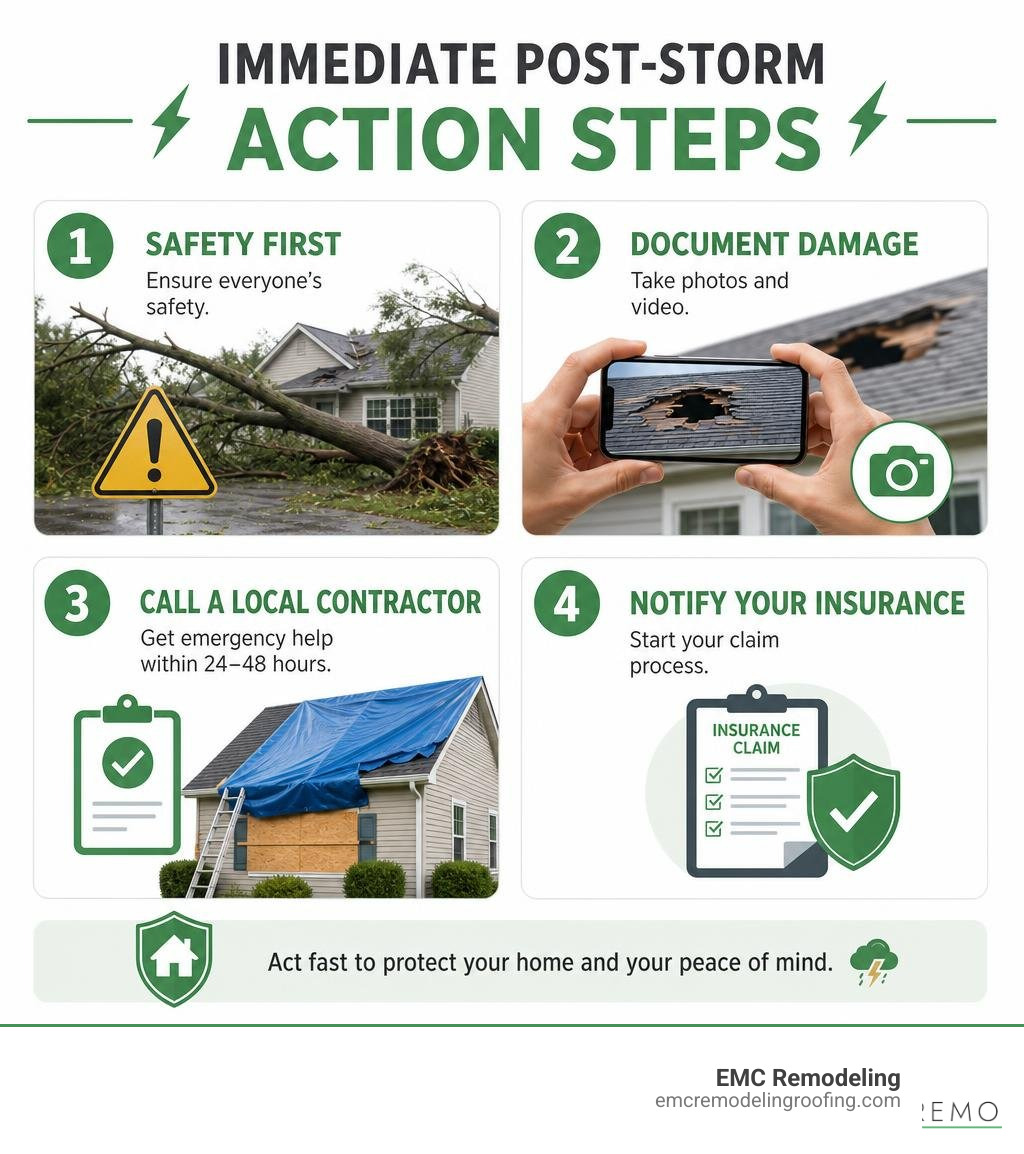
If you need a storm damage repair company near me right now, here’s what to do first:
- Ensure everyone’s safety — stay away from downed power lines and unstable structures.
- Document all damage with photos and video before touching anything.
- Call a local, licensed storm damage contractor for emergency tarping or board-up within 24–48 hours.
- Notify your insurance company to start the claims process.
- Schedule a professional roof inspection — most hail damage is not visible from the ground.
A storm can turn your home from a safe haven into a disaster area overnight. Wind, hail, falling trees, and heavy rain can tear off shingles, crack siding, shatter windows, and let water into places you can’t even see. And the longer you wait, the worse it gets — water intrusion can lead to mold growth, structural rot, and insurance claim complications within just 24 to 48 hours.
The good news? A certified local roofing and restoration contractor can respond fast, secure your property, and guide you through every step of the repair and insurance process.
I’m Matthew Runyon, President of EMC Remodeling & Roofing in Temple, Texas. With over 15 years of hands-on experience helping Central Texas homeowners recover after severe weather, I’ve seen what separates a fast, stress-free recovery from a drawn-out nightmare — and finding the right storm damage repair company near me is always step one. In this guide, I’ll walk you through exactly how to do that.
Simple guide to storm damage repair company near me:
Why You Need a Certified Storm Damage Specialist Immediately
A certified storm damage specialist should inspect and stabilize your home as soon as it is safe to do so after severe weather. In Central Texas communities such as Temple and Leander, wind, hail, and heavy rain can damage roofing, siding, gutters, windows, and structural framing in a single storm event. Fast professional mitigation is the difference between a contained exterior repair and a costly interior restoration.
Professional storm restoration contractors specialize in rapid mitigation. They understand that a storm-damaged home is an active moisture-intrusion risk, where every passing hour allows water to migrate deeper into your attic, walls, insulation, and flooring. By deploying immediate protection measures, a certified specialist shields your home from secondary weather exposure, preserves structural stability, and helps keep your family safe.
Certified experts are also trained to look beyond the obvious. While a homeowner might notice only a few missing shingles, a specialist can identify microscopic cracks, bruised underlayment, compromised flashing, and hidden hail impacts that may not be visible from the ground. Partnering with a professional team ensures that structural vulnerabilities are documented and addressed systematically so your home can be restored to its pre-loss condition.
The Danger of Delaying Emergency Roof Repair
Delaying emergency roof repair after a storm is a high-risk decision that often leads to more expensive structural damage. Once your roof’s outer protective layer is breached, rainwater has a direct pathway into your home. This water intrusion can saturate attic insulation, ruin drywall, weaken wood framing, and contribute to wood rot and ceiling failures.
Restoration timing matters because mold can develop quickly when building materials remain wet. The U.S. Environmental Protection Agency recommends drying wet materials within 24 to 48 hours when possible to help prevent mold growth; see the EPA’s guidance on mold cleanup in your home. To understand the full scope of these risks and how to prevent them, consult our Emergency Roof Repair Complete Guide. Acting quickly is not just about fixing shingles; it is about protecting indoor air quality, structural integrity, and property value.
How to Spot Hidden Hail and Wind Damage
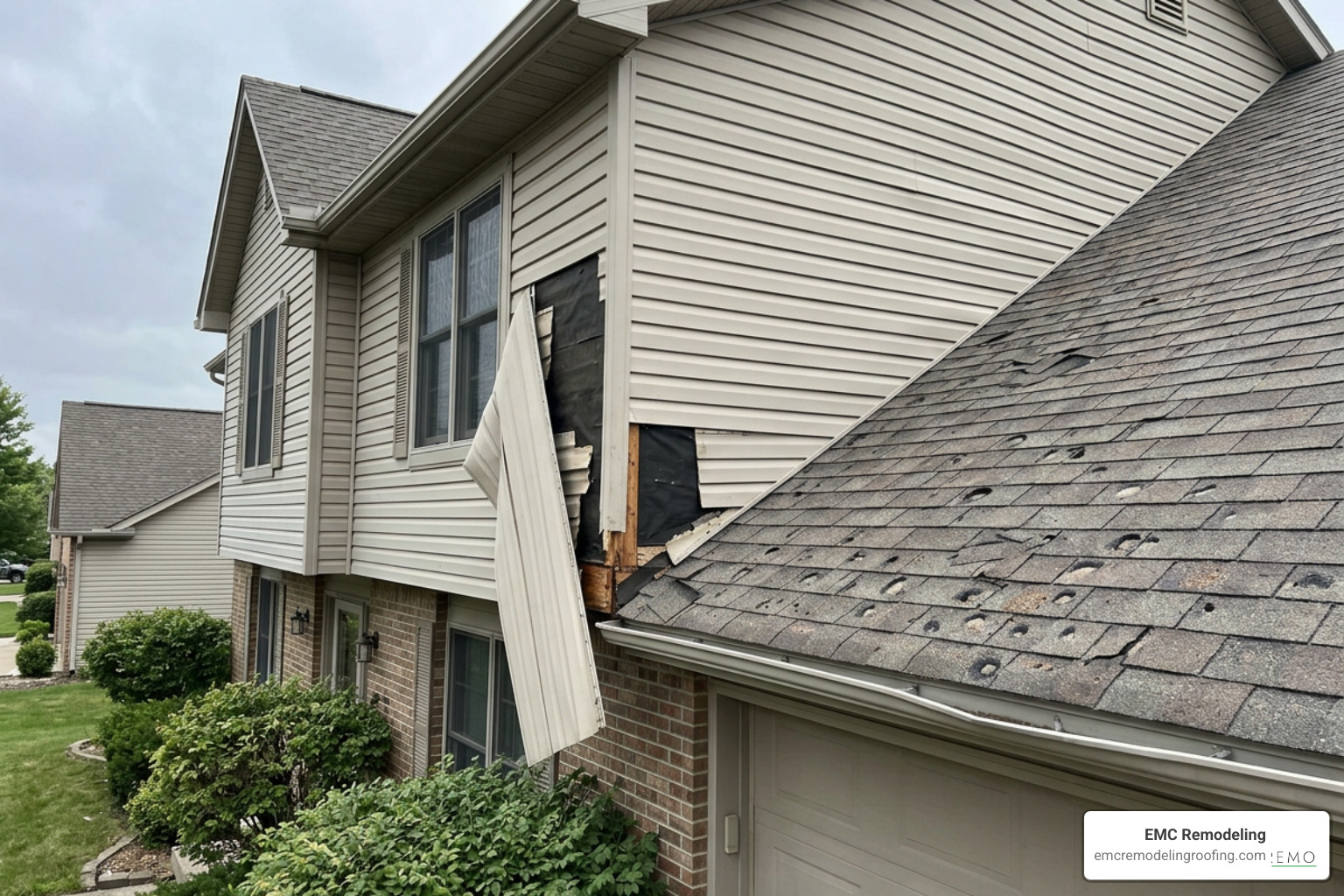
Not all storm damage is obvious from the driveway. In fact, hail damage is notoriously difficult to spot with the untrained eye, often requiring specialized close-up inspections or drone-assisted technology to identify. Hailstones bruise shingles, knocking away the protective mineral granules and exposing the fragile asphalt underlayment beneath. Over time, solar UV rays deteriorate this exposed asphalt, causing it to crack and leak.
To spot hidden storm damage, look for these key indicators:
- Granule Loss: Check your gutters and the exit points of your downspouts for piles of dark, sand-like granules.
- Shingle Bruising: Search for dark, circular dents on your shingles that feel soft to the touch, similar to a bruised apple.
- Dented Metal: Inspect your roof vents, flashing, gutters, and downspouts for small dings or dents caused by hail.
- Creased or Missing Shingles: High winds can lift shingles, breaking their sealant strip and leaving horizontal creases near the top of the shingle.
If you suspect your home has been hit by a recent storm, scheduling a professional inspection is critical. Learn more about identifying and addressing hail impact by reading our guide on Hail Repair Roofing.
Key Services Provided by Professional Storm Restoration Contractors
Reputable storm damage contractors provide a comprehensive suite of emergency and permanent restoration services. They are equipped to handle everything from the initial emergency response to the final structural rebuild. When you search for a trusted storm damage repair company near me, you should look for a team that can manage every phase of the recovery process under one roof.
These essential services include:
- Emergency Tarping and Board-Up: Securing compromised roofs, windows, and doors to prevent immediate water entry.
- Water Mitigation and Structural Drying: Using industrial-grade dehumidifiers and air movers to extract moisture from wet cavities.
- Debris and Tree Removal: Safely clearing fallen branches, shattered glass, and wind-blown debris from your property.
- Structural Reconstruction: Rebuilding damaged roofs, siding, framing, and drywall to restore structural integrity.
By working with dedicated Storm Damage Specialists, you ensure that your home is treated with the specialized equipment and care required to prevent long-term environmental and structural issues.
Emergency Tarping and Board-Up Services
Emergency tarping and board-up services serve as your home’s temporary shield against the elements. If a fallen tree punctures your roof or high winds shatter your windows, your home is entirely exposed to subsequent rainfall, pests, and unauthorized entry.
Professional contractors utilize heavy-duty, weather-resistant tarps and structural plywood to secure these openings immediately. Rather than simply throwing a tarp over a hole, certified technicians use wooden furring strips to anchor the tarps securely, ensuring they can withstand continued high winds without blowing away. This critical step prevents secondary water damage and fulfills your insurance policy’s “duty to mitigate” clause. If you need immediate assistance to secure a compromised structure, reach out to an experienced Emergency Roofer right away.
Comprehensive Roof and Siding Restoration
Once your home is stabilized, the permanent restoration process begins. This phase involves replacing damaged roofing materials, repairing broken siding, and restoring your home’s exterior envelope to a beautiful, weather-tight state.

Siding is particularly vulnerable during severe wind and hail storms. Cracked vinyl siding, dented aluminum, or shattered fiber cement can allow moisture to seep behind your walls, leading to hidden wood rot. For professional advice on managing these exterior repairs, explore our Siding Saviors Expert Tips For Storm Damage Repair. Whether you need a few rows of siding replaced or a complete exterior rebuild, using high-quality, impact-resistant materials will protect your home from future storms.
How to Choose a Reliable Storm Damage Repair Company Near Me
In the chaotic days following a major storm, finding a trustworthy contractor can feel overwhelming. Unfortunately, natural disasters often attract unreliable, out-of-state entities looking to make a quick buck. To protect your investment, you must carefully vet any contractor you consider hiring.
A reliable storm damage repair company should possess:
- A Permanent Local Address: Ensure the company has a physical office nearby and isn’t operating out of a temporary hotel room.
- Proper Licensing and Insurance: Verify they hold active general liability insurance and workers’ compensation coverage to protect you from liability.
- A Strong Workmanship Warranty: Reputable contractors stand behind their labor with multi-year warranties.
- Manufacturer Certifications: Look for credentials like Owens Corning Platinum Preferred status, which indicates advanced training and access to extended material warranties.
Taking the time to verify these credentials will prevent you from making a costly mistake. For a detailed guide on selecting the right partner, read our article on Dont Get Blown Away Choosing a Top Storm Damage Roof Replacement Contractor.
Red Flags to Avoid When Searching for a Storm Damage Repair Company Near Me
The most common trap homeowners fall into after a storm is hiring “storm chasers.” These are out-of-state contractors who travel from city to city following severe weather events. They often knock on doors offering “free roofs” or promising to waive your insurance deductible, which is illegal in many states, including Texas.
Be on high alert for these common red flags:
- High-Pressure Sales Tactics: Demanding that you sign a contract immediately before they inspect your roof.
- Unmarked Vehicles: Crews operating out of unmarked trucks with out-of-state license plates.
- Asking for Full Payment Upfront: Reputable contractors only require a reasonable deposit to cover initial material costs and secure your project on the schedule.
- Vague Written Estimates: Refusing to provide an itemized, written estimate detailing the exact scope of work and materials to be used.
If a contractor makes you feel uncomfortable or pressured, trust your gut and look elsewhere. To maintain your peace of mind during this stressful time, review our tips on How to Handle Wind Damage Repair Near Me Without Losing Your Cool.
Questions to Ask a Storm Damage Repair Company Near Me Before Hiring
Before signing any contract or authorizing work on your property, conduct a thorough interview with the contractor. A professional company will be more than happy to answer your questions and provide the necessary documentation.
Ask the following questions to verify their legitimacy:
- “Are you registered to work in this specific municipality, and will you handle all required local building permits?”
- “Can you provide proof of general liability insurance and workers’ comp coverage?”
- “What specific workmanship warranty do you offer on your labor, and how do we handle issues if they arise after the project is completed?”
- “Do you use industry-standard estimating software like Xactimate to align with my insurance company’s pricing?”
Asking these targeted questions ensures you are working with a legitimate, community-minded business. For more guidance on vetting your contractor, consult our resource on The Best Storm Damage Roof Repair Service For Your Home.
Navigating the Storm Damage Insurance Claims Process
Filing an insurance claim for storm damage can be a complex and frustrating experience. Homeowners are often forced to deal with confusing policy language, long wait times, and adjusters who may miss critical areas of damage. A professional storm restoration company acts as your advocate, helping you document the damage and navigate the claims process from start to finish.
When you work with an experienced local contractor, they will meet your insurance adjuster on-site during the inspection. This ensures that all damaged areas — including hidden structural issues — are documented together, reducing the likelihood of a partial denial. To learn more about managing this process smoothly, read our Residential Storm Damage Restoration Complete Guide.
The Role of Supplements in Storm Restoration
A “supplement” is a charge added to an insurance claim for hidden damage or code-required items that were not included in the insurance adjuster’s initial estimate. It is highly common for adjusters to miss certain items during a quick visual inspection. In fact, 60% to 70% of storm restoration projects require supplements once the old roofing or siding is removed and the underlying structure is exposed.
Common supplemental items include:
- Replacing rotted plywood decking discovered after shingle removal.
- Upgrading materials to meet updated local building codes (such as ice and water shield installation).
- Correcting ventilation issues to preserve your new roof’s manufacturer warranty.
Because these items are critical to a proper build-back, your contractor will submit photo documentation and itemized estimates directly to your insurance carrier to secure approval for these additional costs. For a deeper look at how supplements protect your home and wallet, check out our article, From Dents to Dollars Navigating Hail Damage Roof Repair in Cedar Park.
Step-by-Step Guide to Filing a Storm Damage Claim
Navigating a claim doesn’t have to be overwhelming. Following a structured step-by-step process ensures that you receive the full compensation you are entitled to under your policy.
- Document the Damage: Take clear, close-up and wide-angle photos of all visible damage to your roof, siding, gutters, and interior ceilings.
- Contact a Professional Contractor: Have a trusted local storm damage company perform a detailed inspection to draft a comprehensive repair estimate.
- File the Claim: Contact your insurance provider to report the loss, providing them with the date of the storm and your contractor’s initial findings.
- The Adjuster Meeting: Ensure your contractor is present when the insurance adjuster inspects your home to point out all documented damage.
- Review the Scope of Work: Once you receive the insurance estimate, have your contractor review it to ensure all necessary repairs, materials, and local codes are covered.
- Complete the Repairs: Your contractor will perform the restoration work, submitting any necessary supplements for hidden damage along the way.
- Final Walkthrough and Certificate of Completion: Perform a thorough walkthrough with your contractor, sign off on the completed work, and submit the final invoice to your insurance company to release any withheld depreciation.
By following these steps, you protect your home and ensure a transparent, hassle-free restoration. For more details on this sequence, read about Residential Roof Storm Damage.
Frequently Asked Questions About Storm Damage Repair
Recovering from storm damage brings up many questions about costs, timelines, and logistics. Below, we’ve compiled answers to the most common questions homeowners ask during the restoration process.
How much does storm damage repair typically cost?
The cost of storm damage repair varies widely depending on the severity of the storm, the size of your home, and the materials involved. Most storm-related repairs are covered by homeowners insurance, meaning your out-of-pocket cost is typically limited to your policy’s deductible.
For water-related issues, the average water damage restoration cost is around $3,500, but it is not uncommon to see prices fall between $450 and $15,000 depending on the category of water and how quickly mitigation begins. For full residential roof replacements in Central Texas, costs typically range from $10,000 to $20,000 when paying out of pocket.
| Damage Severity | Description of Work | Average Cost Range |
|---|---|---|
| Minor Mitigation | Minor water extraction, emergency roof tarping, and basic shingle repairs | $450 – $2,500 |
| Moderate Damage | Partial siding repair, gutter replacement, and localized drywall restoration | $2,500 – $8,000 |
| Severe Reconstruction | Full roof replacement, extensive water mitigation, and structural rebuilds | $10,000 – $20,000+ |
How quickly should I contact a storm damage contractor?
You should contact a professional storm damage contractor within 24 to 48 hours of the storm event. Acting quickly is crucial to prevent secondary water damage, stop mold from establishing in wet areas, and comply with your insurance policy’s requirement to mitigate further loss.
Additionally, many insurance policies have strict time limits — often one year from the date of the storm — for filing a property damage claim. Securing a professional inspection early ensures you have the documentation needed to file a successful claim before this window closes. For more information on the benefits of rapid response, see our guide on Weathering the Storm With Professional Repair Services.
What warranties do reputable storm damage contractors offer?
Reputable storm damage contractors offer two types of warranties to protect your investment:
- Manufacturer Warranties: These cover defects in the roofing, siding, or window materials themselves. Premium materials, such as architectural shingles, often come with manufacturer warranties extending up to 50 years.
- Workmanship Warranties: These cover the contractor’s labor and installation quality. While standard contractors may only offer a 1-year or 2-year workmanship warranty, premier local contractors often back their work with a comprehensive 3-year workmanship warranty or longer to guarantee peace of mind.
Always ask for these warranties in writing before authorizing any work on your home.
Conclusion
Recovering from a severe storm does not have to be a stressful, overwhelming ordeal. By acting quickly, documenting the damage, and partnering with a trusted local professional, you can protect your home’s structural integrity and navigate the insurance claims process with complete confidence.
At EMC Remodeling & Roofing, we are proud to serve as your premier, family-operated storm restoration partner in Temple, TX, Leander, TX, and the surrounding Central Texas region. We bring direct owner involvement, exceptional craftsmanship, and dependable 24/7 emergency support to every single project.
If your home has been damaged by recent wind, rain, or hail, do not wait for minor leaks to turn into costly structural issues. Visit our dedicated Storm Damage Repair service page to schedule your free, professional storm damage inspection and learn more about how we can help you rebuild stronger than before.