Emergency Checklist: What to Do After Wind Damage to Your Roof (and Why Siding Damage Usually Starts Up Top)
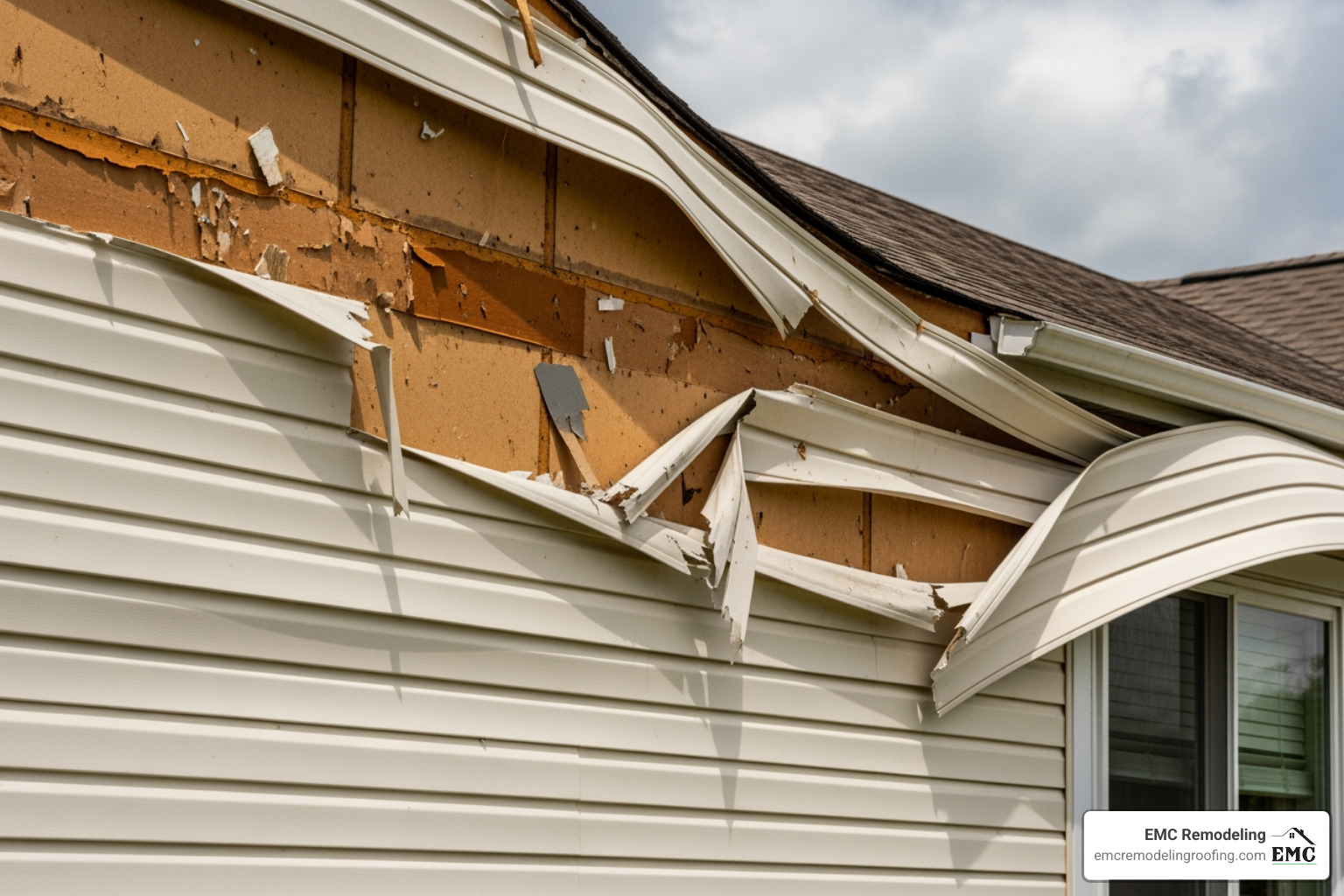
Answer-first: After a windstorm, treat wind damage to siding as a potential roof emergency. When shingles, ridge caps, flashing, or roof vents loosen, wind-driven rain often enters at the roofline and exits behind siding – creating hidden moisture damage.
If you need immediate help, start with our Central Texas storm restoration team and request a rapid-response inspection.
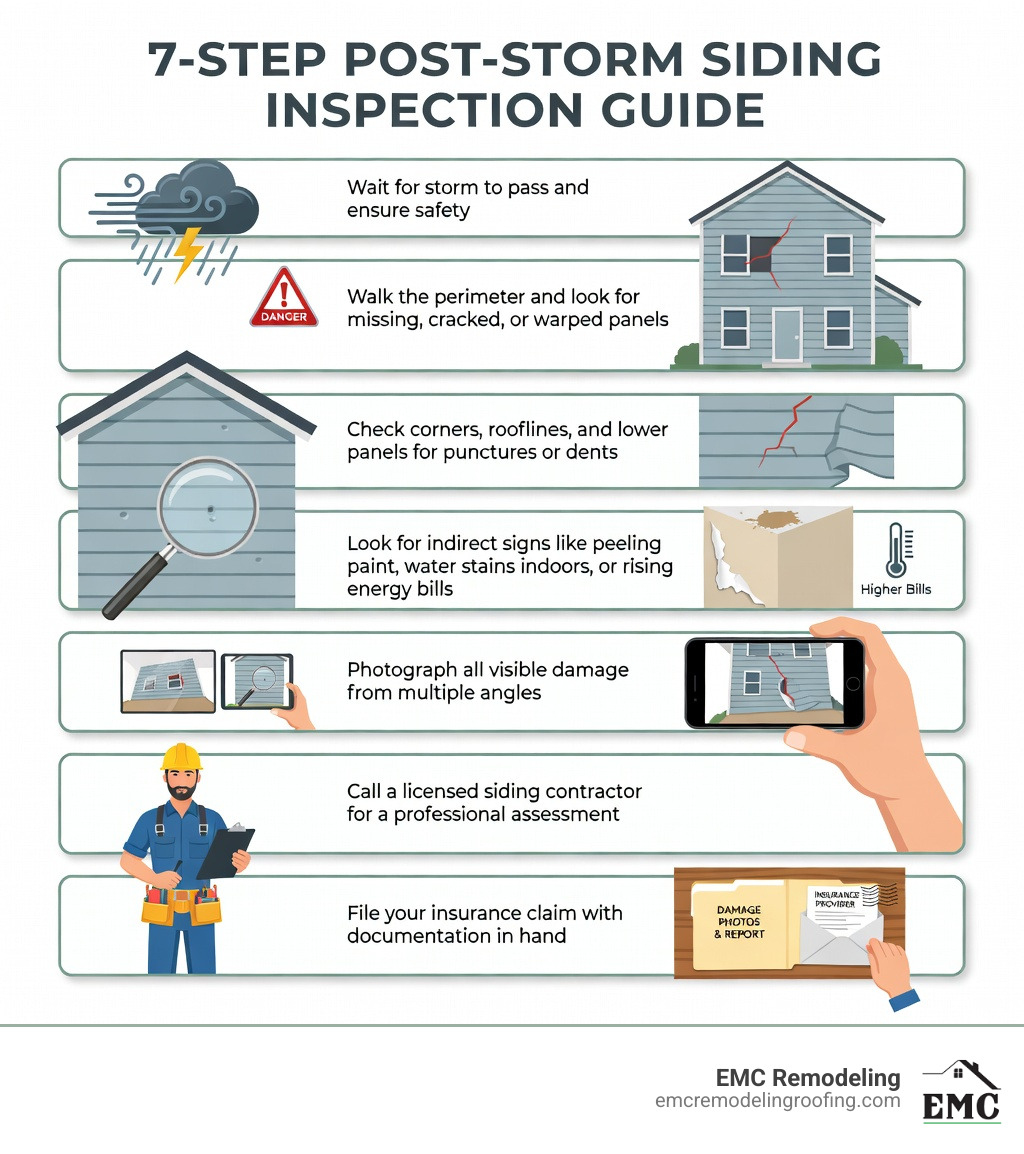
Quick Emergency Steps (Roof-First):
- Confirm safety – stay clear of downed lines and unstable trees.
- Check for active roof leaks – look for dripping at attic penetrations, around chimneys, and near exterior walls.
- Do a ground-level roof scan – missing shingles, lifted edges, exposed underlayment, or displaced ridge caps.
- Inspect roof-to-wall intersections – damaged step flashing and fascia are common leak entry points that soak siding.
- Document everything – wide shots + close-ups + a short video walkthrough.
- Call for emergency stabilization – tarping and temporary dry-in should happen before the next rain.
Storm reality in Texas: NOAA data shows Texas leads the U.S. in severe thunderstorm and hail events in many years, and wind-driven rain is a primary cause of rapid building-envelope failures after a storm. A roof breach is the fastest path to water behind siding.
At EMC Remodeling & Roofing, we respond 24/7 for urgent situations.
I’m Matthew Runyon, President of EMC Remodeling & Roofing. For 15+ years, we’ve helped Central Texas homeowners recover from storm events where roof damage triggered siding failures. This guide prioritizes the roof systems that typically cause the most expensive secondary damage.
Relevant articles related to storm-driven wind damage to siding:
- storm damage repair and emergency response
- storm damage siding repair
- siding damage caused by roofing work
Why Wind-Damaged Roofing Creates Fast, Expensive Wall Damage (Act Within 24-48 Hours)
Answer-first: When wind compromises your roof system, water intrusion starts immediately. Wet roof decking and failed flashing direct water into wall cavities, where it can saturate insulation and sheathing behind siding.
Timing matters: In real-world restoration workflows, the first 24-48 hours after wetting are the window that most often determines whether drying and spot repairs are possible, or whether remediation escalates into large-area tear-out.
Common roof-related triggers that show up as “siding problems”:
- Lifted shingles at eaves/rakes – water is driven under the first courses and into fascia/soffit.
- Broken or loose flashing (chimneys, valleys, step flashing at sidewalls) – concentrated runoff enters the wall system.
- Ridge cap loss – pressurization and rain entry soak attic insulation, then migrate to exterior walls.
- Gutter/apron damage – overflow sheets water down siding, saturating seams and penetrations.
If you see staining on ceilings or around exterior wall corners, schedule an urgent inspection and temporary dry-in through our storm damage repair service page. If the issue is active leakage, request emergency roof stabilization (tarping, temporary sealing, and moisture mapping) before cosmetic repairs.
Hidden Risks That Start With the Roof
These outcomes are predictable after roof-level wind damage:
- Mold growth accelerates with trapped moisture behind siding and in insulation. The roof breach is the initiating event in many wall-cavity mold losses.
- Insulation performance drops when wet, increasing HVAC runtime and energy costs during Central Texas summers.
- Wood rot concentrates at roof-to-wall transitions (top plates, rim areas, and sheathing edges), which can lead to sagging fascia lines and soft wall sections.
For homeowners planning repairs, pair roof and exterior evaluations so the root cause is fixed. If you need exterior-specific help after the roof is secured, schedule professional siding repair.
Property Value Impact: Roof-First Documentation Wins
Buyer inspections prioritize the roof because it controls the entire building envelope. A documented roof repair plan (photos, measurements, material scope, and warranty) is one of the clearest ways to protect resale value after a storm.
If you’re considering an upgrade after a wind event, coordinate roof and siding improvements together; it’s often the most cost-efficient way to restore uniform appearance and prevent repeat leaks.
Insurance Claims That Get Approved: Proving Wind Damage at the Roofline (Then Linking It to Siding)
Answer-first: The strongest storm claim shows a clear causal chain: wind damages roofing components – water enters – wall/siding systems show resulting loss. Adjusters write more accurate scopes when roof evidence is documented first.
Start with official guidance from the Texas Department of Insurance on post-storm exterior repairs: Repairing Exterior Siding (TDI)
For additional, widely cited consumer guidance on filing and documenting homeowners insurance claims, see the NAIC resource: Filing an Insurance Claim
To support your claim, documentation should include:
- Storm date/time (pull from local weather alerts and claim notes)
- Roof slope-by-slope photos (rakes, eaves, ridges, valleys, penetrations)
- Attic photos (wet decking, stained rafters, damp insulation)
- Elevation photos showing where water tracks down behind siding
At EMC Remodeling, we coordinate the full scope as storm damage specialists. We also recommend involving a roofer early – especially when emergency tarping is needed – so the insurer can see that you prevented additional damage.
If the storm caused active leaks or missing materials, ask about temporary measures and then schedule permanent work such as roof repair service or a full roof replacement when warranted.
Settlement Accuracy: Matching and Uniform Appearance
A patch that doesn’t match is not a complete repair. If siding or roofing materials are aged, discontinued, or sun-faded, piecemeal replacement creates obvious mismatch that can reduce curb appeal and resale value.
We build estimates that account for:
- Tear-off and replacement scope (not just surface patching)
- Code/permit items where applicable
- Reasonably uniform appearance when exact match is unavailable
Repair vs. Replacement: Practical Thresholds
Replacement is typically the better decision when:
- Large, repeated wind lifts have compromised seal strips across multiple slopes
- Underlayment is exposed or decking shows moisture damage
- Materials are discontinued (roofing or siding profiles)
If you’re in Temple and want a local, documented assessment, our team can inspect both systems and coordinate next steps through siding services after the roof is stabilized.
Storm-Proofing Your Home: Roof Upgrades That Prevent Future Siding Failures
Answer-first: The most effective way to reduce future wind damage to siding is to upgrade the roof system that sheds and controls water – especially edge metals, flashing, and ventilation penetrations.
High-impact strategies:
1) Wind-rated roofing installation
- Use manufacturer-rated systems and proper starter/edge detailing to reduce shingle lift.
- If you’re planning a full upgrade, start with professional roof installation so the entire assembly is warrantable.
2) Flashing-first approach (the #1 leak source in many storm losses)
- Replace damaged step flashing, chimney flashing, pipe boots, and valley metals.
- Proper flashing prevents water from reaching the wall cavity where siding damage begins.
3) Reinforce roof edges and drainage
- Edge areas (rakes/eaves) see the highest uplift pressures.
- Pair roof repairs with drainage checks; overflow can sheet down walls and saturate siding. If needed, coordinate with siding and gutter solutions.
4) Choose resilient exterior materials where impact is common
- After the roof is secured, consider wind- and impact-resistant cladding such as fiber cement. Learn about James Hardie siding options for long-term durability.
Choosing a Contractor for Emergency Roof Response (Avoid Storm Chasers)
Prioritize contractors who can provide:
- 24/7 emergency tarping and leak mitigation
- Proof of insurance and a written scope
- Photo documentation suitable for insurance
- Clear warranty terms for workmanship
A quality emergency response prevents secondary damage. A delayed response often turns a manageable roof repair into insulation replacement, drywall tear-out, and siding removal.
Frequently Asked Questions about Siding Storm Damage
Does homeowners insurance typically cover wind damage to siding?
Most standard homeowners insurance policies cover wind damage to siding if the damage is sudden and accidental, such as from a storm or tornado. However, coverage may be denied if the damage is attributed to wear and tear, age, or lack of maintenance. Always check if you have a separate “wind/hail” deductible, which is common in Texas.
When should siding be replaced instead of repaired?
Siding should be replaced if more than 25% of the panels are damaged, if the specific siding profile is discontinued (preventing a match), or if there is evidence of water damage to the underlying wall sheathing. Additionally, if the siding is over 20 years old, a full replacement is often a better long-term investment.
How can I tell if there is hidden damage behind my siding?
Hidden damage is often indicated by indoor signs such as peeling wallpaper, water stains on interior walls, a sudden increase in energy bills, or a musty odor suggesting mold growth behind the exterior panels. On the outside, “telegraphing” (where you can see the outline of the studs through the siding) or panels that feel soft when pressed are major red flags.
Conclusion
Navigating the aftermath of a storm is stressful, but you don’t have to do it alone. Wind damage to siding is a serious threat to your home’s longevity, but with a quick response and the right team, you can restore your home to better-than-original condition.
At EMC Remodeling, we are a family-operated business deeply rooted in Temple and Leander. We pride ourselves on exceptional craftsmanship and direct owner involvement. We offer 24/7 emergency support because we know that storms don’t keep business hours.
Whether you need a minor siding repair, a full roof inspection, or a complete exterior overhaul, we are your trusted local partner for storm damage repair.
Don’t wait for the next rain to find a leak. Request a professional assessment and restoration services to protect your home’s structural integrity and long-term value.
