Your Guide to Spanish Tile Roof Replacement Costs
The cost to replace spanish tile roof typically ranges from $11 to $25 per square foot installed, with most Central Texas homeowners spending between $22,000 and $50,000 for a complete replacement on a standard 2,000-square-foot roof. This investment reflects both the premium materials and specialized installation expertise required.
Quick Cost Breakdown:
- Material Cost: $3.45 to $18 per square foot
- Labor Cost: $5 to $16 per square foot
- Total Installed Cost: $11 to $25 per square foot
- Average Project Range: $15,000 to $45,000
- Lifespan: 50 to 100+ years
Spanish tile roofing stands as one of the most durable and visually striking options available to homeowners, particularly in warm climates where its thermal properties shine. The distinctive S-shaped or barrel tiles create that classic Mediterranean aesthetic while providing exceptional weather protection and energy efficiency. However, the weight of these tiles—often 850-1,000 pounds per 100 square feet—means your home’s structure may need reinforcement, adding to the overall investment.
When planning your roof replacement, understanding the full scope of costs beyond just materials and labor is crucial. Factors like underlayment quality, structural support requirements, old roof removal, and the complexity of your roof design all significantly impact your final bill. For Central Texas homeowners, working with experienced professionals who understand both the material and regional installation challenges is essential for a successful project. That’s where professional roofing services become invaluable—ensuring proper installation, structural assessment, and long-term performance.
As Matthew Runyon, President of EMC Remodeling & Roofing with over 15 years of experience in Central Texas, I’ve guided countless homeowners through the cost to replace spanish tile roof and helped them understand the true value of this investment. Our team has completed numerous tile roof replacements throughout Temple and surrounding areas, giving us deep insight into both the financial and practical considerations of this premium roofing option.
Understanding the Average Cost to Replace a Spanish Tile Roof
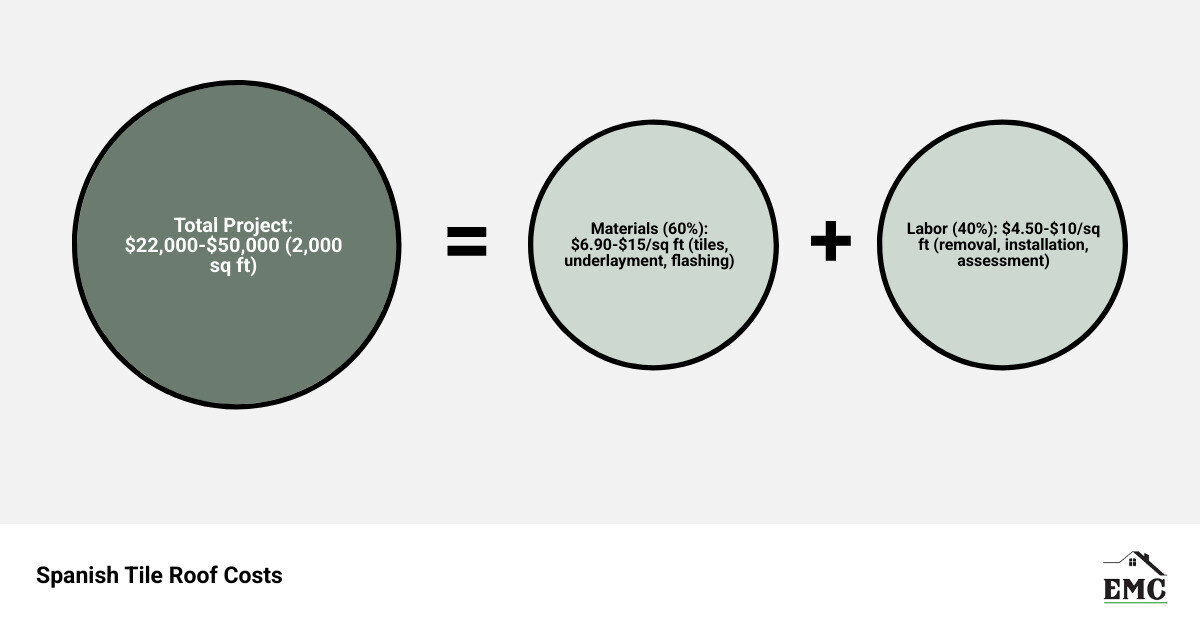
A Spanish tile roof replacement typically costs between $11 and $22 per square foot, with most homeowners spending between $22,000 and $44,000 for a standard 2,000-square-foot roof. This investment reflects the material’s superior longevity and aesthetic appeal.
When we talk about the average cost to replace spanish tile roof, this figure encompasses a wide range of variables. From the moment we step onto your property in Temple, TX, to the final inspection, every decision and detail contributes to the overall expense. Our goal is always to provide a transparent and detailed estimate, ensuring you understand exactly what you’re paying for.
Detailed Breakdown of the Cost to Replace a Spanish Tile Roof
A comprehensive breakdown of your Spanish tile roof replacement project generally includes several key components:
- Material Costs: This is often the largest portion, typically accounting for about 60% of the total cost. It covers the Spanish tiles themselves, which can vary significantly in price depending on type, brand, and origin. For instance, terracotta clay tiles might cost between $6 and $15 per square foot for materials, while fired ceramic clay tiles could range from $8 to $20 per square foot. We also factor in other essential components like flashing, sealants, and fasteners.
- Labor Costs: Accounting for roughly 40% of the total, labor rates are influenced by the complexity of the installation, the number of crew members, and the duration of the project. Given the weight and delicate nature of Spanish tiles, specialized skills are required, making labor a significant investment. Professional roofers for tile installation typically charge between $5 and $17 per square foot.
- Removal and Disposal Fees: Before new tiles can go up, the old roof needs to come down. This includes removing existing tiles, underlayment, and any damaged decking. Disposal fees cover the cost of hauling away this heavy debris. Removing an old tile roof can cost between $0.75 and $1 per square foot, significantly more than removing asphalt shingles.
- Underlayment Costs: The underlayment is a critical waterproof barrier installed beneath the tiles. Its replacement is non-negotiable during a full roof replacement. We’ll dig deeper into this below, but expect costs from $0.50 to $4 per square foot depending on the type and quality.
- Permits and Inspection Fees: Local building codes and regulations in Temple, TX, require permits for most roof replacement projects. These fees ensure the work meets safety standards and can range from $150 to $500. Additionally, initial roof inspections and any subsequent structural assessments will add to the cost.
For a deeper dive into the installation process and what goes into a successful project, you can find more info about roof installation on our site.
Cost Variation by Spanish Tile Material
The type of Spanish tile you choose significantly impacts the overall cost to replace spanish tile roof. Each material offers unique aesthetics, durability, and price points.
- Clay Tiles: These are the classic choice, known for their natural earthy tones and longevity. Clay tiles typically cost between $8 and $22 per square foot installed. They are renowned for their durability, fire resistance, and ability to help regulate indoor temperatures.
- Concrete Tiles: Designed to mimic the look of clay, concrete tiles offer a more budget-friendly alternative. Installed, they generally range from $7 to $19 per square foot. Concrete tiles are strong, hail-resistant, and can last up to 50 years with minimal maintenance.
- Terracotta Tiles: A specific type of clay tile, terracotta is famous for its distinct reddish-brown hue. While visually appealing, they can be prone to chipping and breaking. Terracotta tiles often cost between $9 and $26 per square foot installed.
- Composite Tiles: These modern synthetic materials are designed to replicate the look of traditional Spanish tiles while being lighter and often easier to install. Composite tiles can cost between $12 and $26 per square foot installed. They are also eco-friendly and offer good durability.
- Slate-Look Tiles: While true slate is a different material, some manufacturers produce Spanish-style tiles that emulate the appearance of slate. These can be various materials, including composite or concrete, and their costs vary widely depending on the base material.
Here’s a quick comparison of two popular options:
| Tile Type | Average Installed Cost (per sq ft) | Lifespan (Years) | Weight (lbs per 100 sq ft) |
|---|---|---|---|
| Clay Tile | $8 – $22 | 50 – 100+ | 850 – 1000 |
| Concrete | $7 – $19 | 30 – 50+ | 900 – 1200+ |
The Critical Cost of Underlayment Replacement
When we replace a Spanish tile roof, replacing the underlayment is not just a recommendation—it’s a critical component of ensuring your new roof performs as expected. The underlayment is a waterproof or water-resistant barrier installed directly onto the roof deck, beneath the tiles. It acts as a secondary defense against moisture intrusion, protecting your home from leaks even if a tile cracks or shifts.
There are two primary types of underlayment we consider for tile roofs:
- Felt Underlayment: This traditional option, also known as asphalt-saturated felt, has been used for decades. It typically costs between $0.50 and $0.70 per square foot for labor and materials. While effective, its lifespan is generally shorter than synthetic options.
- Synthetic Underlayment: Made from durable plastics like polyethylene or polypropylene, synthetic underlayment offers superior tear resistance, UV stability, and mold resistance. It’s often preferred for tile roofs due to its longevity and strength, costing between $0.75 and $1.00 per square foot for labor and materials.
The lifespan of underlayment is a key consideration. While your Spanish tiles can last 50 to 100 years or more, the underlayment typically needs replacement every 20-30 years. This means that even if your tiles are still in excellent condition, a “lift and relay” process might be necessary to install new underlayment, which involves carefully removing the old tiles, replacing the barrier, and then re-laying the original tiles. This ensures the integrity of your entire roofing system.
To understand more about this vital component, you can learn more about the cost to replace underlayment on a tile roof through our detailed guide.
Key Factors That Influence Your Final Bill
The final price tag for a Spanish tile roof replacement is influenced by several critical variables, from the complexity of your roof’s design to local labor rates. Understanding these factors is essential for accurate budgeting.
We always strive for clear communication about all potential costs upfront. There are several elements that can cause the cost to replace spanish tile roof to fluctuate, and being aware of these helps you plan your budget effectively.
Roof Size, Pitch, and Complexity
The dimensions and design of your roof play a monumental role in determining the replacement cost.
- Square Footage Calculation: The larger your roof, the more materials and labor it will require, naturally increasing the overall cost. Roof square footage is often larger than the footprint of your home due to overhangs and pitch. Our team will take precise measurements to give you an accurate estimate.
- Steep Slope Challenges: A steep roof pitch (the angle of your roof) significantly impacts safety measures, labor time, and material handling. Steeper roofs require more specialized equipment, additional safety precautions, and more time for installation, all of which contribute to higher labor costs. For instance, a roof with an 8:12 pitch or higher will be more expensive to work on than a lower-sloped roof.
- Architectural Features: Roofs with multiple valleys, hips, dormers, skylights, or chimneys add complexity. Each of these features requires intricate cutting, fitting, and flashing of tiles, increasing both material waste and the labor time involved. A simple, straightforward roof design will always be less expensive to replace than one with numerous architectural elements.
- Labor Time Increase: All these factors—size, pitch, and complexity—directly translate to increased labor time. More hours on the job mean higher labor costs, which, as we’ve discussed, can be a significant portion of your total investment.
How Regional Labor Rates Affect the Cost to Replace a Spanish Tile Roof
Labor is a substantial part of the cost to replace spanish tile roof, typically accounting for 40% to 60% of the total project cost. In Central Texas, as in any region, these rates are influenced by several factors:
- Local Market Demand: High demand for skilled roofing professionals can drive up labor costs. Our team at EMC Remodeling is deeply rooted in the Temple, TX, community, allowing us to offer competitive pricing while maintaining exceptional quality.
- Specialized Skill Requirement: Installing Spanish tile is a highly specialized craft. It requires expertise in handling heavy, delicate materials, understanding proper overlapping and fastening techniques, and ensuring the roof’s structural integrity. This specialized skill set commands higher wages compared to, say, asphalt shingle installation. According to the U.S. Bureau of Labor Statistics, occupational employment and wage statistics for roofers can vary by metropolitan area, reflecting these local nuances. You can explore these trends further at the Occupational Employment and Wage Statistics website.
- Experience and Reputation: Highly experienced and reputable roofing companies, like EMC Remodeling, often have higher labor rates, but this investment pays off in superior workmanship, adherence to building codes, and a long-lasting, warranty-backed roof. We believe in getting the job done right the first time.
If you’re looking for experienced professionals in our area, you can find an experienced roofer in Temple TX right here with us.
Potential Additional Costs to Budget For
Beyond the basic materials and labor, several other expenses might arise during a Spanish tile roof replacement. Being prepared for these “hidden” costs can prevent unwelcome surprises:
- Structural Reinforcement: Spanish tiles are significantly heavier than many other roofing materials. Clay tiles, for example, can weigh 850-1,000 pounds per 100 square feet. If your home wasn’t originally built to support such weight, we might need a structural engineer to assess your framing. Reinforcement could add an estimated $3,000 to $10,000 to your project. This is a critical step to ensure the safety and longevity of your new roof.
- Rafter or Decking Repair: Once the old roof is removed, we might uncover damaged, rotted, or weakened rafters or roof decking. Replacing damaged decking can cost $2 to $5 per square foot, while truss replacement can range from $60 to $500 per truss. Addressing these issues is essential for providing a solid foundation for your new tile roof.
- Old Roof Tear-Off and Debris Disposal: While often included in the initial estimate, the cost of removing the old roof (especially if it was also tile) and disposing of the heavy debris can be substantial. As mentioned earlier, tile roof removal can be $0.75 to $1 per square foot, compared to $0.30 to $0.70 for shingles.
- Solar Panel Removal and Reinstallation: If you have solar panels, they will need to be carefully removed before the roof work begins and then reinstalled afterward. This specialized service can add a few thousand dollars to your project.
- Gutter Replacement: A roof replacement is an ideal time to assess and replace your gutters. New gutters ensure proper water drainage, protecting your home’s foundation and landscaping. More info about gutter installation can be found on our website.
- Emergency Roof Repair for Underlying Issues: Sometimes, the need for a roof replacement stems from long-standing issues that have caused damage to the underlying structure. Addressing water damage, mold, or compromised framing can lead to additional costs, but it’s crucial for the health of your home. If we find severe structural issues, our emergency roof repair for structural issues team is ready to act swiftly.
Spanish Tile vs. Other Materials: A Cost and Performance Showdown
While Spanish tiles have a higher upfront cost, their exceptional lifespan of 50 to 100+ years often makes them a more economical choice over time compared to materials requiring multiple replacements.
We understand that the initial investment for a Spanish tile roof can seem daunting. However, when we look at the long-term value, Spanish tiles truly shine. It’s not just about the immediate cost to replace spanish tile roof; it’s about what that investment delivers over decades.
Lifespan and Long-Term Value
One of the most compelling arguments for Spanish tile is its incredible longevity. Let’s compare it to other popular roofing materials:
- Asphalt Shingles: These are the most common and affordable option, typically lasting 20-30 years. While their upfront cost is low (around $3-$5 per square foot for material), you’ll likely replace them two to three times over the lifespan of a single Spanish tile roof. For a 2,000 sq ft roof, an asphalt shingle roof might cost $8,000-$10,000 to install, but over 50 years, you could spend $24,000-$30,000 on replacements. For more detailed information on shingle roof replacement, refer to our guide to shingle roof replacement.
- Metal Roofing: A durable and energy-efficient choice, metal roofs typically last 40-70 years. Material costs range from $7-$14 per square foot. Over 50 years, a metal roof might cost $10,000-$18,000 per 100 sq ft.
- Spanish Tile: With a lifespan of 50-100+ years, Spanish tiles offer unparalleled durability. While the initial cost per square foot is higher ($8-$25 installed), the “cost per year of use” can be surprisingly competitive, or even lower, than other materials. For a 2,000 sq ft roof, the initial investment might be $22,000-$50,000. However, if it lasts 75 years, the annual cost is significantly lower than replacing asphalt shingles multiple times.
The return on investment (ROI) for a Spanish tile roof isn’t just about avoiding future replacement costs. Its unique aesthetic and superior performance in hot climates like Central Texas significantly boost curb appeal and home value, making your property more attractive to potential buyers. In one analysis, while asphalt roof replacement had an ROI of almost 60%, a metal roof replacement increased home value by $28,000 with a 55% ROI. While a direct ROI for Spanish tile wasn’t available, its longevity and aesthetic appeal suggest a very strong long-term investment.
Pros and Cons of Spanish Tile
To help you make an informed decision about the cost to replace spanish tile roof, let’s weigh the advantages and disadvantages:
Pros:
- Durability: Spanish tiles are incredibly robust, resisting impacts, high winds, and harsh weather conditions. They are often rated for Class A fire resistance, providing excellent protection against fire hazards.
- Longevity: As discussed, these roofs can last a lifetime—50 to 100 years or more—making them a generational investment.
- Fire Resistance: Clay and concrete tiles are non-combustible, offering superior fire protection for your home.
- Energy Efficiency: The thermal mass of clay and concrete tiles helps regulate indoor temperatures naturally. Their curved profile also creates an air space beneath the tiles, providing natural ventilation that keeps attics cooler, potentially reducing cooling costs by up to 20% in hot climates like ours in Texas.
- Curb Appeal: Few roofing materials match the timeless elegance and visual impact of Spanish tiles. They instantly improve a home’s aesthetic, creating a distinctive Mediterranean or Spanish Colonial look.
- Low Maintenance: Once installed, Spanish tile roofs require relatively little maintenance. They resist rot, insect damage, and UV degradation. Regular inspections and cleaning are usually sufficient.
Cons:
- High Initial Cost: This is often the biggest hurdle. The upfront cost to replace spanish tile roof is higher than most other materials due to the cost of materials and specialized labor.
- Heavy Weight: The significant weight of Spanish tiles often necessitates structural reinforcement of the roof framing, adding to the overall expense and complexity of the project.
- Fragility to Impact: While durable, individual tiles can be brittle and crack under heavy impact or if walked on improperly. This means repairs can be complex and require experienced professionals.
- Repair Complexity: Finding matching replacement tiles for older roofs can sometimes be challenging, and the repair process itself requires specialized skills to avoid damaging adjacent tiles. However, our team is well-versed in broken roof tile repair to address these issues promptly.
- Climate Limitations: While excellent in warm, rainy climates, Spanish tiles do not perform well in areas with frequent freeze-thaw cycles, as temperature changes can cause them to crack. Fortunately, this is less of a concern in Central Texas.
Frequently Asked Questions about Spanish Tile Roof Costs
We often hear similar questions from homeowners considering a Spanish tile roof. Here are some of the most common ones, answered with our expertise:
How long does a Spanish tile roof last?
A professionally installed Spanish tile roof can last 50 to 100 years or more, far outliving most other roofing materials. The tiles themselves are incredibly durable and resistant to the elements. However, it’s crucial to understand that while the tiles endure for decades, the underlayment beneath them has a shorter lifespan. The waterproof barrier (underlayment) typically needs replacement every 20-30 years. This means that even if your tiles are in perfect condition, a “lift and relay” operation may be necessary to replace the underlayment and maintain the roof’s waterproofing integrity. This is a crucial maintenance task to prevent leaks and protect your home for the long haul.
Is a Spanish tile roof worth the high upfront cost?
For many homeowners, especially in warmer climates like Texas, the answer is a resounding yes. While the initial cost to replace spanish tile roof is higher than alternatives like asphalt shingles or even some metal roofs, the long-term benefits often outweigh this initial investment. The combination of a 50+ year lifespan (potentially 100 years or more), reduced energy bills due to natural cooling properties, and a significant boost in home value makes it a sound long-term investment. Consider that over a 50-year period, you might replace an asphalt shingle roof two or three times. When you factor in multiple material and labor costs over that time, the total expense can often be comparable, or even higher, than the single investment in a Spanish tile roof. Plus, you get the added benefits of superior aesthetics, fire resistance, and peace of mind.
Does a Spanish tile roof require structural reinforcement?
Yes, in most cases, a Spanish tile roof will require structural reinforcement. Clay and concrete tiles are significantly heavier than asphalt shingles or many metal roofing options. Clay tiles, for example, can weigh 850-1,000 pounds per square (100 sq. ft.), and concrete tiles can be even heavier. Most homes not originally designed for such a heavy roofing material will need their existing roof framing assessed and potentially reinforced to safely support the additional weight. We always recommend having a qualified structural engineer evaluate your home’s framing before installation. This reinforcement, which can add anywhere from $3,000 to $10,000 to the project cost, is a non-negotiable step to ensure the safety and structural integrity of your home for the entire lifespan of your beautiful new Spanish tile roof.
Ready for Your Roof Upgrade?
Replacing your roof with Spanish tile is a significant investment in your home’s beauty, durability, and value. While the initial cost is higher than other options, its incredible lifespan and performance benefits provide best long-term value. For homeowners in Temple, TX, and surrounding areas, the expert team at EMC Remodeling ensures your tile roof replacement is handled with precision and care. If you’re facing unexpected damage or need an urgent assessment, our 24/7 emergency services team is ready to provide immediate assistance.
