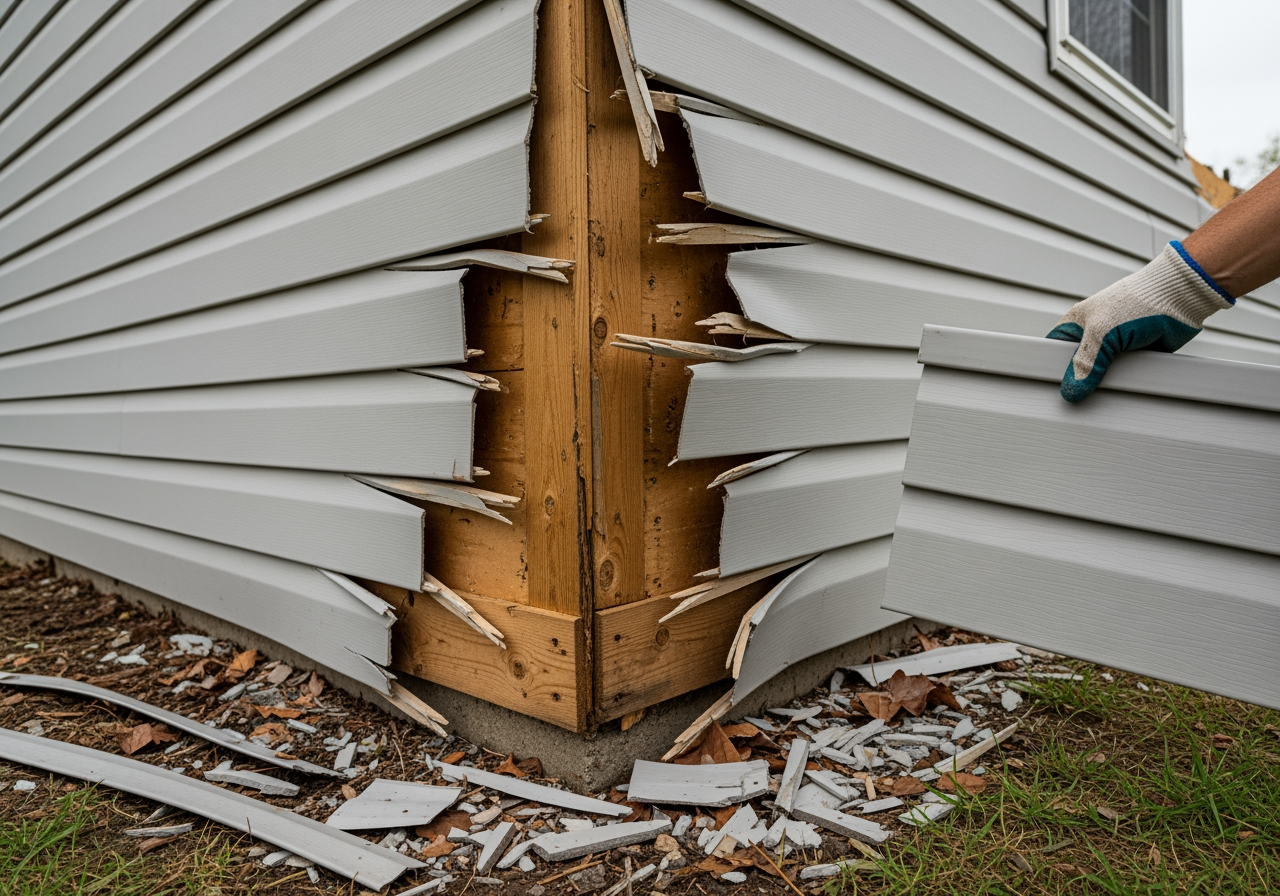
Emergency Roof & Siding Storm Damage Repair: What To Do In the First 60 Minutes
After a severe storm, the first 60 minutes are critical for preventing roof leaks, structural damage, and unsafe conditions inside your home. National data from NOAA shows that the U.S. averaged over 18 billion‑dollar weather and climate disasters per year from 2019–2023, and Central Texas is consistently ranked as one of the most hail‑ and wind‑active regions in the country. When your roof or siding is damaged, you need fast, decisive action and access to local emergency roofing and exterior repair specialists who can respond 24/7.
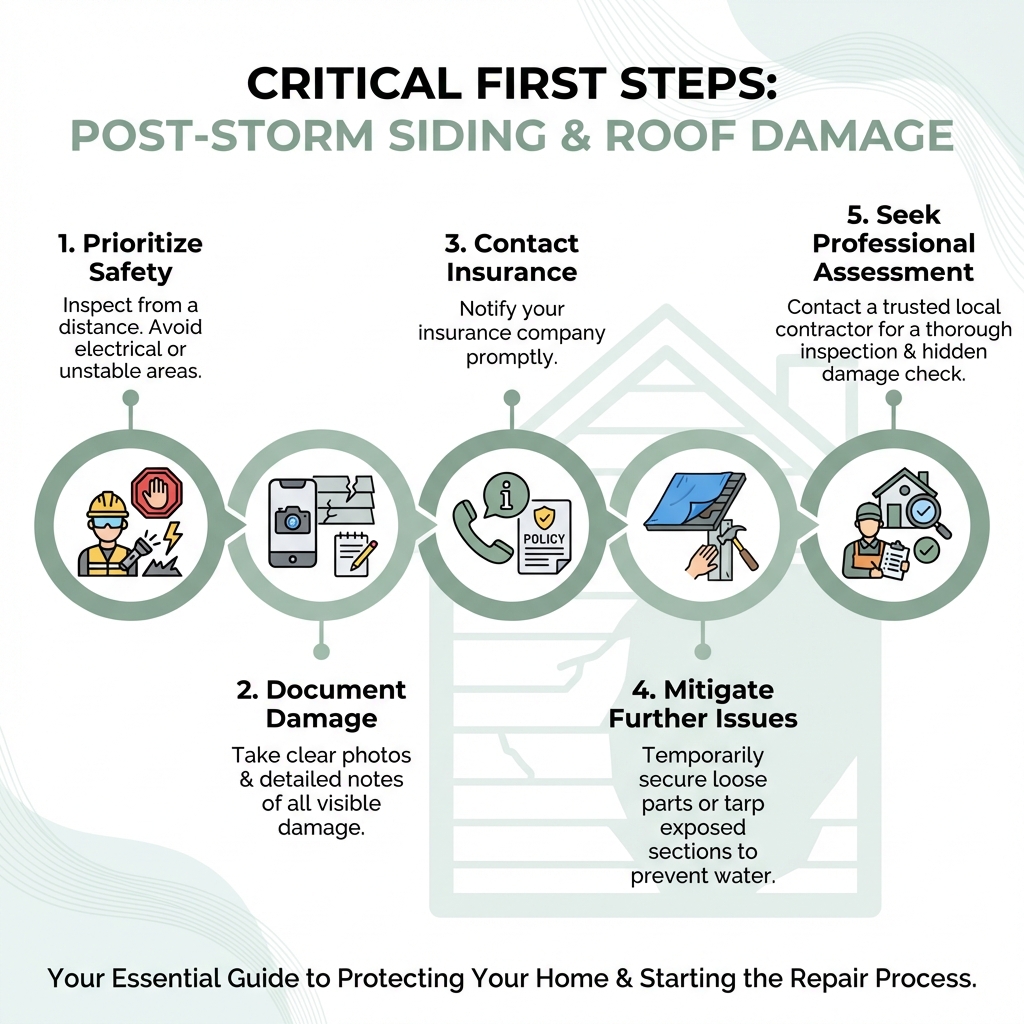
If your siding or roof is damaged, follow these immediate steps to protect your home and prevent costlier issues:
- Prioritize Safety: Ensure it’s safe to inspect. Avoid downed power lines or unstable areas.
- Document Damage: Take clear photos and detailed notes for insurance claims.
- Contact Insurance: Notify your insurance company promptly, as policies have time limits.
- Mitigate Further Issues: Temporarily secure loose panels or tarp exposed sections.
- Seek Professional Assessment: Contact a trusted local roofing contractor that offers emergency tarping and repair.
As your local storm damage experts, EMC Remodeling understands post-storm stress. This guide focuses on emergency roof stabilization, storm damage siding repair, working with insurance, and planning long-term, code-compliant restoration.
I’m Matthew Runyon, President of EMC Remodeling & Roofing. With over 15 years in the industry and thousands of square feet of storm‑damaged roofing restored across Central Texas, I’ve seen how fast minor roof openings turn into major interior losses. Our team guides homeowners through rapid response, documentation, and permanent repairs.
Storm damage siding and roof repair terms at a glance:
- residential storm damage restoration
- storm damage repair
- commercial storm damage restoration
- emergency roof repair services
Prioritize Safety: Protect Yourself and Your Family First
Your safety is the top priority after a storm. Before assessing damage, ensure immediate dangers have passed.
- Downed power lines: Never approach them. Assume they are live and call 911 or your utility company immediately.
- Sharp debris: Wear sturdy shoes and thick gloves to protect against broken glass and other sharp objects.
- Unstable structures: Stay out of your home if it has significant structural damage. A compromised roof or wall could collapse.
- Call 911 for emergencies: Evacuate and call 911 if you smell gas, see sparks, or suspect structural failure.
- Gas leaks: If you suspect a leak, turn off the main gas supply (if safe), evacuate, and call your gas company and 911.
- Wait for the all-clear: Do not inspect your property until local authorities have declared the area safe.
We offer 24/7 emergency support for residents in Temple, Leander, and surrounding Central Texas communities. If you’re facing an urgent roofing or exterior emergency, you can call us anytime at tel:+12547770088 for immediate help.
How to Safely Assess Siding and Roof Damage from the Ground
Once it’s safe, a preliminary ground inspection helps you understand the damage scope for your peace of mind and the insurance process.
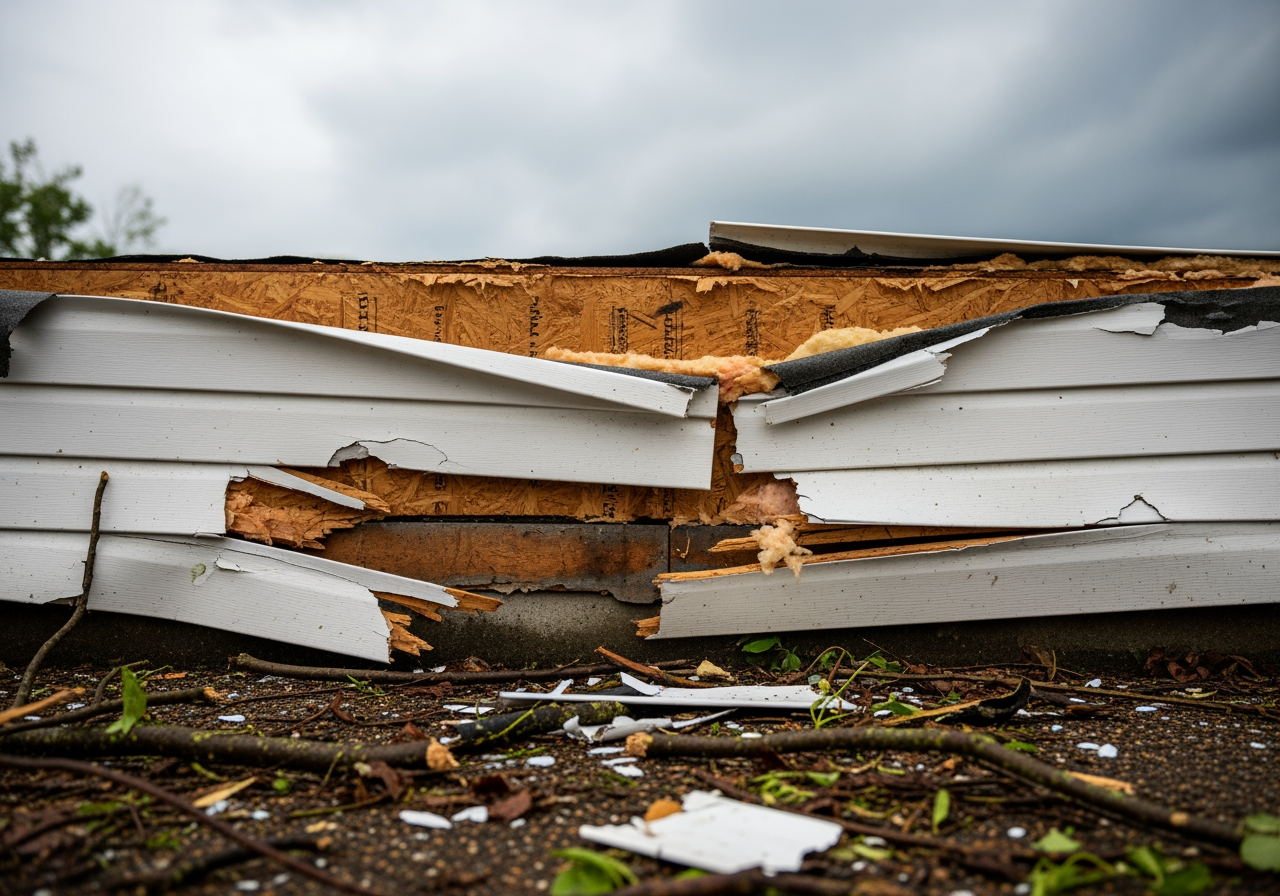
- Visual inspection: Walk around your home from a safe distance, looking for anything out of place. Winds as low as 55 mph can pull siding loose and lift shingles.
- Photo and video documentation: Take wide shots and close-ups of all damage. This is invaluable evidence for your insurance claim.
- Record storm details: Note the date, time, and severity of the storm (wind speed, hail size) to link the damage to the event. NOAA storm reports are an authoritative source for recorded wind and hail events in your ZIP code.
- Identify obvious damage: Look for missing panels, shingles, dents, or holes. Hail as small as 3/4 inch can damage siding, with 1-inch hail causing more significant cracks and holes.
- Check for hidden issues: Inspect all sides of your home and all roof slopes, as damage is not always uniform or obvious. For more tips, see this guide on Spotting and Repairing Siding Damage After a Storm.
Emergency Protection: Preventing Further Water and Structural Damage
After your initial assessment, immediate mitigation is critical and often required by your insurance policy.
- Tarp exposed areas: Cover missing siding or roof sections with heavy-duty tarps to prevent water intrusion. Professional emergency roof repair services typically install anchored tarps at ridges and eaves to withstand additional wind.
- Secure loose materials: Temporarily fasten loose siding panels or shingles to prevent further damage until professional repairs are made.
- Clear debris: Remove debris from siding, gutters, and roof valleys to prevent water backup and related damage.
- Mitigation and insurance: Insurance policies require you to take reasonable steps to prevent further damage. Document these efforts with photos, as neglecting mitigation can affect your claim.
- Schedule a full inspection: After emergency stabilization, arrange a comprehensive inspection for both roofing and exterior cladding to identify all storm-related issues.
- Learn more about our siding and gutters services
- Explore our emergency roof repair services
How Storms Actually Destroy Roofs and Siding: A Material-by-Material Breakdown
Siding and roofing are your home’s first line of defense. Not all materials respond the same way to wind, hail, and debris. Wind speeds as low as 55 mph can dislodge siding, lift shingles, and bend metal flashing, while hail as small as 3/4 inch can cause significant damage to asphalt shingles and vinyl. Understanding these impacts is key to effective storm damage siding and roof repair and to deciding when emergency roof service is required.
Most Common Types of Storm Damage to Siding and Roofs
When a storm hits Central Texas, it brings a variety of destructive forces. Here are the most common types of damage we see on roofs and exterior walls:
- Cracks, splits, and punctures: Caused by hail or debris, these create direct entry points for water.
- Dents and granule loss: Hail causes dents on metal and vinyl siding. On asphalt shingles, it dislodges protective granules, accelerating deterioration and exposing the asphalt base.
- Warping and buckling: Caused by moisture or temperature changes, this is common with improperly sealed wood siding and aging shingles.
- Loose or missing materials: High winds can rip siding panels and shingles off, exposing the underlayment and roof deck.
- Water stains and mold: These secondary signs, like interior stains or musty odors, indicate water has penetrated the exterior and roof assembly.
- Compromised flashing and vents: High wind can pull flashing loose at chimneys, skylights, and vent stacks, which is one of the leading causes of post‑storm roof leaks.
- For a comprehensive look at what to watch for, refer to Spotting and Repairing Siding Damage After a Storm.
Siding and Roofing Material Vulnerability Comparison
The type of material on your home significantly influences how it withstands a storm.
| Material | Hail Damage | Wind Damage | Debris Impact |
|---|---|---|---|
| Vinyl Siding | Prone to cracks, chips, holes, and dings. | Can loosen, buckle, or blow off in high winds. | Cracks, punctures, and shattering. |
| Wood Siding | Dents, splintering, or chipping. | Can loosen, crack, or warp from moisture/wind. | Splintering, gouges, and complete breakage. |
| Fiber Cement | Highly resistant; may chip or crack from large hail. | Excellent wind resistance; very stable. | Very durable; resists most impacts without significant damage. |
| Asphalt Shingles | Granule loss, bruising, cracks, and punctures. | Tearing, creasing, and blow-off. | Punctures, tearing, and displacement. |
| Metal | Dents and dings. | Excellent wind resistance; very durable. | Dents, scratches, but generally resists penetration. |
- Vinyl siding: Affordable but susceptible to storm damage. Hail can cause cracks and holes, especially in cold weather, while high winds can cause panels to buckle or detach.
- Wood siding: Requires maintenance and is vulnerable to moisture, which can cause warping and rot. Hail and debris can cause dents and splintering.
- Fiber cement: Materials like James Hardie siding are exceptionally durable and storm-resistant. This impact-resistant, non-combustible material holds up well against hail and high winds, making it a top choice for long-term protection. Learn more in our complete guide to Hardie Board Siding.
- Asphalt shingles: Common in Central Texas, they are vulnerable to hail, which causes granule loss and accelerates aging. High winds can lift, tear, or blow off shingles. Class 4 impact‑rated shingles provide significantly better hail resistance and can reduce long‑term storm repair costs.
- Metal: Highly durable, metal roofing and siding resist fire, rot, and pests. It can dent from hail but rarely punctures, maintaining its protective barrier. Properly installed standing seam metal roofing routinely withstands wind gusts over 120 mph.
Most siding lasts 25 to 60 years. Upgrading to a resilient material like fiber cement, which can last up to 50 years, is a smart investment. For new roofs, we offer various options, including architectural shingles and metal. Find more about our roof installation and replacement services and how impact‑rated systems can minimize future emergency repairs.
The Hidden Dangers: Structural and Energy Efficiency Risks
Visible damage is just the beginning. Neglecting storm damage siding and roof repair can lead to severe, hidden problems.
- Water infiltration: Small cracks and missing shingles allow water to seep in, saturating insulation and reducing its effectiveness.
- Mold growth: Mold can grow within 48-72 hours of moisture exposure, causing health issues and material degradation.
- Structural damage: Persistent moisture leads to wood rot in sheathing, roof decking, and framing, weakening your home’s structure.
- Higher energy bills: Damage creates air leaks, forcing your HVAC system to work harder and increasing utility costs.
- Reduced home value: Neglected damage hurts curb appeal, lowers resale value, and leads to more complex and expensive future repairs.
Prompt roof and siding restoration after a storm is one of the most cost‑effective ways to protect both the structural integrity and long‑term operating costs of a home in hail‑prone regions.
Insurance, Roof Emergencies, and Full Recovery: A Complete Homeowner Playbook
Recovering from a storm involves both physical repairs and navigating insurance. With full siding or roof replacement ranging from $5,000 to $20,000, a successful insurance claim is essential for most homeowners. Fast action on emergency roof leaks and documentation of exterior damage significantly increases the likelihood of fair coverage. We’re here to help Central Texas homeowners through this process.
How to Steer the Insurance Process for Storm Damage Roof and Siding Repairs
Navigating insurance claims can be a maze, but the right approach ensures a smoother process for your storm damage siding and roof repair.
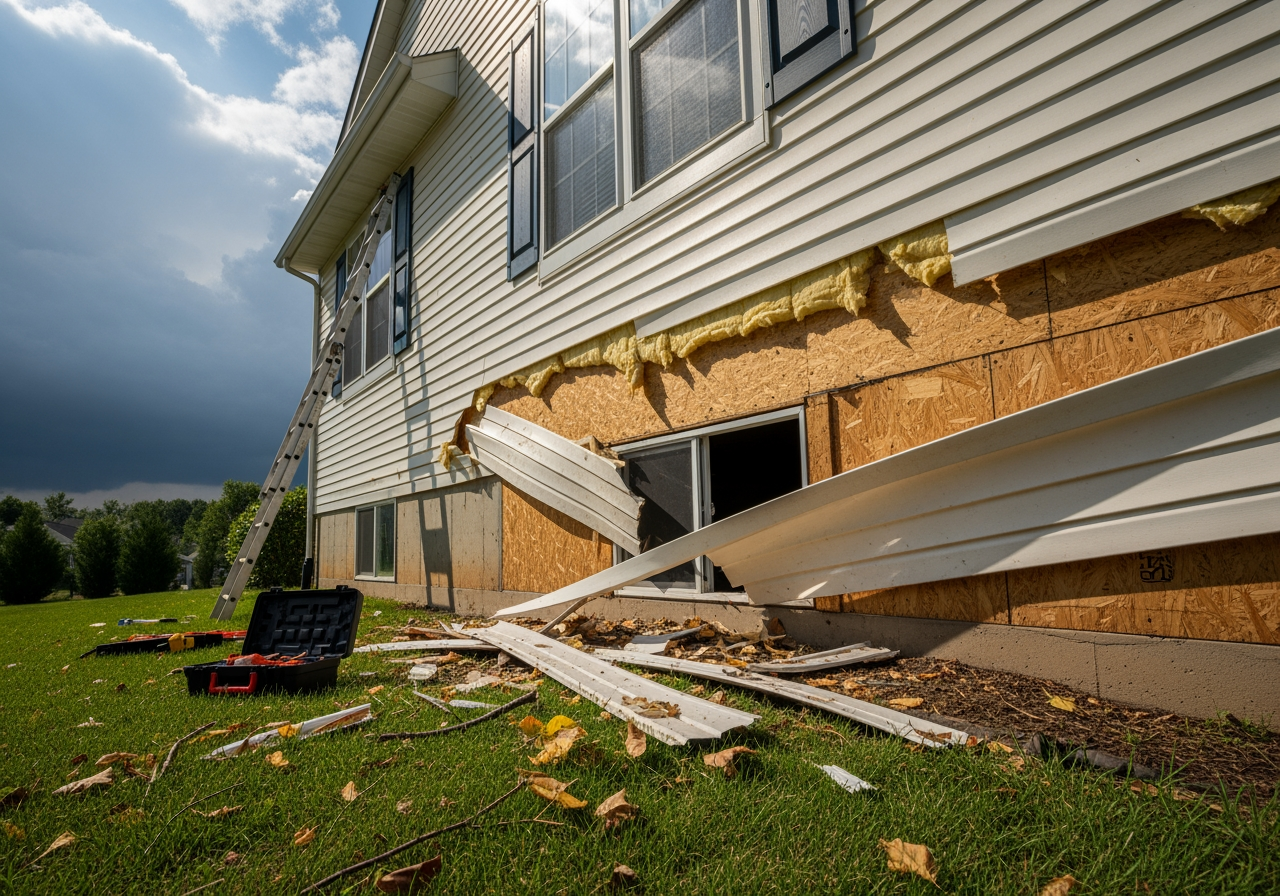
- Contact your agent immediately: Policies have strict filing deadlines. Reporting damage promptly allows your agent to explain your coverage and next steps. Most carriers expect you to report a major roof loss within days, not weeks.
- Understand your policy (RCV vs. ACV): Know if your policy offers Replacement Cost Value (RCV), which covers full replacement with new materials, or Actual Cash Value (ACV), which pays the depreciated value. This difference significantly impacts your payout.
- File with detailed documentation: Submit all photos, videos, and notes from your assessment. Strong evidence helps the adjuster understand the damage. Our Residential Storm Damage Restoration Complete Guide has more details.
- Work with the adjuster: Be present for the adjuster’s inspection to point out all damage. A trusted contractor like EMC Remodeling can also meet with them to ensure a fair and complete assessment of both roofing and siding.
- Crucial documentation for claims: To strengthen your claim, provide: photos/videos of all damage, notes on the storm’s date and severity, records of interior damage, communication logs with your insurer, and professional contractor estimates. Coverage varies by policy, so check your specifics.
- Use emergency invoices strategically: Keep all invoices for emergency roof tarping, temporary board‑ups, and water mitigation. Insurers commonly reimburse reasonable mitigation costs.
- We also offer comprehensive roof insurance claim assistance to simplify the process for our clients.
Repair or Replace? Making the Right Decision for Siding and Roofing
Deciding whether to repair sections or opt for a full replacement is a major choice that impacts costs and long-term protection.
- Assess damage extent: Minor, localized damage may only need repair. Widespread damage across multiple areas often requires a full replacement.
- Consider age and condition: If your siding or roof is old, replacement can be a better long-term value, offering improved protection.
- Material and color matching: Finding an exact match for repairs can be difficult for older materials, and mismatched sections reduce curb appeal.
- Cost-benefit of replacement: Though more expensive upfront, a full replacement can be a smarter investment, offering better durability, energy efficiency, and home value. Insurance “matching” clauses may even cover full replacement if repairs can’t be matched. For more, see Storm Aftermath: Should You Repair or Replace Your Siding?.
- Leverage roof upgrades during insurance work: When a storm triggers covered roof replacement, many homeowners use the opportunity to upgrade to Class 4 impact‑resistant shingles or metal roofing, which can lower future storm losses and may qualify for insurance discounts.
- We specialize in both repair and replacement. Learn more about our Siding Replacement services and roof replacement options in Temple, TX.
Typical Costs for Emergency and Long-Term Storm Damage Roof & Siding Repair
Understanding costs is key for planning your storm damage siding and roof repair.
- Minor siding repairs: Typically $300 to $1,000 for fixing a few loose panels or small sections.
- Emergency roof tarping: Commonly ranges from $300 to $1,200 depending on roof size, pitch, and access. Emergency tarping is one of the most cost‑effective steps to prevent thousands of dollars in interior water damage.
- Partial siding or roof replacement: Costs vary widely based on material, area size, and labor.
- Full siding replacement: The average cost is around $11,520, but can range from $5,000 to $15,000+ depending on material and home size.
- Full roof replacement: The average cost falls between $8,000 and $15,000, influenced by roof size, pitch, and material.
- Factors affecting cost: Total cost depends on material type, local labor rates, home size and complexity, roof pitch, and code‑required upgrades (such as ventilation or underlayment improvements).
- We believe in transparent pricing. Explore our affordable siding solutions and affordable roof repair and replacement options.
DIY vs. Professional Storm Damage Roofing: When You Must Call an Expert
Tackling storm damage siding and roof repair yourself to save money seems tempting, but it carries significant risks that can lead to costlier problems. Professional roofing expertise is critical when structural members, decking, or large roof sections are compromised.
The Risks of DIY Siding and Roof Repair
- Safety hazards: DIY repair involves risks of falls from ladders, electrical shock from damaged lines, and causing further structural damage.
- Incorrect installation: Improper techniques can lead to water intrusion, mold, and premature failure, as detailed in our Siding Hole Repair Guide.
- Mismatched materials: Finding an exact material and color match for a seamless repair is often difficult for homeowners.
- Voiding warranties: DIY or unlicensed repairs can void manufacturer warranties on your siding and roofing materials.
- Creating bigger problems: A failed DIY repair can cause hidden water damage, turning a minor issue into a major, expensive project.
How to Choose a Trusted Storm Damage Roofing Contractor
Choosing the right contractor is critical for your storm damage siding and roof repair. A reputable pro ensures quality work, helps with insurance, and protects your investment.
- Are you licensed and insured in Texas? Verify licenses and comprehensive insurance (liability and worker’s comp) to protect yourself from liability.
- Do you have local experience in Temple, Killeen, or Georgetown? A local contractor understands regional weather, building codes, and has local supplier relationships. If you are in Bell County, start by reviewing a local roofer near me in Killeen, TX with proven storm restoration experience.
- Can you provide recent references? Check references from recent storm damage clients to verify work quality and professionalism.
- Will you provide a detailed, written estimate? Insist on a detailed written estimate outlining scope, materials, timeline, and cost. Avoid vague verbal quotes.
- What warranties do you offer? Ask about warranties on both labor and materials for long-term protection.
- Do you offer 24/7 emergency response? Roof leaks and exposed decking cannot wait. Prioritize contractors that provide around‑the‑clock tarping and temporary repairs.
- For expert assistance, you can always Find Local Pros or contact us directly. We are proud to be your siding contractors in Georgetown TX and a trusted roofer near me in Killeen, TX. EMC Remodeling is a family-operated business in Temple, TX, offering comprehensive roofing and exterior services with a focus on craftsmanship and owner involvement.
How To Storm‑Harden Your Roof and Siding Before the Next Big Weather Event
The best defense against costly storm damage siding and roof repair is proactive maintenance and choosing resilient materials. Smart choices and regular vigilance can significantly reduce your home’s vulnerability to Central Texas storms.
Best Siding and Roofing Materials for Storm Resistance
When it’s time for a replacement, upgrading your materials can offer superior protection.
- Fiber cement siding: A top choice for storm resistance, it’s durable, impact-resistant, and holds up to high winds. It’s also impervious to moisture, rot, and pests. Explore our James Hardie Siding services for a premium solution.
- Impact-resistant vinyl siding: An upgrade from standard vinyl, this option is designed to better withstand hail and debris.
- Engineered wood siding: Offers the look of wood with improved durability and resistance to moisture, rot, and impact.
- Metal roofing and siding: A robust, fire-resistant choice that stands up to high winds. While it can dent, it rarely punctures. Learn about metal roofing installation and repair.
- Class 4 impact-rated asphalt shingles: These shingles are designed to better withstand hail and may qualify for insurance discounts. Homes that upgrade to Class 4 shingles after a hail event typically see fewer emergency roof service calls in subsequent storms.
- Factors for Central Texas: When choosing materials, consider our climate’s hail and high winds, your budget, and your home’s architectural style.
Best Practices for Siding and Roof Maintenance
Regular maintenance is your best long-term strategy for minimizing storm damage siding and roof repair needs.
- Annual inspections: Visually inspect your siding and roof each year for signs of wear or damage, and schedule a professional roof inspection every 1–2 years in hail‑prone areas.
- Clean and clear debris: Regularly clean siding to prevent mildew and clear debris from your roof and gutters.
- Check caulk and flashing: Inspect and replace failing caulk and flashing around openings to prevent water leaks. Flashing maintenance is one of the highest‑ROI tasks for preventing emergency roof leaks.
- Trim trees and vegetation: Keep branches trimmed away from your house to prevent impact damage during high winds.
- Maintain gutters and downspouts: Keep gutters clear to prevent water overflow, which can damage your foundation and siding.
- Plan proactive upgrades: When an older roof or siding system nears the end of its service life, plan for replacement before peak storm season. Coordinating with a roof installation and replacement specialist reduces the likelihood of in‑season failures.
- Explore more ways to protect your home with our exterior home improvements.
Frequently Asked Questions about Storm Damage Siding and Roof Repair
How big does hail have to be to damage siding or roofing?
Hail as small as 3/4 inch (penny-sized) can damage vinyl siding and asphalt shingles. Hail 1 inch or larger causes more significant dents, holes, and fractures in most materials. High winds amplify hail’s destructive force, making smaller hail more damaging.
What are the long-term consequences of not repairing storm-damaged siding or roofing?
Unrepaired damage allows moisture intrusion, quickly leading to wood rot, mold, and saturated insulation. This compromises your home’s structure, reduces energy efficiency, and results in much costlier future repairs. Ignoring minor issues can lead to major structural remediation.
Does homeowners insurance cover full siding or roof replacement if only one side is damaged?
This depends on your policy. Some policies have “matching” clauses that require the insurer to replace undamaged siding or roofing to ensure a uniform appearance if an exact match for the damaged area isn’t available. Review your policy and consult your agent and contractor to understand your coverage.
Central Texas Emergency Roof & Storm Damage Repair: Your 24/7 Local Partner
Recovering from storm damage can be overwhelming, but you don’t have to face it alone. From emergency roof tarping and leak control to siding stabilization, damage assessment, insurance claim support, and expert repairs, every step is critical to restoring your home’s safety and value. By acting quickly, documenting thoroughly, and partnering with a trusted professional, you can protect your home from further harm.
For homeowners in Temple, TX, Leander, TX, and surrounding areas, EMC Remodeling offers 24/7 emergency roofing services and expert guidance through the entire storm damage repair process. Our family-operated business prides itself on exceptional craftsmanship and direct owner involvement, ensuring you receive the highest quality service.
If your roof or siding has been damaged by wind or hail, contact us online to schedule a free, no-obligation inspection and restoration plan custom to your home.
