Why Early Roof Leak Detection Can Save Your Home
Roof leak detection is the critical process of finding where water is entering your roof before it causes catastrophic damage. For Central Texas homeowners, early detection prevents costly repairs, structural issues, and health hazards like mold. Most leaks begin as subtle drips, but research shows that water intrusion is responsible for over 40% of all building-related damage in the U.S., with undetected leaks leading to thousands in repairs.
Quick Answer: How to Detect a Roof Leak
- Interior Signs: Look for water stains, peeling paint, and musty odors.
- Attic Inspection: Check for dark spots, damp insulation, or visible light.
- Exterior Inspection: Examine for missing shingles, damaged flashing, or granules in gutters.
- Water Test: Carefully use a hose on suspected areas while an observer watches inside.
- Call a Professional: Contact an expert for hidden leaks or when DIY methods are insufficient.
Modern methods, from visual checks to thermal imaging, make finding leaks easier. Understanding your options for a professional roof inspection is the first step to protecting your home. At EMC Remodeling, we’ve seen how proactive roof and attic inspection saves homeowners from emergencies. For reliable solutions, explore our homepage for expert roofing services.
Section 1: Spotting Roof Leaks Early—Key Warning Signs
Knowing the warning signs of a roof leak is the first step in roof leak detection. Catching these indicators early can save you thousands in repairs.
Interior Red Flags
Look for these signs inside your home, especially after rain:
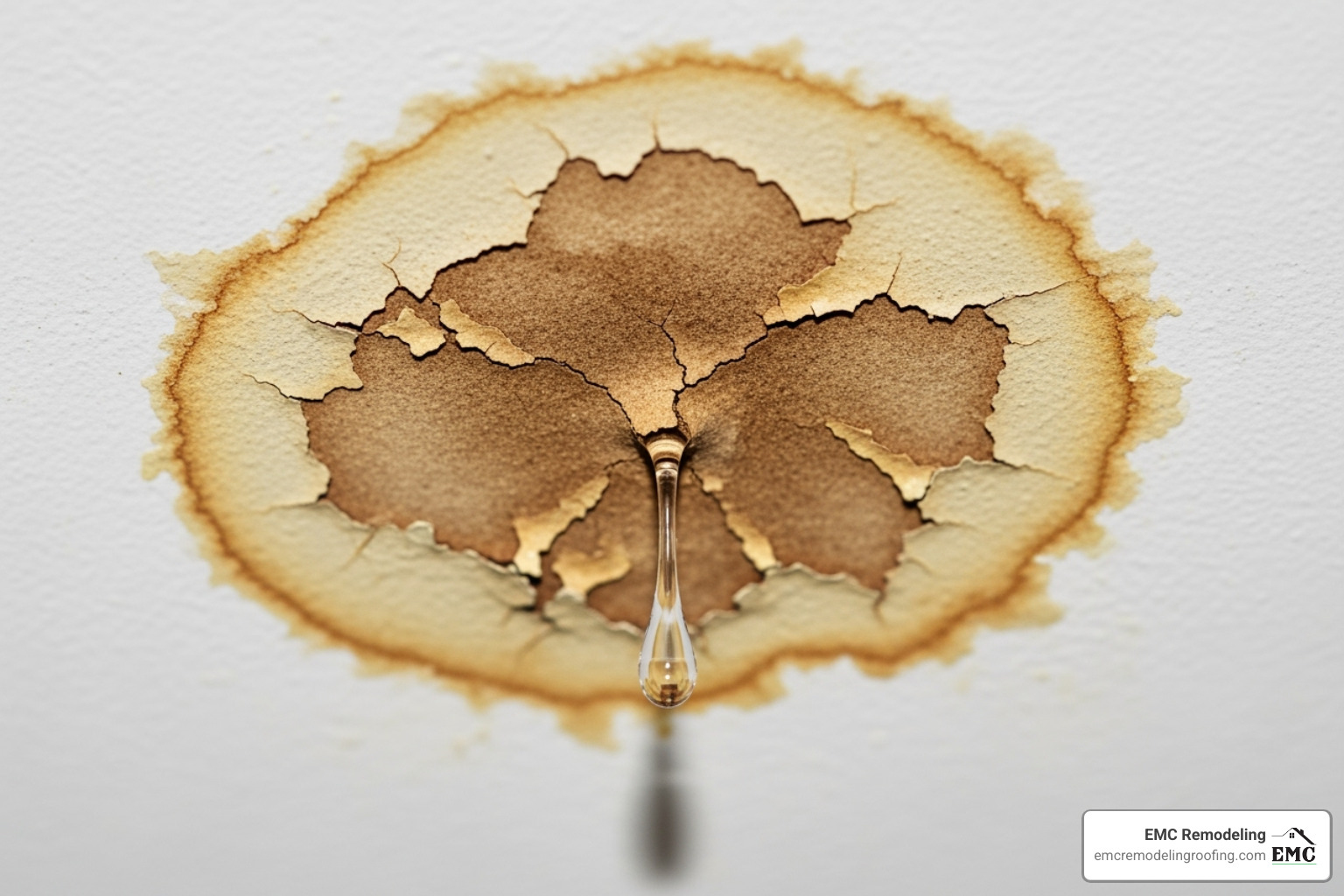
- Water Stains: Yellow, brown, or rust-colored patches on ceilings or walls are a primary indicator. Water can travel along rafters, so the stain may appear far from the actual leak source.
- Peeling or Bubbling Paint: Moisture trapped behind paint or wallpaper causes it to lose adhesion, resulting in bubbles or peeling sheets.
- Musty Odors: A persistent damp, earthy smell in your attic or upper floors signals the presence of mold and mildew, even if you can’t see it.
- Visible Mold or Mildew: Fuzzy patches or dark stains on walls, ceilings, or insulation are a serious health hazard and indicate a long-term moisture problem. If you see mold, you need immediate help from a professional roof inspection team.
Exterior Red Flags
You can often spot these issues from the ground with binoculars:
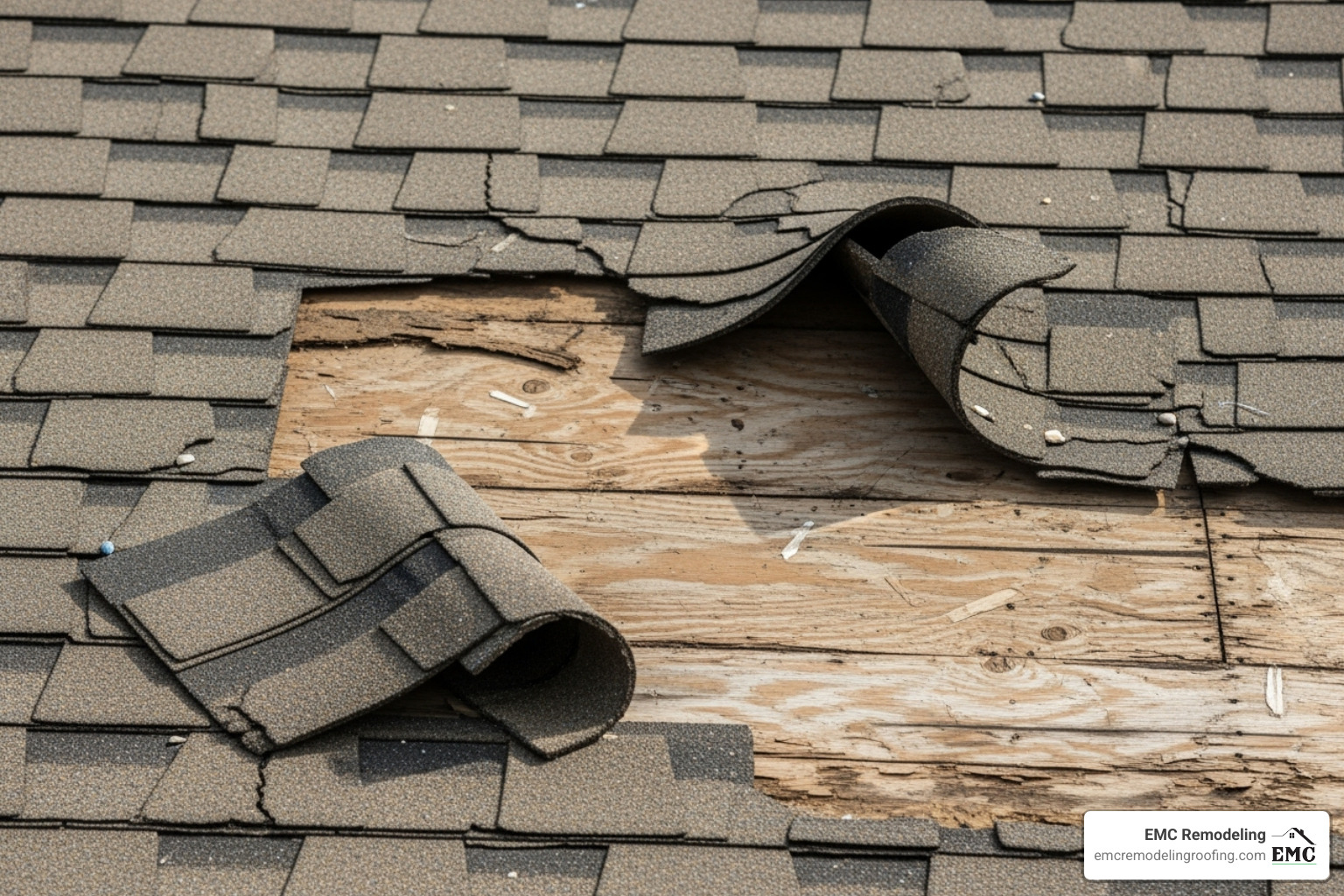
- Missing or Cracked Shingles: Curled, cracked, or missing shingles expose the underlying roof deck to the elements. Texas sun and hail can accelerate this damage.
- Granules in Gutters: Finding significant amounts of sand-like shingle granules in your gutters means your shingles are aging and losing their protective layer.
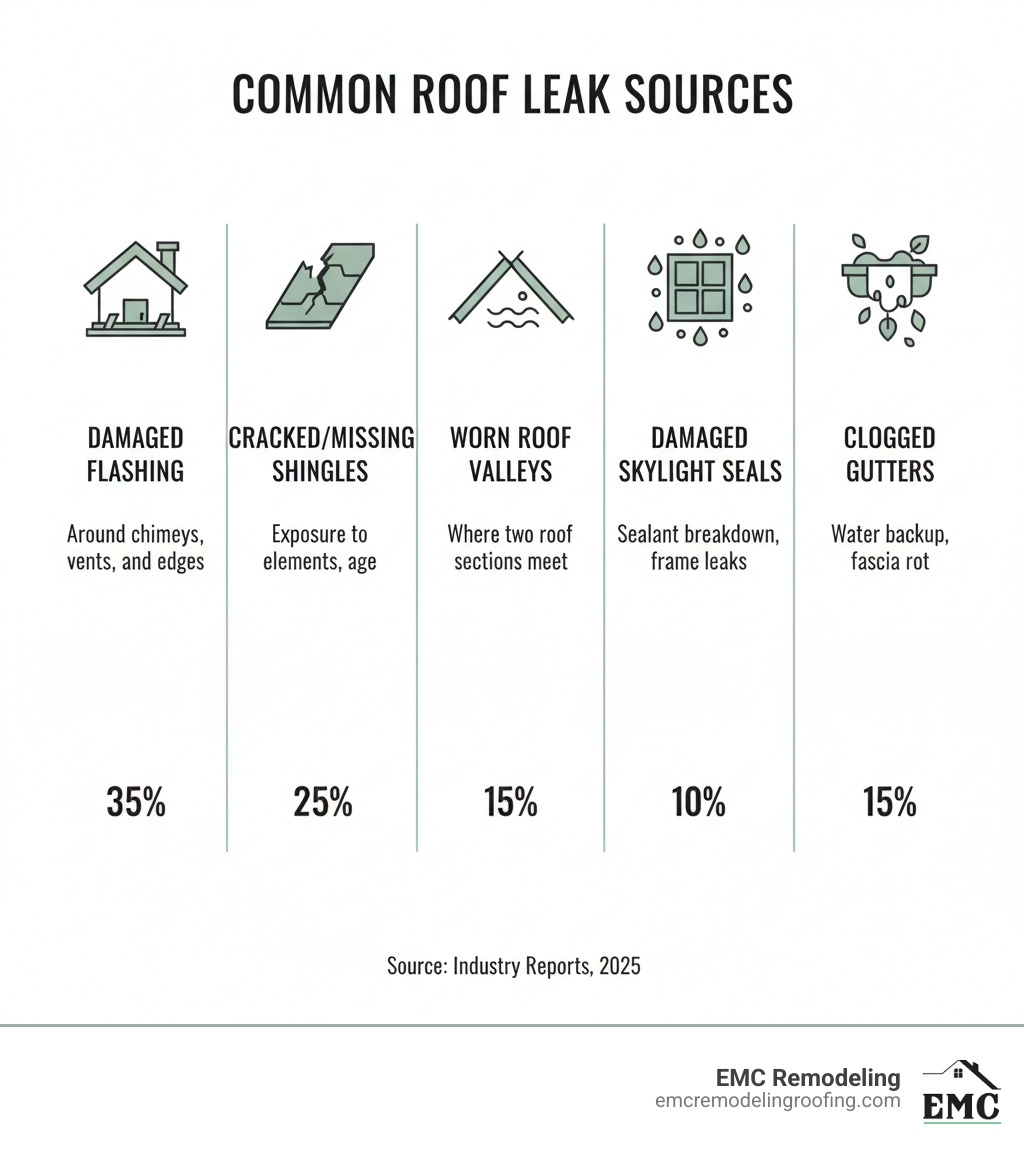
- Damaged Roof Flashing: Flashing—the metal or rubber material around chimneys, vents, and skylights—is a common failure point. Bent, rusted, or cracked flashing creates a direct path for water.
- Sagging Roof Deck: A visible dip or wave in your roofline is a structural red alert, often caused by prolonged water damage. A sagging roof compromises safety and requires immediate professional attention.
Condensation vs. True Leaks: How to Tell the Difference
Not all moisture is a leak. Condensation can mimic leaks, especially in homes with poor attic ventilation.
- A true leak typically leaves a distinct water stain that worsens with rain and can be traced to an entry point.
- Condensation often appears as widespread dampness or frost on cold surfaces (like nail tips in the attic) and is related to indoor humidity and temperature differences.
A roof and attic inspection can definitively diagnose whether you have a leak or a ventilation issue. Don’t guess—early and accurate roof leak detection is key.
Section 2: DIY vs. Professional Roof Leak Detection—What Works Best?
While some homeowners can perform basic roof leak detection, it’s crucial to know when to call for a professional roof inspection to avoid costly mistakes and ensure safety.
DIY Leak Detection Methods
If you suspect a minor leak, you can try these methods:
- Attic Inspection: With a flashlight, inspect your attic for dark spots on the wood, damp insulation, or mold. On a sunny day, turn off the lights and look for any pinpricks of daylight, which indicate a potential entry point for water.
- Water Hose Test: This requires two people. One person sprays a suspected area of the roof with a garden hose, starting from the bottom and working up, while another person watches for drips inside the attic. This method requires patience, as water can travel before it becomes visible.
- Safety First: DIY roof work is inherently risky. Always use a sturdy ladder, wear slip-resistant shoes, and never work on a wet roof or alone. The risks of misdiagnosing the leak or causing further damage are high.
| Factor | DIY Detection | Professional Detection |
|---|---|---|
| Accuracy | Moderate | High |
| Cost | Low | Varies |
| Safety | Risky | Safe |
| Tools | Basic | Advanced |
When to Call a Professional Roofer
Calling a professional is the responsible choice in these situations:
- Hidden Leaks: If you cannot find the source of the leak, professionals have advanced tools to locate it.
- Multiple Leak Spots: This often indicates a systemic issue, like widespread underlayment failure, that requires a comprehensive assessment.
- Significant Storm Damage: After a hail or wind storm, your roof can have hidden damage. Our storm damage repair team can identify issues that are invisible from the ground.
- Safety Concerns: If your roof is steep, high, or you are uncomfortable with heights, do not risk a fall.
- Complex Roofs: Flat or low-slope roofs require specialized knowledge for leak detection. A qualified roofing contractor has the necessary expertise.
Leaks only worsen over time. When you need a definitive diagnosis, trust a professional.
Section 3: Advanced Roof Leak Detection—Professional Tools & Techniques
For hidden or complex leaks, professionals use advanced technology for non-invasive and precise roof leak detection. This ensures an accurate diagnosis before starting any roof repair.
Thermal Imaging & Moisture Meters
These tools help find moisture that is invisible to the naked eye.
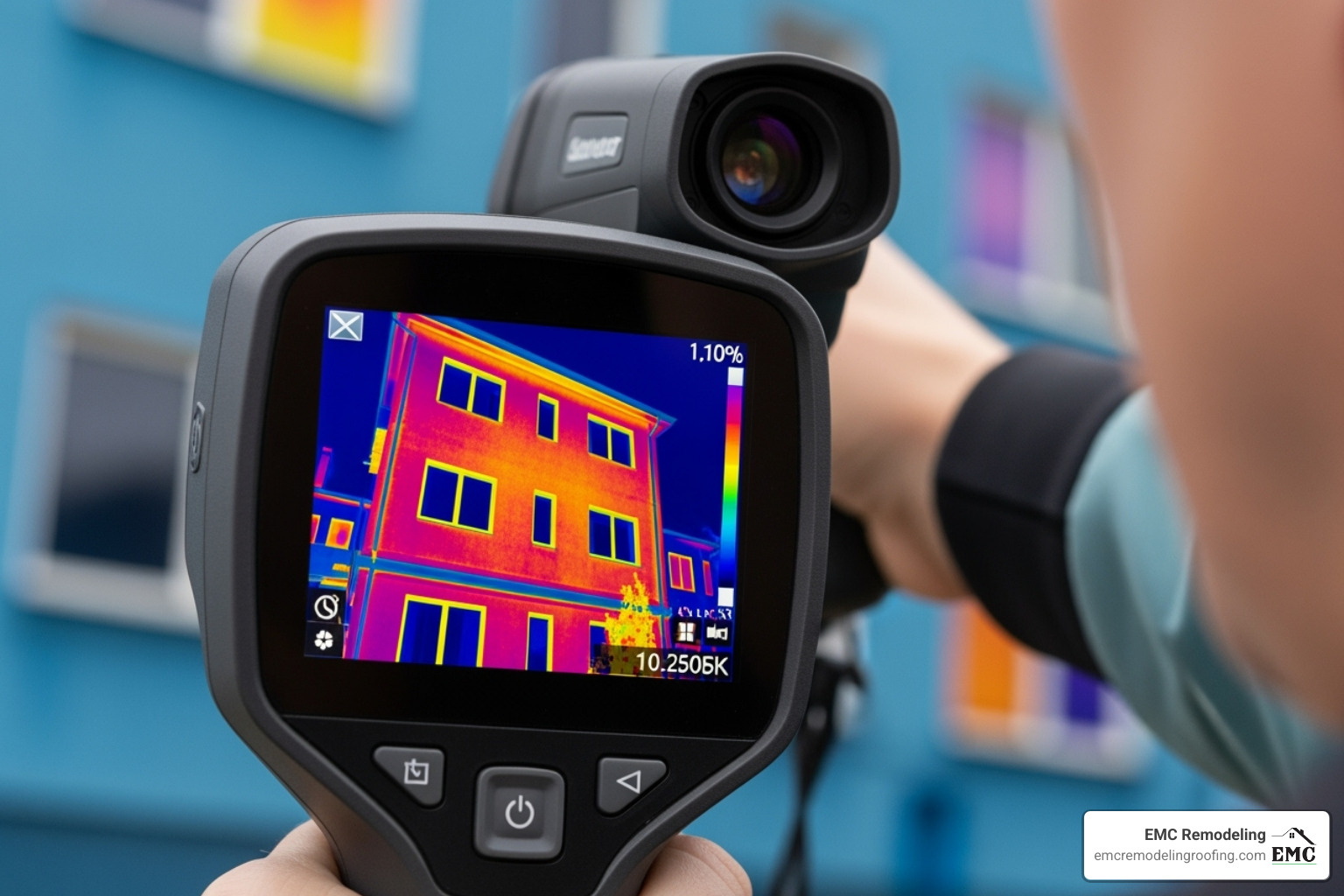
- Infrared Thermography: An infrared camera detects temperature differences caused by trapped water within the roof structure. Wet areas retain heat differently than dry materials, appearing as distinct patterns on a thermal image.
- Moisture Meters: These handheld devices provide a quantifiable reading of moisture content in materials like wood or drywall. They are used to confirm the findings of a thermal scan and determine the extent of water saturation.
Electronic Leak Detection (ELD): The Science Behind Precision
ELD is a highly precise method that uses electrical currents to pinpoint breaches in roofing membranes, especially on flat or low-slope roofs.
- How It Works: A low-voltage current is applied to the roof surface. Where there is a breach, water completes an electrical circuit to a grounded substrate, which specialized equipment then detects. This process can locate even pinhole-sized leaks.
- Industry Standards: ELD meets ASTM D7877 and D8231 standards for accuracy, making it a scientifically validated and reliable method for finding leaks.
Drones & Gas Testing
For hard-to-reach or complex roofing systems, other technologies offer safe and effective solutions.
- Drones: Equipped with high-resolution and thermal cameras, drones provide a safe way to inspect large, steep, or otherwise inaccessible roofs, identifying damage without risk.
- Gas Testing: This method involves introducing a non-toxic tracer gas under the roof membrane. A specialized detector then locates where the gas escapes, pinpointing the leak’s location.
Combining these methods provides the most accurate assessment, ensuring that repairs target the true source of the problem. This comprehensive approach is why a professional roof leak detection service is a valuable investment.
Section 4: What Causes Roof Leaks? The Most Common Culprits
Understanding the cause of a leak is essential for an effective repair. Leaks are typically a symptom of a larger issue related to age, installation, or damage.
Material Failure & Roof Age
Over time, exposure to Central Texas weather—intense sun, heavy rain, and hail—degrades roofing materials.
- Damaged Shingles: Shingles can crack, curl, or be blown off in a storm, exposing the underlayment.
- Cracked Flashing: The metal seals around chimneys, vents, and skylights can corrode, crack, or pull away, creating a direct path for water. A common issue is a roof leaking around chimney.
- Deteriorated Sealant: Caulk and other sealants dry out and crack under UV exposure, compromising watertight seals.
- Worn Underlayment: The protective barrier beneath your shingles can degrade with age, reducing your roof’s defenses.
Common failure points include roof valleys, chimney flashing, vent pipe boots, and skylights.
Installation Errors & Storm Damage
A roof’s vulnerability can also stem from its installation or from severe weather.
- Faulty Installation: Improperly driven nails, incorrect shingle overlap, or poorly installed flashing can cause a roof to fail prematurely.
- Storm Damage: Hail can bruise shingles, high winds can lift them, and falling debris can cause punctures. This damage is often not visible from the ground. Minor storm damage can escalate into major leaks if not addressed, which is why a professional inspection after a storm, especially for hail damage roof repair, is critical.
Different materials like asphalt shingles and metal roofing have unique vulnerabilities, but an experienced roofer will know what to look for.
Section 5: The High Cost of Neglect—Why Immediate Action Matters
A seemingly small leak can cause thousands of dollars in damage if ignored. The consequences of neglect extend far beyond a simple water stain, affecting your home’s structure, your family’s health, and your property value.
Structural Damage & Health Hazards
The most severe damage from a roof leak often occurs out of sight.
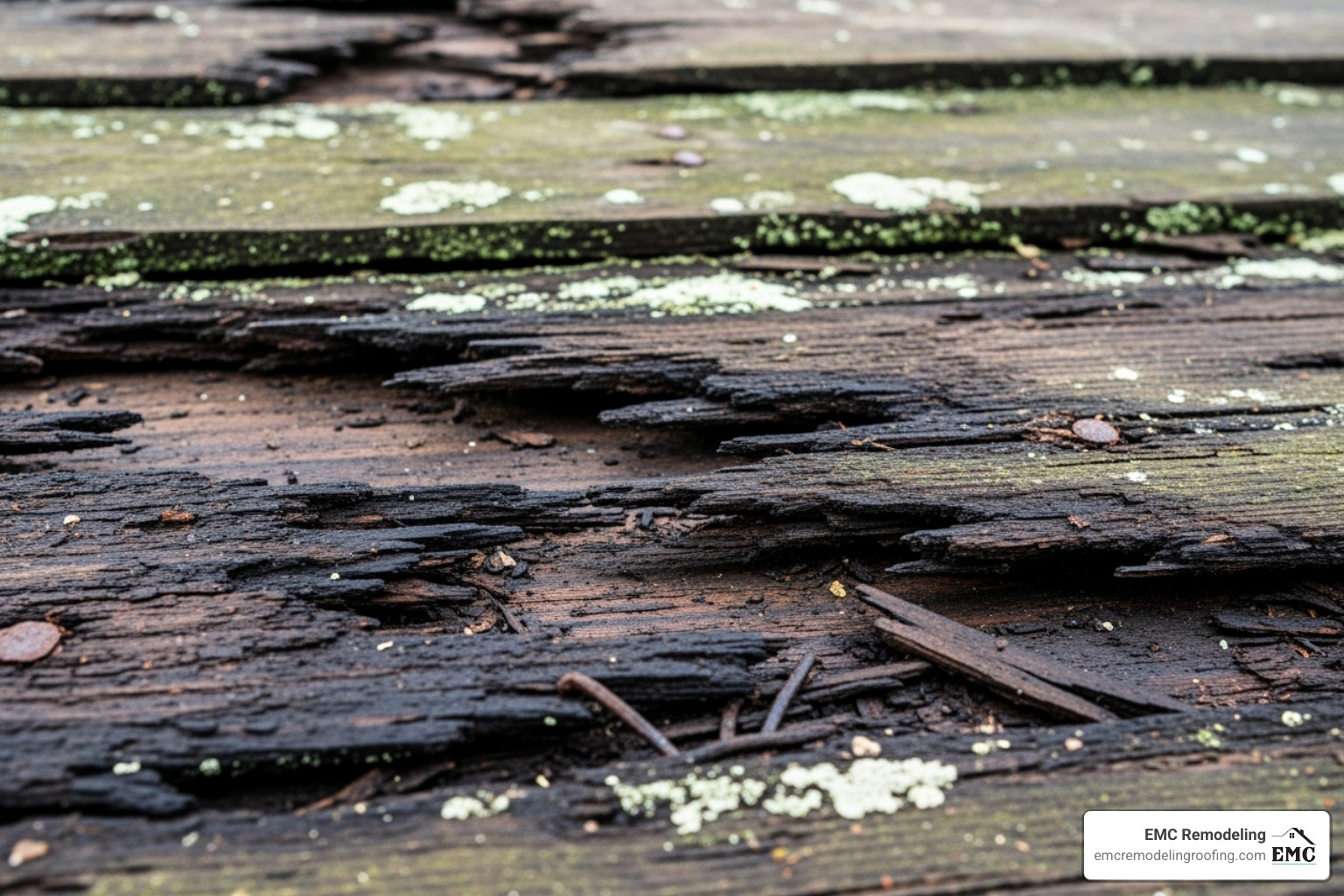
- Structural Rot: Persistent moisture causes wood rot in the roof deck, rafters, and ceiling joists, compromising your home’s structural integrity.
- Mold and Mildew: Damp, dark spaces are breeding grounds for mold, which can spread through your attic, walls, and HVAC system.
- Health Risks: Mold spores are a known allergen and can trigger respiratory issues, asthma attacks, and other health problems, significantly reducing your home’s indoor air quality.
Electrical Hazards & Reduced Property Value
The dangers of an untreated leak also include financial and safety risks.
- Fire Hazard: Water dripping onto electrical wiring can cause short circuits, creating a serious risk of fire or electrocution.
- Interior Damage: Leaks destroy insulation, saturate drywall, and ruin personal belongings, leading to costly and widespread repairs.
- Decreased Home Value: A history of water damage can decrease a home’s market value by up to 10%, as it is a major red flag for potential buyers.
A leak is a roofing emergency that demands immediate action. Because roof leak detection and repair can’t wait, we offer 24/7 emergency services. Call us at (254) 265-6163 to prevent a small problem from becoming a catastrophe.
Section 6: Frequently Asked Questions about Roof Leak Detection
Here are answers to some of the most common questions we receive about roof leak detection.
How much does professional roof leak detection cost?
The cost varies based on your roof’s size, complexity, and the technology required. A basic visual inspection may be low-cost or part of a repair estimate. Advanced methods like thermal imaging or ELD can range from a few hundred to over a thousand dollars. However, this investment is minimal compared to the tens of thousands that extensive water damage repairs can cost. Early detection is always the more affordable option.
How long does it take to find a roof leak?
Finding a leak can take anywhere from under an hour for an obvious issue to several hours for a hidden or intermittent one. Water can travel far from its entry point, making detection complex. Advanced technologies like ELD significantly speed up the process for difficult-to-find leaks by pinpointing the exact location of the breach.
Can you perform roof leak detection in the rain?
Inspecting a roof during rain is unsafe and can interfere with diagnostic tools like thermal cameras. For safety and accuracy, inspections are best performed in dry conditions. However, if you have an active leak during a storm, we provide emergency roof patching to prevent further damage. A full inspection and permanent repair will be scheduled once it is safe to do so.
Section 7: Secure Your Home—Take Action for a Leak-Free Roof
The key takeaway is that early and accurate roof leak detection is the best defense against costly water damage and structural failure. Finding the source of a leak requires experience and specialized tools, as water can travel in unpredictable ways before causing visible damage.
Don’t wait for a small drip to become a disaster. If you suspect a leak, especially after a Central Texas storm, acting now can save you from thousands in repairs and protect your family from health hazards like mold.
At EMC Remodeling, we understand the local climate’s impact on roofing. As a family-operated business serving Temple, Killeen, Belton, Cedar Park, and surrounding areas, we offer comprehensive inspections and 24/7 emergency services. We are your trusted local partner for reliable roofing solutions.
For a professional assessment that solves the root of the problem, contact a trusted roofer near you. Whether you need an inspection or a complete roof replacement, we are here to ensure your home stays safe and dry.