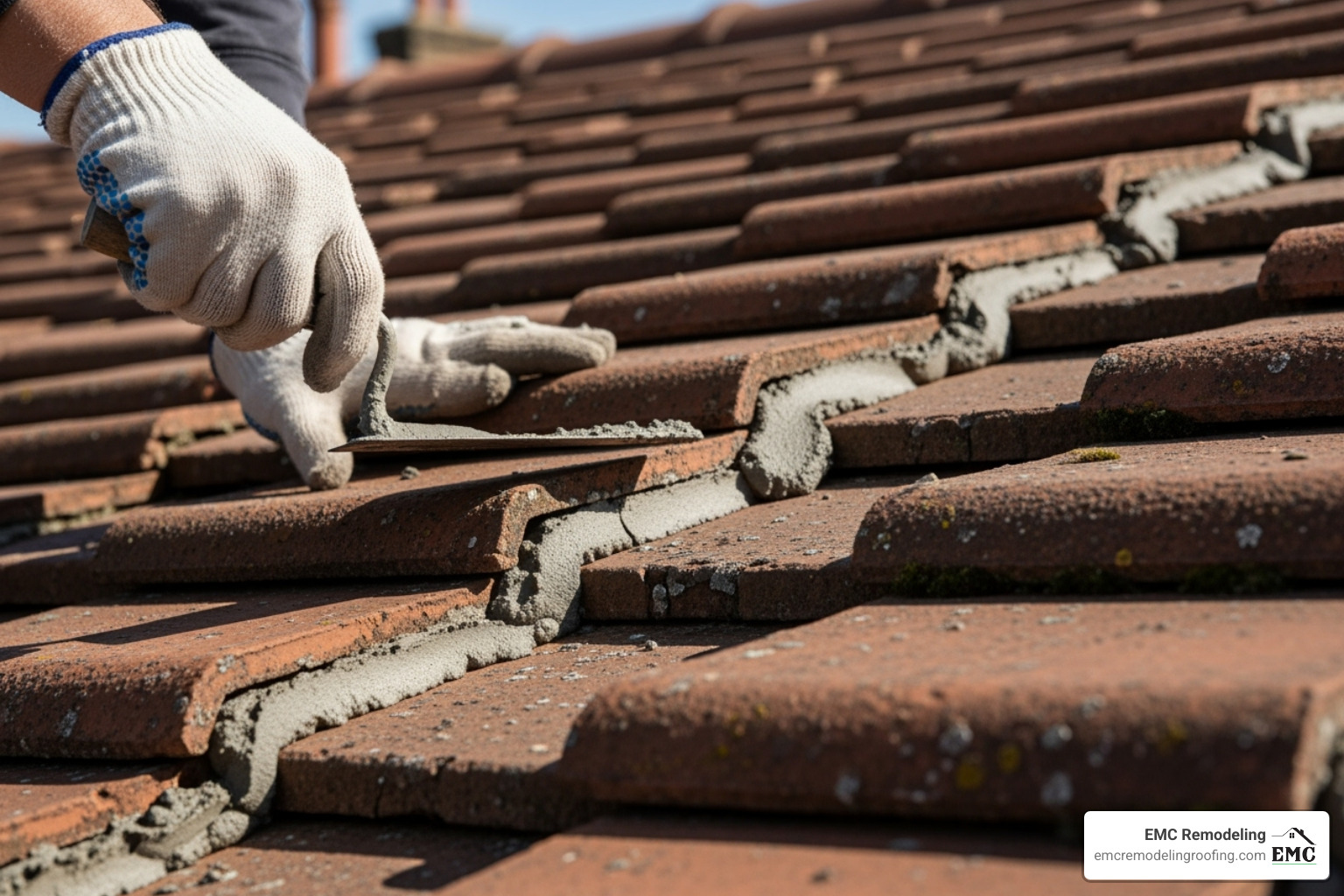
What You Need to Know About Repointing Roof Tiles
Repointing roof tiles is the process of renewing the external mortar joints that secure ridge caps and tiles on your roof. This critical maintenance uses a flexible compound to seal and stabilize these connections, preventing water damage and structural issues.
Quick Answer:
- What it is: Replacing deteriorated mortar between roof tiles with fresh, flexible pointing compound.
- Why it matters: Prevents water leaks, secures loose tiles, and protects your home from structural damage.
- When needed: When you see cracked mortar, loose ridge caps, water stains, or your roof is 15-20+ years old.
- Cost: $1,500-$2,500 for an average roof, or $20-$25 per lineal metre.
- Lifespan: 10-15 years when done professionally with quality materials.
- DIY risk: High—requires specialized skills, proper materials, and safety equipment.
Crumbling mortar in your gutters or water stains on your ceiling are serious warnings that your roof’s defenses are failing. Fortunately, EMC Remodeling’s comprehensive roofing solutions can address these problems before they become expensive emergencies. Repointing is a targeted procedure that can add 10-15 years to your roof’s life.
Repointing is not the same as re-bedding. Re-bedding replaces the foundational mortar holding ridge caps to the roof structure. Repointing is the protective, flexible outer seal applied over that bedding. Think of re-bedding as the foundation and repointing as the waterproof sealant that protects it from Central Texas weather. Timely repointing is one of the most effective ways to prevent major roof failures.
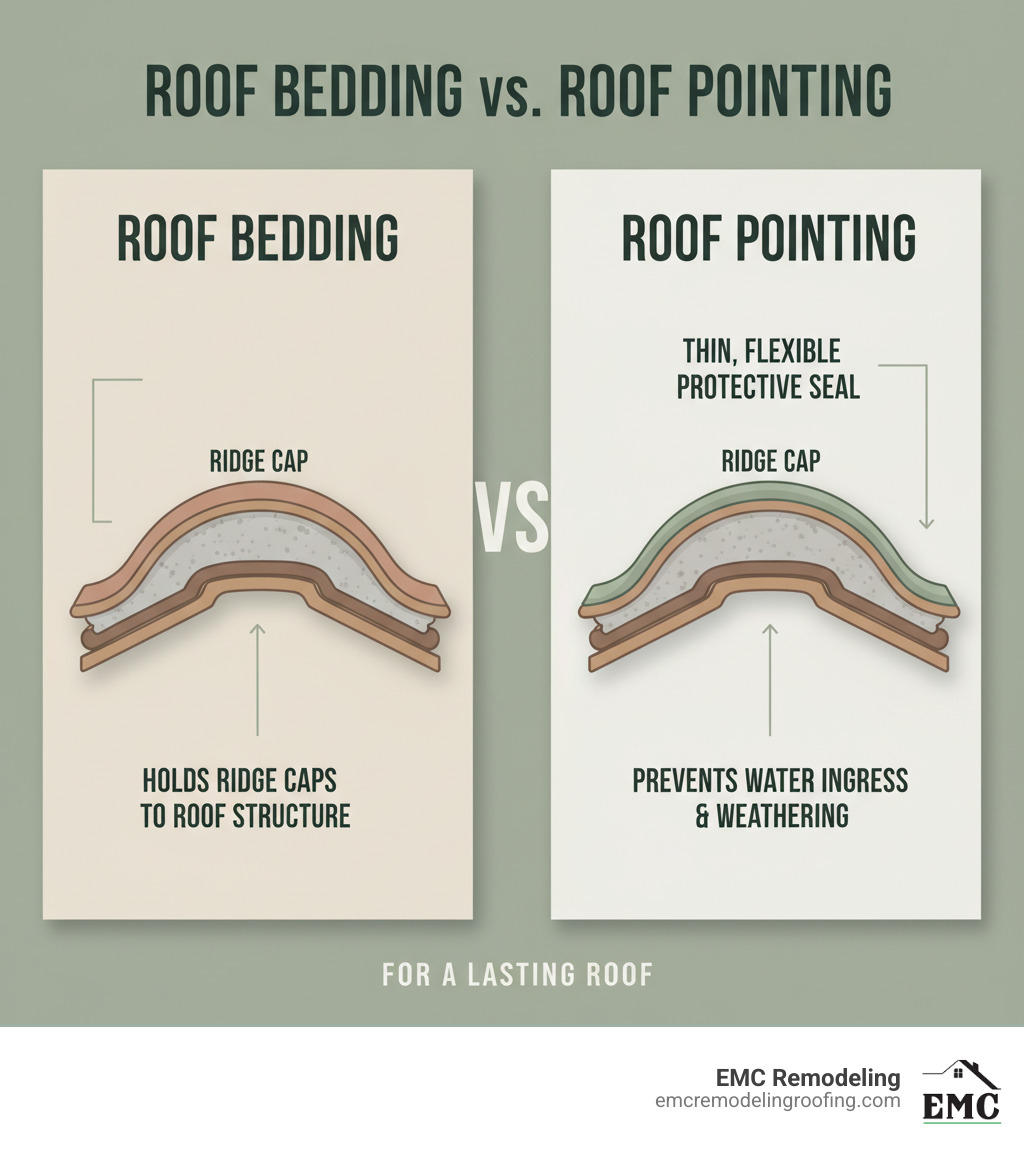
Glossary for repointing roof tiles:
7 Critical Signs Your Roof Needs Repointing
Your roof’s most vulnerable point is often the mortar joints holding your ridge caps and tiles in place. When these joints fail, your home is exposed to water damage and structural issues. Your roof will show clear warning signs when it needs attention.
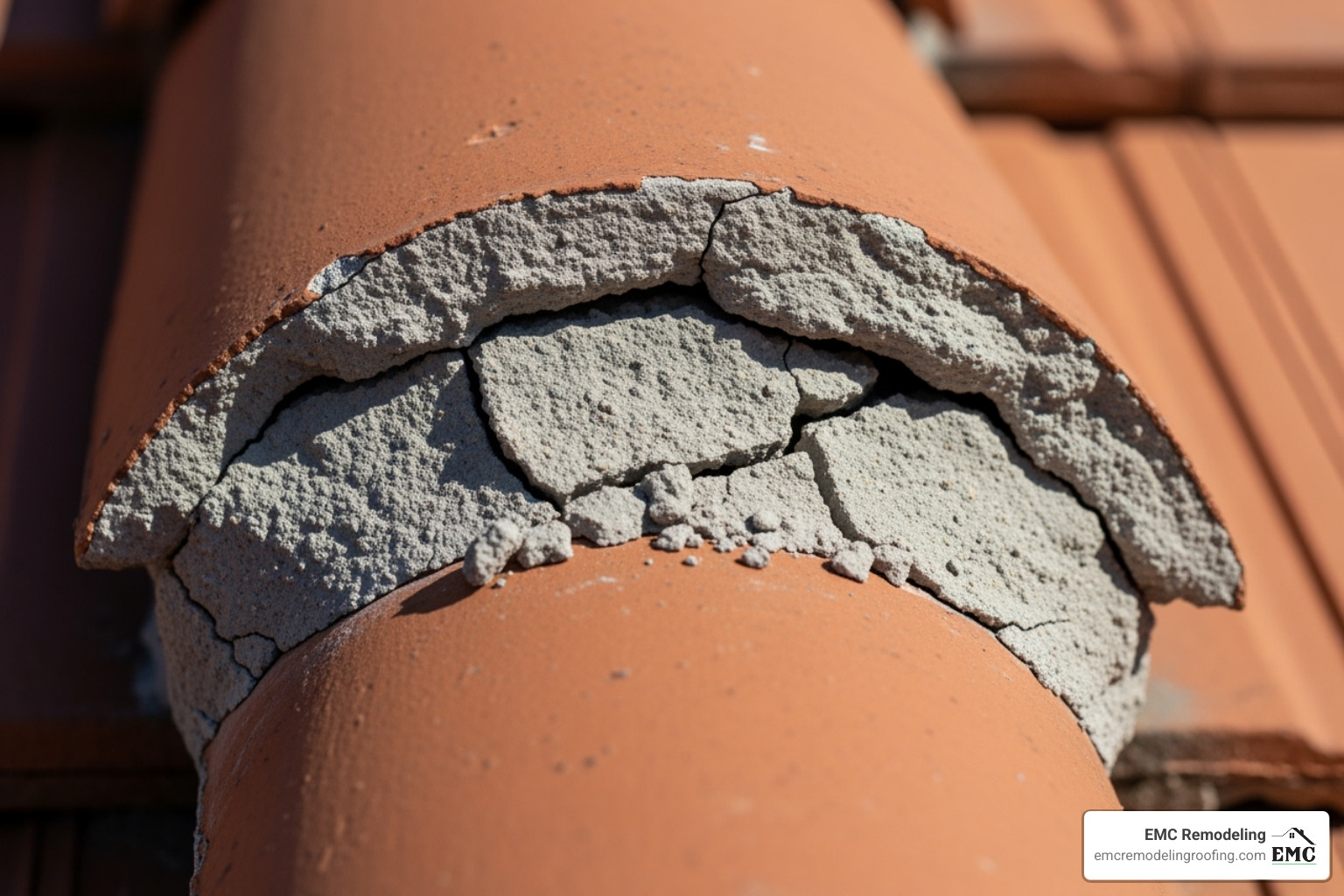
1. Visible Cracks in Mortar: Hairline fractures, wide gaps, or missing chunks of mortar are direct entry points for water, which can lead to wood rot and mold.
2. Loose or Wobbly Ridge Caps: The V-shaped tiles on your roof’s peak should be solid. If they move, the underlying bedding has failed, and they can be blown off in a storm.
3. Water Stains on Ceilings or Walls: Brown spots or peeling paint after rain are classic signs of a roof leak. Failing mortar is a common culprit, and immediate attic leak repair is necessary to prevent further damage.
4. Mortar Debris in Gutters: Finding sand-like material or cement chunks in your gutters means the protective seal on your roof is actively crumbling and washing away.
5. Moss, Algae, or Plant Growth: Green growth in mortar joints traps moisture and accelerates deterioration. It’s a clear sign that water is not being properly shed.
6. Roof Age (15-20+ Years): Mortar has a finite lifespan. If your roof is approaching two decades old, its original pointing is likely at the end of its service life and requires a professional roof inspection.
7. Dampness or Mold in the Attic: Wet insulation or mold on wooden beams after a storm confirms a breach in your roof’s waterproofing. Repointing roof tiles can often resolve this before a full replacement is needed.
Ignoring these signs makes the problem more expensive. A repointing job can prevent minor issues from escalating into five-figure structural repairs. If you see any of these signs, don’t wait for the next storm to test your roof’s integrity.
The Step-by-Step Process of Repointing Roof Tiles
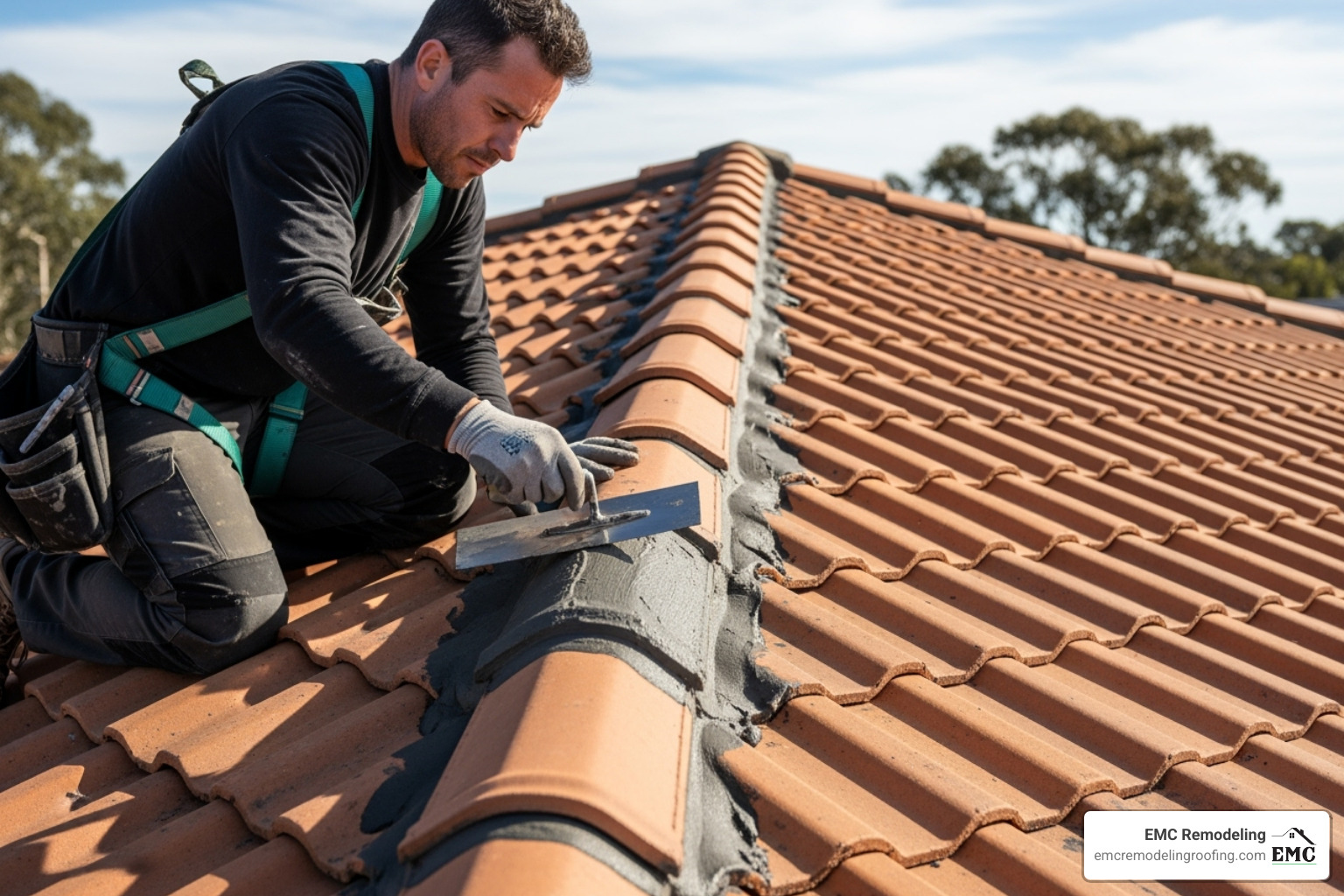
Professional repointing roof tiles is a methodical process that ensures a durable, long-lasting repair. Understanding the steps highlights the craftsmanship involved and why DIY attempts often fall short.
- Inspection: A professional thoroughly assesses the roof to identify all areas of deteriorated mortar and determine the scope of work.
- Preparation and Safety: The site is prepared with safety harnesses, anchor points, and ground protection for the crew and your property.
- Old Mortar Removal: Using specialized tools, all loose, crumbling, and compromised mortar is carefully chipped away without damaging the tiles.
- Thorough Cleaning: Joints are brushed and washed to remove all dust, debris, and organic growth, ensuring the new compound will adhere properly.
- Re-bedding (If Necessary): If the foundational mortar is compromised, it’s replaced with a new, high-strength mix to securely anchor the ridge caps.
- Applying Flexible Pointing: A modern, polymer-based flexible compound is expertly troweled into the joints, creating a durable, watertight seal.
- Finishing and Curing: The new pointing is smoothed for a clean aesthetic. It then needs time to cure, a process essential for long-term performance according to technical standards for masonry joints. The entire process typically takes 2-3 days.
- Final Inspection and Cleanup: The work is inspected for quality, and the site is cleaned of all debris, leaving your property pristine.
The Modern Approach: Flexible Compounds
Traditional cement mortar is rigid and inevitably cracks as a roof expands and contracts with temperature changes. Modern flexible pointing compounds are a superior alternative.
These polymer-based materials are engineered to stretch and compress, moving with your roof without breaking. This elasticity provides a dramatic increase in longevity. Flexible compounds offer superior water resistance, withstand UV degradation from the Texas sun, and maintain their seal in high winds. While old mortar might last 5-7 years, a professional job with quality flexible pointing lasts 10-15 years, making it the standard for durable repointing roof tiles.
Costs vs. Benefits: Is Repointing a Worthwhile Investment?
When considering home repairs, the primary question is always, “Is it worth the cost?” For repointing roof tiles, the answer is a resounding yes. It is one of the most cost-effective preventative maintenance tasks a homeowner can undertake.
A professional repointing job typically costs between $1,500 and $2,500. While this is a notable investment, it pales in comparison to the potential five-figure cost of neglect, which can include structural repairs, ceiling replacement, and mold remediation.
| Aspect | Average Cost of Repointing | Potential Cost of Neglect |
|---|---|---|
| Initial Investment | $1,500 – $2,500 | $0 (initially) |
| Long-Term Damage | Prevented | Easily runs into five figures |
| Roof Lifespan | Extended by 10-15 years | Significantly shortened |
| Interior Damage | Prevented | Extensive damage to ceilings & walls |
| Health Risks | Minimized | Mold growth and related health issues |
The benefits of repointing are clear:
- Prevents Water Damage: It creates a watertight seal, protecting your home’s timber structure and insulation from moisture intrusion.
- Stops Mold Growth: By eliminating the moisture source, repointing prevents the growth of mold, which poses serious health risks of indoor mold.
- Strengthens Against Storms: Secure ridge caps resist wind uplift during severe Central Texas weather, preventing the need for storm damage repair.
- Extends Roof Lifespan: A quality repointing job can delay a costly full roof replacement by 10-15 years.
- Improves Curb Appeal: Fresh, clean mortar lines restore your roof’s appearance and improve your home’s value.
The Financial Breakdown of Repointing
Understanding the costs helps you budget effectively. Contractors typically charge $20 to $25 per lineal metre for ridge cap repointing, leading to the average total of $1,500-$2,500. Several factors influence the final price:
- Roof Size and Complexity: Larger or more intricate roofs require more labor and materials.
- Roof Pitch: Steeper roofs require additional safety equipment and time, increasing labor costs.
- Extent of Damage: If re-bedding is needed in addition to repointing, the cost will be higher.
- Accessibility: Difficult-to-reach roofs may require scaffolding, adding to the overall cost.
A transparent estimate from a trusted company like EMC Remodeling will detail these factors so you know exactly what to expect.
DIY Dangers: Why Professional Roof Repointing is Crucial
The DIY spirit is admirable, but repointing roof tiles is a job where the risks far outweigh the potential savings. This is a task best left to trained professionals for several critical reasons.
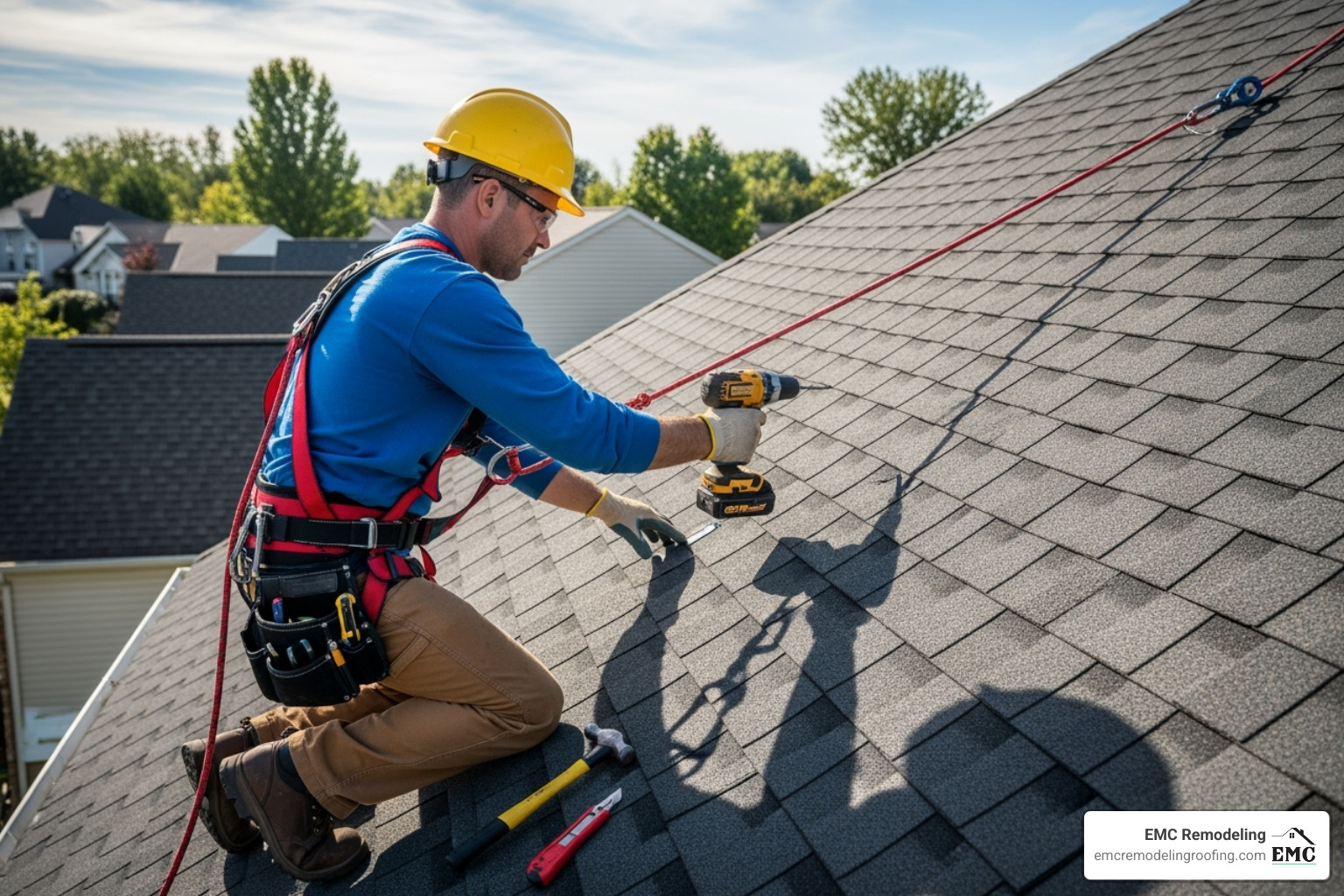
Attempting this repair yourself can lead to costly mistakes and serious personal injury. Here are the primary dangers:
- Extreme Safety Hazards: Falls from roofs are a leading cause of severe injury and death in home improvement. Professionals use specialized safety harnesses, anchor points, and have the training to steer sloped surfaces safely.
- Incorrect Material Selection: Choosing the wrong mortar or flexible compound can cause the repair to fail within months. A professional knows the correct materials for your roof and climate.
- Improper Seal Application: The goal is a watertight barrier. An uneven or thin application will allow water to penetrate, rendering the repair useless and often leading to more expensive fixes.
- Causing More Damage: Walking on a tile roof without experience can easily lead to cracked or broken tiles, turning a simple repair into a much larger project.
- Voiding Your Roof Warranty: Many manufacturer and installer warranties require that all repairs be performed by certified professionals. A DIY attempt could invalidate your coverage.
- Missing Underlying Issues: A professional roofer will spot hidden problems like damaged battens or underlayment that a homeowner might miss. In Temple, TX, professionals also ensure all work complies with local building codes.
When you factor in the cost of safety gear, specialized tools, and the risk of injury or faulty work, hiring a professional is not just the safer choice—it’s the more economical one. Our team is equipped to handle any issues, including on-the-spot emergency roof repairs, ensuring your home is protected.
Your Top Questions About Repointing Roof Tiles Answered
Homeowners often have questions when researching repointing roof tiles. Here are clear, direct answers to the most common inquiries we receive.
How does repointing differ from re-bedding?
Re-bedding and repointing are two distinct processes that work together:
- Re-bedding is the structural foundation. It is the thick mortar base that physically secures ridge cap tiles to the roof structure. It is required when tiles are loose or misaligned.
- Repointing is the protective seal. It is the thinner, flexible topcoat applied over the bedding to create a waterproof barrier and protect the joint from weather.
Essentially, re-bedding provides the strength, while repointing provides the weather protection.
How long does roof repointing last?
A professional repointing job using high-quality flexible compound lasts 10 to 15 years. The ultimate lifespan depends on three key factors:
- Material Quality: Premium polymer-based compounds resist UV rays and temperature changes better than cheaper alternatives.
- Workmanship: Proper surface preparation and application technique are critical for longevity.
- Climate: Extreme weather conditions, like those in Central Texas, can impact the lifespan, making quality materials and installation even more important.
Modern flexible pointing far outlasts traditional rigid mortar, which can fail in as little as 5-7 years.
Can I repoint just a small section of my roof?
Yes, spot repointing is possible for isolated damage, such as from a fallen branch, and typically costs around $10-$15 per tile. However, it’s important to consider the overall condition of your roof.
Mortar failure in one area often indicates that the rest of the roof is in similar condition, even if it’s not as visible. While a spot repair can be a short-term fix, a full repoint is often the more cost-effective long-term solution, preventing you from having to make multiple repairs over the next few years. A professional roof inspection can help determine the best course of action for your specific situation.
Conclusion: Secure Your Roof’s Future Today
Your roof is your home’s first line of defense. Repointing roof tiles is a critical investment in your home’s structural integrity, preventing the kind of water damage that leads to costly and stressful repairs.
For a fraction of the cost of a major roof failure, you can add 10-15 years to your roof’s lifespan and prevent leaks before they start. The crumbling mortar you see today will only worsen, leading to potential mold, structural decay, and the premature need for a complete roof replacement.
At EMC Remodeling, we understand that preventative maintenance saves homeowners thousands. As a family-operated business serving Temple, TX, and surrounding communities like Belton and Killeen, we are your local partners in protecting your home.
Don’t wait for a small issue to become a roofing emergency. The best time to address failing mortar is now, before water gets in.
Ready to protect your investment? Contact us for a free roof repair estimate. Our team is ready to provide an honest, expert assessment to keep your home safe and secure.