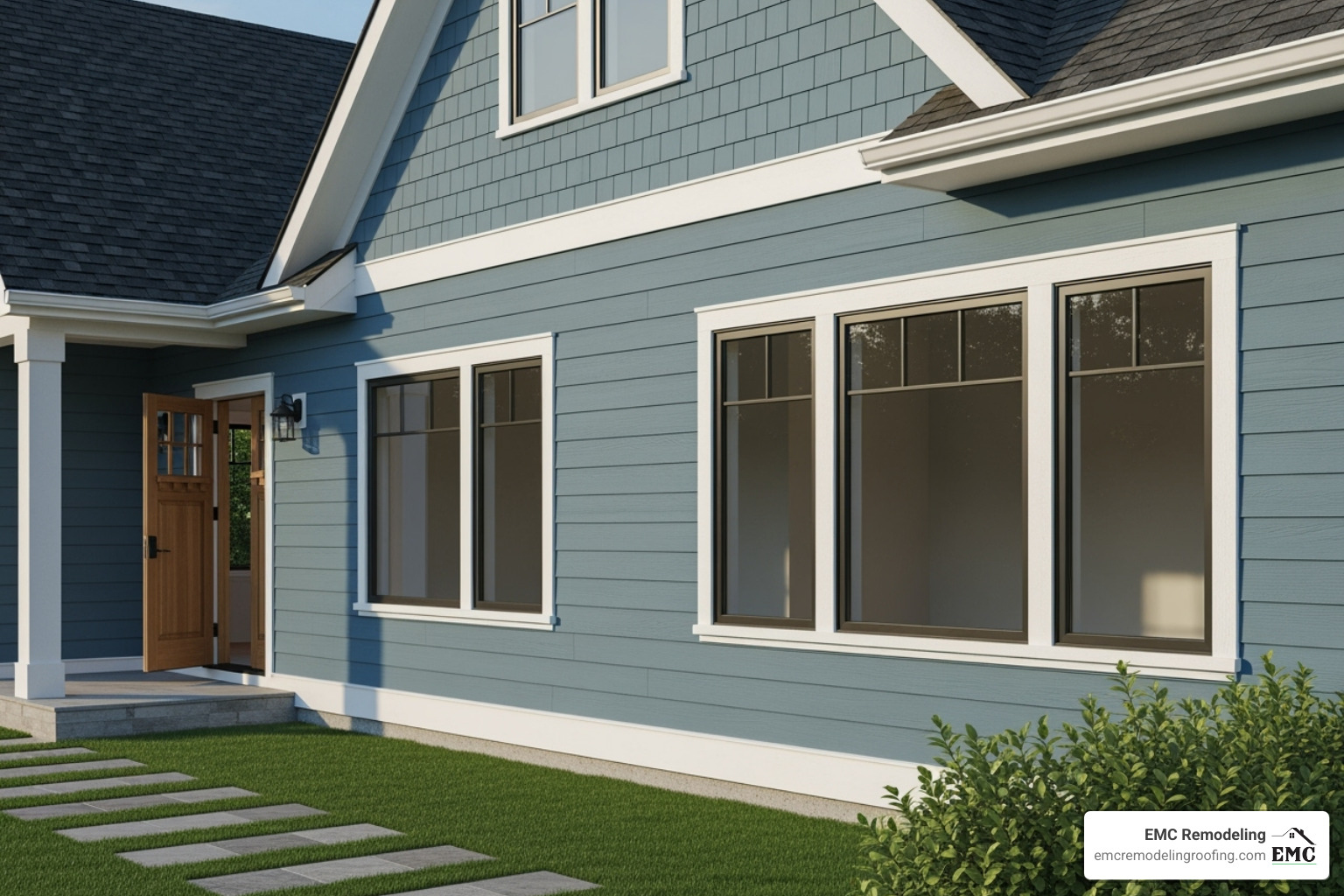
Why Hardie Board Siding is the Premier Choice for Texas Homes
Hardie board siding is a fiber cement exterior cladding manufactured by James Hardie, the #1 brand of siding in North America. It combines cement, sand, water, and cellulose fibers to create a material that outperforms vinyl and wood in durability, fire resistance, and weather protection.
Key Benefits of Hardie Board Siding:
- Exceptional Lifespan: 30-50 years with proper installation
- Fire Resistant: Noncombustible with Class A fire rating
- Weather Proof: Resists hail, wind, moisture, and extreme temperatures
- Pest Resistant: Termites and woodpeckers won’t damage it
- Low Maintenance: Simple cleaning, no painting required with ColorPlus® Technology
- Warranty: 30-year non-prorated, transferable limited warranty
- Investment: Costs $4.70-$8.50 per square foot installed
Your home’s exterior is its first line of defense against the harsh Texas climate—from scorching summers to damaging hailstorms. For homeowners in Temple and Central Texas seeking the ultimate combination of beauty and resilience, EMC Remodeling & Roofing recommends Hardie board siding as a premium solution that delivers best protection and lasting value.
James Hardie fiber cement siding protects over 10 million homes across North America. The material’s engineered composition makes it noncombustible, moisture-resistant, and capable of withstanding the extreme weather conditions common in our region. Unlike vinyl siding that can warp in heat or crack from hail impact, Hardie board siding maintains its structural integrity and appearance for decades.
This comprehensive guide explores why Hardie board siding has become the top choice for discerning Texas homeowners who refuse to compromise on quality, from its superior weather resistance to its extensive design options and long-term cost savings.
As Matthew Runyon, President of EMC Remodeling & Roofing, I’ve spent over 15 years helping Central Texas homeowners protect and beautify their properties with premium Hardie board siding installations. Our family-owned company has built its reputation on delivering quality craftsmanship and helping homeowners steer everything from product selection to insurance claims for storm damage repairs.
Hardie board siding terms made easy:
What is Hardie Board Siding? A Deep Dive into Fiber Cement
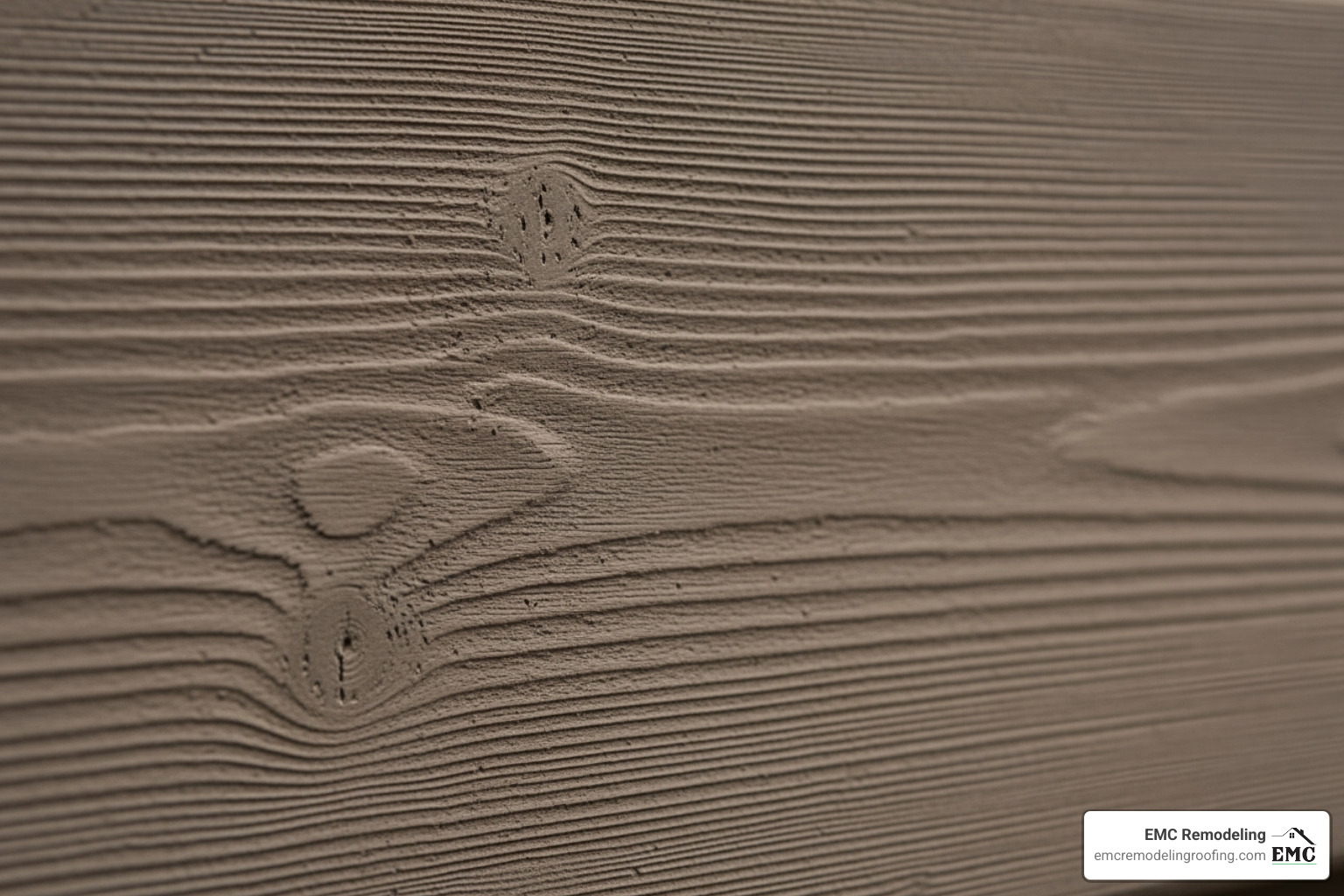
When you hear the term Hardie board siding, you’re not just hearing about any fiber cement product—you’re hearing about the gold standard. James Hardie manufactures this premium material, and they’re the #1 brand of fiber cement siding in North America for good reason. Over 10 million homes across the continent trust Hardie® products to protect their families and investments.
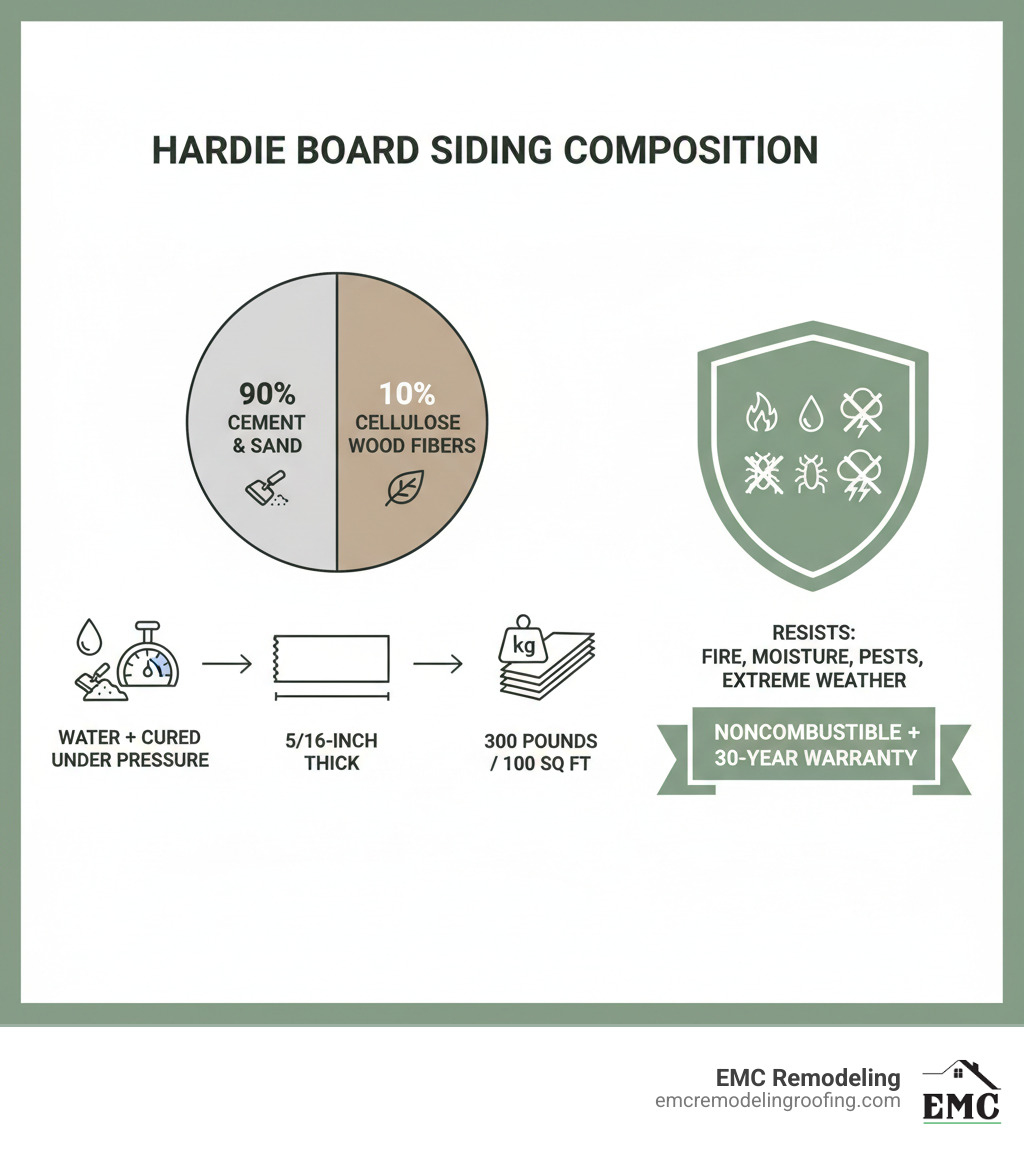
The magic of Hardie board siding starts with its carefully engineered composition. Four simple ingredients combine to create something far stronger than the sum of its parts. Cement forms the backbone, delivering exceptional hardness and impact resistance that laughs off hail and flying debris. Sand adds density and bulk, making each board substantially more durable than alternatives. Water activates the chemical reactions that bind everything together during manufacturing. Finally, cellulose wood fibers act as nature’s reinforcement, preventing brittleness and allowing the material to expand and contract with temperature changes without cracking.
This isn’t your typical siding material. A standard Hardie Plank board measures 12 feet long, 8 ¼ inches wide, and comes in at a solid 5/16-inch thick. Compare that to vinyl siding’s paper-thin 0.040 to 0.048 inches, and you’ll understand why Hardie board siding performs so differently. The difference becomes even more dramatic when you consider weight—fiber cement tips the scales at 300 pounds per 100 square feet, while vinyl barely registers at 60-70 pounds for the same coverage.
That substantial weight and thickness translate directly into protection. When Texas storms roll through Temple with golf-ball-sized hail, that extra mass and density make all the difference between cosmetic damage and structural integrity. The cellulose fibers woven throughout each board prevent the kind of catastrophic cracking that can happen with purely mineral-based materials, giving you a product that’s both rock-solid and surprisingly resilient.
At EMC Remodeling & Roofing, we’ve installed countless square feet of James Hardie products throughout Central Texas. The engineered precision of these boards means consistent quality and performance across every installation—something that matters tremendously when we’re protecting your home from our region’s extreme weather conditions.
The Ultimate Shield: How Hardie Board Protects Your Home from Texas Weather
Your home’s exterior forms a critical barrier against the elements, and in Texas, that barrier faces some serious challenges. From scorching summer heat to sudden hailstorms and torrential downpours, our weather doesn’t pull any punches. Hardie board siding acts as a formidable shield for your entire home, protecting not just your walls but contributing to the overall integrity of your property from foundation to roofline.
Superior Durability and Lifespan
When you invest in Hardie board siding, you’re choosing a solution built to last generations. With professional installation, this material can protect your home for an impressive 30 to 50 years. That’s not marketing talk—it’s backed by James Hardie’s robust 30-year non-prorated limited, transferable substrate warranty that provides lasting peace of mind.
The real beauty of Hardie board siding lies in how it stands up to the specific threats that plague Texas homes. Unlike wood siding that becomes a buffet for termites and carpenter ants, fiber cement holds absolutely no appeal for pests. It resists damage from termites, carpenter ants, and even persistent woodpeckers who love to drum on traditional materials. This protection extends beyond just aesthetics—it prevents costly structural repairs that can compromise your home’s entire envelope.
Texas humidity and sudden downpours present another challenge entirely. James Hardie fiber cement siding products are specifically engineered to resist water absorption, which is crucial for preventing the kind of moisture damage that can lead to mold growth, swelling, and cracking. This moisture resistance protects your home from water intrusion that could eventually compromise everything from your wall cavities to your roofline.
When your current siding has reached the end of its service life or sustained storm damage, our siding replacement services can transform your home’s protection and appearance with Hardie board siding.
Engineered for Extreme Weather
James Hardie’s “Engineered for Climate®” approach isn’t just a slogan—it’s a commitment to creating products specifically formulated for regional weather patterns. For Central Texas, this means HZ10® products designed to combat our particular combination of intense heat, high humidity, persistent moisture, and aggressive pests. Our detailed guide to James Hardie HZ10 explains exactly how this formulation benefits homes in our region.
The fire resistance of Hardie board siding provides protection that could literally save lives. As a noncombustible material, it will not ignite when exposed to direct flame. Hardie® siding complies with ASTM E136 standards as noncombustible cladding and achieves a Class A fire rating when tested according to ASTM E84. This exceptional fire resistance creates an invaluable safety layer, potentially slowing fire spread and giving emergency responders critical extra minutes to respond. Underwriters Laboratories provides comprehensive information about fire safety ratings and testing standards.
Hailstorms rank among the most destructive forces Texas homeowners face, often causing simultaneous damage to roofs and siding. While vinyl siding can crack or shatter from moderate hail impact, Hardie board siding offers superior resistance thanks to its dense, robust composition. It’s far less susceptible to denting or breaking from hailstones, providing resilient protection that complements a strong roofing system. If your home has experienced hail damage, our hail damage roof repair services address both roofing and siding concerns comprehensively.
Strong winds from severe thunderstorms to occasional hurricane remnants test every home’s exterior. Hardie board siding is engineered to withstand these powerful forces, resisting blow-off and maintaining its structural position even when wind speeds reach dangerous levels. This stability keeps your home’s envelope sealed and protected when other materials might fail.
Long-Term Value and Environmental Benefits
Choosing Hardie board siding represents a strategic investment that pays dividends for years to come. James Hardie’s commitment to sustainability means their fiber cement products are manufactured from readily available, sustainable raw materials. The exceptional longevity of these products reduces replacement frequency, which translates to less waste in landfills and fewer resources consumed over your home’s lifetime.
The premium appearance, exceptional durability, and minimal maintenance requirements of Hardie board siding make it highly attractive to potential home buyers. This translates into one of the highest returns on investment for exterior renovations, often recouping a significant portion of installation costs when you sell. Real estate professionals consistently report that homes with quality fiber cement siding command higher prices and sell faster than comparable properties with vinyl siding.
Many insurance companies recognize the superior protection Hardie board siding provides against fire, hail, and wind damage. This recognition often results in tangible discounts on homeowner insurance premiums. These annual savings add up over time, making your investment even smarter from a financial perspective.
Whether you’re concerned about storm damage, aging materials, or simply want to upgrade your home’s protection, our comprehensive exterior home repair services ensure your home remains safe and sound from foundation to roofline.
Hardie Board Siding vs. Vinyl: A Head-to-Head Comparison
When homeowners consider new siding, the conversation often centers on two popular options: Hardie board siding and vinyl siding. Both have their place in the market, but understanding the real differences in cost, performance, and long-term value is essential for making the right choice for your Central Texas home.
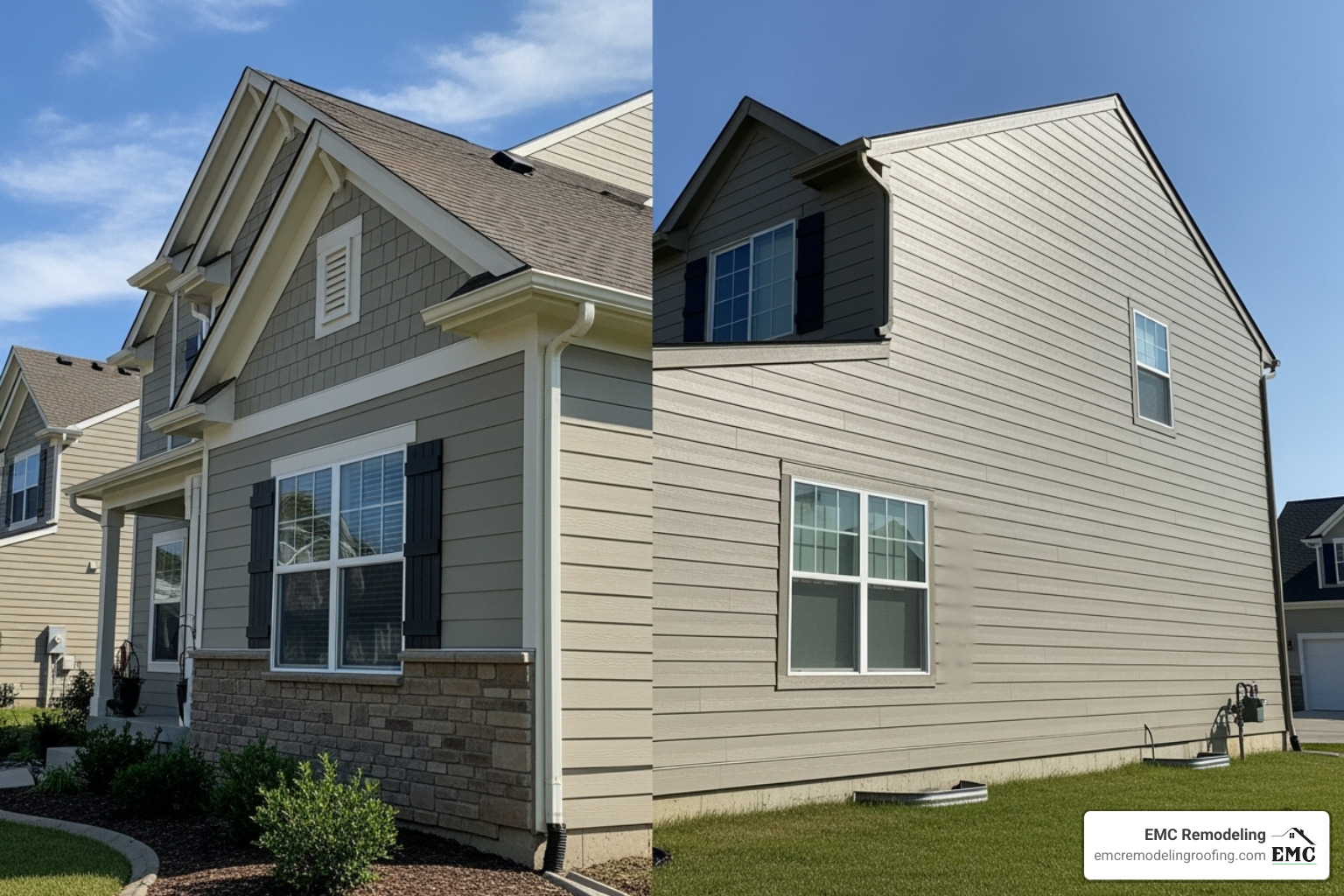
Investment and Installation Costs
Let’s talk money, because we know that’s often where the decision starts. Vinyl siding typically wins on upfront cost, and that initial price difference is significant enough to catch most homeowners’ attention.
Hardie board siding carries a higher product cost right out of the gate. A single 12-foot Hardie Plank board runs between $10 and $12, while a comparable vinyl board might cost around $9. That $1-$3 difference per board adds up quickly when you’re covering an entire home.
But here’s where things get more interesting: the installation costs. Weight difference we talked about earlier? Hardie board siding weighs 300 pounds per 100 square feet compared to vinyl’s 60-70 pounds. That’s not just a number on paper—it means more time, more labor, and specialized equipment to install properly.
The result? Hardie board siding installation costs between $4.70 and $8.50 per square foot, with the national average for a complete home installation hovering around $19,350. Vinyl siding installation, by contrast, costs between $2 and $5 per square foot, averaging about $3.70 per square foot. Because vinyl is lightweight and faster to install, labor costs stay considerably lower.
Given the complexity and weight of Hardie board siding, professional installation isn’t just recommended—it’s essential. Proper installation ensures your warranty remains valid and your investment is protected. Our siding services team has the experience and equipment to handle every aspect of your installation correctly.
Key Considerations for Your Home Renovation with Hardie board siding
Choosing between Hardie board siding and vinyl involves looking beyond that initial price tag. We’ve assembled a comparison to help you see the full picture:
| Feature | Hardie Board Siding | Vinyl Siding |
|---|---|---|
| Cost | $4.70-$8.50 per sq ft installed | $2-$5 per sq ft installed |
| Lifespan | 30-50 years | 20-30 years |
| Durability | Excellent—resists impact, fire, pests, and extreme weather | Good—can crack in cold, warp in heat, vulnerable to hail damage |
| Maintenance | Low—bi-annual cleaning, occasional re-caulking | Low—periodic cleaning, potential for panel replacement |
| Fire Resistance | Noncombustible, Class A fire rating | Combustible, may melt or burn |
When you’re making your decision, think about durability versus budget. If your goal is to install siding once and not worry about it for decades, Hardie board siding delivers best longevity. The initial investment pays dividends through superior performance, potentially lower insurance premiums, and increased home value.
Consider your aesthetic goals, too. While both materials offer style options, Hardie board siding provides a more authentic wood-like appearance that improves curb appeal and resale value. In our experience helping Central Texas homeowners, those who choose Hardie board siding rarely regret the investment.
And let’s not forget climate resilience. In a state where hailstorms, intense heat, and occasional freezing temperatures are part of life, Hardie board siding stands up to these challenges far better than vinyl. It won’t crack in a cold snap, warp during a heat wave, or shatter when hail hits.
If vinyl siding better fits your current budget, we understand—and we’re here to help with that too. Our vinyl siding services ensure you get quality installation regardless of which material you choose. But for homeowners who want the absolute best protection and value over time, Hardie board siding remains the clear winner.
Frequently Asked Questions about Hardie Board Siding
We talk with homeowners every day who are considering Hardie board siding for their homes, and certain questions come up again and again. Let’s address the most common ones so you have all the information you need to make the best choice for your Central Texas home.
How long does Hardie board siding last?
When you invest in Hardie board siding with proper professional installation and basic maintenance, you’re looking at a lifespan of 30 to 50 years. That’s not just marketing talk—it’s backed by real-world performance across millions of homes. To put this in perspective, vinyl siding typically needs replacement after just 15 to 30 years, meaning you could potentially need to re-side your home twice in the time your Hardie board siding is still going strong.
This exceptional longevity comes from the fiber cement composition we discussed earlier. The combination of cement, sand, water, and cellulose fibers creates a material that simply doesn’t succumb to the usual culprits that damage other siding—it won’t rot like wood, it resists pests that would destroy traditional materials, and it stands up to the severe weather we experience here in Texas.
James Hardie backs up their product with a 30-year, non-prorated, transferable limited warranty on the substrate. That “non-prorated” part is important—it means the warranty doesn’t diminish in value over time. Even better, the warranty transfers to the next homeowner if you sell, which adds tangible value to your property. It’s protection you can count on for decades, and it’s one of the reasons we confidently recommend Hardie board siding to our customers.
Is Hardie board siding waterproof?
Let’s be straight with you: no siding material is truly “waterproof” in the sense of being a completely impenetrable barrier. However, Hardie board siding is highly water-resistant, and that distinction matters tremendously for your home’s protection.
The fiber cement composition is specifically engineered to resist water absorption. Unlike wood siding that can soak up moisture and swell, or even some vinyl products that can allow water intrusion at seams, Hardie board siding maintains its dimensional stability even when exposed to moisture. This resistance prevents the swelling, cracking, and warping that can compromise other materials over time.
Perhaps most importantly, this water resistance helps prevent mold and mildew growth, which can be a serious concern in the humid climate of Temple, TX. By keeping moisture out of the siding itself and protecting the underlying structure of your home, Hardie board siding provides a critical defense against water-related damage that could otherwise lead to costly repairs down the road. When properly installed with appropriate flashing and drainage details, it creates a highly effective moisture management system for your home’s exterior.
Can Hardie board siding increase my home’s value?
Absolutely. Installing Hardie board siding consistently ranks among the top home remodeling projects for return on investment (ROI), and there are concrete reasons why. When appraisers evaluate your home, they recognize the premium quality and durability that James Hardie products represent. Real estate professionals know that Hardie board siding is a selling point that makes homes more attractive to potential buyers.
The value increase comes from multiple factors working together. First, there’s the durability and longevity—buyers appreciate knowing they won’t need to worry about replacing siding for decades. Second, the low maintenance requirements mean future homeowners face minimal upkeep costs. Third, the superior weather resistance provides genuine peace of mind, especially important in areas prone to hail, high winds, and extreme temperatures like Central Texas.
Beyond the practical benefits, Hardie board siding significantly improves your home’s curb appeal. The wide range of available styles, textures, and colors allows for architectural beauty that makes your property stand out in the best possible way. A home with premium Hardie board siding simply looks more refined and well-maintained, commanding higher offers when it comes time to sell.
Many of our customers also find that their homeowner’s insurance premiums decrease after installing Hardie board siding, thanks to its Class A fire rating and superior resistance to storm damage. These ongoing savings add up year after year, making the investment even more valuable. If you’re ready to explore how Hardie board siding can transform your home’s exterior and value, contact EMC Remodeling today at (254) 265-6163 or learn more about our comprehensive siding services.
Conclusion
When it comes to protecting your Texas home from our unforgiving climate while maintaining stunning curb appeal, Hardie board siding stands in a class of its own. We’ve seen how this premium fiber cement siding transforms homes throughout Central Texas, delivering an best combination of durability, beauty, and long-term value that simply can’t be replicated by other materials.
Your home deserves the formidable protection that Hardie board siding provides. Its Class A fire rating offers critical defense against one of homeowners’ greatest fears, while its exceptional resistance to hail damage and pest infiltration creates a shield that keeps your family safe and your property secure for decades. With a potential lifespan of 50 years and a robust 30-year non-prorated warranty, this isn’t just siding—it’s a long-term investment in your home’s future.
The aesthetic versatility of Hardie board siding means you never have to choose between protection and beauty. Whether you prefer the classic look of Hardie® Plank lap siding, the charming appeal of Hardie® Shingle, or the bold statement of Hardie® Panel vertical siding, you’ll find a style that perfectly expresses your vision. The ColorPlus® Technology ensures that vibrant, fade-resistant finish stays beautiful year after year with minimal maintenance—just an occasional cleaning with water and a soft cloth.
At EMC Remodeling, we bring over 15 years of expertise to every Hardie board siding installation. As a family-operated business serving Temple, Lago Vista, Cedar Park, Leander, Georgetown, Killeen, Belton, Pflugerville, and Salado, we understand the unique challenges our Texas climate presents. Our commitment to exceptional craftsmanship and direct owner involvement means your project receives the attention and quality it deserves from start to finish. We’re here when you need us, offering 24/7 emergency support because we know that protecting your home can’t wait.
Ready to lift your home’s exterior with the superior protection and timeless beauty of Hardie board siding? We’d love to discuss how this premium solution can transform your property. Contact us today at (254) 265-6163 to schedule your consultation, or explore more about our comprehensive siding services in Temple, TX. Your home’s next chapter of beauty and resilience begins with a single conversation.