Why Your Roof’s Integrity Depends on Healthy Shingles
Fixing roof shingles at the first sign of damage is crucial for protecting your home from water infiltration, structural decay, and costly future repairs. Damaged or missing shingles expose your home to leaks, which can cause mold, rot, and thousands in avoidable damage.
Quick Answer: How to Fix Roof Shingles
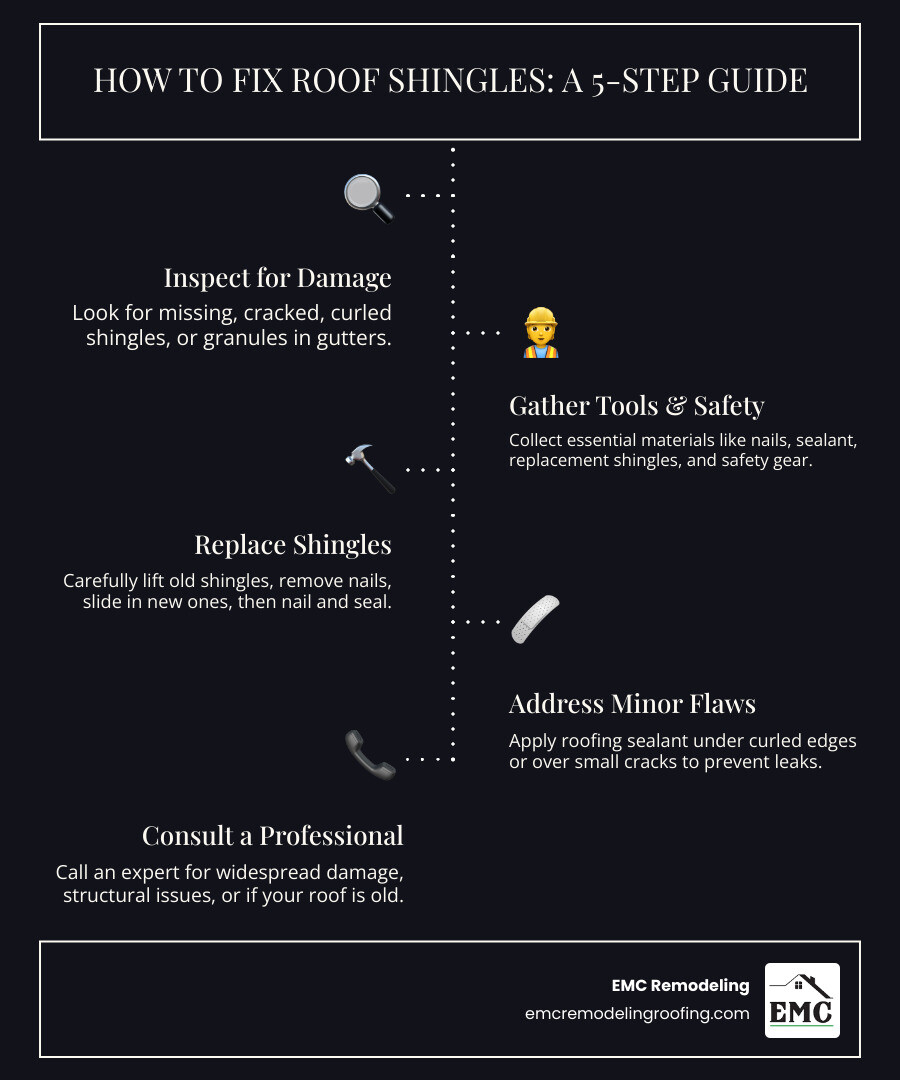
- Safety first – Use a harness, non-slip shoes, and work only in dry conditions.
- Assess the damage – Check for missing, cracked, curled, or granule-loss shingles.
- Gather materials – Pry bar, roofing nails, sealant, replacement shingles, and safety gear.
- Replace damaged shingles – Lift surrounding shingles, remove old nails, slide out the damaged shingle, install a new one, and seal the edges.
- Repair minor issues – Apply sealant under curled shingles or over cracks.
- Call a professional – If damage is widespread, your roof is 20+ years old, or you see structural issues.
Research shows that asphalt shingles cover approximately 70% of American homes and typically last 15-30 years. The average cost to repair a roof is $1,064, but ignoring minor damage can escalate into repairs costing thousands more. Understanding how to address shingle problems quickly is essential for every homeowner.
This guide walks you through identifying shingle damage, deciding between DIY and professional repair, and taking the right steps to protect your home from the elements. You’ll learn which repairs you can safely tackle and when it’s time for an expert.
With over 15 years of experience in Central Texas, Matthew Runyon, President of EMC Remodeling & Roofing, has seen how prompt shingle repair prevents minor issues from becoming major headaches. Quick action against storm damage, aging, or leaks saves your home and your wallet.
Fix roof shingles terminology:
Why Your Shingles Fail: Common Causes and Telltale Signs
Your roof’s shingles are constantly exposed to Central Texas’s harsh sun, thunderstorms, and hail. Even durable asphalt shingles, which cover about 70% of U.S. homes, have a finite lifespan of 15 to 30 years before they begin to fail. Understanding why is the first step to knowing how to fix roof shingles before small problems become disasters.
- Age and wear: As shingles age, they become brittle and lose protective granules, leading to cracks and curling.
- Weather damage: Severe storms with high winds and hail can lift, tear, or remove shingles. Extreme temperature swings also cause fatigue and failure. After a storm, check for damage. We often handle storm damage repair and hail damage roof repair after severe weather.
- Improper installation: Cutting corners during installation, like layering new shingles over old ones, leads to premature failure.
- Foot traffic: Walking on your roof loosens protective granules. Stay off the roof unless necessary.
- Granule loss: These particles protect against UV rays and fire. Excessive loss creates bald spots, leaving the shingle vulnerable.
- Missing or loose shingles: High winds can remove shingles, exposing underlayers to moisture. Even partially attached shingles can let in wind-driven rain.
- Buckling and curling: Caused by age, moisture, or poor ventilation, these issues prevent proper water shedding.
- Cracks and splits: Develop from UV exposure and temperature changes, creating pathways for water.
- Blistering: Trapped moisture or manufacturing defects cause bubbles that eventually pop, accelerating wear.
- Water stains: Stains on ceilings or walls indicate an active leak that needs immediate attention.
Identifying the Extent of the Damage
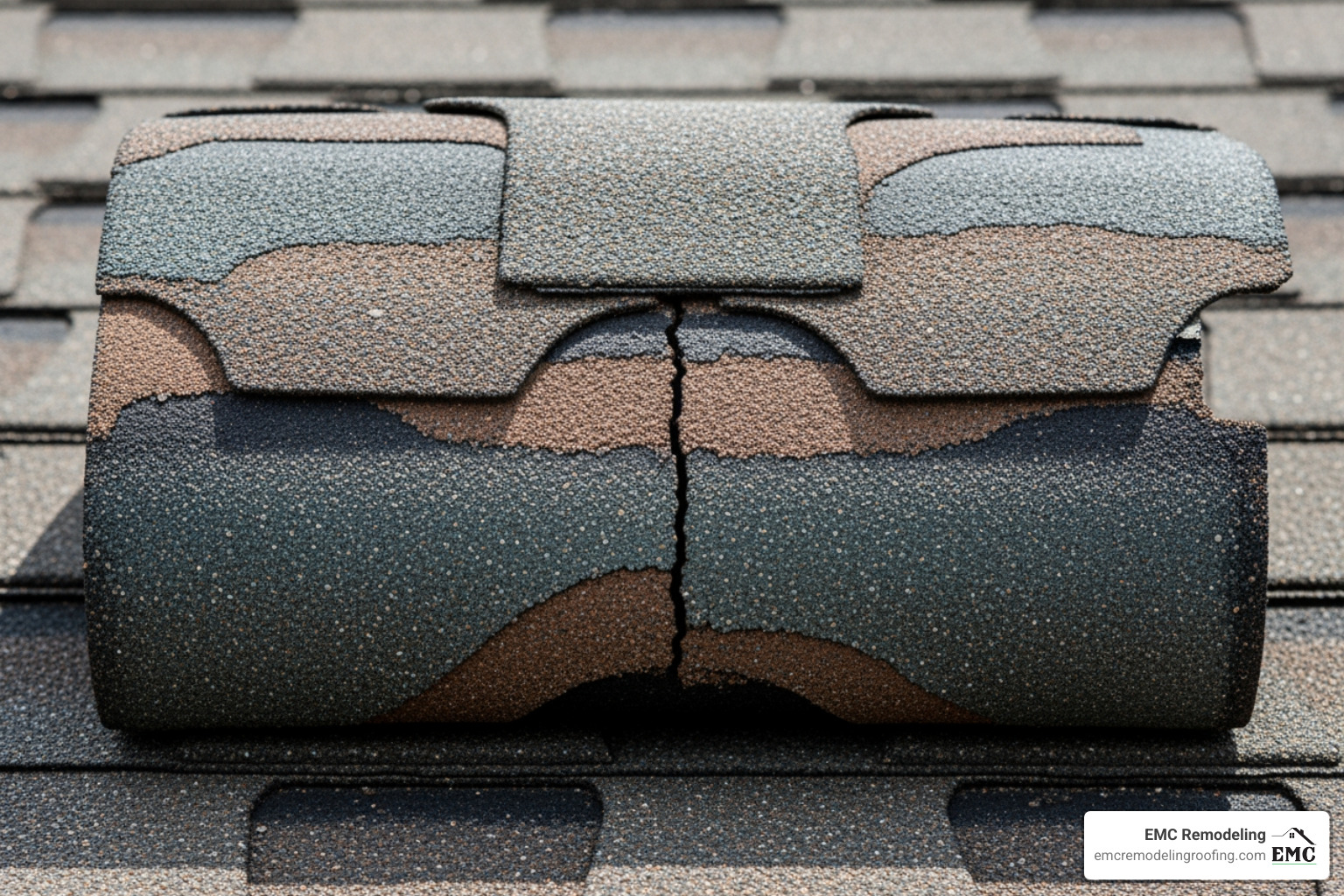
Before you can fix roof shingles, you must know what you’re dealing with. Start with a visual inspection from the ground using binoculars. Look for missing patches, curled edges, or wavy sections. In your attic, use a flashlight to find water stains, mold, or mildew on the underside of the roof deck. A professional roof and attic inspection can uncover hidden issues. Finally, check your gutters for large accumulations of granules, a sign of accelerated wear. The key is to determine if you have isolated or widespread damage. A few bad shingles may be a DIY fix, but problems across the roof suggest a larger issue requiring professional help.
The Risks of Delaying Repairs
Ignoring shingle damage is a costly mistake. While the average roof repair costs around $1,064, delaying can lead to far greater expenses. The primary risks include:
- Structural Rot: Water penetrates the roof deck, rafters, and framing, compromising your home’s integrity.
- Mold and Mildew: Moisture in the attic creates a breeding ground for fungi, posing health risks and requiring expensive remediation.
- Reduced Energy Efficiency: Wet insulation loses its effectiveness, causing your HVAC system to work harder and increasing energy bills.
- Pest Infestations: Gaps from damaged shingles provide entry points for rodents, insects, and birds.
- Higher Future Costs: A simple shingle fix can escalate into a full roof replacement and interior repairs costing tens of thousands.
Gearing Up: Tools, Materials, and Safety Precautions
Proper preparation is essential for a successful shingle repair. This means having the right tools, materials, and a safety-first mindset to avoid common pitfalls. Always fix roof shingles in warm, dry weather, as shingles are more pliable and the roof is safer to work on.
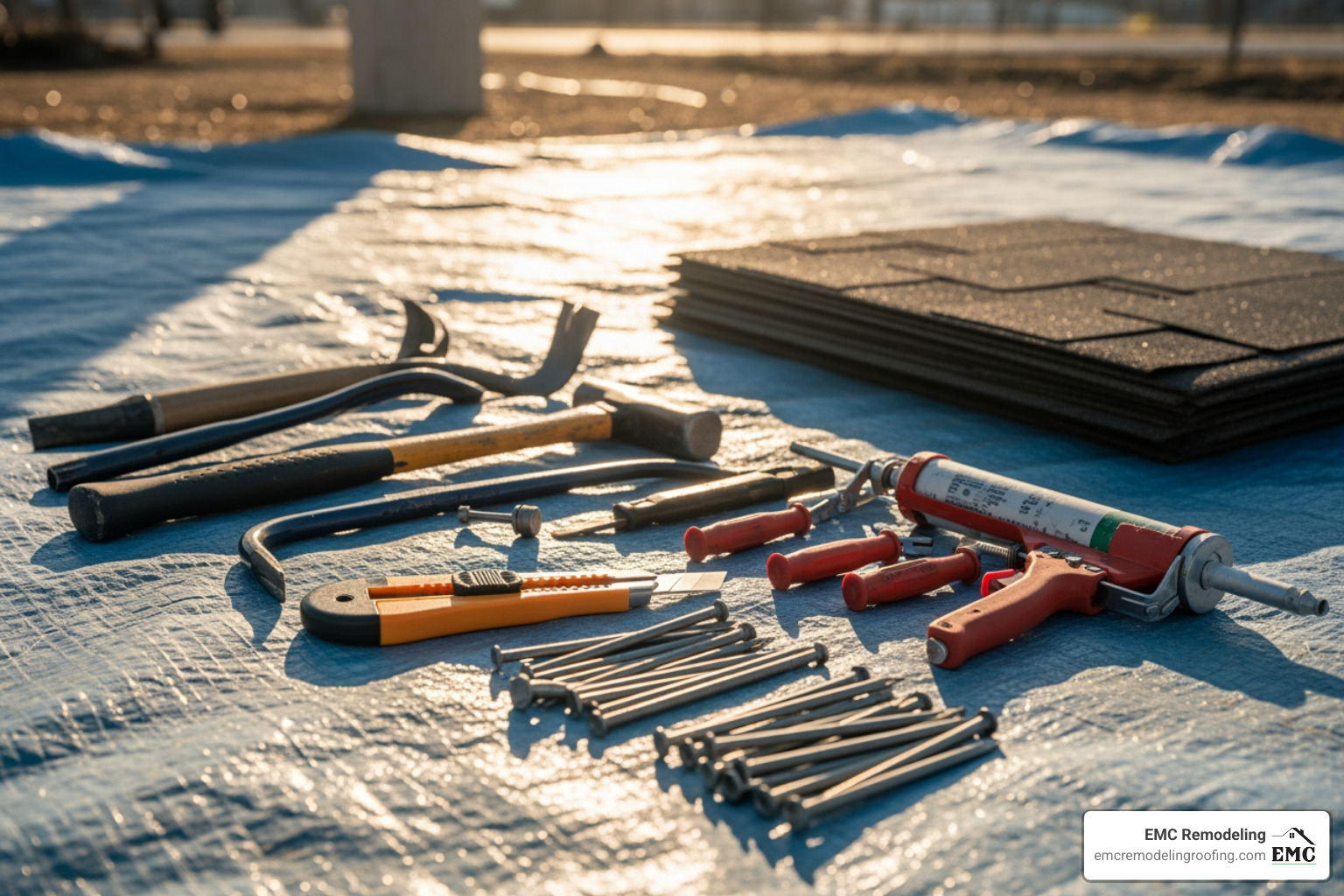
You’ll need a pry bar, hammer, roofing nails (1 1/4″), a utility knife, a caulking gun, roofing sealant or cement, replacement shingles, a sturdy ladder, a safety harness, gloves, and non-slip shoes. Having everything ready beforehand saves time and reduces trips up and down the ladder.
Choosing the Right Materials
Matching your existing roof is crucial for both aesthetics and performance. Most homes in areas like Temple and Killeen use asphalt shingles, which come in two main types:
- 3-tab shingles: A flat, single-layer, economical option with a 15-20 year lifespan.
- Architectural shingles: A thicker, multi-layered shingle with a textured look, superior durability, and longer warranties (30+ years).
Color matching can be tricky due to weathering. Use leftover shingles from the original installation if possible. For sealing, use roofing sealant for minor cracks and re-adhering curls, and thicker roofing cement for securing new shingles and covering nails.
Safety: The Most Important Part of the Job
Roofing is dangerous. The National Roofing Contractors Association recommends professional inspections partly due to these risks. If you’re uncomfortable with heights or have a steep roof, call a professional. For Central Texas residents, EMC Remodeling offers expert roofing services and can handle any job safely.
For DIYers, safety is paramount:
- Ladder: Ensure it’s sturdy, on level ground, and extends 3 feet above the eave. Have a spotter.
- Safety Harness: Non-negotiable for steep roofs. It must be attached to a secure anchor.
- Partner: Never work alone. A partner can assist and call for help.
- Power Lines: Maintain a safe distance from all overhead lines.
- Gear: Wear non-slip shoes, gloves, and safety glasses.
- Ground Safety: Keep the area below clear of people and pets.
- Weather: Never work on a wet, icy, or dewy roof. Wait for dry conditions.
If you feel uncertain, EMC Remodeling provides 24/7 emergency services and can be reached at (254) 265-6163.
The DIY Guide to Fix Roof Shingles
With damage assessed, tools gathered, and safety prioritized, it’s time for the repair. This guide covers the most common fixes for minor shingle issues. For more details, see our Asphalt Shingle Roof Repair Guide.
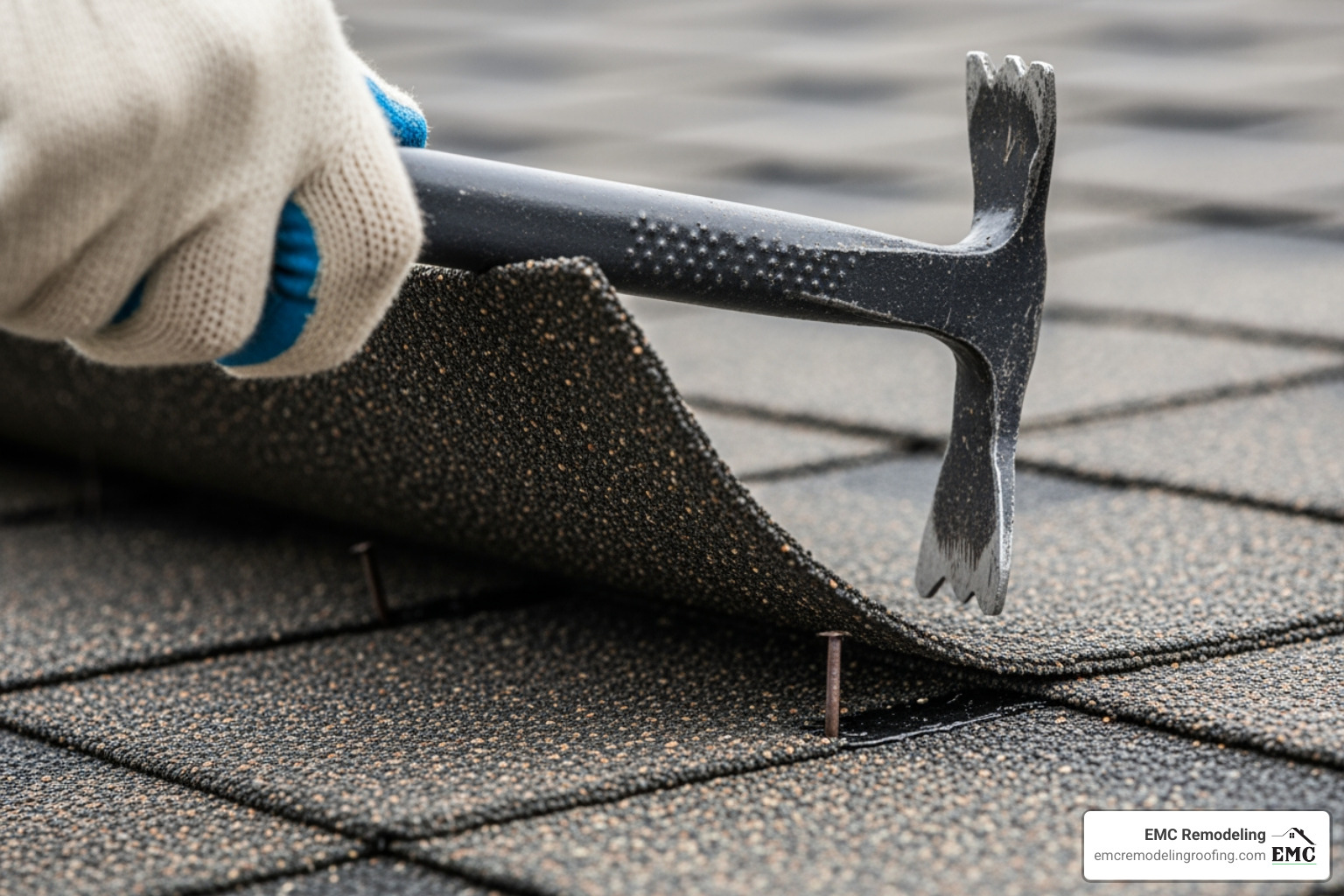
How to Fix Roof Shingles by Replacing a Damaged One
When a shingle is missing, torn, or severely cracked, replacement is the best option. Follow these steps methodically:
- Step 1: Loosen the Seals: Gently slide a pry bar under the shingles directly above and adjacent to the damaged one to break the adhesive seals. Work slowly to avoid damaging good shingles.
- Step 2: Remove the Nails: Lift the overlying shingles to expose the nails holding the damaged one (typically 4-6). Use your pry bar to remove them. You may also need to remove nails from the course above.
- Step 3: Slide Out the Old Shingle: With seals broken and nails removed, the damaged shingle should slide out easily.
- Step 4: Slide In the New Shingle: Position the new, color-matched shingle, ensuring it aligns perfectly with the surrounding shingles for proper water shedding.
- Step 5: Nail the New Shingle: Lift the overlying shingle and secure the new one with 4-6 galvanized roofing nails (1 1/4″). Place nails so the shingle above will cover them, as recommended by professional approach.
- Step 6: Seal the Shingles: Apply dabs of roof cement under the tabs of the new shingle and any others whose seals you broke. Press down firmly to create a new, watertight bond.
How to Fix Roof Shingles That Are Curled or Cracked
Not all damage requires replacement. For minor issues, a simple repair can extend a shingle’s life.
Repairing Curled Shingles: On a warm day, brush away debris from under the curl. Apply a bead of roofing sealant, press the shingle down firmly, and weigh it down with a brick for 24 hours to allow the sealant to cure.
Repairing Cracked Shingles: For minor cracks, apply a thick bead of sealant along the crack. Use a putty knife to spread it evenly. For better camouflage and UV protection, sprinkle loose granules from your gutters over the wet sealant.
DIY vs. Professional Repair: Knowing When to Call for Help
While DIY shingle repair can be satisfying and save on labor costs (typically $100-$200 in materials), some jobs require a professional. Knowing when to call for help can prevent a minor issue from becoming a costly disaster, especially when a full roof replacement averages $10,521.
DIY repairs are suitable for isolated issues like one or two damaged shingles or minor cracks, provided you are comfortable with heights and have the right safety gear. The risk is yours—both physical and financial if the repair fails or voids a warranty.
Professional repair is essential for widespread damage, complex jobs, or safety concerns. While it costs more upfront, you get expertise, insurance, quality materials, and warranties for peace of mind.
Signs You Need a Full Roof Replacement
Patching is sometimes not enough. Plan for a replacement if you see these signs:
- Age: Your asphalt roof is over 20 years old and requires frequent repairs.
- Widespread Damage: Large sections of the roof show curling, buckling, or cupping.
- Granule Loss: You see large “bald spots” where the protective granules have worn away.
- Sagging Roof Deck: A visible dip in the roofline signals serious structural problems.
- Frequent Repairs: You’re constantly fixing leaks or replacing shingles after storms.
Our Complete Roof Replacement Guide and Roof Replacement Estimate Complete Guide offer more details.
The Value of a Professional Roofer in Central Texas
In Central Texas locations like Georgetown and Salado, local expertise is invaluable for dealing with our unique weather. A professional offers:
- Expert Diagnosis: We perform comprehensive roof and attic inspections to find hidden issues before they escalate. Our emergency roof repair services are available 24/7 for urgent problems.
- Quality Materials: Professionals have access to better materials and can perfectly match your existing shingles.
- Safety and Insurance: Our crews are trained, equipped, and fully insured, protecting you from liability.
- Warranty Protection: Professional repairs come with labor and material warranties and won’t void your existing roof warranty.
- Efficiency: An experienced crew can complete a job in hours that might take you a full weekend.
When Finding a Roofing Contractor, look for a local expert like a Roofer Near Me: Temple TX. At EMC Remodeling, we’re here to help when the job requires expertise. Give us a call at (254) 265-6163 to discuss your roof’s needs.
Protecting Your Investment: Preventative Maintenance Tips
Proactive roof maintenance, much like car care, extends the 15-30 year lifespan of asphalt shingles and helps you avoid costly emergency repairs. Most of this work is straightforward and can be done from the ground.
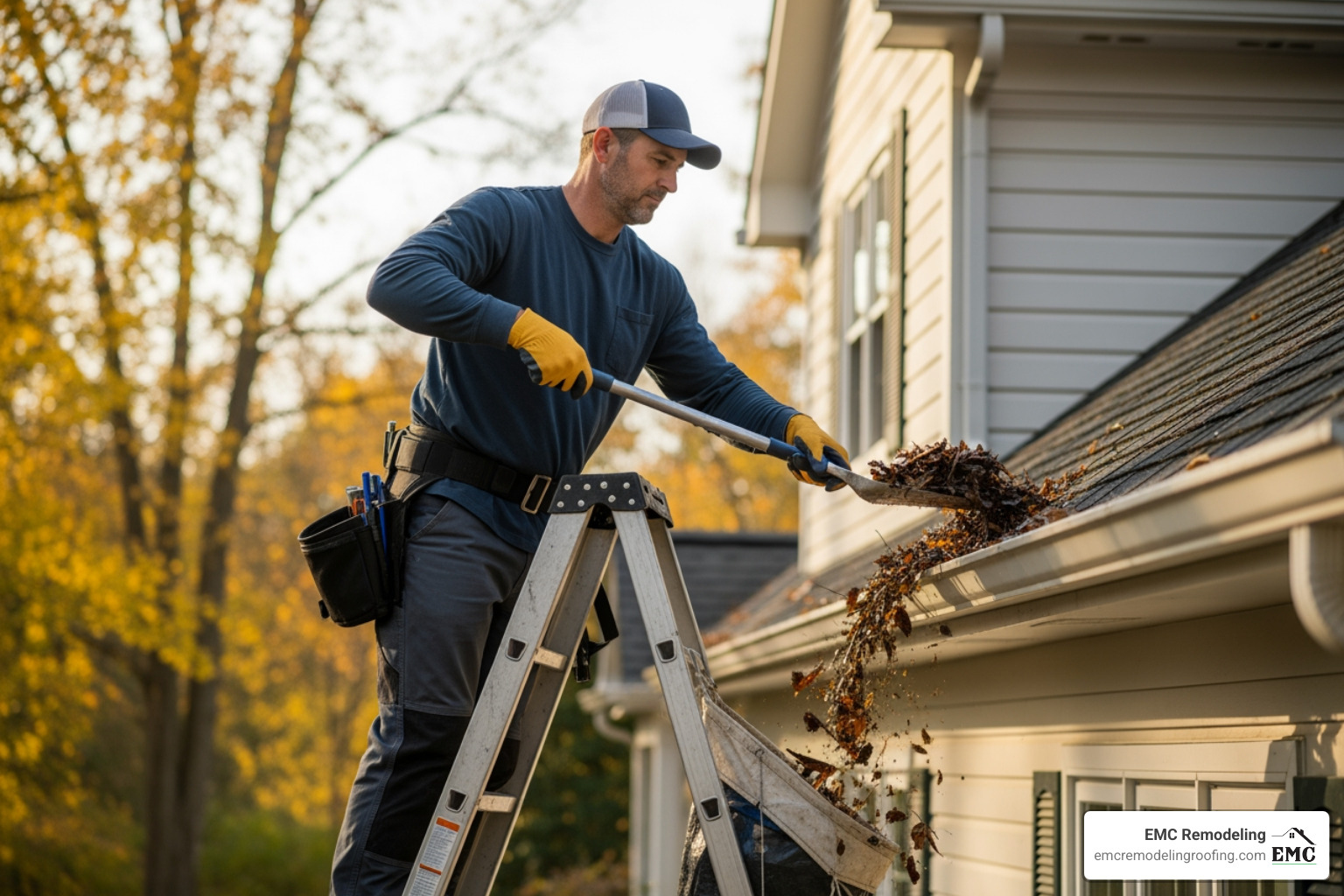
- Regular Inspections: Twice a year (spring and fall), scan your roof from the ground with binoculars. Look for missing, cracked, or curling shingles. For a safer, more thorough check, schedule a professional roof and attic inspection.
- Keep Gutters Clean: Clogged gutters cause water to back up under shingles and damage your foundation. Clean them twice a year and check for heavy granule loss, a sign of shingle wear.
- Trim Overhanging Branches: Keep branches 6-10 feet from your roof to prevent scratches, debris buildup, and storm damage.
- Ensure Proper Attic Ventilation: Good airflow prevents heat buildup in summer and moisture in winter, both of which can destroy shingles and lead to rot and mold. This is critical to extending shingle life when you fix roof shingles.
- Seasonal Checks: In summer, monitor sun-facing slopes for accelerated wear. In winter, watch for ice dams, which can force water under shingles. The National Weather Service offers guidance on how to prevent ice dams.
By staying on top of these tasks, you actively protect your home’s most important shield, preserve your property value, and ensure your family stays safe and dry.
Conclusion: Secure Your Home by Addressing Shingle Damage
Your roof is your home’s primary shield. Fixing roof shingles promptly is a critical investment in your property’s value and your family’s safety. This guide has shown how to spot damage, when to DIY, and when to call a professional. While minor fixes are manageable, widespread damage, structural issues, or an aging roof demand expert attention.
For homeowners in Temple, Killeen, Georgetown, and across Central Texas, a reliable roofing partner is essential. As a family-operated business, EMC Remodeling understands that emergencies don’t wait for business hours, which is why we offer 24/7 emergency services for urgent leaks and storm damage.
Whether you need an expert assessment or have found missing shingles or water stains, our team applies over 15 years of experience to protect your investment and provide peace of mind.
Don’t let minor shingle damage become a major headache. Protect your home today. For a professional assessment or immediate assistance, explore our comprehensive roof repair services. We’re here to help, rain or shine.