Why Understanding Spanish Tile Roof Replacement Matters for Texas Homeowners
Spanish tile roof replacement is one of the most durable and energy-efficient upgrades a Texas homeowner can make, but it demands careful planning and expert installation. For long-term performance, every project should start with a trusted, local specialist. Homeowners looking for a reliable, full-service partner can turn to a Central Texas roofing and remodeling expert that understands Temple’s climate, codes, and storm patterns.
A Spanish tile roof replacement is a significant investment that requires structural evaluation, proper material selection, and meticulous installation. Whether your roof has weathered decades of Texas storms or you’re planning an upgrade after hail or wind damage, understanding the process upfront reduces both risk and stress. For homeowners seeking lasting quality, partnering with a local roof installation and roof repair specialist is the first step.
Answer at a Glance: The Spanish Tile Roof Replacement Process
- Inspection & Assessment – Professional evaluation of tiles, underlayment, and structural integrity
- Material Selection – Choose between clay, concrete, or modern composite tiles
- Structural Reinforcement – Most homes need support upgrades ($3,000-$10,000) to handle tile weight
- Old Roof Removal – Careful tear-off of existing tiles and underlayment
- Deck Repair – Replace damaged sheathing and install new waterproof underlayment
- Tile Installation – Expert laying of new tiles with proper fastening and ventilation
- Flashing & Finishing – Install ridge tiles, valleys, and ensure all penetrations are sealed
- Final Inspection – Quality check and cleanup
Expected Investment: $15-$25 per square foot installed, with a lifespan of 50-100+ years. While this is higher than asphalt shingles, the durability and reduced replacement frequency make the lifecycle cost highly competitive.
Spanish tiles are engineered for hot, storm-prone climates like Central Texas. Their curved profile channels heavy rain away from vulnerable joints, and the ventilated air gap beneath them can reduce attic heat by up to 70%, lowering cooling costs significantly. However, their weight—850-1,000 pounds per 100 square feet for clay—means most homes require structural reinforcement before installation.
Choosing between localized repairs and a full replacement is a critical budget decision. Individual tile repairs in Texas average around $1,000, but widespread breakage or underlayment failure (common after 20-30 years) often makes a full replacement more cost-effective. Routine roof inspection services frequently uncover degraded underlayment even when the surface tiles appear intact.
As Matthew Runyon, President of EMC Remodeling & Roofing, I have guided Central Texas homeowners through spanish tile roof replacement projects for over 15 years. From material selection to structural assessments and emergency leak response, our family-operated team delivers comprehensive roofing services backed by disciplined workmanship and 24/7 support.
When to Replace vs. Repair: Reading the Signs on Your Roof
A well-maintained Spanish tile roof can last over 50 years, with some clay roofs lasting a century. However, Central Texas weather, underlayment age, and initial installation quality affect its true lifespan. Knowing when to repair versus replace can save you thousands and prevent further home damage.
Signs You Need a Full Replacement
While Spanish tiles themselves are incredibly durable, the components beneath them have a more limited lifespan. Here are the key indicators that a full spanish tile roof replacement might be on the horizon:
- Widespread Cracked or Broken Tiles: Extensive damage across large sections of your roof, beyond a few cracked tiles, often points to a systemic issue. This can be caused by major impacts like hail or improper foot traffic.
- Evidence of Significant Water Damage in the Attic: Stains on your ceiling, damp insulation, or attic mold are clear signs of water intrusion, indicating the waterproof underlayment beneath your tiles has failed.
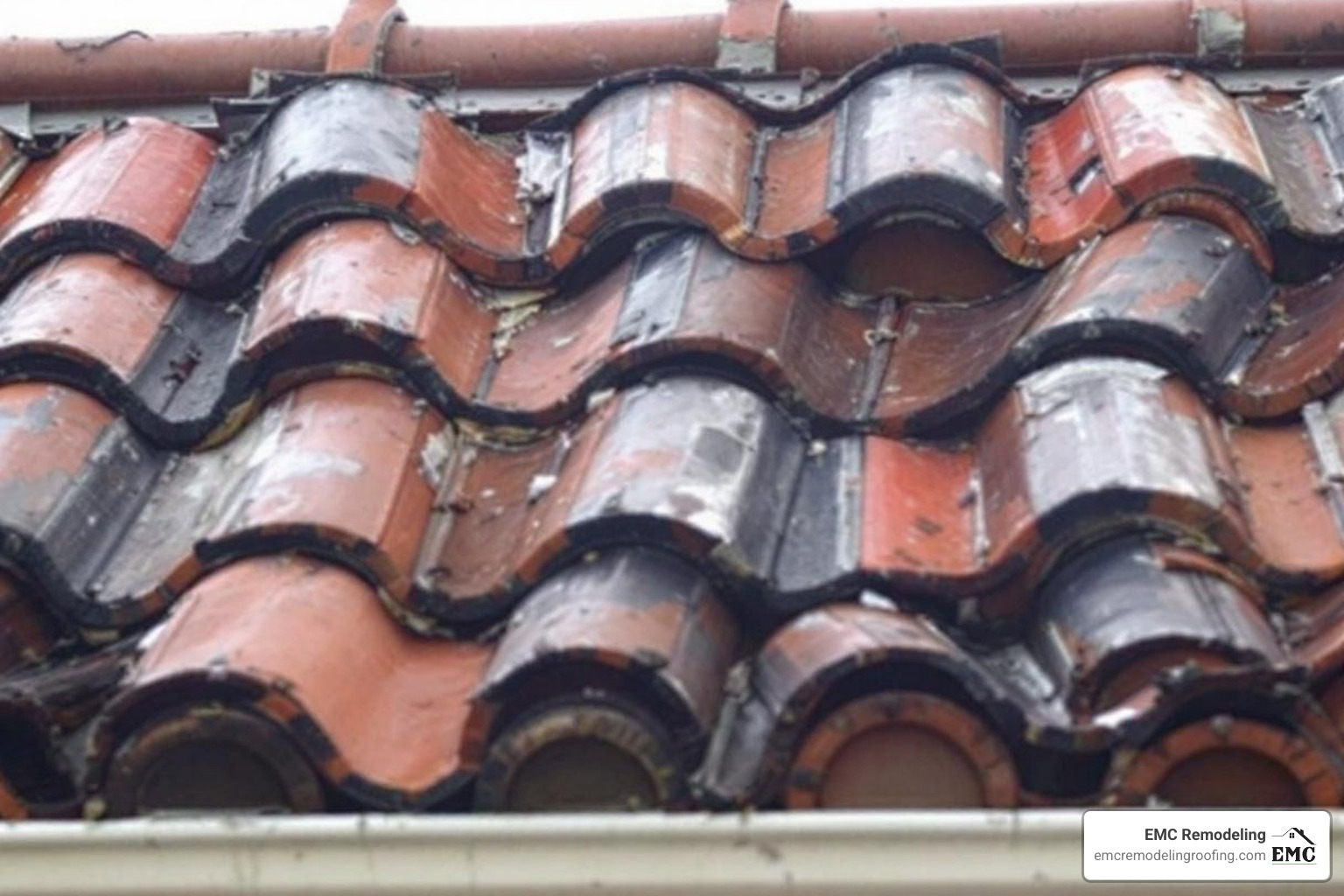
- Underlayment Has Reached the End of Its Lifespan: The underlayment, your roof’s primary waterproof barrier, lasts about 20-30 years. Once it degrades, your roof is compromised, even if the tiles look fine. Replacing it requires removing all tiles, making a full replacement necessary. Understanding the cost to replace underlayment on tile roof is key.
- Multiple, Persistent Leaks Across the Roof: Chasing multiple, persistent leaks indicates a systemic failure of the roof’s integrity, not just an isolated problem.
- Structural Sagging Due to Weight or Water Damage: A sagging roofline is a critical safety issue. It can be caused by the immense weight of the tiles on an improperly reinforced structure or by prolonged water damage, and it requires immediate attention and a full replacement.
- Moss and Algae Growth: Extensive moss or algae growth indicates trapped moisture, which accelerates the deterioration of tiles and the underlayment.
- If You Need Emergency Service for Severe Damage: Severe storm damage often requires more than simple repairs. An emergency roof repair assessment is vital to secure your home, and we offer 24/7 support for these situations.
Deciding Between Repair and Replacement
The choice between repairing and replacing your Spanish tile roof often boils down to a few critical factors:
- Cost of Individual Tile Repair: Isolated tile roof repairs average around $1,000. If damage is widespread, replacement becomes the more cost-effective long-term solution.
- Age of the Roof System: If your underlayment is over 20-30 years old, replacement offers better long-term value than ongoing repairs.
- Extent of the Damage: Determine if damage is isolated to a few tiles or systemic, affecting the underlayment. If the underlayment is breached, replacing only the tiles won’t fix the leak.
- Long-Term Value vs. Short-Term Fix: Replacement is a long-term investment in protection and home value, while repairs on a failing system can become a recurring expense.
- Consulting with a Professional: A professional roof inspection pflugerville tx is essential. As one of the top roofing repair companies nearby, our team provides an honest evaluation to help you make an informed decision.
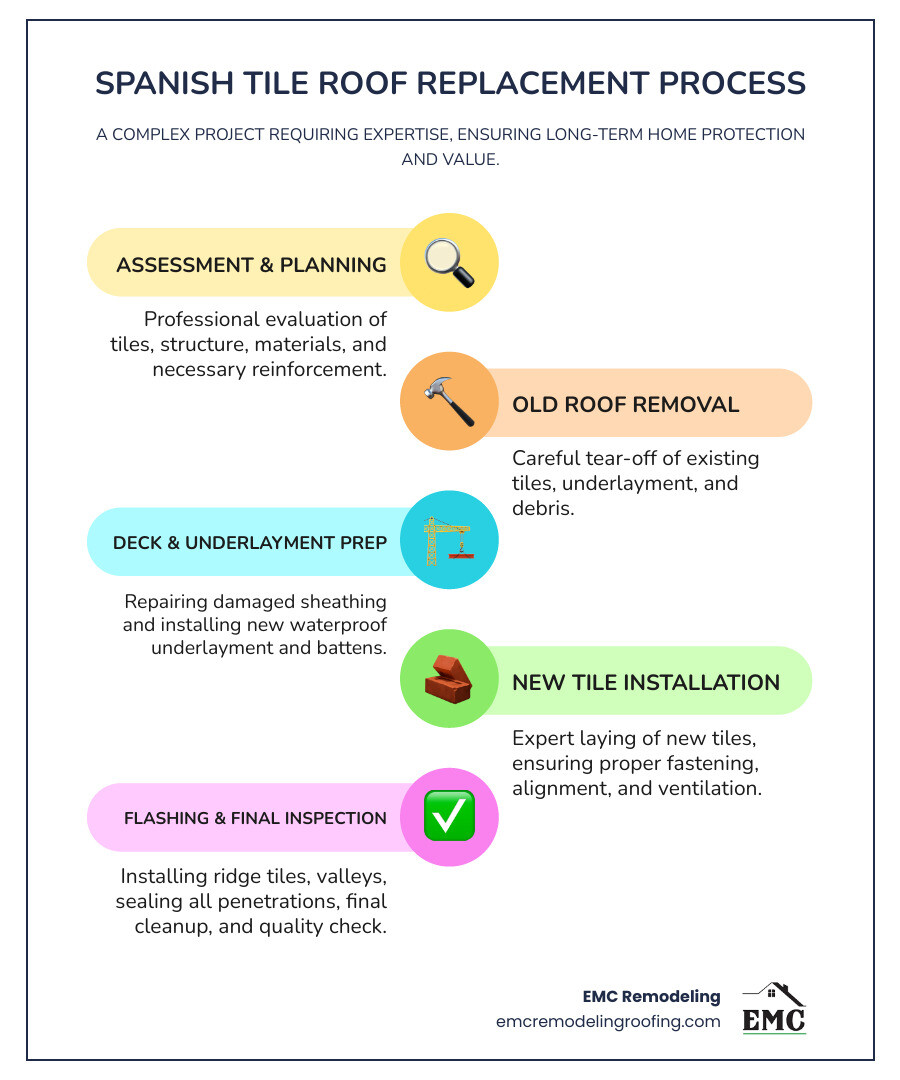
The Step-by-Step Spanish Tile Roof Replacement Process
A spanish tile roof replacement is a complex process requiring expertise. Unlike a shingle roof replacement complete guide, it involves heavy materials and precise installation for longevity. Here is our step-by-step approach:
- Structural Assessment: We first conduct a structural assessment. Clay tiles weigh 850-1,000 pounds per square (100 sq ft), far heavier than other materials. If your home wasn’t built for this load, reinforcement is a critical safety step to ensure it can support the new roof.
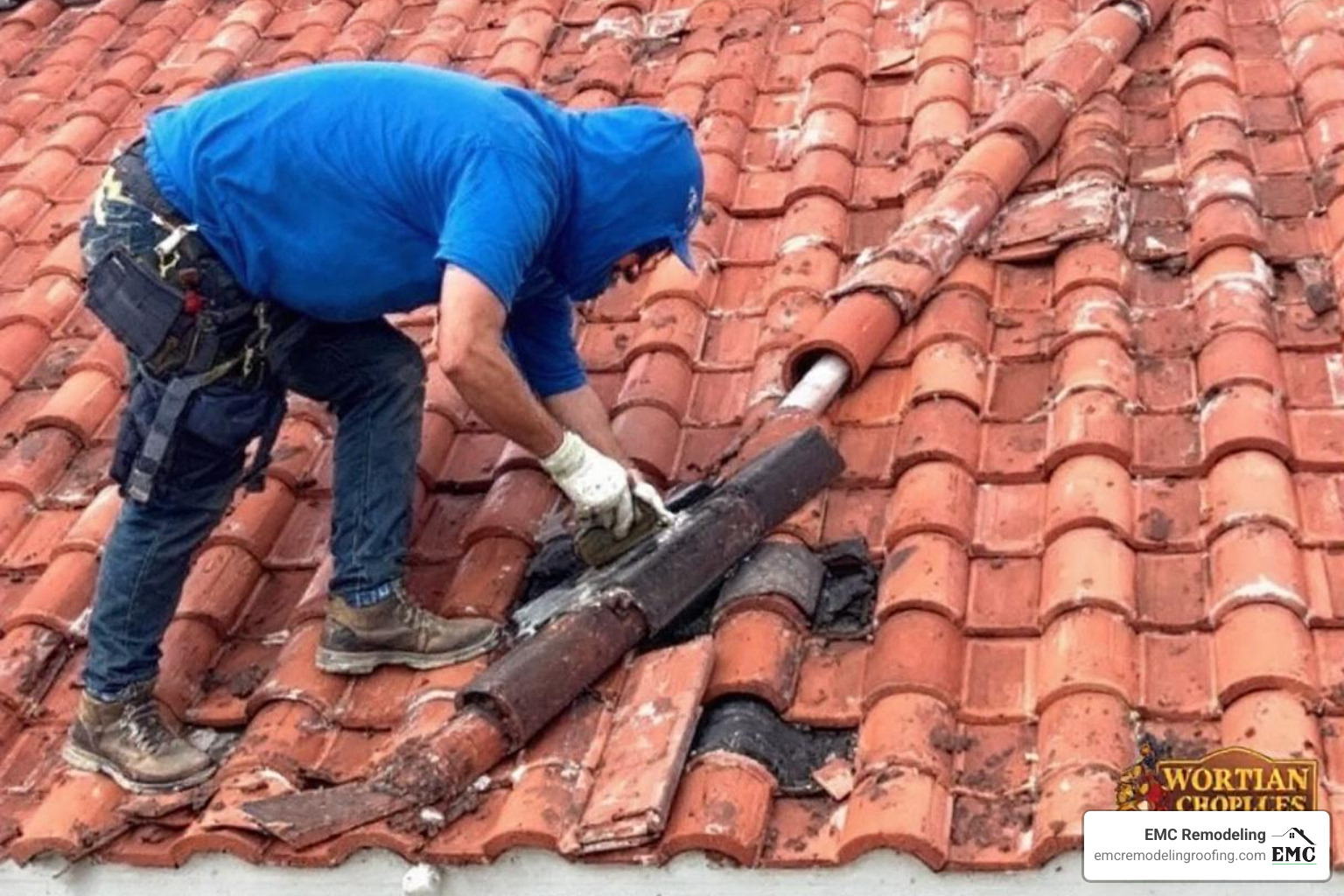
- Tearing Off Old Tiles and Underlayment: Old tiles are carefully removed by hand to protect the property, and the old underlayment is stripped to expose the roof deck.
- Deck Inspection and Repair: We inspect the exposed roof deck for rot or damage, replacing any compromised sheathing to create a solid foundation.
- Installing New, High-Performance Underlayment: We install a high-performance underlayment, the primary waterproof barrier. This modern synthetic membrane is designed to last 20-30 years, protecting your home as recommended by the Tile Roofing Industry Alliance for optimal performance.
- Batten System Installation (if required): A batten system (wood strips) is often installed over the underlayment. It provides a nailing surface, creates an air gap for ventilation, and ensures proper tile alignment.
- Laying the New Tiles: New tiles are carefully laid from the eaves to the ridge with precise overlap. The S-shape profile is key to channeling water and creating energy-efficient ventilation.
- Flashing Installation (Chimneys, Valleys, Vents): We install durable flashing (e.g., copper) around chimneys, vents, and in valleys. This is expertly integrated to create watertight seals and prevent leaks.
- Ridge and Hip Tile Installation: Specialized ridge and hip tiles are mortared or fastened to protect vulnerable areas and provide a finished look.
- Final Cleanup and Inspection: We perform a thorough site cleanup and a final inspection to ensure every detail is perfect and your new roof is ready to last for decades.
Key Considerations for Your Spanish Tile Roof Replacement
Undertaking a spanish tile roof replacement involves several unique considerations that set it apart from other roofing projects.
- Structural Reinforcement: This is the most critical factor. Clay tiles (850-1,000 lbs/square) are much heavier than shingles (200-400 lbs/square). Most homes require a structural engineer’s assessment and reinforcement, which can add $3,000-$10,000 to the budget. This is a non-negotiable safety step.
- Minimum Roof Slope: Spanish tiles require a minimum roof slope of 2.5/12 (4:12 is recommended) for proper water drainage. Low-slope roofs may require alternative systems.
- Proper Ventilation: The air gap created by Spanish tiles provides natural ventilation, a major energy efficiency benefit in Texas. Proper attic ventilation is also essential to reduce heat and extend the roof’s life.
- Choosing a Qualified Installer: Handling heavy, fragile tiles and assessing structural needs requires a qualified roof installation company near me. Proper installation by an experienced contractor is key to the roof’s longevity.
- Historic Preservation: For historic homes, specific guidelines may apply. Resources like Preservation Brief 30 detail the importance of matching original tiles and installation methods to maintain historical accuracy.
Materials and Costs: What to Expect for Your Investment
While the upfront cost of a Spanish tile roof is higher than asphalt, its 50-100+ year lifespan offers incredible long-term value. Over 50 years, its total cost can be comparable to multiple shingle roof replacements. Understanding the material options is key to budgeting for your project.
Material Options: Pros and Cons
The world of Spanish tiles isn’t just about classic clay anymore. Modern advancements offer homeowners several choices, each with its own benefits and considerations.
- Traditional Clay Tiles:
- Pros: Best longevity (50-100+ years), authentic look, natural thermal resistance, eco-friendly, and Class A fire-rated.
- Cons: Very heavy (850-1,000 lbs/square), fragile, high upfront cost, and limited color options.
- Concrete Tiles:
- Pros: Durable, wide color/profile variety, less expensive than clay, and good thermal mass.
- Cons: Heavier than clay, requires reinforcement, can absorb some moisture, and colors may fade.
- Modern Composite/Synthetic Tiles:
- Pros: Lightweight (often no reinforcement needed), durable (Class 4 impact rating), eco-friendly (recycled materials), wide color variety, and easier installation. Brava tiles withstand winds up to 211 MPH.
- Cons: Higher cost than asphalt, may lack the authentic texture of clay, and has less long-term history.
Understanding the Cost of a Spanish Tile Roof Replacement
The cost of a spanish tile roof replacement can vary significantly based on several factors. It’s an investment, but one that pays dividends in longevity and home value.
- Installation Cost Per Square Foot: Expect to pay $15-$25 per square foot installed, depending on tile type, roof complexity, and local labor rates.
- Comparison to Other Materials: Compared to asphalt shingles ($5-$10/sq ft) and metal roofing ($10-$18/sq ft), tile has a higher initial cost. However, since a tile roof lasts 2-5 times longer than asphalt, the lifetime cost is often comparable.
- Labor Costs: Specialized, labor-intensive installation of heavy tiles leads to higher labor costs than for other roofing materials.
- Underlayment Costs: High-quality underlayment adds $2-$3 per square foot but is a crucial investment for waterproofing and longevity.
- Debris Removal: Debris removal for heavy tiles costs about $0.75-$1 per square foot, more than for lighter shingles.
- Potential Structural Reinforcement Costs: Structural reinforcement, if needed, can add $3,000-$10,000 to the total project cost.
- Getting a Detailed Estimate: Due to cost variations, a detailed roof replacement estimate complete guide from a reputable contractor is essential for understanding your investment.
| Feature | Traditional Clay Tiles | Concrete Tiles | Modern Composite/Synthetic Tiles |
|---|---|---|---|
| Cost (per sq ft) | $15 – $30 | $10 – $20 | $15 – $25 |
| Weight (per square) | 850 – 1,000 lbs (heavy) | 900 – 1,200 lbs (very heavy) | 281 – 400 lbs (lightweight) |
| Lifespan | 50 – 100+ years (can exceed 100) | 50+ years | 50+ years (with warranty) |
| Maintenance | Low (tiles durable, underlayment needs checks) | Low (tiles durable, underlayment needs checks) | Very Low (highly durable, minimal breakage) |
| Fragility | High (prone to chipping/cracking) | Moderate (more resilient than clay) | Very Low (Class 4 impact rating) |
| Aesthetics | Authentic, natural, classic Mediterranean | Versatile, wide color/profile options, can mimic clay | Realistic, consistent, modern aesthetic |
| Energy Efficiency | Excellent (natural thermal mass & ventilation) | Good (thermal mass, can be reflective) | Excellent (air gap, often reflective, eco-friendly) |
| Structural Needs | Almost always requires reinforcement | Almost always requires reinforcement | Often no reinforcement needed |
| Fire Rating | Class A (often) | Class A (often) | Class C (with standard underlayment), Class 4 Impact |
| Eco-Friendliness | Natural, recyclable | Natural materials, long lifespan | Made from recycled materials, recyclable |
The Benefits and Drawbacks of a Spanish Tile Roof
Spanish tiles offer superior performance in the Texas climate, but it’s important to weigh their significant advantages against a few key drawbacks.
Showing the Advantages: Why Spanish Tiles Shine
- Exceptional Durability and Lifespan: A key benefit is longevity. Clay tile roofs can last over 100 years, meaning fewer replacements and long-term savings.
- Superior Weather Resistance: Spanish tiles offer superior resistance to Texas weather. Their weight and interlocking design resist high winds (some systems are rated for up to 211 MPH). They stand up well to hail, with composite options offering a Class 4 impact rating—the industry’s highest. For any storm-related issues, we provide specialized hail damage roof repair. The curved design efficiently sheds heavy rain, and the tiles resist cracking or warping in extreme temperatures.
- Excellent Fire Safety: Most tile roofs have a Class A fire rating, the highest available. This makes them highly resistant to external fire, a crucial safety feature. You can learn more about what a Class A rated tile roof system means.
- Energy Efficiency: The curved tile profile creates an air barrier that can reduce heat transfer into the attic by up to 70%. According to the Tile Roofing Industry Alliance, this natural ventilation can lower cooling costs by up to 20% in hot climates like Texas.
- Increased Home Value and Curb Appeal: The timeless aesthetic of a Spanish tile roof boosts curb appeal and property value, perfectly suiting Mediterranean, Spanish Colonial, Mission, and Tuscan architectural styles.
Acknowledging the Drawbacks: The Other Side of the Coin
While the benefits are substantial, it’s important to be aware of the challenges associated with Spanish tile roofs:
- High Upfront Cost: The initial investment is significantly higher than for asphalt shingles, which can be a barrier for some homeowners.
- Heavy Weight: The extreme weight requires structural reinforcement for most homes, adding complexity and cost to the installation.
- Repair Complexity: Repairs require skilled professionals who know how to walk on tiles without causing more damage. Matching older, weathered tiles can also be difficult.
- Fragility: Traditional clay tiles are fragile and can crack from impacts or improper foot traffic.
Frequently Asked Questions about Spanish Tile Roof Replacement
Here, we address some of the most common questions our clients in Temple, Killeen, and Belton, TX, ask about spanish tile roof replacement.
How long does a Spanish tile roof really last?
A properly installed clay tile roof can last over 100 years, while concrete tiles last 50+ years. The limiting factor is the underlayment, which typically needs replacement every 20-30 years. Overall, it is one of the longest-lasting roofing materials available.
Do I need to reinforce my roof structure for Spanish tiles?
Yes, most homes require structural reinforcement. Clay tiles weigh 850-1,000 pounds per square, far more than shingles. A structural engineer must assess your home’s framing to ensure it can support the weight. This essential safety step, managed by professional roofing companies in Temple, TX, can add $3,000-$10,000 to the project cost.
How do Spanish tiles help with energy bills in Texas?
The curved tile shape creates an air pocket that acts as a thermal barrier, reducing heat transfer to your attic by up to 70%. This natural ventilation can lower cooling costs by up to 20% in hot Texas summers, according to the Tile Roofing Industry Alliance, making it a highly energy-efficient choice.
Your Trusted Partner for Spanish Tile Roofing in Central Texas
A spanish tile roof replacement is a major decision that significantly improves your home’s value, curb appeal, and long-term protection. Because tile systems are heavier, more complex, and more technically demanding than shingle roofs, the project requires a contractor with deep structural knowledge, storm-damage experience, and a proven safety record.
EMC Remodeling is a family-operated roofing company based in Temple, TX, known for direct owner involvement and 24/7 response when severe weather strikes. Our team manages every phase of your project—from structural assessment and permitting to precision tile installation and emergency dry-in—so homeowners have a single accountable partner.
For homeowners who want clear, data-driven planning before committing, our complete roof replacement guide explains how professional contractors calculate scope, labor, and materials for tile, metal, and shingle systems. If you are comparing materials or planning a major upgrade, our new tile roof cost resource breaks down how tile selection, roof pitch, and reinforcement impact your total investment over a 50–100 year service life.
We are your local experts for:
- Full-scale roof installation on new and existing homes
- Comprehensive roof repair after hail, wind, or impact damage
- 24/7 emergency response for active leaks and storm-related failures
- Insurance claim documentation and coordination for storm losses
Our roofing contractors killeen tx team provides fast deployment for storm events across the region, while our detailed roofing company belton tx complete guide helps Belton homeowners understand local code requirements, roof options, and maintenance expectations.
If you are facing storm damage, ongoing leaks, or planning a proactive Spanish tile upgrade, you can reach EMC Remodeling 24/7 at (254) 262-1739 for rapid assistance and a detailed evaluation custom to your home.
