The Best Roof Ventilation Solutions Start With Understanding Your Attic
Roof ventilation solutions are systems that move air through your attic — pulling cool air in at the eaves and pushing hot, humid air out at the peak. If your attic is trapping heat or moisture, the right ventilation fix depends on your roof type, climate, and current setup.
Here are the most effective roof ventilation solutions at a glance:
| Solution Type | Best For | Key Benefit |
|---|---|---|
| Ridge + soffit vents | Most home types | Balanced, passive airflow |
| Solar-powered fans | Hot, sunny climates | High air exchange, no energy cost |
| Hard-wired attic fans | Low-wind areas | Powerful, consistent extraction |
| Turbine (whirlybird) vents | Windy regions | Wind-driven, no electricity needed |
| Gable vents | Older gable-style roofs | Simple cross-ventilation |
| Hip vents | Hip roofs with no ridge | Exhaust along hip lines |
Without proper ventilation, attic temperatures can reach dangerous extremes — up to 70°C on a hot summer day. That trapped heat warps shingles, feeds mold, and drives up your cooling bills. The good news: the right system can cut energy costs by as much as 43%.
As a Central Texas homeowner, you’re dealing with some of the most punishing roof conditions in the country — scorching summers, sudden storms, and high humidity that make ventilation not just helpful, but essential.
I’m Matthew Runyon, President of EMC Remodeling & Roofing, and with over 15 years of hands-on roofing experience in Central Texas, I’ve seen how the right roof ventilation solutions protect homes from heat damage, moisture buildup, and premature roof failure. In this guide, I’ll walk you through everything you need to make the best choice for your home.
Roof ventilation solutions word guide:
Why Proper Roof Ventilation Solutions are Critical for Your Home
When we talk about roof ventilation solutions, we aren’t just talking about comfort; we are talking about the structural survival of your home. In our service areas like Temple and Leander, TX, the sun is relentless. Without a way for heat to escape, your roof space can become a literal oven.
The 70°C Reality
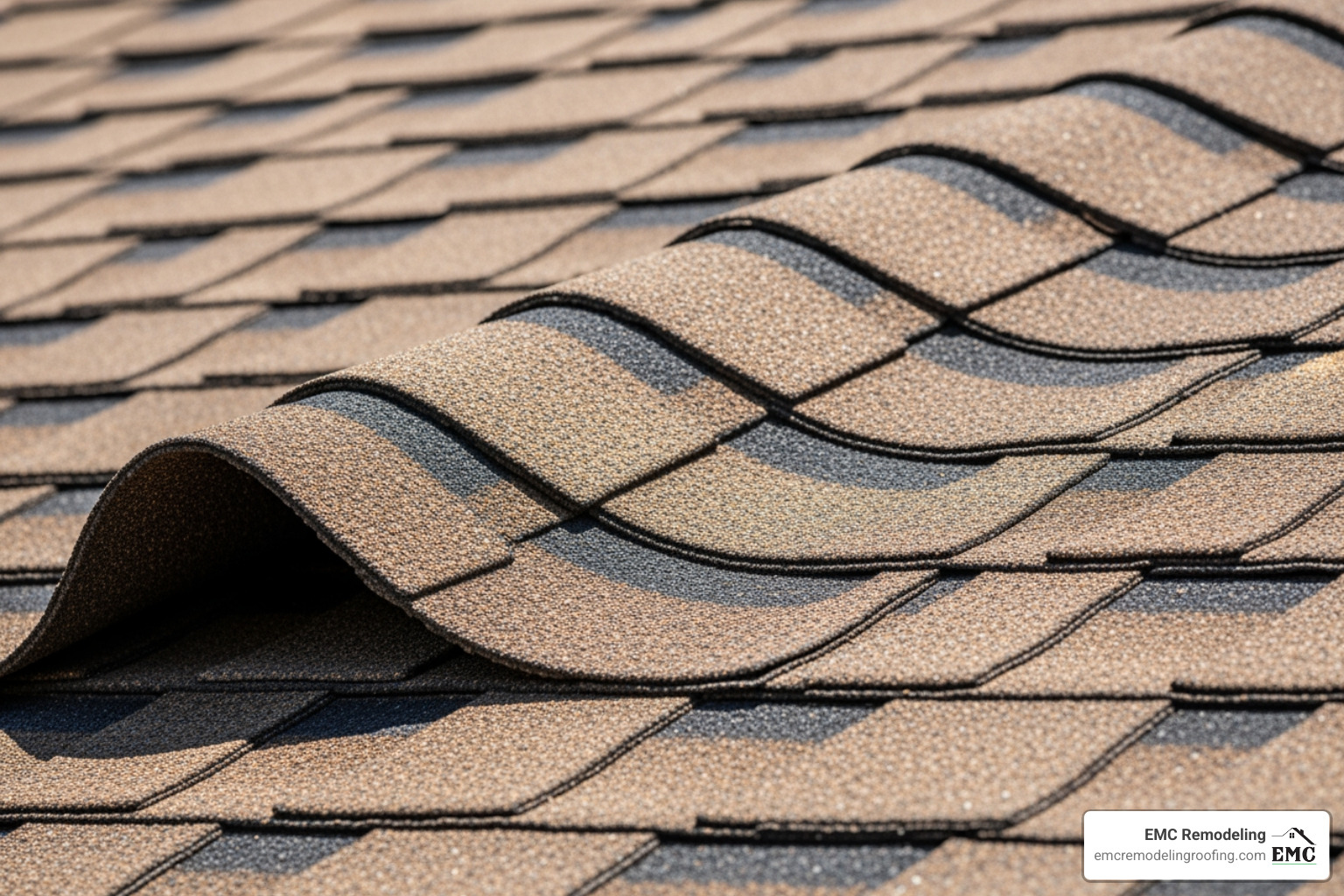
Research indicates that without ventilation, roof space temperatures can reach extremes of 70°C (158°F) during hot summers. This level of heat doesn’t just make your air conditioner work harder; it actually bakes your roofing materials from the inside out. High heat causes asphalt shingles to become brittle, lose their protective granules, and eventually curl or “cup.”
Mold Prevention and Structural Integrity
It’s a common misconception that ventilation is only for the summer. In reality, it is just as vital for moisture control. Daily activities like showering and cooking release moisture that rises into the attic. If this moist air isn’t exhausted, it condenses on the underside of the roof deck, leading to wood rot and mold growth. Regular attic inspections are the best way to catch these “invisible” issues before they require a full roof replacement.
Preventing Ice Dams
While less common in Central Texas than in snowy regions, temperature fluctuations can still cause issues. Proper soffit vents ensure that the roof temperature remains consistent. In colder climates, warm attic air melts snow on the roof, which then refreezes at the cold eaves, creating ice dams. These dams force water under the shingles, leading to devastating leaks. Balanced airflow keeps the attic closer to the outside temperature, neutralizing this risk.
How Roof Ventilation Works: The Science of Airflow
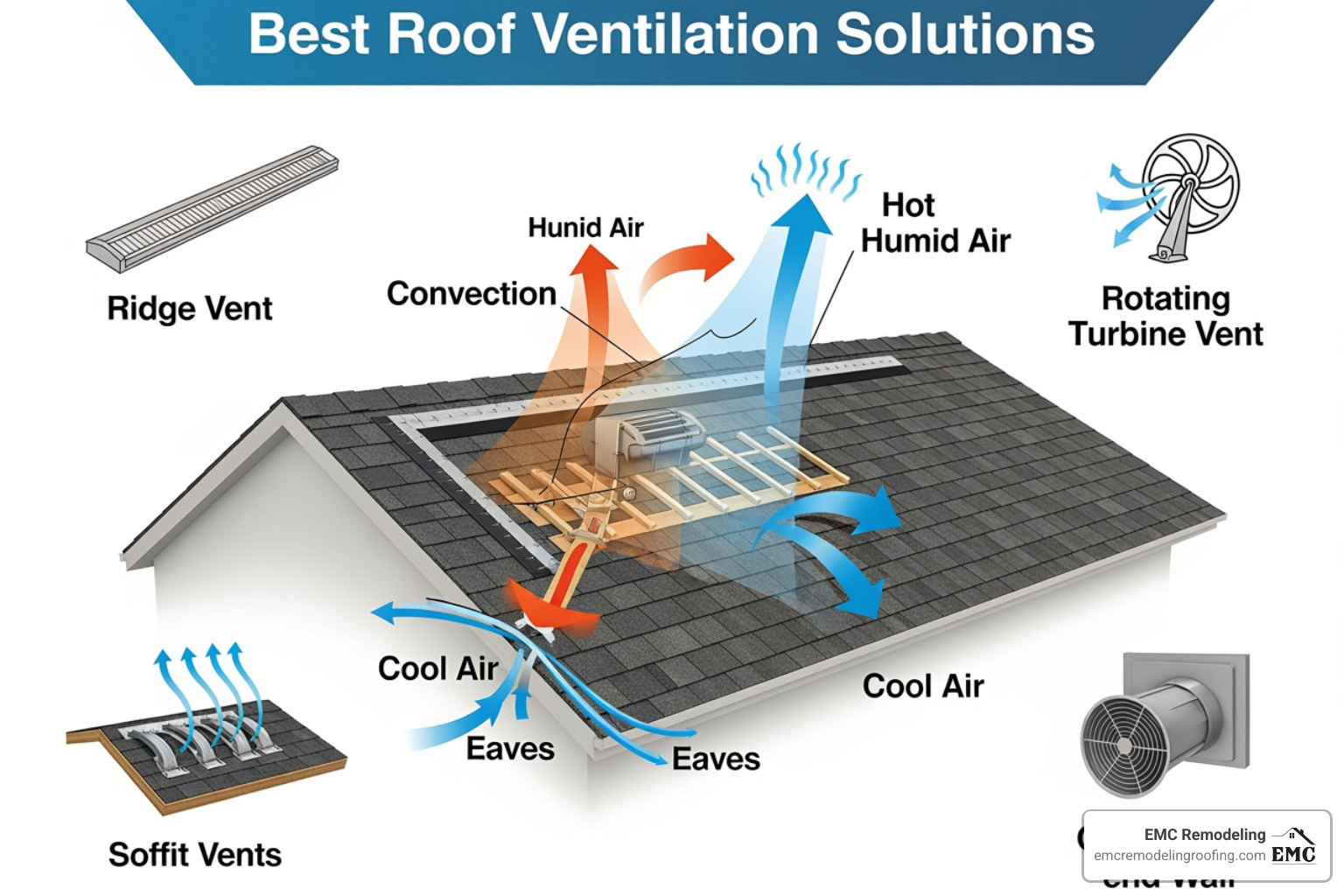
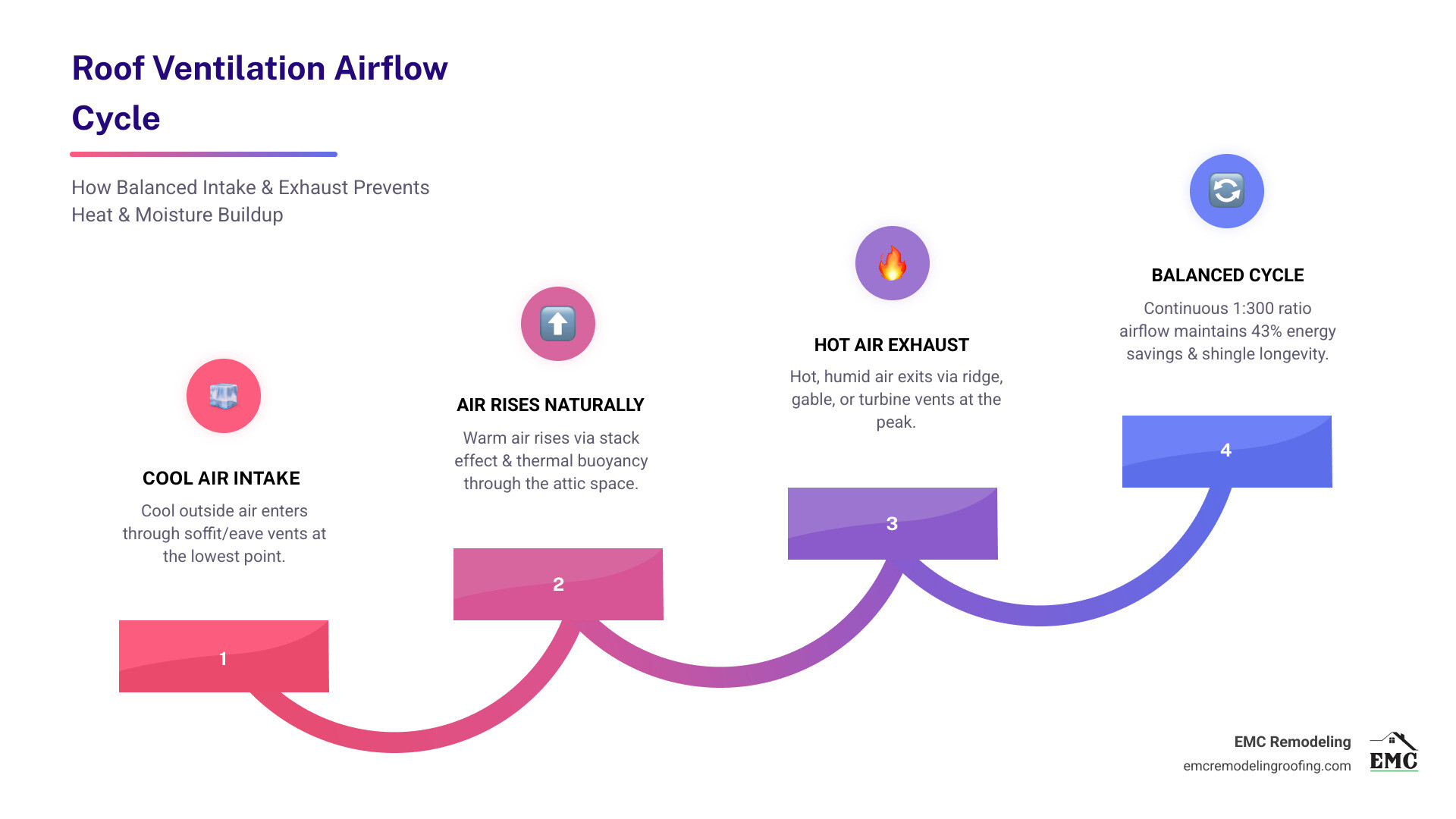
To understand how to improve attic airflow, we have to look at the physics of “The Stack Effect.” This is the natural phenomenon where warm air rises (thermal buoyancy) and creates a vacuum that pulls cooler air in from below.
The Intake and Exhaust Balance
A functional system requires two parts:
- Intake Vents: Usually located at the lowest part of the roof (soffits or eaves), these allow fresh, cool air to enter.
- Exhaust Vents: Located at or near the peak of the roof, these allow the hot air to escape.
For the system to work efficiently, these must be balanced. If you have plenty of exhaust but no intake, the system will struggle to move air, often pulling conditioned air from inside your living space instead.
The 1:300 Rule
How do you determine how many vents are needed? Most building codes and manufacturers, including GAF, recommend a minimum of 1 square foot of net free ventilation area (NFVA) for every 300 square feet of attic floor space. This should be split evenly—50% intake and 50% exhaust. If your roof is particularly steep or lacks a balanced high/low system, experts often suggest increasing this to a 1:150 ratio.
Passive Roof Ventilation Solutions
Passive vents rely entirely on natural forces like wind pressure and thermal buoyancy. They have no moving parts and require zero electricity.
- Ridge Vents: These are installed along the entire peak of the roof. According to the scientific guide on ridge vents, they provide the most uniform cooling and are nearly invisible from the ground. High-performance models like the Cobra Rigid Vent 3 offer 18 square inches of NFVA per linear foot.
- Soffit Vents: These are the primary intake source. They are installed in the eaves and are essential for a balanced system.
- Static Domes (Box Vents): These are individual vents installed near the ridge. They are excellent for roofs with limited ridge lines.
- Turbine Vents (Whirlybirds): These use a series of vanes that spin when the wind blows, creating a vacuum that pulls air out of the attic. Even in light breezes, they are quite effective.
| Vent Type | NFVA (Typical) | Best Feature |
|---|---|---|
| Ridge Vent | 18-20 sq in/ft | Consistent, aesthetic |
| Static Dome | 144 sq in/unit | High capacity for small areas |
| Soffit Vent | Varies by size | Essential for intake |
| Turbine Vent | High (when windy) | Active-style pull with passive tech |
Active and Powered Roof Ventilation Solutions
When natural airflow isn’t enough—especially in the stagnant heat of a Texas July—active solutions are the answer. These use mechanical power to force air out of the attic.
- Solar-Powered Fans: Units like the Solar Star are incredibly efficient, extracting up to 1800 m³ of air per hour. This is equivalent to roughly 6 to 8 traditional whirlybirds. Because they run on the sun, they cost nothing to operate.
- Hard-Wired Electric Vents: These are the heavy hitters. They can ventilate up to 127 square meters of roof space and are often equipped with humidistat and thermostat controls. When the attic hits a certain temperature (e.g., 90°F) or humidity level, the fan kicks on automatically.
If you notice your upstairs rooms are significantly hotter than the downstairs, it might be time for an upgrade. We often recommend these during roof repair services to help homeowners lower their long-term cooling costs.
Choosing the Right System for Your Roof Type and Climate
Not every vent works for every home. Your roof’s architecture dictates which roof ventilation solutions will be most effective.
- Gable Roofs: These are the easiest to vent. A combination of ridge and soffit vents is standard, though gable-end vents can provide excellent cross-ventilation.
- Hip Roofs: Because hip roofs have shorter ridge lines, they often struggle with exhaust. Solutions like the Cobra Hip Vent allow for exhaust along the hip rafters, providing necessary airflow where a standard ridge vent can’t fit.
- Flat and Shed Roofs: These require specialized “roof-over” or fascia vents because there is no traditional attic space.
- Texas vs. Washington: In the hot Texas climate, the goal is heat rejection. In moist climates like Washington, the focus shifts to moisture removal to prevent moss and rot.
For the DIY-inclined, we have a guide to roof component installation that covers the basics, but cutting into your roof deck always carries a risk of leaks if not flashed correctly.
Identifying and Fixing Common Ventilation Problems
Is your roof struggling? Look for these warning signs:
- Clogged Vents: Soffit vents are notorious for getting clogged with bird nests, insulation, or cobwebs. A simple blast of compressed air can sometimes clear them.
- Curling Shingles: This is a clear sign of “shingle baking” from excessive attic heat.
- Musty Odors: If your attic smells like a damp basement, you have a moisture problem.
- Over-Ventilation: Yes, it’s possible! Too many exhaust vents without enough intake can create “short-circuiting,” where air is pulled from one exhaust vent to another rather than from the intake vents at the bottom.
If you see water stains or experience a sudden leak during a storm, our 24/7 emergency roof repair team is always available to help. Proper ventilation can prevent many of these emergencies by ensuring your roof deck stays dry and strong.
Frequently Asked Questions about Roof Ventilation
How many vents do I need for my roof?
A good rule of thumb is one natural vent for every 90 square metres of roof space. If you are using high-efficiency powered vents, one unit (like the AiroMatic) can be as effective as six natural vents. Always aim for a 1:300 ratio of vent area to attic floor space, ensuring you have four eave vents for every one exhaust vent to maintain the pressure balance.
What is the average cost of roof ventilation installation?
The cost varies based on the technology. Passive ridge vents are generally the most affordable when installed during a re-roofing project. Solar-powered fans have a higher upfront cost but provide a massive return on investment (ROI) through energy savings. Some systems, like the Rapid Ridge, can reduce energy costs by as much as 43%.
Should I install roof vents myself or hire a professional?
While some homeowners handle soffit cleaning, installing ridge or powered vents involves cutting into the roof deck and shingles. This requires specialized tools and precise waterproofing to prevent leaks. Hiring a professional ensures your manufacturer’s warranty remains valid—most shingle warranties are actually voided if the roof isn’t ventilated to their specific standards.
Conclusion
At EMC Remodeling, we believe that a roof is a system, not just a layer of shingles. Whether you are in Temple, Leander, or need a roofer near Lago Vista, TX, our goal is to provide roof ventilation solutions that keep your home cool, dry, and efficient. We are a family-operated business that treats your home like our own, offering everything from routine maintenance to 24/7 emergency support.
Don’t let the Texas heat destroy your investment. If you’re worried about your attic’s airflow, give us a call. We’ll help you find the perfect balance for your home.
Contact EMC Remodeling today for an expert consultation at (254) 771-3600.
