Your First Line of Defense: Why Roof Care Matters
Asphalt roof maintenance is the most cost-effective way to protect your home and avoid a full roof replacement that can easily exceed $30,000. Most homeowners ignore their roof until a leak appears, but by then, the damage is often extensive and expensive to fix. Working with a trusted, local Central Texas roofing expert for proactive care is the single best strategy to prevent emergencies and extend roof life.
Essential asphalt roof maintenance tasks include:
- Visual inspections twice yearly (spring and fall) to spot missing, cracked, or curling shingles
- Gutter cleaning to prevent water backup under shingles and into your home’s foundation
- Debris removal from the roof surface using a soft broom or leaf blower
- Trimming overhanging branches 6-10 feet from the roofline to reduce moisture and physical damage
- Flashing checks around chimneys, vents, and roof valleys to ensure watertight seals
- Professional inspections at least annually and after severe weather events
Your roof is your home’s primary shield against the elements, but it needs regular attention to perform its job effectively. Four out of every five U.S. homes use asphalt shingles, and with proper care, these roofs can last 25 to 30 years or more. Without maintenance, that lifespan drops significantly—often by eight years or more. For Central Texas homeowners, where intense UV rays, heavy rain, high winds, and hail routinely trigger emergency roof repair calls, a proactive approach to roof maintenance is essential for protecting your investment.
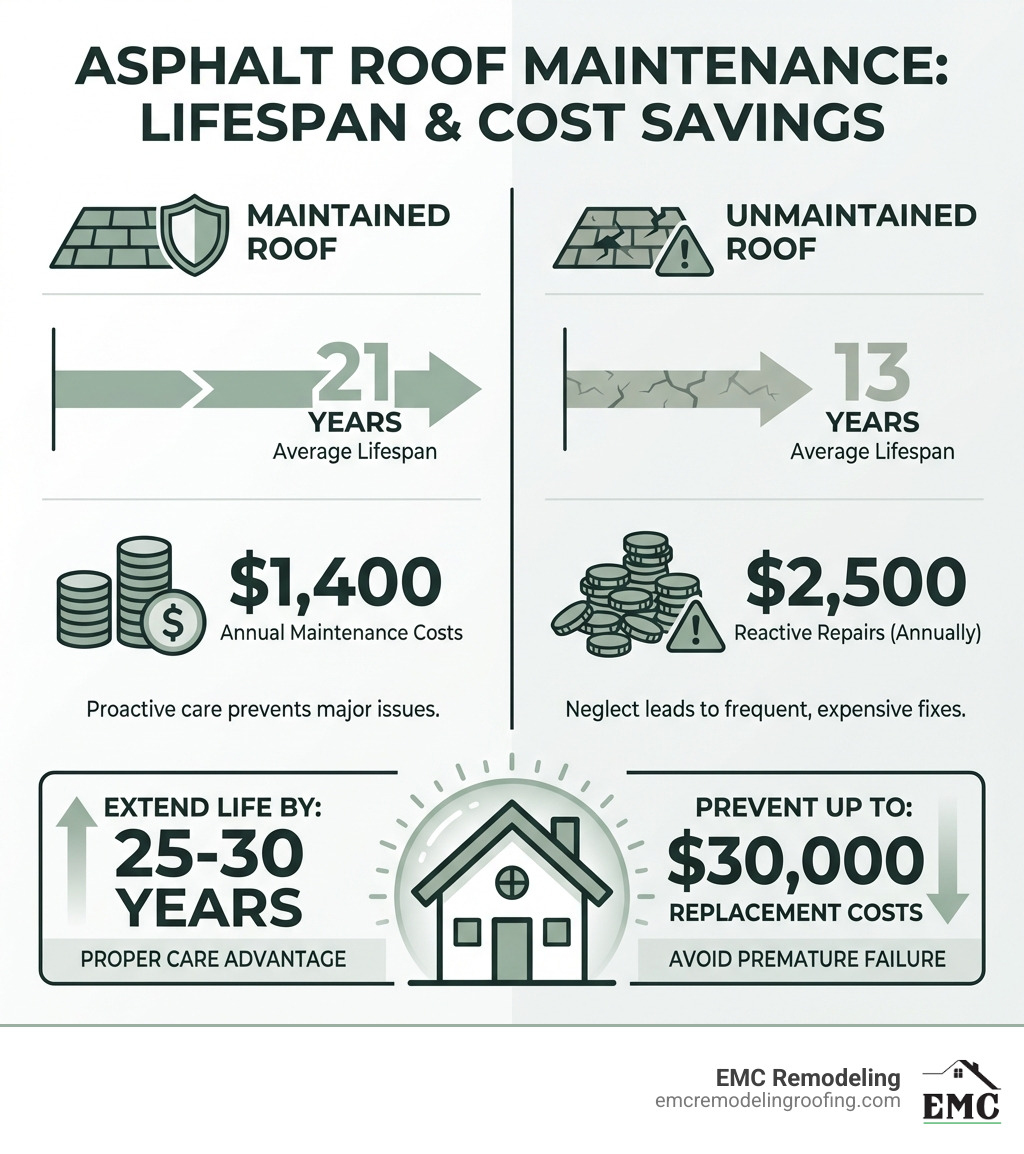
The difference between a well-maintained roof and a neglected one is stark. Research shows that roofs with robust maintenance programs lasted an average of 21 years, while roofs that were not proactively maintained lasted only 13 years. Even more compelling, an actively maintained 10,000-square-foot roof costs an average of $1,400 per year, whereas a roof that was not proactively maintained costs $2,500 annually—representing nearly $20,000 in savings over the roof’s lifetime.
This comprehensive playbook will walk you through the essential maintenance tasks every homeowner should perform, the warning signs that demand immediate attention, and when to call in professional help. Whether you’re dealing with routine care or need guidance on managing moss growth, ventilation issues, or storm damage, you’ll find actionable steps to keep your roof in top condition.
I’m Matthew Runyon, President of EMC Remodeling & Roofing, and I’ve spent over 15 years helping Central Texas homeowners protect their properties through expert asphalt roof maintenance and repair services. Our family-owned company has built its A+ Better Business Bureau rating by delivering quality workmanship and helping homeowners understand exactly what their roofs need to stay strong for decades.
Asphalt roof maintenance terms to remember:
Proactive Maintenance vs. Reactive Repairs: A Cost-Benefit Analysis
A robust maintenance program is an investment, not an expense. Data from multiple building-envelope studies confirms that proactively maintained roofs last an average of 21 years, compared to just 13 years for neglected roofs. That eight-year difference frequently delays a full roof replacement and can save a homeowner tens of thousands of dollars over the life of the home.
Beyond extending lifespan, the financial benefits are substantial. The annual cost for maintaining a 10,000-square-foot roof is approximately $1,400, which is nearly 45% less than the $2,500 annual cost associated with reacting to problems on an unmaintained roof. This represents a nearly $20,000 savings over the life of the roof thanks to a proactive maintenance plan. Proactive care prevents small issues from escalating into catastrophic failures, such as major leaks or structural damage that require emergency roof repair.
The Financial Payoff of Prevention
Investing in proactive asphalt roof maintenance offers a clear financial payoff.
- Cost savings: By addressing minor issues early, you prevent them from becoming major, expensive repairs. This includes avoiding the high costs associated with emergency repairs or premature roof replacement.
- Extended roof lifespan: A well-maintained asphalt shingle roof can last 25 to 30 years or more, maximizing the return on your initial investment.
- Increased property value: A healthy, well-maintained roof improves your home’s curb appeal and signals to potential buyers that the property has been well cared for, positively impacting its market value.
- Peace of mind: Knowing your roof is in good condition provides security and protects your family and belongings from the elements.
The High Cost of Neglect
Ignoring your roof can lead to a cascade of expensive and damaging problems. The cost of neglect extends far beyond just roof repairs.
- Water damage: Unaddressed leaks can lead to water seeping into your home’s interior, damaging ceilings, walls, flooring, and personal belongings.
- Mold growth: Persistent moisture from leaks creates an ideal environment for mold to thrive. Mold can cause significant health issues and require costly remediation, often starting with a compromised attic leak repair.
- Structural rot: Water penetrating the roof deck or attic can cause wooden components to rot, compromising the structural integrity of your home.
- Compromised insulation: Wet insulation loses its effectiveness, leading to higher energy bills and potential moisture problems within your home. In severe cases, saturated insulation must be removed and replaced after the roof leak source is corrected, further increasing total project cost.
Your Seasonal Asphalt Roof Maintenance Checklist
Regular inspections are the cornerstone of effective roof care. Just like a regular check-up for your car, routine roof inspections help catch small issues before they become big headaches or late-night emergency roof repair calls. We recommend performing these checks at least twice a year—ideally in the spring after winter storms and in the fall after summer heat and before winter weather—and always after any severe weather event, such as a hailstorm or strong winds, common in Central Texas.
Step 1: Ground-Level and Attic Inspection
You don’t always need to climb onto the roof to identify potential problems. A thorough inspection can begin from the ground up, using binoculars for a closer look, and from within your attic.
- Visual inspection points from the ground:
- Missing, cracked, or curled shingles: These are obvious signs of wear and tear. Curled edges can lift, allowing water to get underneath, while cracks can expose the underlying roof structure.
- Granule loss: If you notice excessive asphalt granules collecting in your gutters or on the ground around your home, it indicates that your shingles are aging and losing their protective layer.
- Sagging roof deck: A visible sag or dip in your roofline can signal underlying structural issues or water damage to the decking.
- Damaged flashing: Inspect the metal or other material around chimneys, vents, skylights, and in roof valleys. Look for rust, dents, missing fasteners, or rotting sealant. Damaged flashing is a top source of roof leaks.
- Peeling exterior paint: Peeling paint on fascia boards or soffits can be a sign of moisture issues originating from the roof or gutters.
- What to check for in the attic:
- Water stains on ceilings or rafters: Any discoloration, dark spots, or dampness indicates a leak.
- Musty odors: A persistent musty smell can point to hidden mold or moisture issues.
- Sagging insulation: Wet insulation will clump together and sag, losing its R-value and indicating a water intrusion.
- Mold growth: Look for any visible mold on wooden components or insulation.
For a professional assessment that covers both the exterior and interior aspects of your roof, schedule a roof and attic inspection with a trusted local contractor.
Step 2: Gutter and Debris Management
Cleaning your gutters and managing debris are two of the most impactful tasks in asphalt roof maintenance.
- Clean gutters and downspouts: Clogged gutters are a primary cause of water backup under shingles, leading to fascia rot, damaged soffits, and even foundation issues. We recommend cleaning your gutters at least twice a year, or more frequently if you have many trees nearby. Ensure downspouts are clear and extend far enough away from your home’s foundation to prevent water from pooling.
- Remove leaves and branches from the roof surface: Accumulated organic debris, such as leaves, twigs, and pine needles, can trap moisture against your shingles, accelerating their deterioration and encouraging moss and algae growth. Use a soft-bristle broom or a leaf blower to gently clear your roof, always directing debris downwards to avoid forcing it under shingle edges.
- Trim overhanging tree branches: Tree branches that hang over your roof can cause multiple problems. They drop debris, rub against shingles (especially during windy weather) disturbing protective granules, and create shaded, damp areas conducive to biological growth. We advise trimming branches back at least 6 to 10 feet from the roofline. Be mindful of nesting birds; some species are protected under the Migratory Bird Treaty Act, so check with wildlife agencies before disturbing nests.
Step 3: Essential Asphalt Roof Maintenance and Spot Repairs
While major repairs are best left to professionals, some basic spot repairs can be performed safely by homeowners, provided you take proper safety precautions. These tasks are crucial for maintaining the integrity of your roof.
- Curled or cracked shingles: For minor curling or cracks, you can sometimes use a high-quality roofing cement to re-adhere the shingle. If the shingle is severely cracked or brittle, it needs to be replaced.
- Missing shingles: Replacing a missing shingle promptly is vital to prevent water intrusion. This involves carefully lifting the shingles above the gap, sliding in a new shingle, and securing it with roofing nails and cement.
- Popped nails: Nails that have backed out can create small holes for water entry. Gently tap them back down and seal the head with roofing cement.
- Damaged flashing: Small cracks or gaps in flashing can sometimes be sealed with a high-quality, exterior-grade sealant designed for roofing. However, if the flashing is rusted, bent, or severely compromised, it will need professional replacement.
These are common signs that you might need an asphalt shingle roof repair guide or professional help. Always use caution and proper safety gear for any DIY tasks, including non-slip shoes, gloves, and a sturdy ladder. If you’re uncomfortable with heights or unsure about a repair, it’s always best to call a professional roofer in Temple, TX, like our team at EMC Remodeling.
Advanced Threats to Your Asphalt Roof
Even with regular cleaning, your roof faces threats from moisture, biological growth, and the harsh Central Texas climate. Understanding these risks is key to prevention and ensuring your roof’s longevity, especially when storms can turn routine wear into a sudden roof repair emergency.
Managing Moss, Algae, and Organic Growth
Moss and algae are common biological growths that can impact your asphalt roof, especially in shaded or damp areas.
- Moss: Moss thrives in moist environments and can be particularly detrimental. It absorbs water, which can cause the leading edges of your shingles to lift or curl. This increases the risk of shingle blow-off during wind events and can lead to lateral water movement, potentially causing moisture damage to the roof deck or even leaks.
- Algae: Algae often appears as dark, unsightly streaks on your roof. While there is no scientific consensus that algae directly damages asphalt shingles, it certainly affects the aesthetics of your home. On highly reflective or “cool roofs,” algae can also negatively impact the roof’s energy efficiency.
Prevention and Management:
The best defense against moss and algae is prevention. Ensure good drainage and trim trees to allow more sunlight to reach the roof. For existing growth, a solution of 50:50 laundry strength liquid chlorine bleach and water, applied with a sprayer and rinsed with low-pressure water after 15-20 minutes, can effectively clean your roof. Always protect landscaping and wear appropriate personal protective equipment when using bleach. Never use a pressure washer on an asphalt shingle roof, as this can dislodge granules and cause premature failure. For more detailed guidance, the Asphalt Roofing Manufacturers Association (ARMA) provides insights on moss and algae growth.
The Critical Role of Attic Ventilation and Insulation
Proper attic ventilation and insulation are unsung heroes in maintaining a healthy roof and a comfortable home.
- Attic Ventilation: Your attic needs to breathe. Proper ventilation allows hot air and moisture to escape, preventing the buildup of heat and condensation. In Central Texas, this is crucial for preventing shingles from overheating and deteriorating prematurely. It also prevents mold growth in the attic, which can spread to your home. Make sure soffit vents and ridge vents are clear and unobstructed, allowing for continuous airflow.
- Proper Insulation: Insulation works hand-in-hand with ventilation. It helps regulate the temperature in your attic, preventing heat from escaping into the attic during winter and keeping it out during summer. This not only lowers your energy bills by up to 15% but also helps prevent ice dams in colder climates (though less common in Temple, TX, it is still a consideration during rare freezes). A well-insulated attic means your HVAC system does not have to work as hard, extending its lifespan and saving you money.
Special Considerations for Central Texas Climate
Living in Temple, TX, means your roof faces unique challenges that demand specific asphalt roof maintenance considerations.
- Intense UV rays: The Texas sun is intense. Constant exposure to ultraviolet (UV) rays can dry out and crack asphalt shingles, leading to accelerated granule loss and reduced lifespan. Regular inspections help identify this early.
- Heavy rain and hail: The region experiences periods of heavy rainfall and hailstorms. These can cause significant damage, from bruising shingles to completely dislodging them. After any severe weather, a prompt inspection is crucial to identify issues that may require hail damage roof repair.
- High winds: Strong winds are common and can lift shingles, damage flashing, and send debris impacting your roof. Ensuring shingles are properly sealed and flashing is secure is critical.
We understand these local challenges because we live and work here. Our expertise ensures your roof is prepared for whatever Central Texas weather throws its way, and our 24/7 emergency team can respond quickly when severe storms turn minor vulnerabilities into active leaks.
Frequently Asked Questions about Asphalt Roof Maintenance
We often hear similar questions from homeowners about keeping their roofs in top shape. The answers below are structured to help you decide when simple monitoring is enough and when to call for professional or emergency roofing services.
How often should I get a professional roof inspection?
A professional roof inspection should be scheduled at least once a year, or immediately after a severe weather event. While homeowners can perform visual checks, a trained eye can spot subtle signs of damage—like granule loss, minor flashing issues, or early signs of mold—that homeowners might miss, preventing costly future repairs. Professionals can also safely access all areas of your roof for a comprehensive assessment.
What are the signs I need immediate professional roof repair?
Several signs indicate you need immediate professional roof repair. These include significant granule loss (especially large amounts in gutters), widespread shingle cracking or curling across large sections of your roof, a noticeable sagging roofline (which can indicate structural issues), or any visible water leak inside your home. Even small leaks can lead to extensive damage over time. For urgent issues, you should always look for a company offering 24/7 emergency services to prevent further damage.
How is maintenance different for an asphalt flat roof?
Maintenance for an asphalt flat roof differs significantly from shingle roofs. While shingle roofs focus on individual shingle integrity and water shedding, asphalt flat roof repair and maintenance centers on ensuring the membrane is seamless and free of punctures.
Key tasks include:
- Checking for ponding water: Flat roofs are designed with a slight slope for drainage, but ponding water can lead to membrane degradation.
- Inspecting seams: Seams are potential weak points where water can penetrate.
- Ensuring drains are clear: Flat roofs rely heavily on clear drains and scuppers to move water off the roof efficiently.
- Patching cracks: Any cracks or punctures in the membrane need to be patched promptly using appropriate roofing cement or patching materials to maintain watertightness.
What is the role of flashing in roof integrity and how should it be inspected?
Flashing plays a critical role in roof integrity by preventing water penetration at vulnerable points where the roof plane changes direction or meets vertical surfaces. This includes areas around chimneys, skylights, vent pipes, and in valleys where two roof slopes meet. During inspection, look for rust, dents, cracks, loose sections, or deteriorated sealant. Any signs of compromise can allow water to seep underneath, leading to leaks and rot. Proper flashing should have adequate overlap, be firmly attached, and be made from materials compatible with adjacent surfaces. If installing flashing against brick, copper or galvanized steel is often advised because the lime in brick mortar can corrode aluminum over time.
How does proper insulation impact roof health and longevity?
Proper insulation significantly impacts roof health and longevity by regulating the temperature in your attic. In the summer, good insulation prevents heat from the scorching Central Texas sun from radiating into your attic, which protects your shingles from overheating and premature aging. In winter, it keeps heat inside your living space, preventing it from escaping into the attic. This consistent temperature regulation reduces stress on roofing materials and contributes to a longer lifespan. It also prevents moisture buildup from condensation, which can lead to mold and rot.
What are the risks associated with ice dams and how can they be prevented?
Ice dams, while less common in Central Texas than in colder climates, can still occur during rare freezing events. They form when heat escapes from your home into the attic, melting snow on the upper parts of the roof. This meltwater then flows down to the colder eaves, which are typically unheated and extend beyond the house’s heated space, where it refreezes. As more meltwater refreezes, a dam of ice forms, preventing further meltwater from draining. This trapped water can then back up under your shingles, seep into your home, and cause significant water damage to ceilings, walls, and insulation.
Prevention: The best prevention for ice dams is proper attic insulation and ventilation. Good insulation minimizes heat transfer from your home to the attic, keeping the roof deck consistently cold. Excellent attic ventilation then helps to equalize the temperature across the entire roof surface, preventing uneven melting and refreezing. In rare heavy snow events, clearing snow from the roof edges with a roof rake can further reduce the chance of ice dam formation.
How can homeowners safely perform basic roof maintenance tasks?
Homeowners can safely perform basic asphalt roof maintenance tasks by prioritizing safety above all else. Always use a sturdy ladder placed on level ground, ensure someone is spotting you, and wear non-slip shoes with good grip. Inspect from the ground with binoculars first. For tasks like gutter cleaning or minor debris removal, work from the ladder or use tools with extension poles to avoid walking on the roof whenever possible. If you must go on the roof, choose a dry, clear day, and avoid walking on steep pitches or near edges. Never work on the roof alone. If a task feels unsafe or requires specialized equipment, it is always best to call a professional roofing contractor.
Protect Your Investment with Professional Roof Care
Consistent asphalt roof maintenance is the single most effective way to maximize your roof’s lifespan, prevent costly emergencies, and protect your home’s value. By following this playbook, you can handle basic tasks and know exactly when to call in the experts. For residents in Temple, TX, and surrounding areas, having a trusted local partner for both routine care and 24/7 emergency roof repair is invaluable.
EMC Remodeling is a family-operated business dedicated to exceptional craftsmanship, direct owner involvement, and rapid storm-response services. Our team can assist with everything from scheduled roof repair service and preventive inspections to urgent tarping, leak mitigation, and full roof replacement when damage is beyond repair.
Protect your home today by calling us at tel:(254) 265-6599 or scheduling your service through our website. A 15-minute conversation and timely inspection can be the difference between a simple repair and a five-figure roofing emergency.
