Why Roof Slope Matters for Central Texas Homeowners
Steep slope roofing is the most common residential roofing style in Central Texas, and for good reason. These roofs, defined by a pitch of 3:12 or greater, excel at shedding water and resisting the extreme weather conditions our region faces.
Quick Answer: What is Steep Slope Roofing?
- Definition: A roof with a pitch of 3:12 or greater (meaning it rises at least 3 inches for every 12 inches of horizontal distance)
- Common Materials: Asphalt shingles, metal panels, clay/concrete tiles, slate, wood shakes
- Primary Advantage: Superior water shedding through gravity (hydrokinetic design)
- Best For: Residential homes, buildings needing attic space, areas with heavy rain or snow
- Installation: Requires specialized safety equipment and expertise
The choice between a steep slope and low slope roof impacts nearly every aspect of your home’s protection, from how quickly rainwater drains to which materials you can use. Steep slope systems rely on gravity to shed water rapidly, making them ideal for the heavy downpours and severe storms common in Temple, Killeen, and surrounding communities. This is why you’sll see steep slope roofs on the vast majority of single-family homes throughout Central Texas.
Understanding the differences between steep and low slope roofing systems is critical when you’re planning a roof replacement or repair. The wrong choice can lead to premature failure, costly water damage, and ongoing maintenance headaches. The right choice provides decades of reliable protection and can even lower your energy bills through improved ventilation and reflective materials.
Beyond functionality, your roof’s slope dramatically affects your home’s curb appeal and architectural character. Steep slope roofs create the classic residential aesthetic most buyers expect, while offering practical benefits like additional attic storage space and better snow and ice shedding.
As Matthew Runyon, President of EMC Remodeling & Roofing with over 15 years of experience, I’ve guided countless Central Texas homeowners through the complexities of steep slope roofing system selection and installation. Whether you’re recovering from storm damage or planning a proactive upgrade, understanding your roof’s pitch is the foundation of making the right choice for your property.
Understanding the Slope: What Defines a Steep Roof?
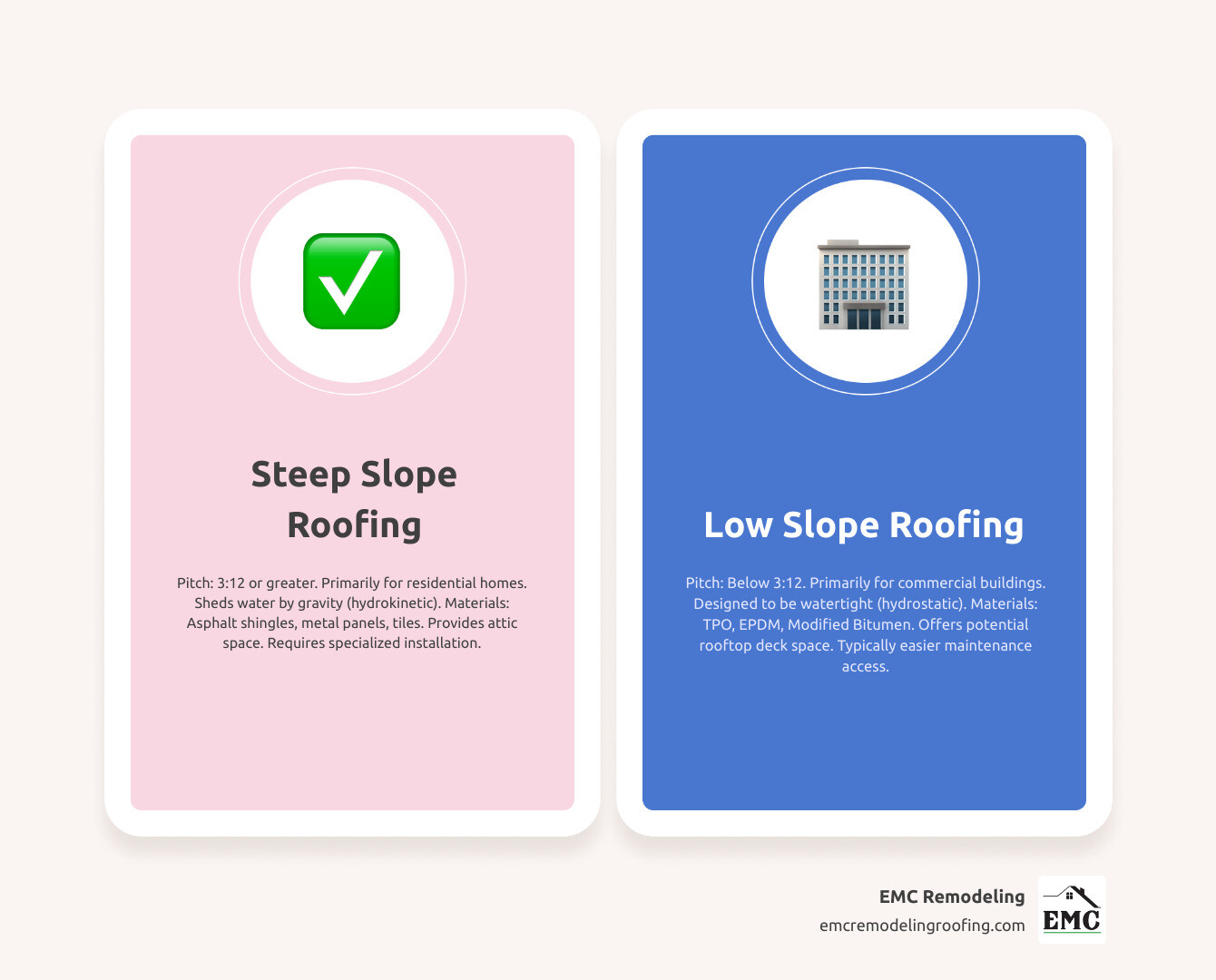
A roof’s slope, or pitch, is the primary factor determining its classification and the roofing systems it can support. A steep slope roof is technically defined as any roof with a pitch of 3:12 or greater. This means for every 12 inches of horizontal distance (the run), the roof rises by at least 3 inches vertically (the rise). For homeowners in Central Texas, understanding your roof’s pitch is the first step in making informed decisions about roof repair and replacement. In fact, the most common industry standard for what is considered a steep slope is any roofing structure that is above a 3/12 pitch. Some industry experts even classify a steep roof as having a pitch of 18 degrees or more. This distinction is crucial because it dictates everything from material selection to installation methods and even safety precautions during work.
How to Measure Your Roof’s Pitch
Measuring your roof’s pitch might sound complicated, but it’s actually quite straightforward once you understand the “rise over run” concept.
To determine your roof pitch, you’ll need to measure how many inches your roof rises over every 12-inch run. Using a ruler or tape measure, move inward on the flat roof plane (parallel to the ground) 12 inches. Then, measure how many inches the roof rises vertically over that 12-inch horizontal distance. For example, a roof that rises 6 inches over a 12-inch horizontal span has a 6:12 pitch. It’s relatively easy to calculate, and there are even apps available on your phone or tablet that can give you an approximate slope measurement. However, we always recommend verifying any app-based measurements with a physical measurement for accuracy. If you’re uncomfortable with heights or using ladders, a professional roof inspection from our team can accurately determine your roof’s pitch and overall condition.
Common Steep Slope Roof Styles
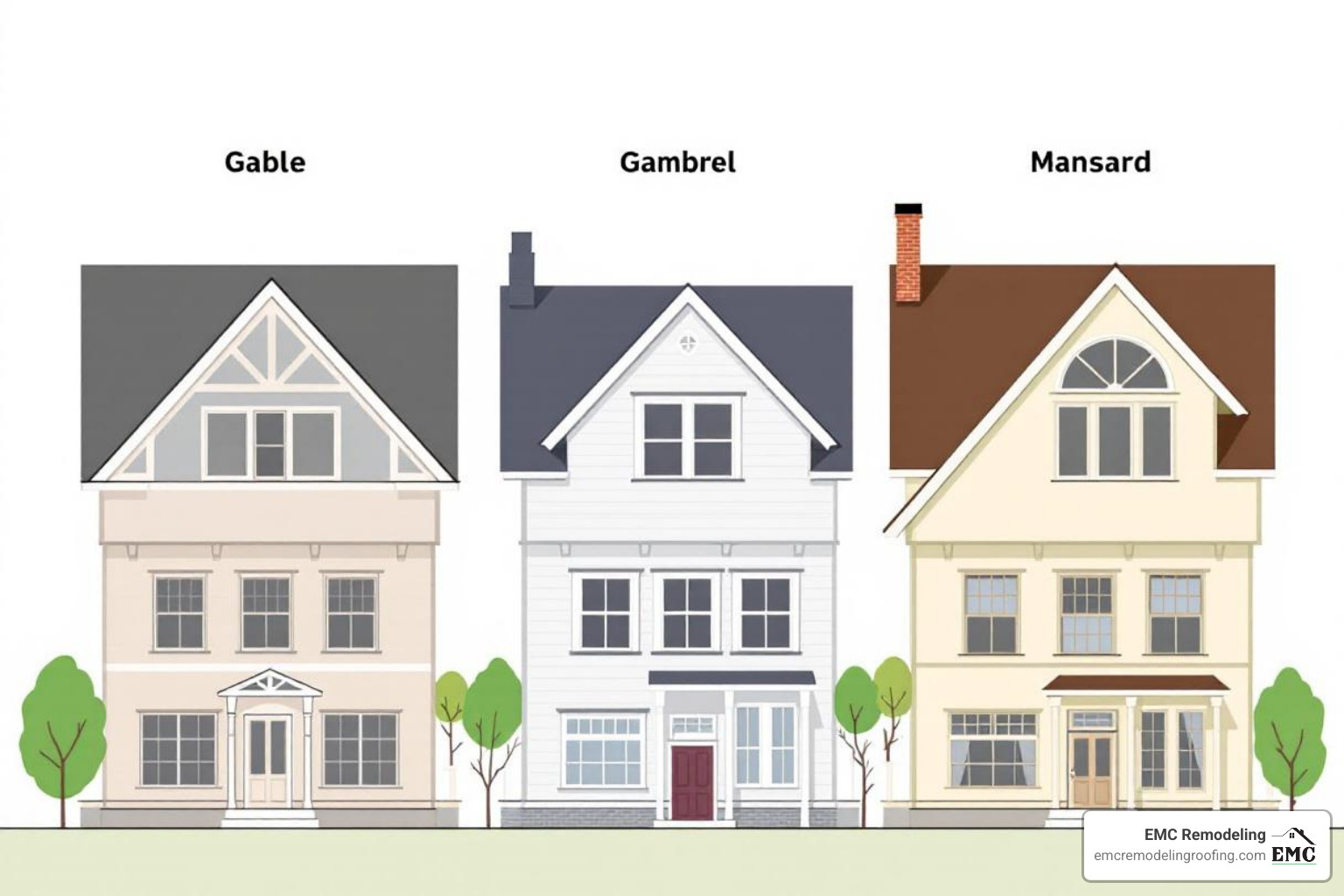
Steep slope roofing is synonymous with classic residential architecture, offering a variety of styles that improve curb appeal and provide practical benefits. Some of the most common steep slope roof styles you’ll encounter include:
- Gable roofs: Characterized by two sloping sides that form a ridge, creating a triangular shape at each end. These are perhaps the most common and easily recognizable residential roof type.
- Gambrel roofs: Feature two different slopes on each side, with the lower slope being much steeper than the upper slope. This design creates more usable attic space.
- Shed roofs: A single, continuous slope that typically extends from a higher wall to a lower wall. Often used for additions, porches, or modern architectural designs.
- Mansard roofs: Feature four sides, each with two different slopes. The lower slope is much steeper than the upper, often featuring dormer windows. This style also maximizes attic space and can even allow for an extra floor.
- A-frame roofs: Characterized by extremely steep, almost ground-level slopes that extend from the ridge to the foundation, forming the shape of the letter ‘A’.
These styles not only contribute to the aesthetic charm of a home but also inherently benefit from the water-shedding advantages of a steep pitch.
Steep Slope vs. Low Slope: A Head-to-Head Comparison
The fundamental difference between steep and low-slope roofs lies in their ability to shed water. Steep slope roofing systems are “hydrokinetic,” meaning they rely on gravity to shed water quickly. Think of water running rapidly down a hill. Low-slope systems, on the other hand, are often “hydrostatic,” designed to be watertight against pooling or standing water. This distinction impacts material choice, installation complexity, and long-term maintenance needs. While steep-sloped roofs are what you’ll often see on most residential buildings, low-sloped roofs are more common for larger commercial and industrial facilities where cost-effectiveness for vast square footage is a priority.
Advantages and Disadvantages
Choosing between a steep slope and a low slope roof involves weighing several key factors. Here’s a comparison to help you understand their respective pros and cons:
| Feature | Steep Slope Roofs | Low Slope Roofs |
|---|---|---|
| Water Drainage | Excellent; gravity ensures rapid water shedding, minimizing pooling and leaks. | Requires specialized watertight membranes to prevent pooling. Higher potential for leaks if not properly installed or maintained. |
Material Suitability by Slope
The choice of material for your roof is largely determined by its slope.
For steep slope roofing, several materials are typically used:
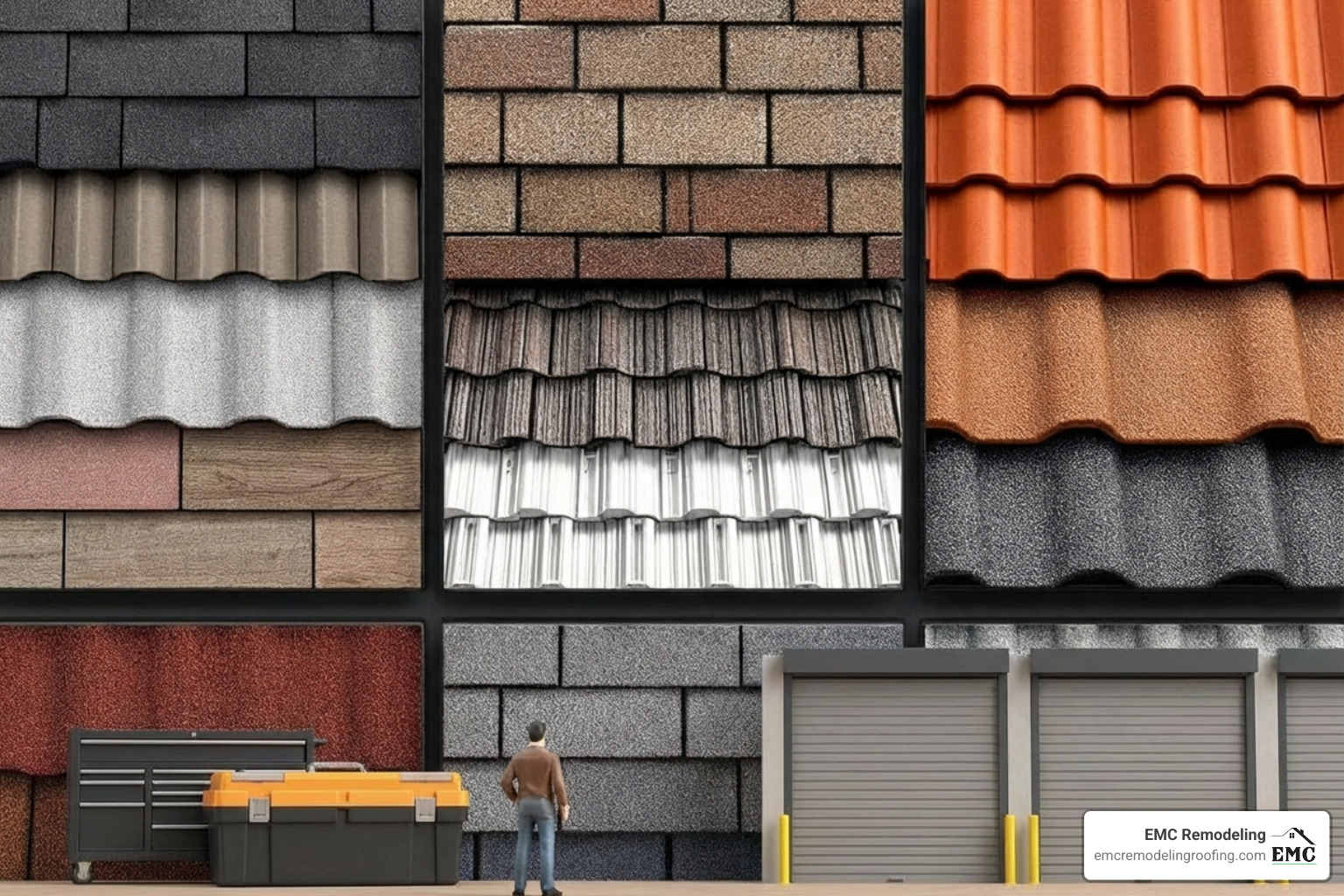
- Asphalt Shingles: The most common residential roofing material in Central Texas due to its cost-effectiveness, ease of installation, and wide variety of styles and colors. Modern asphalt shingles offer excellent durability and weather resistance.
- Metal Panels and Shingles: Known for their exceptional durability, longevity (often lasting 50+ years), and energy efficiency. Metal roofs can come in traditional vertical seam profiles or be manufactured to resemble wood shake, slate, or tile. Steep slope metal roofing is typically hydrokinetic and uses a solid deck, normally installed at slopes of 2:12 or greater.
- Clay & Concrete Tiles: These offer outstanding durability, fire resistance, and a distinctive aesthetic. They are heavier than other materials and require a strong roof structure.
- Slate: A natural stone product, slate boasts an incredibly long lifespan (100+ years) and a unique, neat appearance. It is a premium material due to its weight, cost, and specialized installation requirements.
- Wood Shakes & Shingles: Provide natural beauty and good insulation properties. They require more regular maintenance and are less fire-resistant than other options.
For low slope roofs, materials are chosen for their watertight capabilities, as they deal with standing water:
- TPO (Thermoplastic Polyolefin)
- PVC (Polyvinyl Chloride)
- EPDM (Ethylene Propylene Diene Monomer)
- Modified Bitumen
- Built-Up Roofing (BUR)
It’s worth noting that standing seam metal roofing is a versatile option that can be used for both low slopes and certain steep slopes, making it a strong contender for various architectural designs.
A Deep Dive into Steep Slope Roofing Materials and Systems
Choosing the right material for your steep slope roof is a balance of aesthetics, budget, durability, and local climate considerations. Each material offers a unique set of characteristics that can significantly impact your home’s performance and curb appeal. Our goal at EMC Remodeling is to help you find the perfect match for your Temple, TX home.
Primary Materials and Their Characteristics
Let’s explore the common materials used for steep slope roofing in more detail:
- Asphalt Shingles: As the most common type of residential roofing in America, asphalt shingles are a popular choice for steep slope roofing due to their affordability, ease of installation, and versatility. They come in a vast array of colors and styles, including architectural (laminate) shingles that offer a dimensional look, and 3-tab shingles which are more uniform. Modern asphalt shingles are designed with layers for strength, weather resistance, UV protection, and even impact and fire resistance. They are a cost-effective solution for many Central Texas homes. You can learn more about our expertise with Asphalt Shingles here.
- Metal Roofing: Offering energy savings, beauty, and protection, metal roofing is an increasingly popular choice for steep slope roofing. It’s incredibly durable, resistant to cracking, shrinking, and eroding, and can withstand extreme weather conditions common in our area. Residential metal roofs come in a wide variety of designs, from traditional vertical seam profiles to options that resemble wood shake, slate, or clay tiles. Many use reflective pigment technology for overall home energy efficiency, leading to lower utility bills. All metal roofs are made from a minimum of 25% recycled material, making them an environmentally conscious choice. Find the benefits of Metal Roofing for your home.
- Clay & Concrete Tiles: These materials offer excellent durability and are highly resistant to fire, hail, and moisture, making them a robust option for Central Texas weather. Clay tiles must adhere to ASTM C 1167 standards, ensuring quality. While they boast a classic aesthetic and long lifespan, their significant weight requires a strong roof structure to support them.
- Slate: A natural stone, slate is renowned for its exceptional durability and longevity, often lasting 100 years or more. It’s a non-absorbent material, making it highly resistant to water damage. Slate is classified by texture (standard, standard smooth, gradual/textural) and offers a sophisticated, timeless look. However, its premium cost, weight, and specialized installation make it a higher-end option.
- Wood Shakes & Shingles: These provide a natural, rustic beauty and offer good insulation. Wood shakes are typically thicker at the butt end than wood shingles. While aesthetically appealing, they require more maintenance and are less fire-resistant than other materials.
The Critical Role of Underlayment in Steep Slope Roofing
Underneath your chosen roofing material lies a crucial component: the underlayment. This water-resistant barrier is installed directly on the roof deck before the final roofing material, providing an essential foundation for a secure, well-designed steep slope roof. Its primary role is to provide secondary protection against water intrusion, especially from wind-driven rain and ice dams. It also acts as a separator between the roof covering and the substrate, protecting the roof deck temporarily during installation and preventing chemical reactions between certain roofing materials and the deck.
According to The Polyglass 101 Guide to Steep-Slope Roofing Systems, underlayments are typically made from asphalt-saturated materials (felt), rubberized asphalt, or synthetic materials. Self-adhered underlayments, often modified bitumen, are more commonly used for ice dam protection, particularly in colder climates, but they offer improved waterproofing benefits even in Central Texas’s heavy rains. Modified underlayments are generally preferred over traditional organic asphalt felts for self-adhering applications due to their superior performance. Some advanced underlayments, like those using ADESO self-adhered technology, are dual-compound membranes with specialized formulations for weather resistance and aggressive adhesion. These can withstand high temperatures and extended UV exposure, offering greater flexibility during installation.
Special Considerations for Metal Steep Slope Roofing
Metal roofing systems for steep slopes are categorized as “hydrokinetic,” meaning they are designed to shed water efficiently rather than being completely watertight against standing water, which is less of a concern on steep pitches. This characteristic allows for different panel designs and installation techniques.
When considering metal for your steep slope roofing, the profile of the metal panels is a critical decision.
- Snap-lock profiles are popular for pitches ranging from 3:12 to about 7:12. These panels simply “snap” together during installation, making the process generally quicker and less labor-intensive. For many residential applications in Central Texas, a snap-lock system can be an excellent choice.
- Mechanically seamed profiles require the panel legs to be aligned and then “seamed” together using a hand or mechanical seamer. While potentially more expensive and labor-intensive, mechanically seamed systems offer improved protection against thermal movement, which is particularly beneficial in regions with significant temperature fluctuations or heavy snow loads. Although Central Texas doesn’t typically experience heavy snow, the extreme heat can cause considerable thermal expansion and contraction, making a mechanically seamed system a robust option for long-term durability. While installing a mechanically seamed system might be an added unnecessary expense for steep-slope roofs in some contexts, for improved durability and peace of mind against thermal movement, it’s a worthwhile consideration.
Regardless of the profile, ensuring your metal roof is an engineered standing seam metal roofing system is key for maximum protection and longevity. Our team of experts can help you find expert metal roofing specialists near you to guide you through the best options for your property.
Installation, Cost, and Maintenance of Steep Slope Roofs
The installation process for a steep slope roof is often more complex and requires specialized safety protocols compared to low-slope work. Our family-operated business, EMC Remodeling, prides itself on exceptional craftsmanship and a dedication to safety, ensuring the integrity of your roof. Understanding the factors that influence cost and maintenance will help you budget effectively for your new roof installation.
The Typical Installation Process
While specific steps may vary depending on the material, a general steep slope roofing installation process includes:
- Deck Preparation and Inspection: We start by inspecting the roof deck for any weak spots, unnailed, or damaged sheathing, repairing them before proceeding. The deck is also cleaned of any dirt or debris.
- Installation of Drip Edge and Underlayment: Drip edge is installed along the eaves and rakes to direct water away from the fascia. Then, the underlayment (felt or synthetic) is applied, typically parallel to the eave, with proper overlaps to create a secondary water barrier. For ice dam protection, eave protection membrane is installed along the roof edge, extending a minimum of 900 mm (36 in) up the slope and 300 mm (12 in) inside the inner face of the exterior wall.
- Flashing Installation: Crucial for preventing leaks, flashing is installed around all penetrations such as chimneys, skylights, vents, and in valleys. This involves carefully integrating metal pieces to divert water.
- Installation of the Primary Roofing Material: This is where your chosen material (shingles, tiles, metal panels) is carefully installed, starting from the eaves and working upwards. Proper fastening methods, such as nailing patterns and nail penetration (minimum 19 mm or 3/4 inch into the sheathing), are critical for durability and wind resistance.
- Ridge Cap and Ventilation System Installation: The ridge cap covers the peak of the roof, and ventilation components (like ridge vents and attic fans) are installed to ensure proper airflow, which is vital for minimizing condensation and optimizing the performance of asphalt shingles. Attic ventilation should be equally distributed between soffit/eave and ridge.
Factors Influencing Installation Cost
The cost of a steep slope roof installation can vary significantly based on several factors:
- Roof Size and Complexity: Larger roofs and those with multiple valleys, hips, dormers, or chimneys require more materials and labor, increasing costs.
- Material Choice: Asphalt shingles are generally the most affordable option, while slate and certain metal systems represent a premium investment. The durability and longevity of the material often correlate with its price point.
- Labor Costs and Accessibility: Steeper pitches require more specialized safety equipment and often take more time to install, leading to higher labor costs. Difficult-to-access roofs (e.g., very high or with limited ground clearance) can also add to the expense.
- Geographic Location and Local Codes: Local labor rates and specific building codes in Temple, TX, or surrounding areas can influence pricing.
- Need to Remove the Old Roof: If we need to remove the old roof before installing the new one, this adds to labor, disposal, and overall project costs.
When calculating material quantities, we typically include a waste allowance of between 5 and 10 percent to account for cuts and unforeseen issues.
Best Practices for Maintenance and Repair
Regular maintenance is key to maximizing the lifespan of your steep slope roofing system and preventing costly repairs. Our team at EMC Remodeling emphasizes proactive care:
- Perform Visual Inspections: Conduct a visual check of your roof twice a year, ideally in the spring and fall, and especially after any major storms. Look for damaged, loose, or missing shingles/tiles, granule loss on asphalt shingles, and any signs of wear.
- Keep Gutters and Downspouts Clear: Ensure gutters and downspouts are free of leaves, twigs, and other debris. Clogged gutters can lead to water backup, fascia damage, and potential leaks.
- Address Minor Issues Promptly: Small problems, such as a single missing shingle or a loose piece of flashing, can quickly escalate into major leaks if not addressed. Prompt repair can save you significant money and hassle.
- Professional Assessment: For any concerns or if you notice significant granule buildup in your gutters (indicating shingles are nearing the end of their lifespan), schedule a professional roof repair service. Our experts can spot issues not visible to the untrained eye and provide effective solutions.
Resilience in Action: How Steep Roofs Handle Extreme Weather
In regions like Central Texas, a roof’s ability to withstand high winds, heavy rain, and hail is paramount. Steep slope roofs are inherently designed for superior performance in harsh weather conditions, making them a wise choice for protecting your home.
Performance in High Winds, Hail, and Heavy Rain
The very nature of a steep pitch offers significant advantages against severe weather:
- High Winds: A steep pitch naturally deflects wind, reducing the uplift forces that can tear off roofing materials. Proper installation, including correct nailing patterns and the use of high-quality fasteners, is critical for maximizing wind resistance.
- Heavy Rain: Gravity is your roof’s best friend! The steep angle ensures that rainwater sheds rapidly into gutters, minimizing the chance of pooling water and reducing the risk of leaks, even during the heaviest Central Texas downpours.
- Hail: While no roof is entirely hail-proof, materials like impact-resistant asphalt shingles and metal roofing offer excellent protection against hail damage. Metal roofs, for instance, are highly resistant to cracking, shrinking, and eroding, making them a durable choice against hail.
Enhancing Resilience Against Hurricanes and Storms
To maximize the resilience of your steep slope roofing system against extreme weather events like hurricanes or severe thunderstorms, specific fortification measures can be implemented:
- Strengthen Roof-to-Wall Connections: We can use hurricane clips or straps to create stronger connections between your roof trusses/rafters and the walls of your home, significantly improving resistance to uplift forces.
- Upgraded Fasteners: Using ring-shank nails for sheathing and roofing materials provides superior gripping power compared to smooth-shank nails, enhancing resistance against wind uplift.
- Sealed Roof Deck: Installing a high-quality, self-adhered underlayment across the entire roof deck creates a secondary waterproof barrier. This “sealed roof deck” prevents water intrusion even if the primary roofing material is damaged or blown off.
- Gable End Bracing: For gable roofs taller than 4 feet, adding gable end bracing can significantly improve structural integrity against high winds.
For comprehensive guidance on retrofitting and designing for improved resilience, FEMA provides extensive resources, including detailed information on sloped roof systems. Their guidance often recommends measures like using plywood or OSB sheathing rated for high wind, and specific requirements for metal connectors in high-wind regions. You can learn more through FEMA guidance on sloped roofs.
When Disaster Strikes: Emergency Roof Services
Despite the best preparations, severe storms can cause unexpected damage to even the most robust steep slope roofing systems. A tree limb through the roof, widespread shingle loss from extreme winds, or significant hail damage can compromise your home’s protection. A leaking or compromised roof requires immediate attention to prevent further interior damage, such as water stains, mold growth, or structural issues. That’s why having access to 24/7 emergency services is crucial for securing your property quickly and minimizing the impact of unforeseen events. As a family-operated business, we understand the urgency and are ready to respond when you need us most.
Your Local Steep Slope Roofing Experts
Choosing, installing, or repairing a steep slope roof requires significant expertise and a commitment to quality craftsmanship. Whether you’re dealing with storm damage or planning a full replacement, partnering with a trusted local contractor ensures your home is protected for years to come. The team at EMC Remodeling has the experience to handle all your residential roofing needs in Belton, TX and the surrounding Central Texas area. Our direct owner involvement means a dedication to integrity and successful roofing solutions. We pride ourselves on attention to detail, from initial assessment to the final touches, ensuring your roof not only looks great but performs flawlessly.
For a professional assessment, expert advice on material selection, or immediate assistance with your steep slope roofing needs, contact us to schedule your roof installation today. We are your trusted local partner for comprehensive roofing, siding, gutter, and window services, always ready to deliver exceptional craftsmanship and peace of mind.
