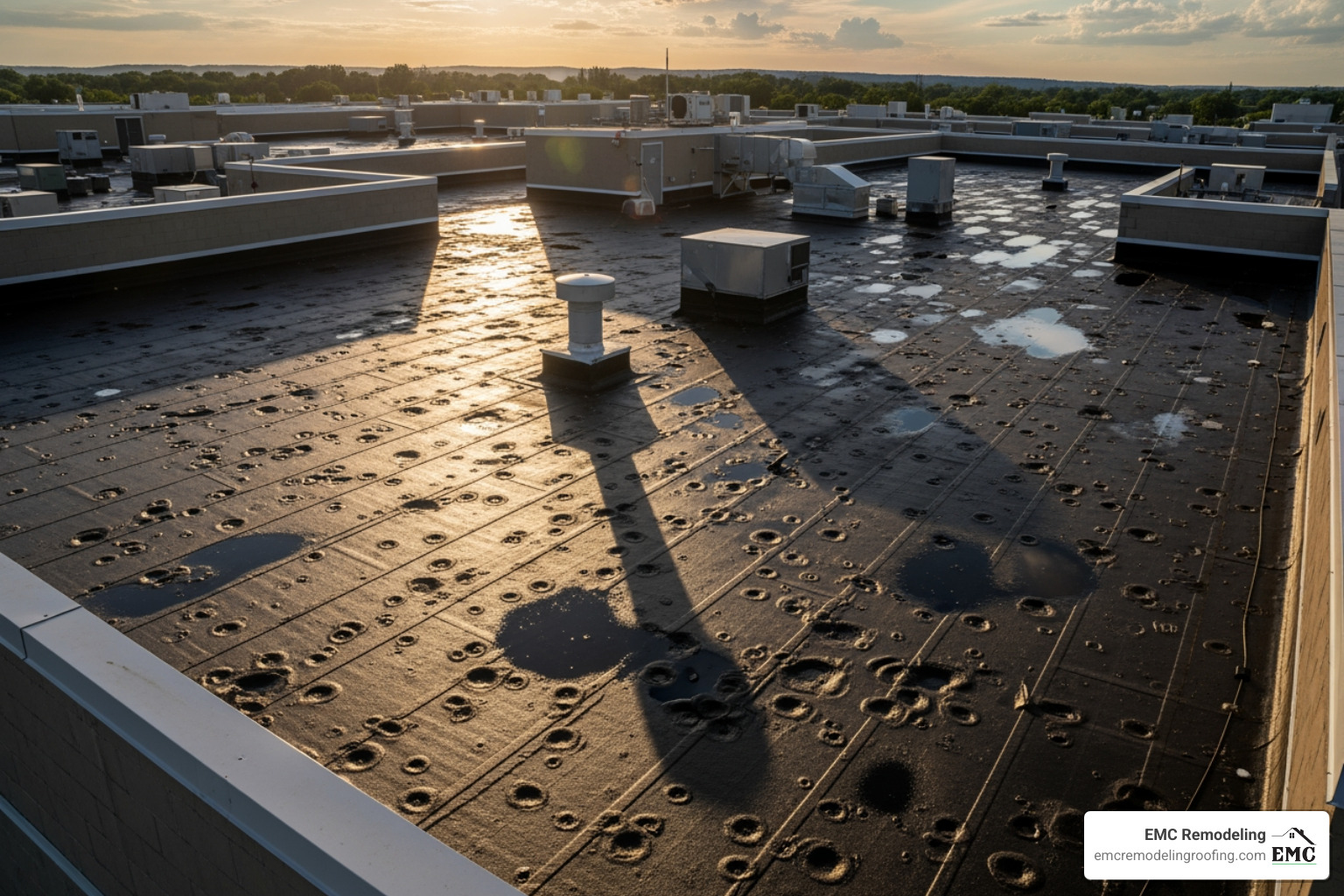
Why Flat Roofs Face Hidden Hail Threats
Hail damage flat roof issues are notoriously difficult to spot from the ground, yet they can lead to costly leaks and structural problems if left unaddressed. Unlike sloped roofs that shed hailstones, flat roofs absorb the full impact of every strike, making them particularly vulnerable to punctures, cracks, and membrane tears. Property owners who partner with a trusted local roofing and storm damage expert in Temple are far more likely to catch this hidden damage before it turns into an emergency.
Industry field data from insurance carriers and roofing manufacturers consistently shows that undetected hail damage is one of the top three causes of premature flat roof failure in hail-prone regions like Central Texas. In other words, the storm itself is rarely what forces a full replacement; it is the slow, unseen deterioration that follows when impacts are ignored.
As a family-operated business serving Temple, TX, EMC Remodeling & Roofing specializes in identifying and repairing this hidden damage, often within 24 hours of a storm event through our 24/7 emergency response.
Quick Answer: What to Look For After a Hailstorm
- Visible punctures or tears in the membrane surface
- Dents, divots, or circular impact marks on the roof
- Granule loss (black spots on modified bitumen)
- Pooling water in new areas (indicating drainage damage)
- Damaged flashing, vents, or rooftop equipment
- Interior signs like water stains, peeling paint, or musty odors
What to Do Next:
- Document all damage with photos (use a coin for scale)
- Schedule a professional inspection within 24-48 hours
- Contact your insurance company to file a claim
- Avoid walking on the roof to prevent further damage
If you need immediate assistance with hail damage roof repair, professional assessment is critical to prevent small issues from becoming major replacements. For properties already taking on water, EMC’s emergency crews can install temporary coverings and begin mitigation the same day in most Temple-area events.
I’m Matthew Runyon, President of EMC Remodeling & Roofing, and over my 15+ years in the industry, I’ve helped countless Central Texas property owners identify and repair hail damage flat roof systems after severe storms. Our team provides expert assessments and works directly with insurance companies to ensure your property is protected.
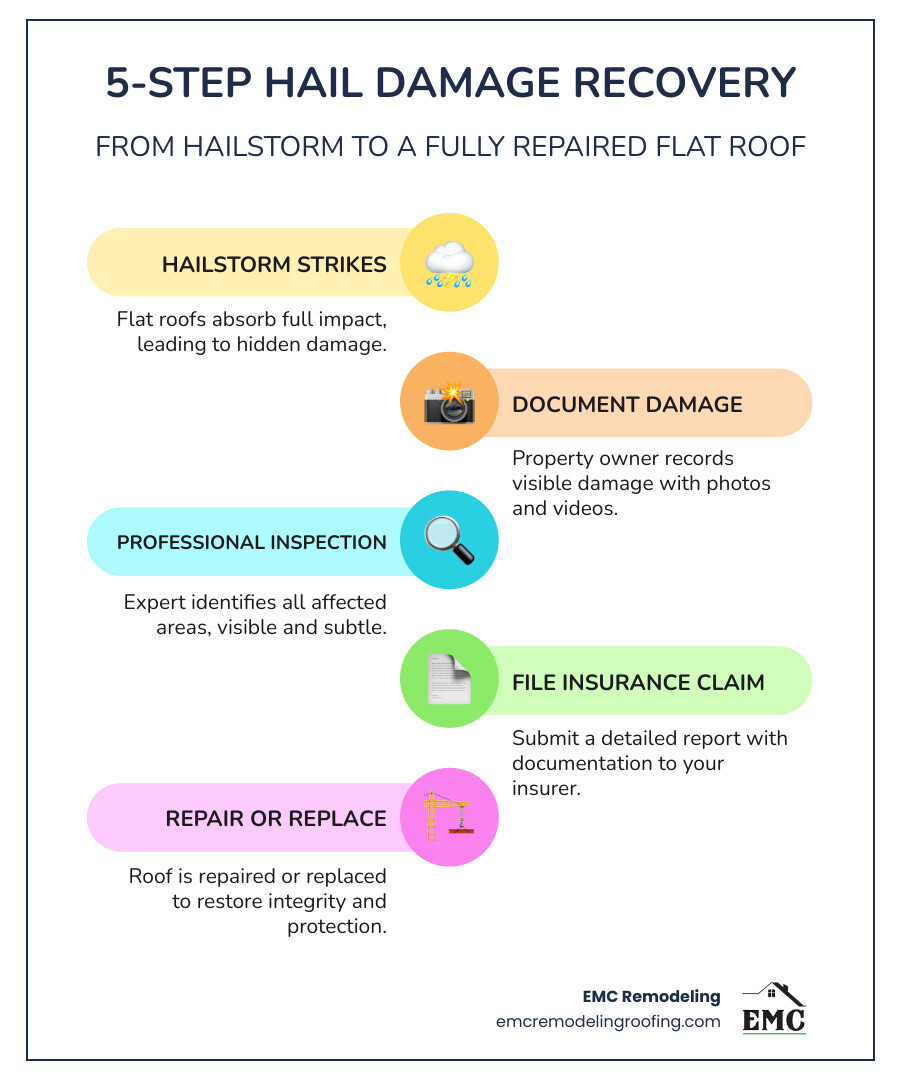
Hail damage flat roof word roundup:
10 Telltale Signs of Hail Damage on a Flat Roof
Spotting hail damage flat roof systems isn’t always straightforward. Unlike sloped roofs where missing shingles are a dead giveaway, flat roofs often hide their injuries, making early detection a true detective’s work. We’ll guide you through both the obvious and the subtle clues your roof might be giving you.
Visible Damage on the Roof Surface
The membrane surface is the first line of defense for your flat roof, and it often bears the initial brunt of a hailstorm. Hailstones impact at high speed, transferring energy that bruises or fractures the outer surface and weakens waterproofing layers underneath.
- Punctures and Tears: These are perhaps the most obvious signs. Hail, especially larger stones, can create small holes or tears in the membrane. Even small hailstones can lead to costly repairs if they strike vulnerable areas or weaken aging materials. These breaches allow water to infiltrate, leading to significant problems down the line.
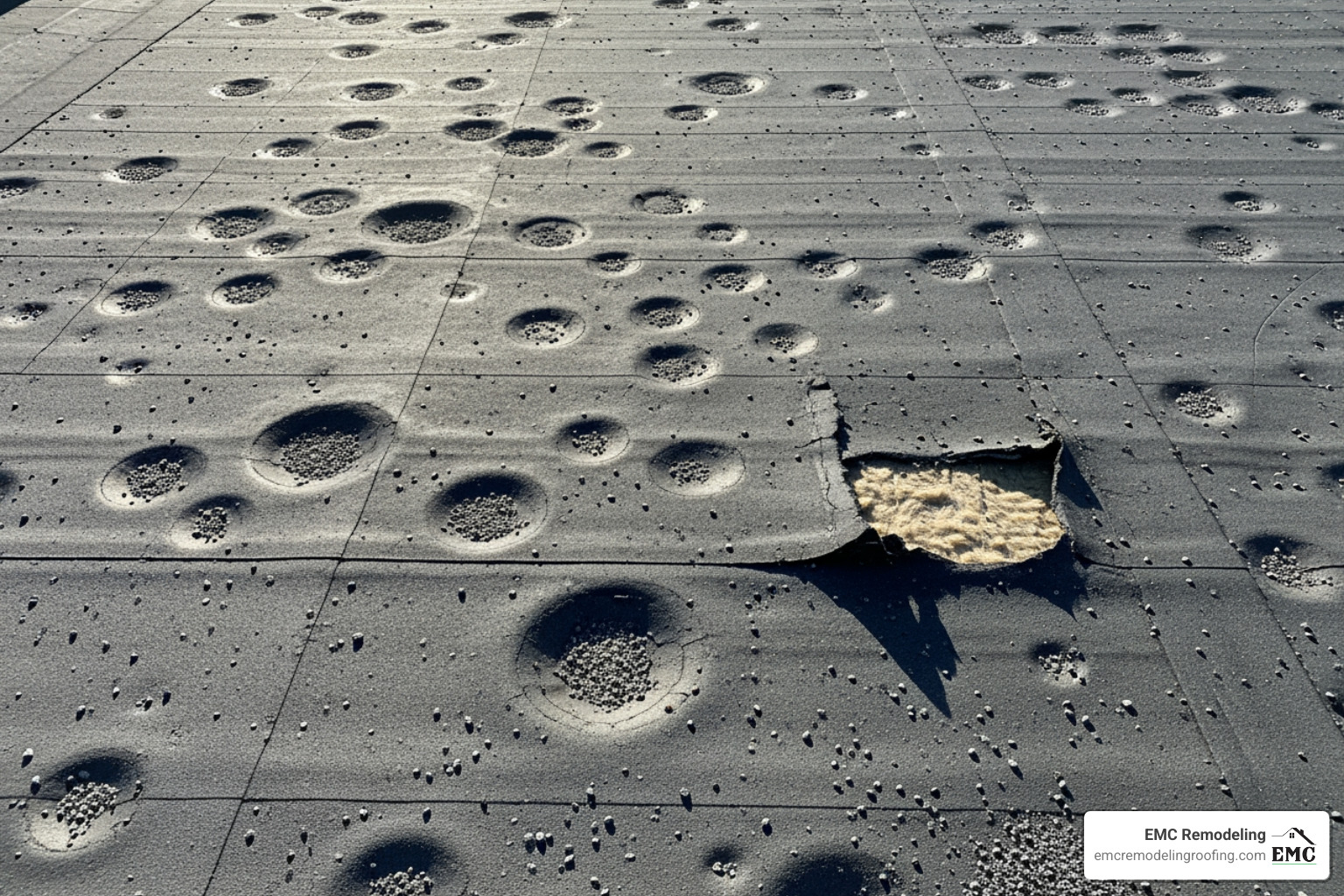
- Dents or Divots: Hail impact can leave circular depressions or divots on the roof surface. While not always immediate punctures, these dents can weaken the membrane, making it more susceptible to future damage or creating areas where water can pool.
- Cracks or “Spider-Webbing”: You might observe fine cracks, sometimes resembling a spiderweb pattern, especially on older or less flexible membranes. These indicate stress and material fatigue from the hail impact, compromising the roof’s integrity.
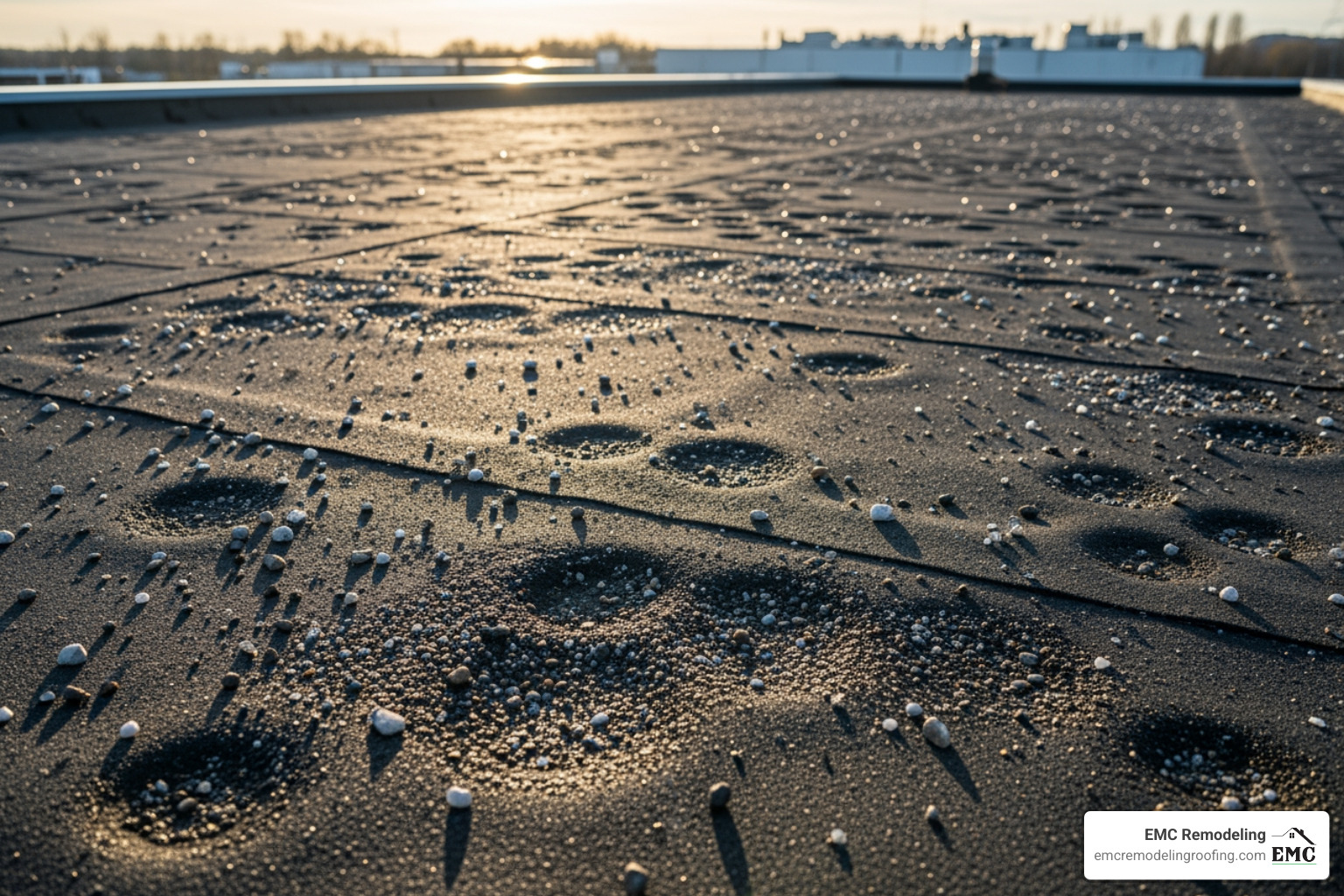
- Granule Loss on Modified Bitumen: For modified bitumen roofs, hail can dislodge the protective granules, revealing the underlying asphalt. These dark, exposed spots are vulnerable to UV degradation and accelerated aging. Finding loose granules in your gutters or scuppers is a strong indicator of this type of damage.
- Blistering or Bubbling: Hail impacts can sometimes cause localized blistering or bubbling in the membrane. This indicates trapped moisture or air underneath, often a result of hail ruptures that allow water to seep in, eventually leading to delamination.
Understanding these signs is crucial. For a more comprehensive understanding of what constitutes genuine hail damage versus other issues, refer to a guide to help you understand what is hail damage.
Damage to Roof Components and Drainage
Beyond the main membrane, various rooftop components and the drainage system are also highly susceptible to hail. Damage here can quickly lead to widespread water issues.
- Dented Flashing and Vents: Metal components like flashing around skylights, chimneys, and parapet walls, as well as roof vents, are often made of lighter gauge metal. They can easily suffer dents, dings, or even cracks from hail impacts. These are critical weak points where water can enter.
- Damaged Skylight Domes: Skylights, particularly their plastic or acrylic domes, can crack, chip, or shatter under heavy hail, creating immediate entry points for water.
- Clogged Scuppers or Drains: A hailstorm can dislodge debris, granules, or even parts of the roof membrane, which then accumulate and clog scuppers, internal drains, and downspouts. This impedes proper water runoff.
- Ponding Water: If your flat roof suddenly has new areas where water collects and remains for more than 48 hours after rainfall, it could indicate hail-induced depressions or damage to the drainage system. Ponding water significantly accelerates membrane aging and increases the risk of leaks.
- Hail Impact on Rooftop HVAC Units: While not directly part of the roof’s waterproofing, dents on HVAC condenser fins or other rooftop equipment are a strong indicator that significant hail fell and likely impacted the roof surface too.
For any issues related to these components, our team at EMC Remodeling specializes in flat roof repair and can address these critical areas.
Interior and Hidden Signs of Damage
Sometimes, the first sign of hail damage flat roof systems give you isn’t on the roof itself, but inside your building. These interior indicators are critical and often signify that water has already breached the roof’s defenses.
- Water Stains on Ceilings: Brown or yellow water stains, especially in corners or along seams, are classic indicators of a roof leak. These can appear days or even weeks after a storm.
- Peeling Paint Near Corners: Moisture seeping into walls or ceilings can cause paint to bubble, crack, or peel, particularly in areas where water might accumulate or travel along structural elements.
- Musty Odors in the Attic or Top Floor: A persistent musty smell, especially after rainfall, suggests the presence of mold or mildew, which thrives in damp conditions caused by water intrusion.
- Wet Insulation: If accessible, checking the attic for wet or damp insulation is a direct sign of a leak. Wet insulation loses its R-value, leading to higher energy bills and creating an ideal environment for mold.
It’s important to differentiate between cosmetic and functional hail damage. Cosmetic damage might be superficial dents that don’t compromise the roof’s waterproofing or lifespan. Functional damage, however, diminishes the roof’s weather resistance or reduces its expected service life. Even subtle damage, if functional, can lead to serious long-term consequences if neglected.
How Different Flat Roof Materials Stand Up to Hail
Understanding how your specific flat roofing material responds to hail is crucial for anticipating damage and planning repairs. The type of membrane, its age, and even the underlying substrate play a significant role in its hail resistance.
TPO and PVC Membranes
Thermoplastic Olefin (TPO) and Polyvinyl Chloride (PVC) are popular single-ply membranes known for their durability and energy efficiency. However, they have specific vulnerabilities to hail.
- Susceptibility to Punctures: While generally robust, large hailstones can puncture TPO and PVC membranes, especially if they are older or if the underlying insulation is soft.
- Semicircle Patterns or Cracks: Hail impact can leave distinct semicircle patterns or cracks on the surface of these membranes. As TPO membranes age, their plastic components degrade, making them more brittle and susceptible to cracking and damage.
- Increased Vulnerability with Age: An aging TPO roof, exposed to years of UV radiation and thermal cycling, becomes less flexible and more prone to damage from hail.
- Hail Resistance Statistics: TPO membranes can resist damage from up to 1 3/4-inch hailstones, while newer PVC membranes often perform similarly or better.
If your TPO or PVC roof has sustained hail damage, we offer comprehensive roof repair and replacement services to restore its integrity.
EPDM (Rubber) Membranes
Ethylene Propylene Diene Monomer (EPDM) is a synthetic rubber roofing membrane highly valued for its flexibility and longevity.
- High Impact Resistance: EPDM is known for its excellent elasticity, which allows it to absorb impacts without immediately tearing. EPDM roof membranes can resist damage from up to 2 1/2-inch hailstones, making them one of the more hail-resistant flat roofing options.
- Puncture Risk Over Soft Substrate: While elastic, EPDM can still be punctured if the hail impact is severe enough, particularly if the underlying substrate (insulation) has softened or is not rigid enough to support the membrane against the impact.
- Bruising Without Immediate Tearing: Often, hail will cause a “bruise” on an EPDM membrane—a soft spot underfoot without a visible hole—rather than an immediate tear. This bruising can weaken the material over time, leading to eventual failure.
Modified Bitumen (Mod-Bit) and Built-Up Roofing (BUR)
Modified Bitumen (Mod-Bit) and Built-Up Roofing (BUR) systems are multi-ply options, with BUR being one of the oldest and most resilient. Their layered construction offers a different kind of hail resistance.
- Granule Loss Exposing Asphalt: Modified bitumen roofs often have a granular surface for UV protection. Hail can dislodge these granules, exposing the asphalt layer to the elements, similar to what happens with asphalt shingles.
- Cracks or Fractures: Hail impacts can cause cracks or fractures, especially in older or less flexible modified bitumen membranes. Water can then accumulate underneath, leading to further deterioration.
- BUR’s Gravel Layer Offers Protection: Traditional Built-Up Roof (BUR) systems often feature a top layer of gravel or aggregate, which provides substantial hail protection by absorbing much of the impact energy. More and larger aggregate surfacing typically means greater resistance.
- Susceptible to Smaller Hailstones: Despite the gravel, BUR membranes are still susceptible to damage from smaller hailstones, usually about 1 1/2 inches in diameter, which can dislodge the gravel and expose the underlying membrane to direct impact. Foot traffic can also loosen gravel, making these areas more vulnerable.
For issues specific to these materials, our team is expert in asphalt flat roof repair.
Your Post-Hailstorm Action Plan: What to Do Immediately
After a hailstorm sweeps through Temple, TX, your immediate actions can significantly impact the extent of damage and the success of your insurance claim. Safety is paramount, followed by meticulous documentation and professional assessment.
Step 1: Prioritize Safety and Conduct a Ground-Level Inspection
Your safety, and the safety of anyone on your property, is our top priority. Never climb onto a roof, especially a flat roof, if it’s wet, icy, or if you lack proper safety equipment and training.
- Safety First: If you suspect damage, avoid walking on the roof until a professional has assessed it. Walking on a compromised roof can worsen existing damage or create new problems.
- Using Binoculars: From the ground, use binoculars to carefully inspect your flat roof for any visible signs of damage. Look for punctures, tears, dents, or areas where granules might be missing.
- Checking for Collateral Damage: Hail rarely limits its impact to just your roof. Inspect other exterior components like gutters and downspouts for dents or dings. Check your siding and windowsills for splatter marks, dents, or cracks. Even your outdoor AC units can show dents on their fins, providing a strong indicator of the hailstorm’s severity.
For a comprehensive guide on what to look for, download this Checklist to Spot Roof Hail Damage.
Step 2: Document Everything for Your Insurance Claim
Thorough documentation is your best friend when filing an insurance claim. The more evidence you have, the smoother the process will be.
- Take Photos and Videos: Capture clear, well-lit photos and videos of any suspected damage. Get wide shots of the entire roof area, mid-range shots of damaged sections, and close-ups of specific impacts.
- Use a Reference for Scale: For close-up shots, place a common object like a coin, ruler, or tape measure next to the damage to provide scale. This helps insurance adjusters accurately gauge the size of the impacts.
- Note the Date and Time of the Storm: Insurance policies often have strict deadlines for filing claims after a storm event (e.g., within 365 days). Knowing the exact date and time helps establish the timeline for your claim.
- Keep a Log of All Findings: Detail everything you observe, including the location, type, and approximate size of the damage. Also, note any interior leaks or issues that arise after the storm.
For more information on handling storm damage and the restoration process, explore our residential storm damage restoration complete guide.
Step 3: Contact a Professional Roofing Contractor
After your initial assessment and documentation, the next crucial step is to call in the experts.
- Importance of a Professional Assessment: Hail damage, especially on flat roofs, can be subtle and difficult for an untrained eye to detect. A professional roofing contractor can identify hidden damage that might otherwise go unnoticed.
- What a HAAG-Certified Inspector Looks For: Our HAAG-certified commercial inspectors are trained to spot both obvious and subtle signs of hail damage flat roof systems. They understand how different materials react to hail and can differentiate genuine hail damage from other issues like blistering or manufacturing defects. They look for specific impact marks, fractures on the underside of membranes, and damage to underlying insulation.
- Getting an Unbiased Report for Your Insurer: While your insurance company will send an adjuster, their assessment may sometimes favor the insurer. Having an independent, detailed report from a reputable roofing contractor provides an unbiased perspective and ensures all damage is accurately documented, which is vital for a fair settlement.
As your trusted local partner in Temple, TX, we offer professional inspections and can help you steer the claims process. You can always find a roofing contractor near you by contacting us.
The Long-Term Cost of Neglect: Why You Can’t Ignore Flat Roof Hail Damage
Ignoring hail damage flat roof systems is akin to ignoring a small crack in your car’s windshield—it might seem minor at first, but it inevitably grows into a much larger, more expensive problem. The consequences of inaction can be severe, impacting both the structural integrity of your building and your finances.
How Minor Damage Escalates
What starts as a small impact can quickly lead to a cascade of problems, changing a manageable repair into a major crisis.
- From Small Punctures to Major Leaks: A tiny hail-induced puncture might not leak immediately, but over time, water will find its way in. Once water penetrates the membrane, it can travel laterally, making the source of the leak difficult to pinpoint and causing damage far from the initial impact site.
- UV Degradation of Exposed Membranes: When hail dislodges granules or creates cracks, it exposes the underlying membrane or asphalt to direct ultraviolet (UV) radiation. UV rays accelerate the aging process, causing the material to become brittle, crack, and lose its waterproofing properties much faster than intended.
- Water Infiltration into Insulation: Flat roofs often have insulation directly beneath the membrane. If water enters, it saturates this insulation. Wet insulation loses its thermal resistance, becoming ineffective and leading to significant energy loss.
- Compromised Structural Integrity: Persistent water leaks can lead to the rotting of the roof deck and supporting structures. This weakens the entire roof system, potentially compromising the structural integrity of your building and creating hazardous conditions.
- Mold and Mildew Growth: Dark, damp environments created by leaks are perfect breeding grounds for mold and mildew. These can spread rapidly, causing unpleasant odors, damaging interior finishes, and posing serious health risks to occupants.
The Financial Impact of Waiting
Delaying repairs on hail damage flat roof systems doesn’t save money; it almost always costs more in the long run.
- Increased Repair Costs Over Time: A small, localized repair today can prevent a much larger, more complex, and expensive repair tomorrow. As damage spreads, the scope of work increases, driving up material and labor costs.
- Potential for a Full Roof Replacement: What could have been a simple patch job can escalate to requiring a full roof replacement if the damage becomes too extensive or if the underlying structure is severely compromised. The replacement cost of a commercial low-sloped roof system can be 10 times greater than a steep-sloped residential roof.
- Damage to Interior and Business Assets: Leaks don’t just damage the roof; they can ruin interior finishes, equipment, inventory, and other valuable assets within your building. For businesses, this can mean costly downtime, lost revenue, and disruptions to operations.
- Higher Energy Bills from Wet Insulation: Once insulation becomes wet, its R-value plummets. This means your HVAC system has to work harder to maintain indoor temperatures, leading to noticeably higher energy consumption and utility bills.
Don’t let minor damage become a major headache. Get an accurate estimate for your roof repair as soon as possible after a storm.
Repair or Replace? Making the Right Call for Your Damaged Roof
After a hailstorm, one of the most critical decisions you’ll face is whether your hail damage flat roof requires localized repairs or a complete replacement. This decision hinges on several factors, including the extent of the damage, the age of your roof, and its overall condition. Our experts can help you make an informed choice that protects your investment.
When Localized Repairs Are Sufficient
Not every hail impact necessitates a full roof overhaul. Localized repairs can be a cost-effective and efficient solution when the damage is contained and the overall roof system remains robust.
Conditions suitable for repair include:
- Isolated Punctures or Tears: If only a few small, distinct punctures or tears are present, and the surrounding membrane is in good condition, patching or heat-welding can effectively seal these breaches.
- Minor Flashing Damage: Dented or slightly detached flashing can often be repaired, re-sealed, or replaced without affecting the entire roof system.
- Small Areas of Granule Loss: On modified bitumen roofs, if granule loss is confined to small, scattered areas and the underlying asphalt is not severely compromised, protective coatings or localized patching can be applied.
- No Underlying Insulation Damage: If the hail impact did not damage the underlying insulation or deck, localized repairs are more viable.
Common repair methods for flat roofs include patching with compatible membrane materials, applying commercial-grade sealants, and re-welding or reinforcing stressed seams. Our dedicated roof repair service ensures these repairs are performed with precision and durability.
When a Full Replacement is Necessary
Sometimes, the damage is too extensive, or the roof’s condition too poor, for repairs to be a sensible long-term solution. In these cases, a full roof replacement becomes the most prudent course of action.
Consider a full replacement if:
- Widespread Damage (Over 30%): If hail damage affects a significant portion of the roof—generally considered to be 30% or more of the surface area—localized repairs may become impractical and less cost-effective than a complete replacement.
- Compromised Insulation: If water has infiltrated and saturated a large portion of the roof’s insulation, its thermal performance is permanently compromised, and mold growth is a risk. Replacing the entire system, including the insulation, is typically required.
- Roof Nearing the End of Its Lifespan: Even minor hail damage can be the final straw for an older roof. If your flat roof is already past its prime (e.g., 15+ years old for many commercial systems), hail damage often signals that it’s time for a full replacement rather than pouring money into temporary fixes.
- Multiple Previous Repairs: A history of numerous patches and repairs suggests a roof that is already struggling. Hail damage on such a roof can indicate systemic failure, making replacement the more economical and reliable option.
For a detailed understanding of the process, consult our complete roof replacement guide.
Preparing for the Next Storm
While we can’t control the weather, we can certainly prepare for it. Proactive measures can significantly improve your flat roof’s resilience against future hailstorms.
- Upgrading to Impact-Resistant Materials (Class 4 Rating): When it’s time for a replacement, consider materials with a UL2218 Class 4 Impact Rating. This is the highest impact resistance rating available, indicating superior durability against simulated hail. Investing in these materials can offer peace of mind and potentially lower insurance premiums. You can learn more about the testing process and classifications by visiting the UL impact rating system website.
- Applying Protective Coatings: High-quality reflective or protective coatings can add an extra layer of defense against minor hail impacts, as well as extending the roof’s lifespan by shielding it from UV rays.
- Regular Maintenance Schedules: The best defense is a good offense. Regular professional inspections and maintenance, ideally twice a year and always after a major storm, can identify vulnerabilities before they become critical. Clearing drains, inspecting seams, and addressing minor issues promptly are key.
Conclusion: Secure Your Property with a Professional Inspection
The threat of hail damage flat roof systems face in Central Texas is a serious one, but it doesn’t have to be a devastating one. From the subtle dents on a TPO membrane to the telltale granule loss on modified bitumen, identifying hail damage early is your best defense against costly repairs and structural deterioration. Independent adjuster reports from major hail events in Texas routinely show that flat roofs with documented post-storm inspections have up to 40% lower long-term repair costs than roofs that go unchecked for even a single season.
At EMC Remodeling, we understand the unique challenges property owners in Temple, TX, face after severe weather. As a family-operated business, we pride ourselves on exceptional craftsmanship, direct owner involvement, and providing 24/7 emergency support when you need it most. Our expert team is equipped to conduct thorough inspections, accurately assess damage, and guide you through the repair or replacement process, working seamlessly with your insurance company.
Don’t let the hidden threat of hail compromise your property’s integrity. Act fast after a storm. For a thorough inspection and the peace of mind that comes with knowing your flat roof is in expert hands, schedule your storm damage repair assessment today.
