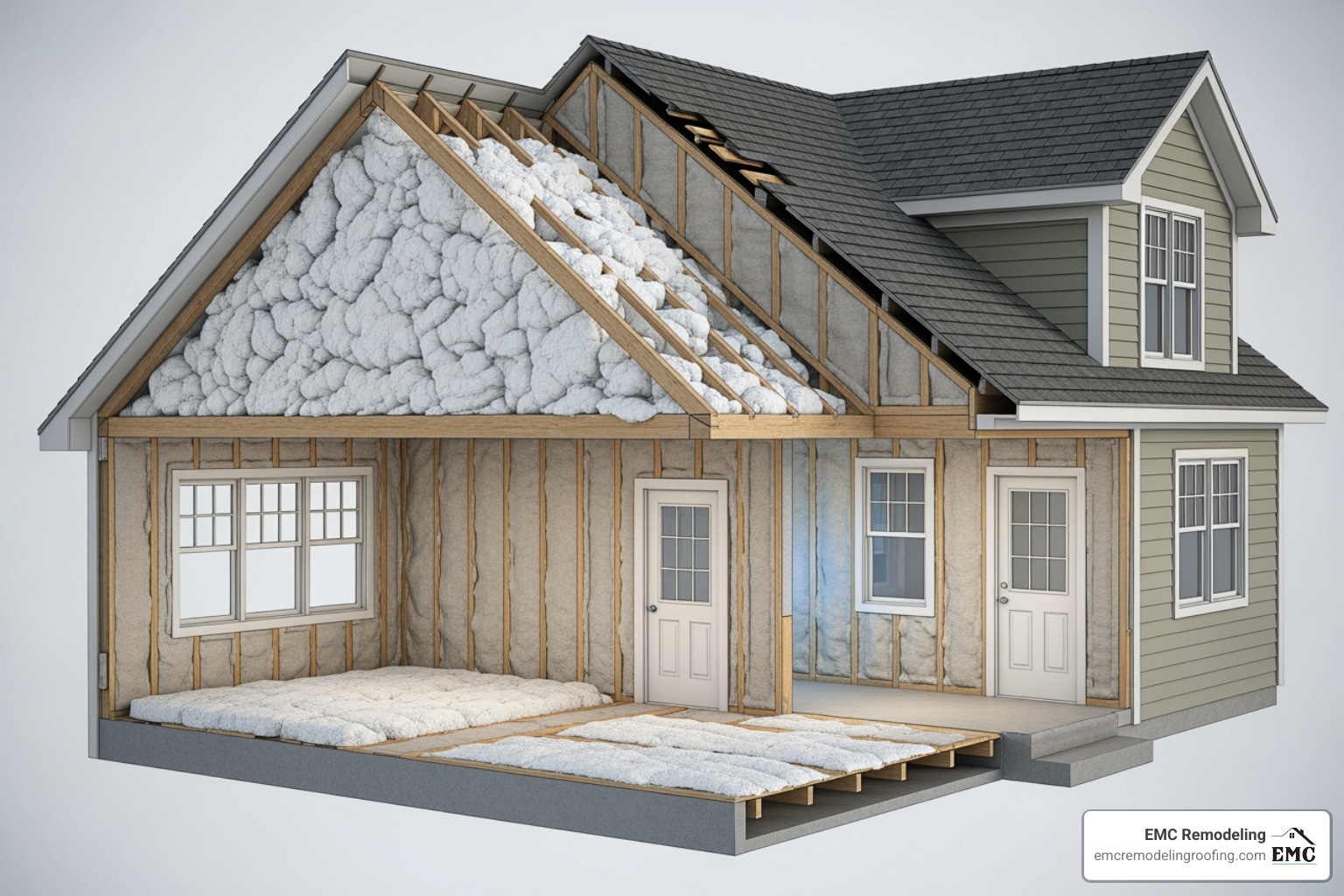
Why Weatherization Is the Foundation of an Energy-Efficient Home
Weatherization is the process of protecting your home from the elements to improve energy efficiency, comfort, and safety. It involves sealing air leaks, upgrading insulation, improving ventilation, and ensuring your roof, windows, doors, and siding work together as a barrier against heat, cold, moisture, and drafts.
Key benefits of weatherization include:
- Lower utility bills – Homeowners save an average of 15% on heating and cooling costs (EPA)
- Improved comfort – Stable indoor temperatures year-round
- Improved health and safety – Reduced mold, better air quality, and safer combustion appliances
- Increased home value – Energy-efficient homes are more attractive to buyers
The U.S. Department of Energy’s Weatherization Assistance Program (WAP) has helped more than 7.2 million families since 1976, with participating households saving an average of $372 per year on energy bills. But weatherization isn’t just for low-income families—every homeowner can benefit from a whole-house approach to energy efficiency.
A more energy-efficient home starts with understanding where you’re losing energy. Whether you’re dealing with high utility bills, drafty rooms, or inconsistent temperatures, professional roofing and insulation services can help you take control of your home’s performance.
I’m Matthew Runyon, President of EMC Remodeling & Roofing in Temple, Texas. Over the past 15 years, I’ve helped hundreds of Central Texas homeowners improve their homes through weatherization strategies that start with a solid, energy-efficient roof. A well-maintained roof is the first line of defense in any weatherization plan, and our team specializes in identifying and fixing the vulnerabilities that lead to energy waste and costly repairs.
Easy weatherization glossary:
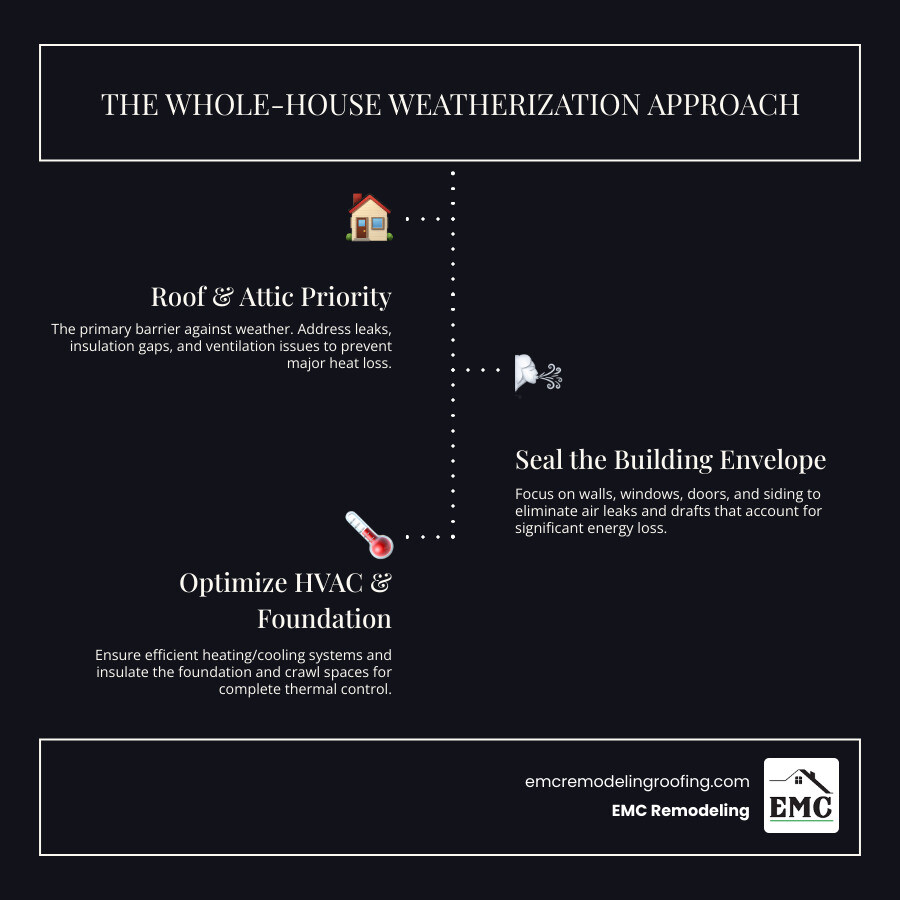
The ‘Whole-House’ Approach: Why Your Roof is the First Line of Defense
When we talk about weatherization, we’re not just patching up a few cracks. We’re looking at your home as a complete system, where every component works together to create an energy-efficient, comfortable living space. This “whole-house” approach is crucial because addressing one issue without considering others can lead to unexpected problems or diminish the effectiveness of your efforts. For example, insulating an attic without first fixing a leaky roof is like trying to fill a bucket with holes – a futile exercise.
At EMC Remodeling, we understand that the foundation of any effective weatherization strategy begins at the top: with your roof. Your roof is your home’s primary shield against the relentless Central Texas sun, unpredictable storms, and occasional cold snaps. A compromised roof can undermine all other efficiency upgrades, allowing moisture intrusion, heat gain, or heat loss that negates the benefits of new insulation or windows.
Building science confirms this: a leaky or poorly insulated roof acts as a major thermal bridge, allowing conditioned air to escape and unconditioned air to enter. This forces your HVAC system to work overtime, driving up energy bills and reducing comfort. That’s why a professional Roof and Attic Inspection is essential. Our experts can identify hidden leaks, insulation gaps, and ventilation issues that may not be obvious to the untrained eye. We check for common problems like damaged shingles, compromised flashing, and poor attic ventilation, all of which contribute to energy waste.
In Central Texas, severe weather events are a fact of life. Hailstorms and strong winds can inflict significant damage, creating vulnerabilities that demand immediate attention. That’s why our Emergency Roof Repair services are vital for maintaining the integrity of your home during and after these events. Similarly, Hail Damage Roof Repair addresses one of the most common sources of roof leaks in our region, ensuring that your home’s first line of defense remains impenetrable. By prioritizing roof integrity, we lay the groundwork for truly effective weatherization that lasts.
Sealing the Envelope: Insulation, Siding, and Windows
Once the roof is sound, we turn our attention to the rest of your home’s envelope – the outer shell that separates your conditioned indoor space from the outdoor environment. Air leaks are a prime culprit in energy waste, responsible for up to 30% of a home’s energy loss. These hidden gaps and cracks are found around windows, doors, electrical outlets, plumbing penetrations, and even where walls meet the foundation. Sealing these leaks with high-quality caulking and weatherstripping is a fundamental step in comprehensive weatherization.
Beyond air sealing, proper insulation is critical. Attics, walls, and floors are often under-insulated, allowing heat to transfer freely. Upgrading insulation, particularly in the attic, can dramatically reduce heating and cooling costs. For example, spray foam insulation, which we frequently recommend for its superior R-value and air-sealing properties, can be incredibly effective in our hot Texas climate. It creates a continuous thermal and air barrier, reducing humidity infiltration and lowering the risk of mold growth, particularly important during our humid summers. Homeowners in Temple, Texas, often see energy bill reductions of 20% to 40% after installing spray foam.
Your home’s siding also plays a significant role in its energy performance. Damaged or outdated siding can allow air and moisture to penetrate, compromising your insulation and leading to higher energy bills. A Siding Replacement not only improves curb appeal but also significantly improves your home’s weather resistance and thermal envelope. We offer durable, energy-efficient siding options that stand up to the Texas elements.
Finally, windows are a notorious source of heat loss and gain. Old, single-pane windows can account for a substantial portion of your home’s energy leakage. Upgrading to Energy Star Most Efficient Windows can drastically reduce drafts and energy waste. These high-performance windows are designed with advanced glazing and frames to minimize heat transfer, keeping your home cooler in the summer and warmer in the winter. Our Window Services ensure professional installation, which is just as important as the quality of the windows themselves for long-term performance and energy savings. By addressing these key components of your home’s envelope, we ensure a holistic approach to weatherization that delivers lasting comfort and efficiency.
The Value of a Professional Home Energy Audit
Before starting on any major weatherization project, a professional home energy audit is the definitive way to identify the exact sources of energy loss and prioritize improvements. Think of it as a comprehensive health check-up for your home’s energy systems. Many homeowners might guess where their problems lie, but an audit provides data-driven insights.
Certified professionals use specialized diagnostic tools, such as blower door tests, to measure air leakage throughout your home. This test depressurizes your house, making air leaks more apparent and allowing technicians to pinpoint their exact locations. Infrared cameras are also used to visualize thermal bridges and insulation deficiencies, revealing cold spots in winter or hot spots in summer that indicate where energy is escaping or entering.
The U.S. Department of Energy does not offer energy assessments directly, but they recommend finding certified professionals. Organizations like the Building Performance Institute (BPI) and RESNET (Residential Energy Services Network) provide directories to find a professional assessor near you. These professionals are trained to understand how a house works as a system, identifying interconnected issues that a piecemeal approach might miss. An energy audit is more than just a list of problems; it’s the first critical step toward building a comprehensive, effective, and cost-efficient weatherization plan custom to your specific home and climate challenges here in Central Texas.
Weatherization Assistance: Programs and Eligibility
For many households, the upfront cost of weatherization improvements can be a barrier. Thankfully, programs exist to help make these crucial upgrades accessible. The U.S. Department of Energy’s Weatherization Assistance Program (WAP) stands as the nation’s largest residential energy efficiency initiative, operating since 1976. Its primary goal is to reduce energy costs for low-income households by increasing the energy efficiency of their homes while ensuring their health and safety. This program helps families save an average of $372 or more every year on their utility bills. We believe everyone deserves a comfortable, efficient home, and WAP is a vital resource in achieving that goal. You can learn more about the program at the official About the Weatherization Assistance Program page.
Who Qualifies for WAP?
Eligibility for the Weatherization Assistance Program is primarily based on income. Households with an annual income at or below 200% of the federal poverty line are generally eligible for financial support. This broad guideline covers a significant number of families who struggle with high energy costs.
Beyond income, WAP often prioritizes certain vulnerable populations, ensuring that those most in need receive assistance. This includes:
- Elderly individuals
- People with disabilities
- Families with children (typically under 18)
WAP serves both homeowners and renters. If you are a renter, your landlord’s permission will be required to perform weatherization services on the property. This ensures that the benefits of improved energy efficiency extend to a wider range of low-income housing. While specific income thresholds can vary slightly by state and local administering agencies, the overarching federal guideline of 200% of the poverty line remains constant.
What WAP Covers—and What It Doesn’t
The Weatherization Assistance Program takes a comprehensive, “whole-house” approach to improving energy efficiency, but it’s important to understand the scope of services provided. The goal is to maximize energy savings and improve health and safety within the existing structure.
Covered Weatherization Services typically include:
- Insulation: Adding insulation to attics, walls, floors, and crawl spaces to prevent heat transfer.
- Air Sealing: Sealing cracks and gaps in the home’s envelope to reduce air leakage and drafts. This includes caulking, weatherstripping, and sealing around pipes and wires.
- Minor Roof Repairs: Addressing small leaks or damaged areas that could compromise insulation or lead to moisture problems. This is critical to ensure other weatherization measures are effective.
- HVAC Tune-ups & Repairs: Optimizing heating and cooling systems for efficiency, and in some cases, minor repairs or replacements of inefficient units.
- Health and Safety Checks: Testing combustion appliances (furnaces, water heaters) for proper operation and carbon monoxide leaks.
- Carbon Monoxide (CO) Detectors: Installing CO detectors to improve occupant safety.
- Ventilation Fans: Improving ventilation to control moisture and improve indoor air quality.
- Duct Sealing: Sealing leaky ductwork to prevent conditioned air loss.
- Water Heater Insulation: Insulating water heaters and pipes to reduce heat loss.
- Energy-Efficient Lighting: Replacing inefficient light bulbs with LED alternatives.
What WAP Does NOT Typically Cover:
- Major Roof Replacements: While minor roof repairs are included, a complete roof replacement is generally not covered. This underscores the importance of maintaining a healthy roof, as a structurally unsound roof can defer a home from receiving WAP services until major repairs are made.
- Structural Repairs: Significant structural issues, such as foundation problems, severely damaged walls, or major roof framing issues, are usually outside the scope of WAP.
- Full Window Replacement: While some programs may offer window repairs or secondary glazing, a full replacement of all windows is often not covered unless it’s deemed the most cost-effective solution for energy savings.
- Cosmetic Repairs: Painting, new flooring, or other aesthetic improvements are not part of the program.
- Additions or Major Remodeling: WAP focuses on improving the efficiency of the existing structure.
The critical takeaway here, especially for our Central Texas clients, is that a structurally sound roof is a prerequisite for many WAP services. If your roof has significant damage, address that first. Our team at EMC Remodeling can assess your roof’s condition and provide expert Roof Repair or replacement services, ensuring your home is ready for comprehensive weatherization.
How to Apply for WAP
Applying for the Weatherization Assistance Program is a straightforward process designed to help low-income families access these vital services. The federal government distributes WAP funds to states, which then work with a network of local agencies – often community action agencies or non-profit organizations – to deliver services directly to eligible households.
Here’s a general overview of the application process:
- Contact Your Local WAP Agency: The first step is to locate and contact the WAP service provider in your area. The U.S. Department of Energy provides a helpful resource to Learn if you qualify for WAP and find your state WAP office to apply. For our clients in Central Texas, this would involve contacting the relevant agency serving cities like Temple, Killeen, Cedar Park, or Georgetown.
- Submit Required Documentation: You will need to provide documentation to verify your income, household size, and residency. This typically includes proof of income for all household members (e.g., pay stubs, Social Security statements, public assistance award letters), utility bills, and identification.
- Home Energy Audit: Once deemed eligible, a certified energy auditor will conduct a comprehensive assessment of your home to identify specific areas of energy loss and recommend custom weatherization measures.
- Service Delivery: Approved weatherization measures will then be installed by qualified contractors or agency crews.
Appeals Process: If you are denied services or feel you have been treated unfairly, you have the right to appeal the decision. You should first notify your local Community Action Agency to request a fair hearing. If your appeal is denied at the local level, you can typically submit a written appeal to the state agency overseeing the WAP program. This ensures a fair review of your application and circumstances.
Maximizing Savings: Tax Credits, Rebates, and Financing for Weatherization
Investing in weatherization is an investment in your home’s future, but it doesn’t have to break the bank. Beyond programs like WAP, a variety of federal, state, and local incentives exist to make energy efficiency upgrades more affordable for all homeowners. Recent legislation, such as the Inflation Reduction Act (IRA), has significantly expanded available tax credits and rebates, making this an excellent time to consider improving your home’s energy performance.
Federal Tax Credits and Local Rebates
The federal government offers substantial incentives for homeowners who make energy-efficient improvements. The Energy Efficient Home Improvement Credit, for instance, covers a portion of the costs for qualifying upgrades like insulation, energy-efficient windows, and exterior doors. This credit can significantly reduce your tax liability for the year you make the improvements. To understand which products and improvements qualify, you can See a list of FAQs about tax credits for Energy Star products.

Beyond federal tax credits, many utility companies and local municipalities in Central Texas offer their own rebate programs for qualifying energy-efficient products and services. These can include rebates for installing new, high-efficiency HVAC systems, upgrading insulation, or choosing ENERGY STAR certified appliances. It’s always a good idea to check with your local utility provider in areas like Temple, Killeen, or Cedar Park for specific programs available in your area. You can also use online tools to Find rebates near you for Energy Star products. Combining federal tax credits with local rebates can lead to substantial savings on your weatherization projects.
Financing and Assistance Programs
For projects that require more significant upfront investment, several financing options are available to help homeowners. The U.S. Department of Housing and Urban Development (HUD) offers programs designed to facilitate home improvements, including those focused on energy efficiency.
- HUD Title I Property Improvement Loans: These loans can help finance property repairs or improvements, including those related to weatherization and energy efficiency. They are often available through approved lenders and can be a flexible option for homeowners. You can Learn about HUD Title I property improvement loans for more details.
- 203(k) Mortgage Insurance: If you’re a homebuyer or homeowner looking to finance both the purchase or refinance of a home and its repairs or improvements, a 203(k) loan might be an option. This program allows you to borrow an extra amount through your mortgage for home repairs and improvements, including energy-efficient upgrades.
- Low Income Home Energy Assistance Program (LIHEAP): Beyond weatherization services, LIHEAP provides critical assistance for low-income households struggling with their home heating and cooling bills. While primarily focused on bill payment, LIHEAP funds can sometimes be leveraged to support energy-efficiency improvements. If you’re facing high energy costs, it’s worth exploring if you Find out if you qualify for LIHEAP.
These programs, combined with the expertise of a trusted contractor like EMC Remodeling, make weatherization an accessible and financially rewarding endeavor for homeowners across our Central Texas service areas, including Leander, Belton, and Pflugerville.
The Impact of Weatherization: Economic, Health, and Community Benefits
The benefits of weatherization extend far beyond individual energy savings. This vital process delivers measurable economic, health, and environmental advantages that ripple through communities. The U.S. Department of Energy reports that for every $1 invested in weatherization, it returns $2.78 in non-energy benefits. This means a significant return on investment that benefits not just the homeowner, but the entire local economy and public health.
Economic and Community Revitalization
Weatherization is a powerful engine for economic growth. The Weatherization Assistance Program alone supports over 8,500 jobs nationwide annually, creating opportunities in assessment, installation, and manufacturing. These are local jobs, performed by local crews and contractors, directly stimulating the economies of cities like Temple, Killeen, and Georgetown. By investing in home efficiency, we’re not only creating jobs but also supporting local businesses that supply materials and services.
Furthermore, energy-efficient homes often have higher property values. As homes become more attractive to buyers due to lower operating costs and improved comfort, the overall value of properties in a neighborhood can increase. This revitalization strengthens local tax bases and fosters community pride. When we perform Roofing Services or Window Replacement in areas like Salado or Lago Vista, we’re contributing to this larger economic picture. This makes weatherization a win-win for homeowners and the broader community.
Healthier, Safer, and More Comfortable Homes
Perhaps the most profound impacts of weatherization are on the health and safety of a home’s occupants. By sealing air leaks and improving insulation, we create a more stable indoor environment, reducing exposure to outdoor pollutants, allergens, and humidity. This leads to improved indoor air quality and can significantly reduce instances of respiratory illnesses and allergies.
Effective weatherization also plays a crucial role in preventing moisture intrusion, which is a common cause of mold and mildew growth. By controlling humidity and sealing the building envelope, we mitigate these issues, creating a healthier living space. Additionally, comprehensive weatherization includes checks and improvements for combustion appliance safety, reducing the risk of carbon monoxide poisoning and ensuring proper ventilation.
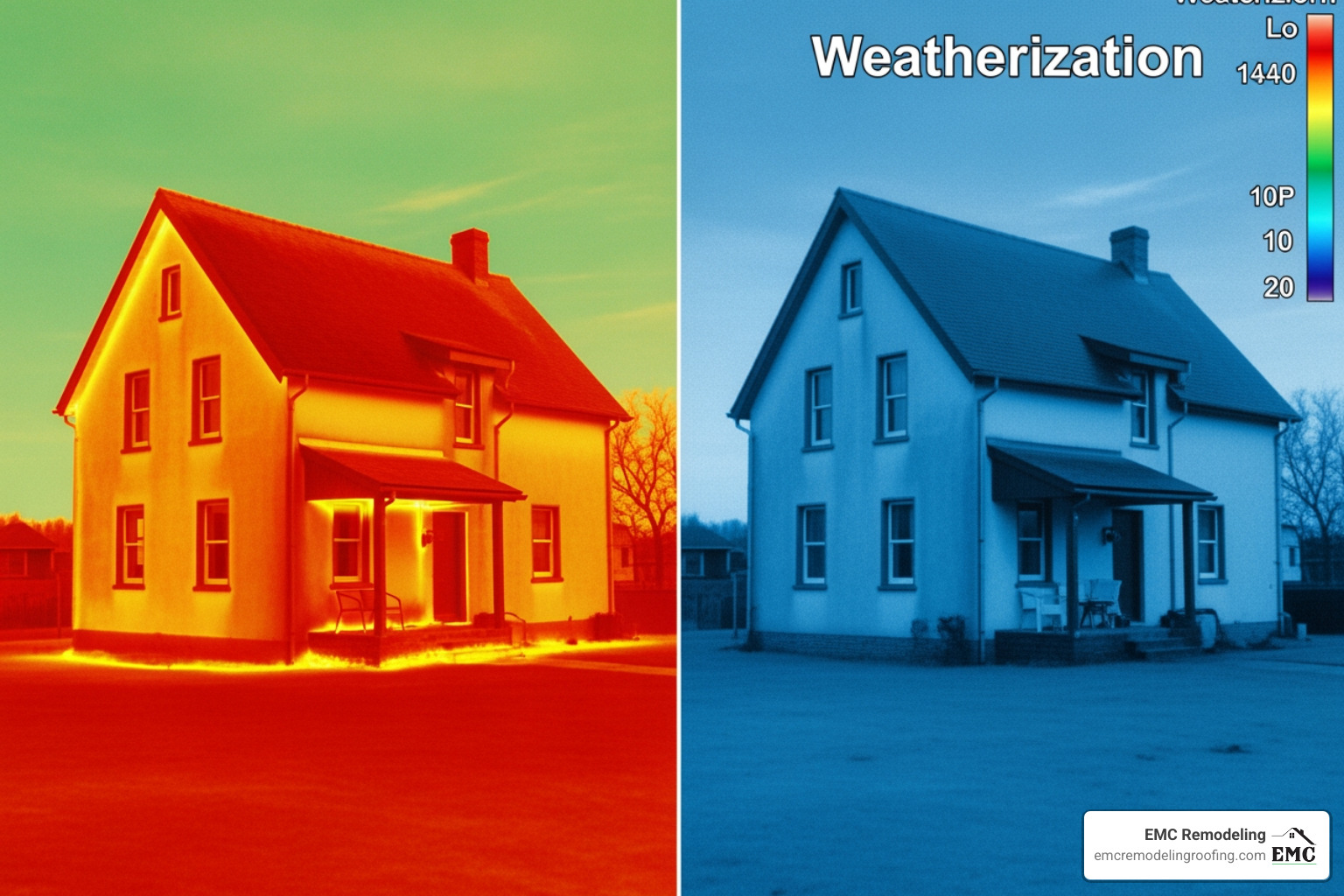
The result is a home that is not only warmer in winter and cooler in summer but also safer and more comfortable year-round. Stable indoor temperatures mean less strain on the body, especially for vulnerable populations like the elderly or those with chronic health conditions. Lower utility bills also reduce financial stress, allowing families to allocate resources to other essential needs. These “non-energy benefits” are a cornerstone of why weatherization is such a vital service.
Frequently Asked Questions about Weatherization and Roofing
We encounter many questions about weatherization and how it impacts homes in Central Texas. Here are some of the most common inquiries we receive:
How much can I save with weatherization?
The savings from weatherization can be substantial and vary based on several factors, including your home’s current condition, the climate, and the specific improvements made. However, the Environmental Protection Agency (EPA) estimates that homeowners can save an average of 15% on heating and cooling costs (or an average of 11% on total energy costs) by air sealing their homes and adding insulation in attics, floors over crawl spaces, and accessible basement rim joists. For low-income households participating in the WAP, average annual savings are even higher, at $372 or more. For a typical homeowner in Temple, TX, facing hot summers and chilly winters, these savings can significantly impact your monthly budget.
Can I do weatherization myself?
Some weatherization tasks are perfectly suited for the DIY enthusiast. Simple projects like caulking around windows and doors, adding weatherstripping, or installing foam gaskets behind electrical outlets can effectively seal minor air leaks. However, for more complex and impactful improvements, professional services are highly recommended for both safety and effectiveness.
Tasks such as upgrading attic insulation, repairing major roof leaks, or optimizing your HVAC system require specialized knowledge, tools, and experience. For instance, a thorough Roof Inspection by experts like us ensures that all vulnerabilities are addressed correctly, preventing costly future damage. Improper installation of insulation or sealing can lead to moisture problems, poor indoor air quality, or even structural damage. While we encourage homeowners to tackle small projects, for the major components of your home’s energy envelope, trusting professionals ensures the job is done right and delivers the maximum benefits.
Does weatherization increase my home’s value?
Absolutely. Weatherization is a smart investment that directly contributes to your home’s market value. Energy-efficient homes are increasingly attractive to potential buyers because they offer lower operating costs, greater comfort, and a reduced environmental footprint. Studies and real estate data, including information from the National Association of Realtors, consistently show that homes with energy-efficient features, such as new insulation, sealed air leaks, and upgraded windows, command higher resale values.
Beyond the immediate financial appeal, weatherization can also improve your home’s durability and reduce maintenance needs in the long run. By protecting against moisture, drafts, and extreme temperatures, you’re preserving the structural integrity of your property. For homeowners in Killeen, Belton, or any of our Central Texas service areas, an energy-efficient home is a competitive advantage in the real estate market.
Conclusion: Protect Your Home and Maximize Savings with EMC Remodeling
Weatherization is more than just a home improvement project; it’s a strategic investment in your family’s comfort, health, and financial well-being. By taking a comprehensive “whole-house” approach, we can significantly reduce energy costs, create a more stable indoor environment, and extend the lifespan of your home. We’ve seen how these upgrades transform properties and improve lives across Central Texas, from Temple to Cedar Park, and from Leander to Georgetown.
A secure, well-maintained roof is the absolute foundation of any effective weatherization strategy. Without a robust roof protecting your home from the elements, other efforts to seal and insulate can be undermined. For homeowners in Central Texas seeking to improve their home’s energy efficiency, EMC Remodeling is your trusted partner. We offer expert Roofing Services, comprehensive Roof Repair, professional window installation, and durable siding upgrades. Our team is dedicated to exceptional craftsmanship and direct owner involvement, ensuring every project meets the highest standards.
Don’t let high energy bills and uncomfortable rooms dictate your home life. Take control with strategic weatherization. Contact us today for a free estimate at (254) 265-6163 or explore our full range of Exterior Home Improvements to find how we can make your home more efficient, comfortable, and valuable.
