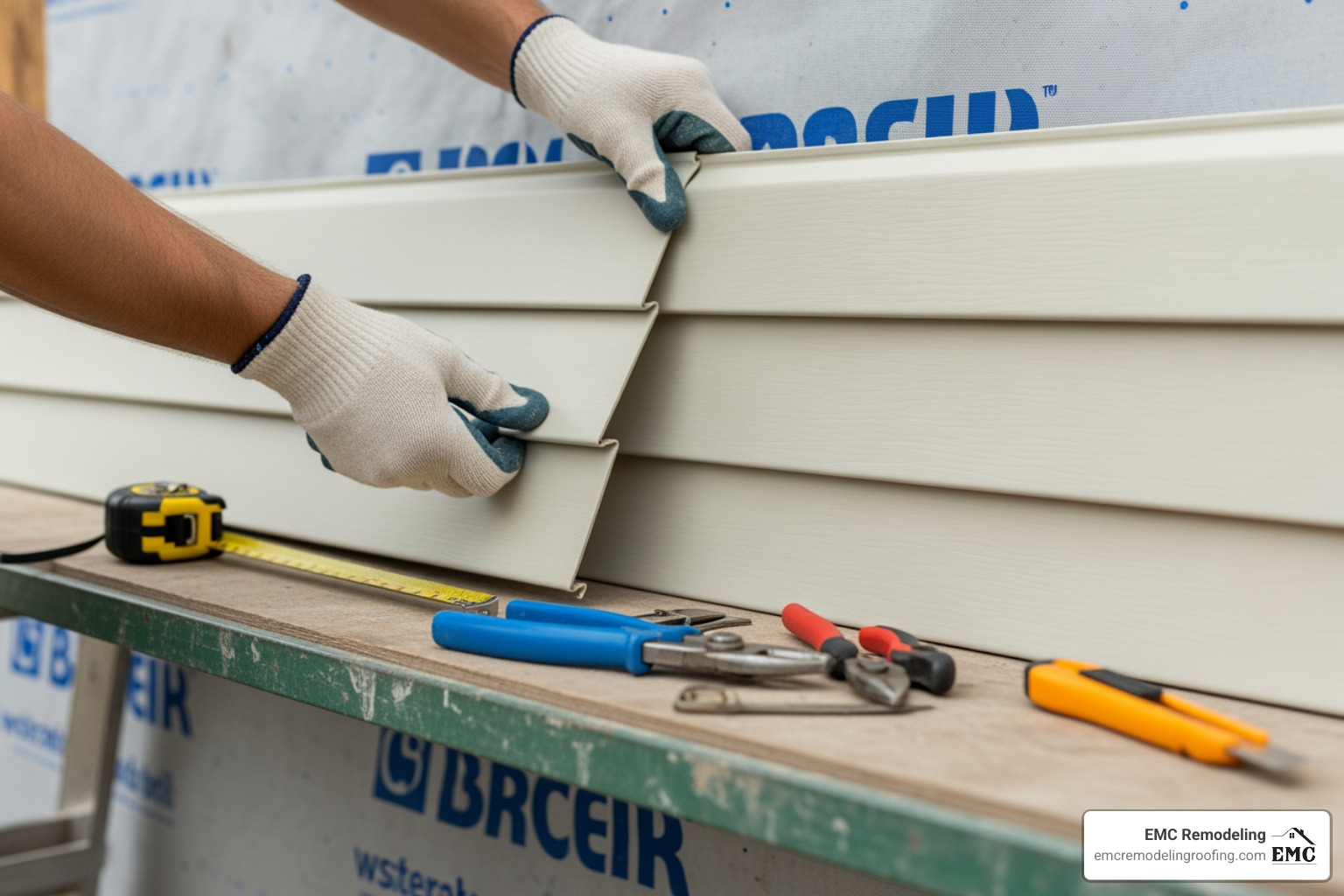
Why Cheap Vinyl Siding Installation Makes Financial Sense for Texas Homes
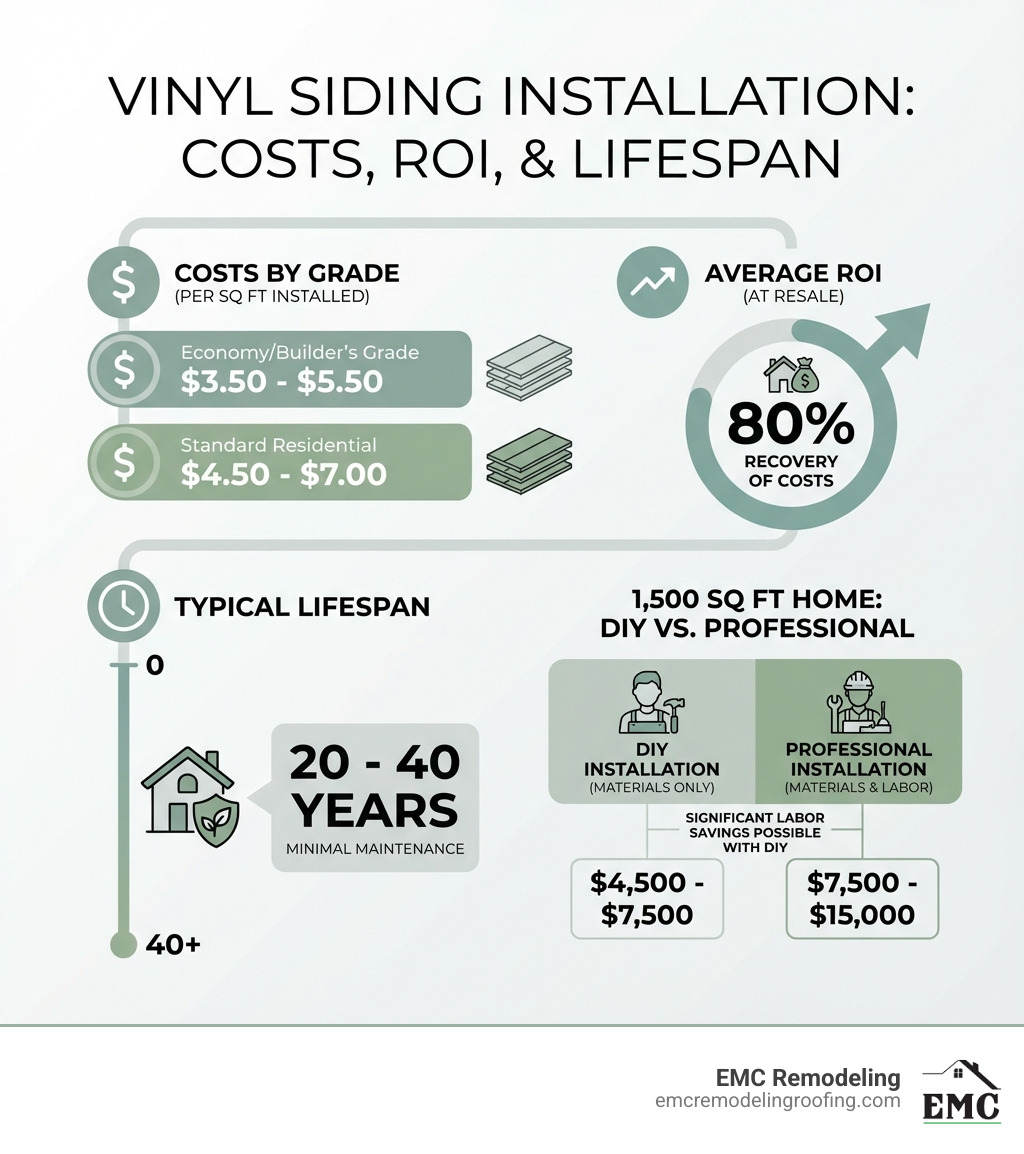
Cheap vinyl siding installation delivers one of the highest paybacks of any exterior upgrade, with homeowners typically recovering 80% of project costs at resale. For Central Texas property owners, that makes vinyl siding a strategic way to boost curb appeal and weather protection without overspending. As a trusted local partner for roofing and exterior services in Temple and surrounding areas, EMC Remodeling helps homeowners plan exterior projects that balance budget, durability, and long-term value.
Quick Answer: Your Best Options for Affordable Vinyl Siding Installation
- DIY Installation: $3-$5 per square foot (materials only)
- Economy/Builder’s Grade: $3.50-$5.50 per square foot installed
- Standard Residential: $4.50-$7 per square foot installed
- Expected ROI: 60-80% cost recovery at resale
- Project Timeline: 2-5 days for average home
For a typical 1,500 square foot home, material costs range between $4,500 and $7,500, with professional labor adding another $3,000 to $7,500. With proper planning and basic carpentry skills, many homeowners can tackle this as a DIY weekend project and save significantly on labor costs.
Vinyl siding has become the go-to choice for budget-conscious homeowners because it delivers on three key fronts: durability (lasting 20-40 years with minimal maintenance), energy efficiency (especially with insulated options), and curb appeal (with countless color and style options). Unlike wood siding that requires regular painting and staining, vinyl simply needs an occasional wash with soap and water.
In Central Texas, where extreme heat, high winds, and sudden hail storms routinely test exterior materials and roofing systems, choosing the right vinyl siding grade matters. The region’s climate demands materials that can withstand temperature swings from freezing winters to scorching summers exceeding 100°F. Standard residential grade vinyl (0.044 inches thick) typically performs well in our area, offering a good balance between cost and durability, especially when paired with a resilient roofing system and properly installed gutters.
The affordable siding solutions available today make this project accessible even on tight budgets. Whether you’re repairing storm damage, updating an aging exterior, or preparing your property for sale, understanding the installation process helps you make informed decisions about DIY versus professional installation. Homeowners who coordinate siding with roof repair services or new roof installation often achieve the best overall weather protection and visual consistency.
I’m Matthew Runyon, President of EMC Remodeling & Roofing, with over 15 years of experience helping Central Texas homeowners steer cheap vinyl siding installation projects. Throughout my career, I’ve guided hundreds of property owners through the decision-making process, helping them maximize value while staying within budget.
Planning Your Project: The Keys to an Affordable, Storm-Ready Installation
Starting on a cheap vinyl siding installation project requires careful planning, much like any significant home improvement. Proper preparation is half the battle, especially when you’re aiming for both affordability and a professional finish that can stand up to Central Texas storms. Before you even think about swinging a hammer, you need to consider your budget, material choices, and local requirements in our service areas from Temple to Georgetown.
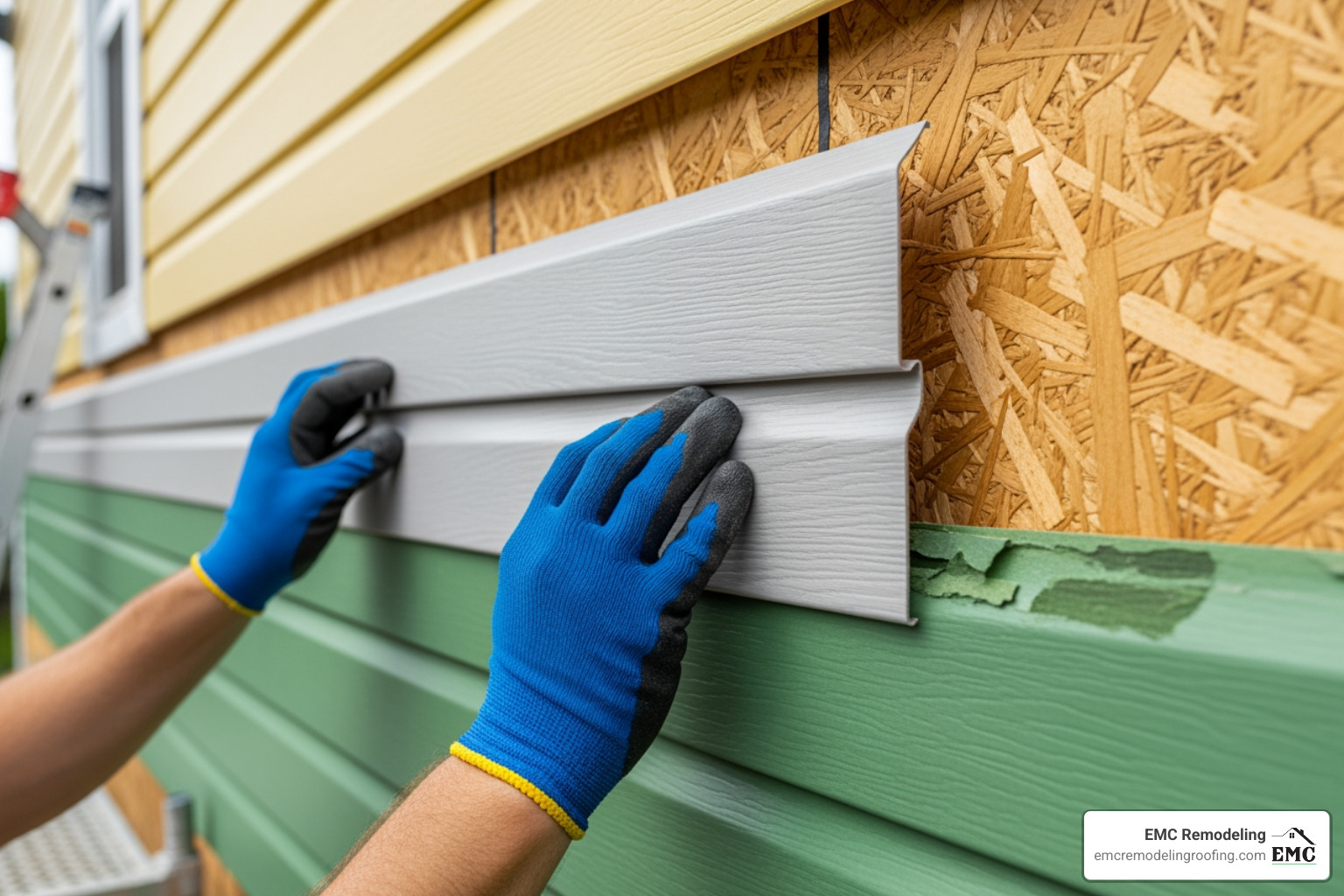
Coordinating siding work with other exterior services, such as emergency roof repair after storms, often produces the most cost-effective results because access, setup, and permits are shared across multiple upgrades.
How to Choose Materials for a Cheap Vinyl Siding Installation
When selecting vinyl siding, “cheap” doesn’t have to mean “low quality.” Vinyl siding costs approximately one-third the price of fiber cement siding. The average cost of vinyl siding is $3.16 per square foot for materials.
Here’s a breakdown of common vinyl siding grades and their typical installed costs:
- Economy/Builder’s Grade (0.035-0.040 inches thick): Costs $3.50 to $5.50 per square foot installed. While budget-friendly, it’s thinner with a lifespan around 15 years.
- Standard Residential Grade (0.042-0.044 inches thick): Costs $4.50 to $7 per square foot installed. Offers good balance of cost and durability, lasting 20-25 years. This is often ideal for homeowners in hail-prone areas when combined with impact-resistant roofing.
- Thick/Premium Grade (0.046-0.052 inches or higher): Costs $6 to $12+ per square foot installed. Built to last 30+ years and withstand harsher conditions.
Plain vs. Textured Styles: Traditional lap siding costs between $1 and $6 per square foot, averaging about $4 per square foot. Simple horizontal panels in standard colors like sand offer the lowest cost. More intricate styles like shakes or board and batten can push costs to $8-$15 per square foot.
Insulated vs. Uninsulated Siding: Insulated vinyl siding includes rigid foam backing, offering 5x better energy efficiency than standard options and up to 45% noise reduction. However, it adds $3-$4 per square foot to material cost, bringing total installed costs to $7 to $13 per square foot.
Color Choices: Lighter colors tend to be less expensive than custom or darker shades. Darker colors absorb more solar heat, an important consideration for both siding and roofing choices in hot climates.
Vinyl siding has an excellent investment return rate. Homeowners can expect to recover 63% of project value according to the National Association of Realtors’ 2019 Remodeling Impact Report. Remodeling’s 2021 Cost vs Value Report puts ROI at over 68%, and The Journal of Light Construction’s 2024 Cost vs. Value Report shows an 80% ROI.
Calculating Your Material Needs
Accurately estimating material needs prevents overspending or running short mid-project:
- Measure Your Home’s Exterior: Measure length and height of each wall section. Multiply for square footage, then add all sections together.
- Account for Gables: For triangular gable ends, multiply base width by height, then divide by two.
- Subtract Windows and Doors: Measure and subtract window and door areas from your total. Remember you’ll need J-channel and trim pieces around these openings.
- Add a Waste Factor: Add 5-10% to total square footage for cuts and mistakes. For complex homes, increase to 15%. A box of vinyl siding typically covers 200 square feet and costs about $500.
Essential Tools for Vinyl Siding Installation:
- Tape measure
- Level (4 ft. and torpedo)
- Chalk line
- Tin snips
- Utility knife
- Hammer
- Power drill with screwdriver bits
- Circular saw or miter saw (with fine-tooth blade for vinyl)
- Siding removal tool (zip tool)
- Nail slot punch
- Snap lock punch
- J-channel cutter (optional)
- Safety glasses and gloves
- Stepladder or scaffolding
Homeowners with ladders and safety equipment for roof maintenance and inspection can often repurpose that gear for siding, further reducing project costs.
The Step-by-Step DIY Installation Guide for Weather-Resilient Siding
Now let’s cover the actual cheap vinyl siding installation. This guide assumes you’re working on a single-story home with a relatively simple exterior, and that your roof, fascia, and gutters are in good condition or have recently been serviced by a professional.
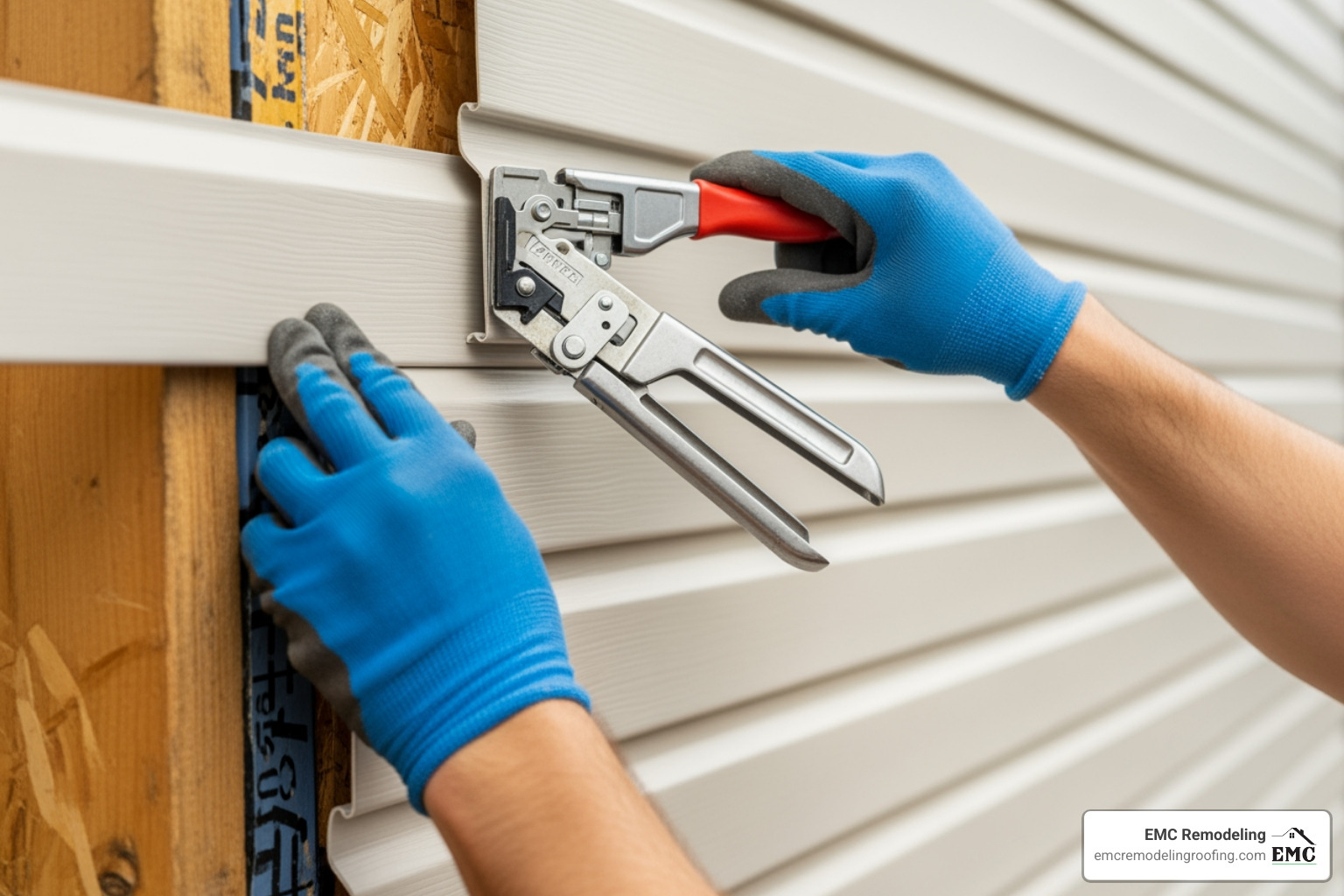
Step 1: Removing Old Siding and Preparing the Surface
Before new siding goes up, the old must come down. This step is critical, as underlying issues can compromise your new vinyl siding and allow wind-driven rain to penetrate.
- Safety First: Wear gloves, eye protection, and dust mask. Homes built before 1978 may contain lead paint; those before 1989 might have asbestos. Get testing and professional removal if suspected ($5-$11 per square foot for asbestos removal).
- Siding Removal: Use a pry bar to carefully remove old siding from top to bottom. Disposal costs $1-$2 per square foot for vinyl, more for heavier materials.
- Inspect for Damage: Check sheathing for rot, mold, water damage, or pest infestations. Focus on windows, doors, roof-to-wall transitions, and eaves. Address issues immediately. For guidance, see our Exterior Home Repair guide. Consider pairing with roof repair services if leaks are present.
- Install House Wrap: Install new weather-resistant barrier even if old siding had one. Overlap seams 6-12 inches and tape securely. Proper integration with roof and window flashing creates continuous drainage.
- Find and Mark Studs: Use stud finder to locate and mark studs for secure nailing into structural framing.
Step 2: Installing Trim, Soffit, and Starter Strips
Trim and accessories provide clean finish and protect vulnerable areas where water enters during Central Texas thunderstorms.
- Install J-Channel: Install around windows, doors, and openings. Creates channel for siding panels. Cut and miter corners for professional look and proper drainage.
- Install Corner Posts: Install vertical trim at all inside and outside corners.
- Soffit and Fascia: If updating soffit and fascia, do it now. Ensures cohesive look and better roof ventilation. Professional installation costs $4-$22 per linear foot.
- Install Starter Strip: Most critical step for successful installation. Starter strip provides foundation for first course.
- Measure up from lowest foundation point and mark level line around entire home.
- Attach starter strip along this line, nailing securely. Leave 1/4 inch gaps at corners for expansion.
Step 3: Hanging the Vinyl Siding Panels
Time to bring your exterior to life:
- First Course: Engage first panel’s bottom lip into starter strip. Push up until locked.
- Nailing Technique: Critical for proper installation:
- Nail through center of pre-drilled slots
- Leave 1/16 inch space between nail head and siding
- Space nails every 12-16 inches into wall studs
- Overlapping Panels: Overlap panels about 1 inch, facing away from common viewing angle.
- Working Upwards: Continue locking panels, ensuring each course is level. Check periodically near roof intersections.
- Cutting Panels: Use utility knife for scoring and snapping. For intricate cuts, use circular saw with fine-tooth blade (installed backward).
- Top Course: Final course below soffit often needs lengthwise cutting. Use snap lock punch to create tabs that lock into utility trim.
Patience and attention to detail are essential. Improper installation leads to panels falling off, buckling, or moisture intrusion. If you uncover significant roofline issues, contact professionals for emergency roofing services.
DIY vs. Professional: Cost, Risk, and Storm Protection Compared
When considering cheap vinyl siding installation, the biggest decision often boils down to whether to DIY or hire a professional. Both options have clear trade-offs in terms of cost, safety, and how well your home will perform during hail, wind, and heavy rain events.
The True Cost of a DIY Cheap Vinyl Siding Installation
Opting for a DIY approach can significantly reduce the overall cost of your project, primarily by eliminating labor expenses, which can account for 30% to 50% of the total cost.
- Material Costs: This will be your largest expense. As discussed, economy-grade vinyl siding can be as low as $2-$4 per square foot. For a 1,500 sq ft home, this means $3,000-$6,000 for materials.
- Tool Purchase/Rental Fees: If you don’t own the specialized tools listed above, you’ll need to buy or rent them. A basic set of hand tools might cost $100-$300, while renting a siding brake or scaffolding could add $50-$150 per day.
- Permit Costs: Most municipalities in Central Texas will require a permit for exterior siding replacement. These can range from $50 to $500, depending on your city (for example, permits in Austin often run higher than in Temple or Killeen). Always check with your local building department.
- Time Investment: This is the “hidden” cost of DIY. A typical vinyl siding installation for an average home can take 2-5 days for experienced professionals. For a DIYer, this could easily stretch into several weekends, plus time for research and problem-solving. Your time has value.
- Potential for Mistakes: While DIY can save up to 50% on total project costs, improper installation can lead to costly repairs down the road. Common DIY mistakes include nailing too tightly, incorrect overlapping, or neglecting proper house wrap, which can lead to buckling, water damage, or even voiding manufacturer warranties. In severe cases, wind can get behind poorly fastened panels and rip them off along with roof-edge components.
Homeowners who already have experience with tasks like minor roof repair and maintenance often find the learning curve for siding less steep, but structural and waterproofing details still require careful attention.
When to Hire a Professional for Your Siding Project
While DIY is tempting for a cheap vinyl siding installation, there are clear instances where bringing in the pros is the smarter, more cost-effective choice in the long run.
- Complex Architecture: Homes with multiple stories, intricate gables, dormers, or numerous windows and doors significantly increase the complexity and danger of the project. Professionals have the right equipment (scaffolding, lifts) and expertise to handle these challenges safely and efficiently.
- Multi-Story Homes: Working at heights is inherently risky. Our team is trained and equipped to manage multi-story installations safely, minimizing risk to you and your property. Pairing siding work with roof installation services on taller homes can also reduce overall labor duplication.
- Finding Significant Structural Damage: If, after removing the old siding, you uncover extensive rot, water damage, or structural issues, these repairs often require specialized carpentry and knowledge. A professional can assess and address these problems correctly before the new siding goes on. We frequently find underlying issues during exterior renovations, and our team is equipped to handle comprehensive Exterior Home Improvements, including roof deck repairs and gutter replacement.
- Lack of Specialized Tools or Experience: While you can rent tools, the learning curve for using them efficiently and correctly can be steep. Professionals have all the necessary equipment and the experience to use it effectively.
- Ensuring Warranty Compliance: Most vinyl siding manufacturers offer warranties that can be voided by improper installation. Professional installers are typically certified and follow manufacturer guidelines, ensuring your warranty remains valid.
- Time Constraints: If you don’t have several weekends to dedicate to the project, or simply prefer to spend your free time differently, hiring a professional is a clear advantage. They can complete the job much faster, with less disruption to your daily life.
- Storm-Prone Locations: In Central Texas communities like Temple, Killeen, and Georgetown, proper siding and roof integration is critical for protecting your home against hail storms and extreme weather. Professional installation greatly reduces the risk of wind-driven rain entering at roof-to-wall intersections and causing hidden damage.
Our Vinyl Siding Services are designed to provide that level of protection while coordinating with roofing, gutter, and window upgrades. For homeowners in specific service areas, such as those looking for a roofer near me in Killeen, TX, EMC Remodeling can streamline both siding and roof work under a single, storm-ready plan.
Frequently Asked Questions About Vinyl Siding and Exterior Protection
Homeowners in Temple, Killeen, Georgetown, and other Central Texas communities often have questions about vinyl siding and how it fits into a complete exterior protection strategy that includes the roof and gutters. Here are some of the most common ones.
What is the expected lifespan of vinyl siding?
Vinyl siding is known for its durability, making it a strong long-term investment. Typically, vinyl siding lasts 20 to 40 years. High-quality, premium-grade vinyl with proper installation and maintenance can last up to 60 years.
Several factors influence its lifespan:
- Quality of Material: Thicker, higher-grade vinyl (0.044 inches or more) lasts longer and withstands more abuse than thinner, builder’s grade options.
- Installation Quality: Proper installation is paramount. Incorrect nailing or trim work can lead to buckling, cracking, wind damage, and premature failure.
- Local Climate: In Central Texas, intense sun can cause fading, and extreme temperature fluctuations can stress the material. Hail storms can also cause impact damage, especially when combined with roof and gutter impacts during the same event.
- Maintenance: While low-maintenance, annual cleaning with mild soap and water prolongs its life. Promptly addressing minor issues prevents bigger problems, much like timely roof repair prevents leaks from escalating.
The International Association of Certified Home Inspectors provides useful data on the life expectancy of building materials, confirming vinyl’s long-term value.
When should I repair versus replace my siding?
Deciding whether to repair or replace vinyl siding, especially after a Central Texas storm, depends on the damage extent and the siding’s age.
Repair When:
- Minor, Localized Damage: A few cracked, punctured, or loose panels from minor impact can be repaired. Individual panel replacement is cost-effective at $2-$4 per square foot. Our Siding Hole Repair Guide can help with small fixes.
- Minor Fading: If fading is minimal and cosmetic, cleaning or painting with vinyl-specific paint can refresh its look.
- Age: For relatively new siding (under 10-15 years) with isolated damage, repair is the most cost-effective choice.
Replace When:
- Widespread Damage: Large sections of severely cracked, warped, or missing siding from major storms warrant replacement. This is especially true if you also need hail damage roof repair or emergency roof repair from the same event.
- Extensive Fading/Brittleness: Significant color fading or brittle, cracking material indicates the vinyl is degrading and needs replacement.
- Underlying Issues: Widespread rot, mold, or structural damage beneath the siding requires full removal and replacement to address the core problems.
- Cost Threshold: A general rule is to replace if repair costs exceed 50% of a full replacement.
- Age: If siding is near or past its 20-40 year lifespan, replacement is wise for long-term protection and curb appeal.
For a detailed guide on assessing damage, read our Siding Repair Services Complete Guide. Coordinating siding replacement with a new roof installation often maximizes insurance claim value after major storms.
How does vinyl siding compare in cost to other materials?
Vinyl siding is one of the most budget-friendly exterior cladding options, considering both upfront costs and long-term maintenance.
Cost Comparison (Installed per square foot, approximate ranges):
| Material | Upfront Cost/sq ft | Lifespan | Maintenance |
|---|---|---|---|
| Vinyl Siding | $3 – $12 | 20-40 years | Low (annual cleaning) |
| Fiber Cement Siding | $7 – $15 | 30-50 years | Moderate (re-painting every 10-15 years) |
| Wood Siding | $6 – $15 | 20-40 years | High (regular painting/staining every 3-7 years) |
| Brick | $9 – $29 | 100+ years | Very Low (occasional cleaning) |
| Stucco | $6 – $12 | 50+ years | Moderate (crack repair, repainting) |
| Metal Siding | $2 – $10 | 25-40+ years | Low (dent repair, repainting) |
Key Takeaways:
- Vinyl vs. Fiber Cement: Vinyl’s upfront cost is about one-third that of fiber cement. While fiber cement (like Hardie Board, detailed in our Hardie Board Siding Complete Guide) offers superior fire and impact resistance, vinyl provides an excellent cost-to-value ratio.
- Vinyl vs. Wood: Wood siding has a higher upfront cost and requires demanding maintenance (scraping, painting, staining every few years), making its lifetime cost much higher than vinyl.
- Upfront Cost vs. Lifetime Cost: Materials like brick have high upfront costs but minimal maintenance. Vinyl offers a strong balance with a low upfront cost and very low maintenance, making its lifetime cost highly competitive.
For Central Texas homeowners, vinyl siding provides a practical blend of affordability, aesthetics, and resilience to local weather without constant upkeep. When paired with a well-designed roofing system and properly sized gutters, it forms a comprehensive exterior shell that protects against wind-driven rain and hail. If you’re looking for Siding Services in Temple, TX, or surrounding areas, we can help.
Conclusion: A Weekend Project That Protects Your Home for Decades
Starting on a cheap vinyl siding installation project, whether DIY or with professional assistance, is a transformative step for any homeowner. You’re not just covering your walls; you’re investing in your home’s protection, energy efficiency, and curb appeal. When coordinated with a resilient roofing system and healthy gutters, new siding becomes a critical layer in your home’s defense against Central Texas storms.
From understanding material grades and calculating precise measurements to mastering the art of hanging panels, each stage of your siding project contributes to a stunning and durable finish. While the allure of a DIY project for a cheap vinyl siding installation is strong, understanding its true costs—including your time, safety risk, and the potential for waterproofing mistakes—is essential. For complex homes, multi-story exteriors, or those demanding perfection and warranty compliance, the expertise of a professional team like ours at EMC Remodeling is invaluable.
We take pride in helping our neighbors in Temple, Lago Vista, Cedar Park, Leander, Georgetown, Killeen, Belton, Pflugerville, and Salado improve their homes with high-quality, affordable siding and roofing solutions. For a professional assessment and expert installation in the Temple, TX area, explore our vinyl siding services and related roof installation and roof repair options. To speak directly with our team and schedule a free exterior evaluation, call us anytime at +1 (254) 272-2364.