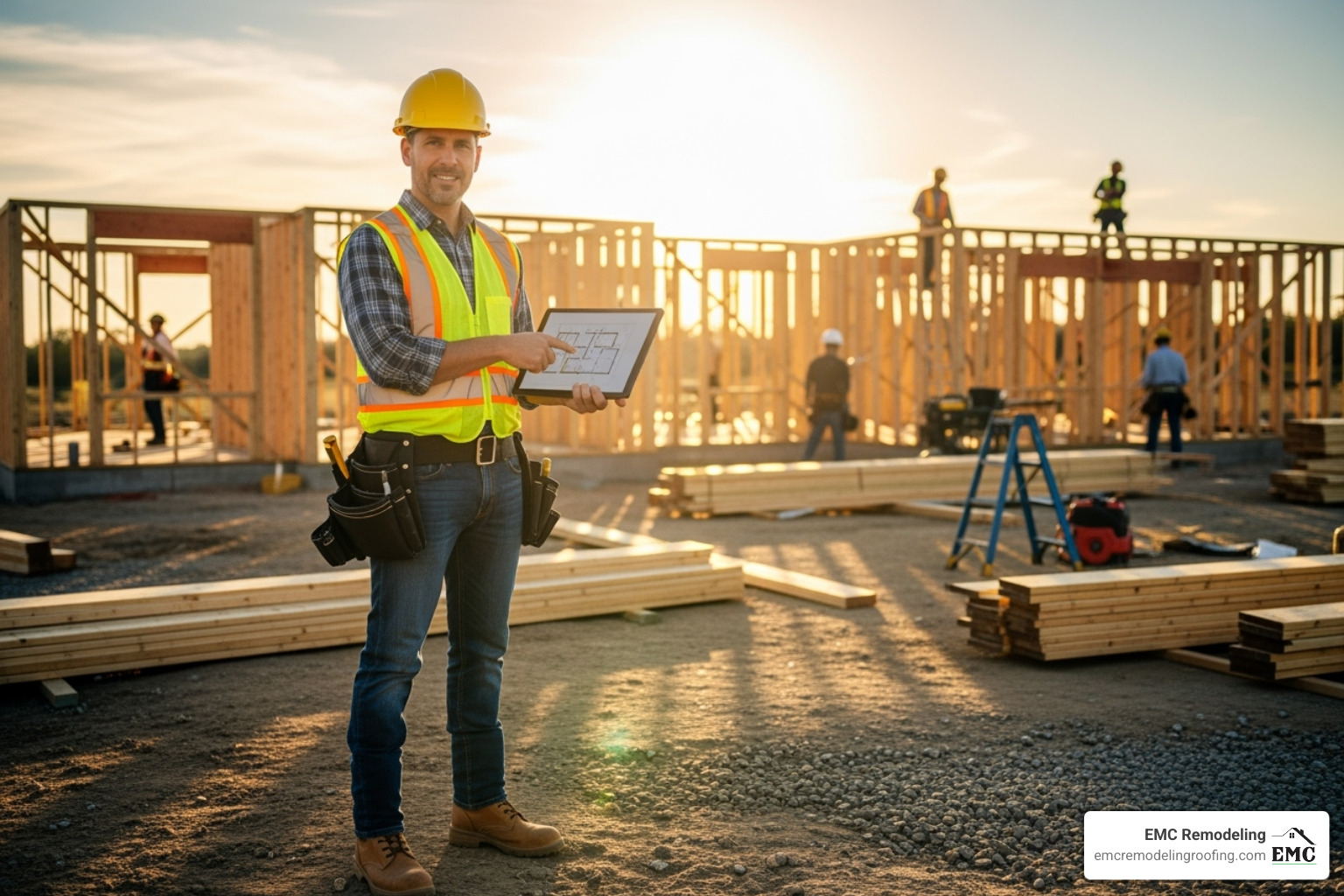
Your Guide to Hiring a General Contractor
Finding a trustworthy local general contractor is the first step to a successful home improvement project. Whether you’re planning a major renovation, dealing with storm damage, or building new construction, the right contractor acts as the conductor for your project, managing every detail from budget to timeline. Research shows general contractors typically add a 10% to 20% markup on total construction costs, a fee that covers their expertise in project management and quality control.
Quick Guide to Choosing a Local General Contractor:
- Verify Licensing & Insurance: Check for current, valid state licenses and full insurance coverage.
- Review Past Work: Ask for a portfolio and references for similar projects.
- Get Detailed Bids: Obtain and compare itemized estimates from at least three contractors.
- Check Online Reviews: Read customer feedback on platforms like the Better Business Bureau and Houzz.
- Ask Key Questions: Inquire about their timeline, communication process, and how they handle changes.
I’m Matthew Runyon, President of EMC Remodeling & Roofing, and I’ve spent over 15 years helping Central Texas homeowners steer the process of selecting the right local general contractor. My experience has shown me the common pitfalls homeowners face and the essential steps needed to protect your investment.
What Does a General Contractor Actually Do?
Think of a local general contractor as the project manager for your home. They are the single point of contact responsible for ensuring every part of your renovation or repair works together seamlessly. For homeowners needing professional roofing and remodeling services, a GC coordinates all moving parts, turning a potentially chaotic process into a streamlined success.

A general contractor oversees the day-to-day operations of a construction site. With the construction industry busier than ever, their role in managing schedules, materials, and personnel is indispensable.
Key Responsibilities of a General Contractor:
- Project Oversight: Creates and manages the project schedule, tracks progress, and adjusts for unforeseen issues like weather delays.
- Hiring Specialized Workers: Uses their network to hire vetted and reliable subcontractors like electricians, plumbers, and roofers.
- Sourcing Materials: Leverages supplier relationships to secure quality materials at fair prices, ensuring they are suitable for the local climate.
- Permit and Code Compliance: Manages all necessary building permits and ensures the project adheres to local codes and safety regulations.
- Cost Estimation & Budgeting: Provides detailed cost estimates and manages the project budget to prevent overruns.
- Problem-Solving: Addresses unexpected issues, such as hidden structural problems or outdated wiring, with effective solutions to keep the project on track.
- Client Communication: Acts as the primary contact, providing regular updates and translating construction jargon into clear, understandable terms.
- Warranty Management: Stands behind their work and coordinates any warranty claims with manufacturers or subcontractors after the project is complete.
For homeowners with diverse exterior home repair needs, a full-service contractor can address roofing, siding, and window issues simultaneously, ensuring a cohesive and durable result.
Decoding the Dollars: How Much Does a General Contractor Cost?
Understanding the cost of hiring a local general contractor is key to budgeting for your home improvement project. Most contractors use one of two pricing models:
- Percentage Markup: The most common method, where they add a 10% to 20% fee to the total cost of the project’s labor and materials.
- Hourly Rate: Less common for large projects, this can range from $50 to $150 per hour.
Expect to pay a down payment of 10% to 25% of the total project cost upfront. This is a standard industry practice to cover initial material orders and permits. When we provide an Estimate for Roof Repair, we ensure every cost is itemized for full transparency.
Understanding Bids and Red Flags
A professional bid is a roadmap for your project’s finances. The table below highlights what to look for and what to avoid.
| Feature | Detailed, Professional Bid | Vague, Red-Flag Bid |
|---|---|---|
| Cost Breakdown | Itemized list of materials, labor, sub-contractors, permits | Single lump sum or very broad categories |
| Project Timeline | Specific start/end dates, milestones | “Will finish quickly” or no dates |
| Payment Schedule | Clearly defined payments tied to project phases | Large upfront payment (e.g., >25%) or unclear schedule |
| Exclusions | Clearly lists what is not included | Assumes everything is included, leading to hidden costs |
| Change Orders | Formal process for scope changes and pricing | Verbal agreements for changes, often leading to disputes |
| Permit Costs | Explicitly included or noted | Omitted, implying homeowner responsibility or overlooking them |
| Contract Language | Clear, comprehensive, legally sound | Short, informal, lacks protection for both parties |
Be wary of these additional red flags:
- Unusually Low Pricing: A bid significantly lower than others often indicates subpar materials, cut corners, or hidden costs that will appear later.
- High-Pressure Tactics: A reputable contractor will give you time to review their proposal. Pressure to “sign today for a special price” is a major warning sign.
- Large Upfront Payments: Any request for more than 25% down should be questioned. It may signal cash flow problems or an intent to defraud.
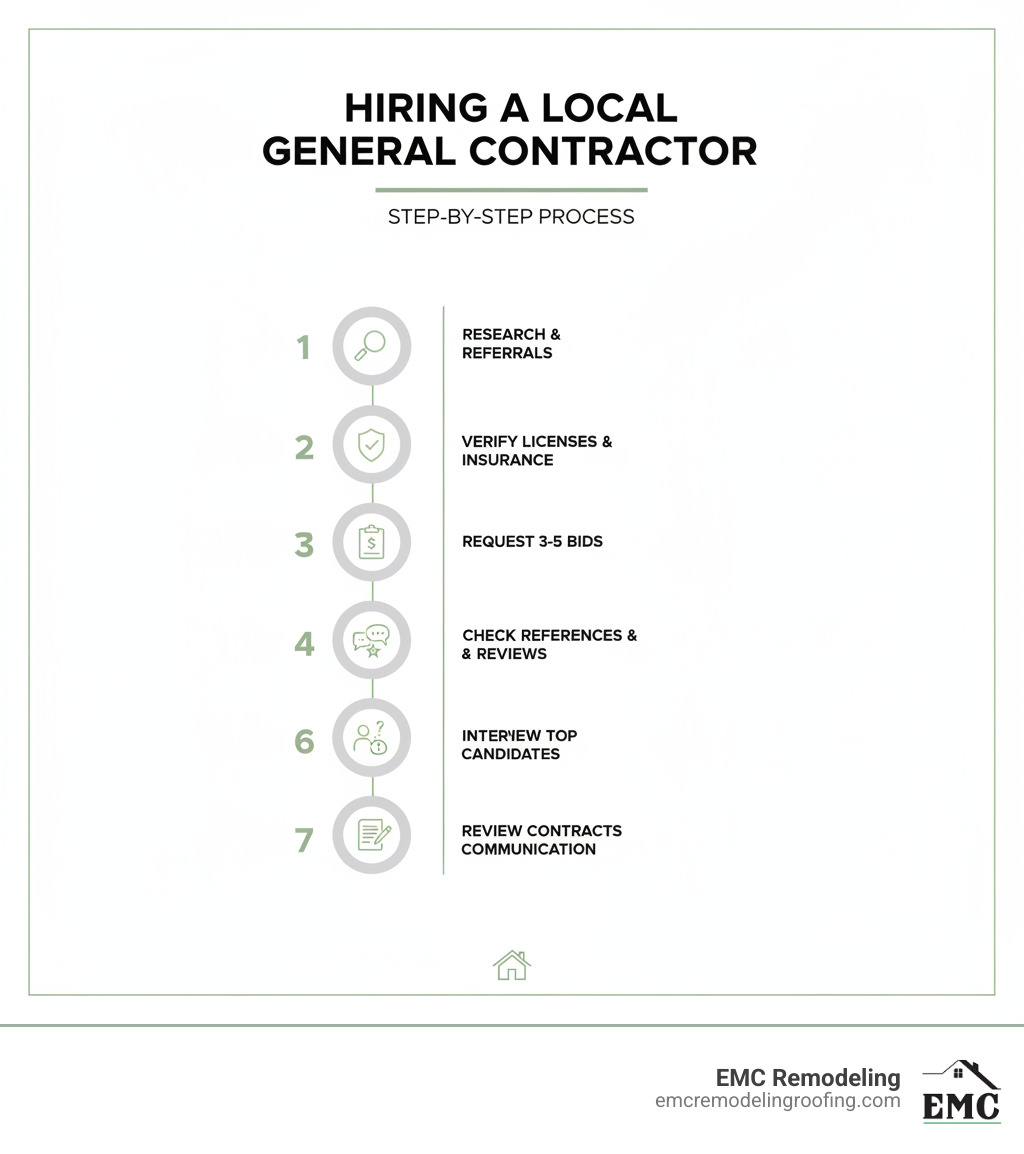
Finding Your Perfect Match: A Guide to Hiring a Local General Contractor
Finding the right local general contractor requires diligence, but a methodical approach will lead you to a trusted partner for your home.

Start by gathering names from word-of-mouth referrals and online directories like Houzz and the Better Business Bureau. You can check contractor accreditation and ratings to vet local companies. Once you have a shortlist, focus on verifying their qualifications.
Essential Qualifications Checklist
Before you hire, confirm these non-negotiable qualifications:
- State Licensing: Ensures the contractor meets state and local requirements, which is critical whether you’re in Temple or Belton.
- General Liability Insurance: Protects your property from accidental damage during construction.
- Workers’ Compensation Insurance: Covers workers injured on your property, protecting you from liability.
- Strong Portfolio: A gallery of completed projects similar to yours demonstrates their experience and quality of work.
Key Questions to Ask Potential Contractors
A professional local general contractor will welcome your questions. Use this list during your interviews:
- How long have you been in business?
- Can you provide a list of recent references?
- Who will be my main point of contact during the project?
- How do you handle project changes and unexpected issues (change orders)?
- What is your payment schedule?
- Will you be obtaining all the necessary building permits?
- What warranties do you offer on your workmanship and materials?
- How do you vet the subcontractors you hire?
Asking these questions upfront is the best way to ensure you’re Finding a Roofing Contractor or general contractor who is professional, transparent, and reliable.
From Blueprint to Reality: Navigating the Construction Process
Once you’ve hired your local general contractor, the project moves from concept to reality. A good contractor ensures clear communication and manages the complex world of permits and inspections, saving you from bureaucratic headaches. For example, a major renovation in Lago Vista, TX, requires navigating a specific local permitting process, a task your GC will handle entirely.
Understanding the key phases helps you know what to expect.
The Pre-Construction Phase
This foundational stage sets your project up for success.
- Initial Consultation: A detailed discussion to align on your vision, budget, and timeline.
- Design Finalization: Working with designers to complete drawings and specifications. For roofing, this includes material and color selection as detailed in our Complete Roof Replacement Guide.
- Contract Signing: Reviewing and signing a comprehensive document outlining scope, costs, timeline, and payment schedule.
- Securing Permits: Your contractor prepares and submits all applications to local authorities.
- Material Ordering: The contractor coordinates the purchase and delivery of all materials to align with the project schedule.
During and After Construction
This is when your vision takes physical shape.
- Project Execution: The GC manages all subcontractors and day-to-day work on site.
- Regular Progress Updates: Expect consistent communication on milestones, challenges, and next steps.
- Managing Inspections: Your contractor schedules and oversees all required inspections with local building officials.
- Change Orders: A formal process is used to document any changes to the project scope, cost, or timeline.
- Final Walkthrough & Punch List: Before final payment, you’ll inspect the work and create a “punch list” of any items needing correction. You can see our commitment to detail in our Project Gallery.
When Disaster Strikes: Why a General Contractor is Crucial for Emergency Repairs
When a storm tears through your property, the chaos can be overwhelming. This is when a local general contractor is most valuable, acting as a single point of contact to manage the entire restoration process, from immediate protection to final repairs.
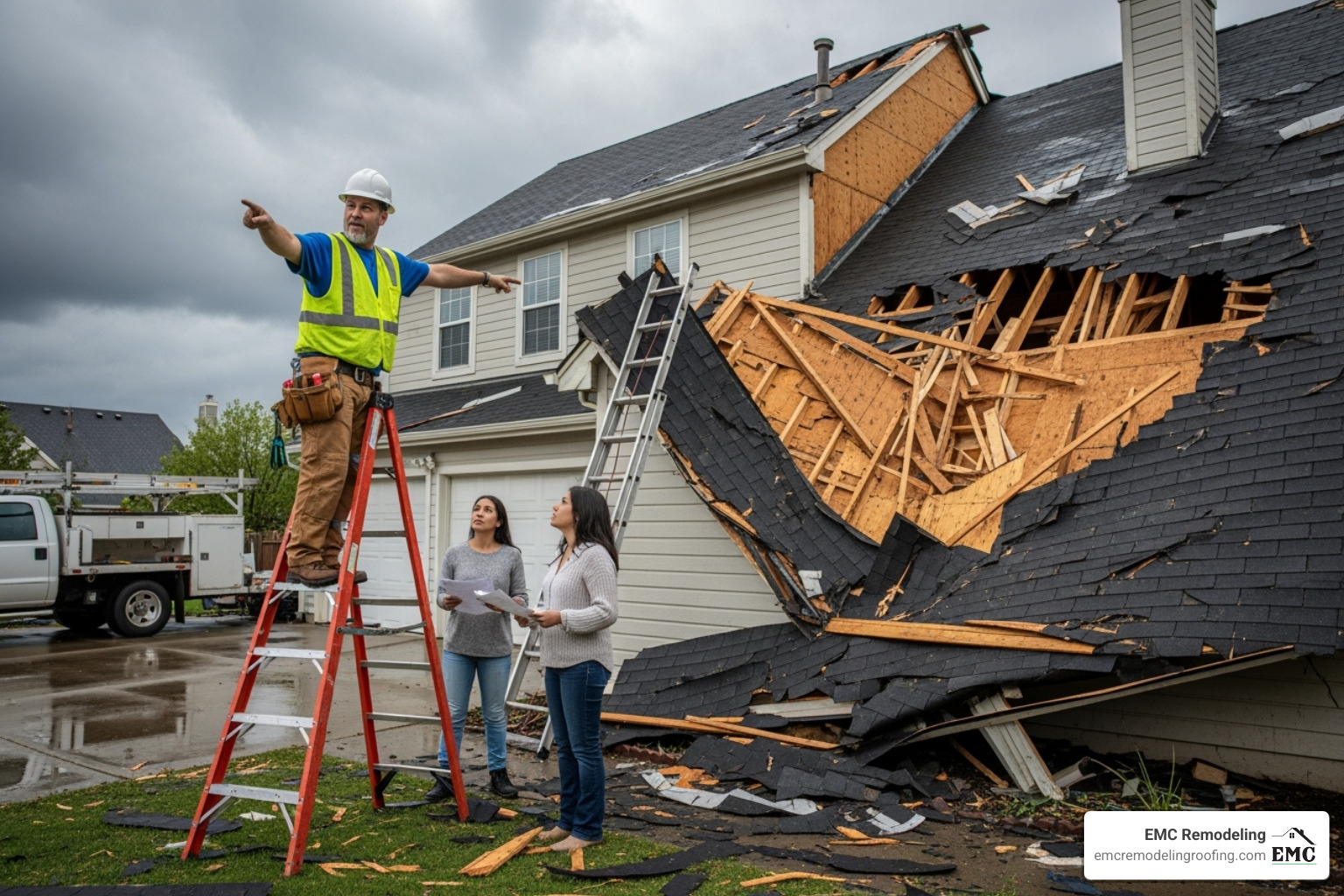
After a severe storm in Central Texas, a qualified GC is your first line of defense. They bring expertise to assess the damage, secure your property, and steer the complex Insurance Roof Claims process. At EMC Remodeling, we offer 24/7 emergency support because disasters don’t keep business hours.
The First 24 Hours: Immediate Response
The actions taken in the first 24 hours are critical to minimizing damage and cost.
- 24/7 Availability: You need a contractor who answers the phone day or night. When a tree hits your roof in Temple, TX, immediate action is non-negotiable.
- Emergency Roof Patching: The first priority is to install temporary tarps or other barriers to stop water from entering your home and causing further damage.
- Damage Assessment: An experienced contractor identifies both obvious and hidden damage, forming the basis for a comprehensive repair plan.
- Securing the Property: This includes boarding up windows, stabilizing structures, and making the site safe.
Navigating Storm Damage and Insurance
Dealing with an insurance company adds another layer of stress. A skilled GC acts as your advocate.
- Expert Damage Documentation: For issues like Hail Damage Roof Repair, a contractor knows how to properly document damage with photos and measurements that insurance adjusters require.
- Meeting with Adjusters: Your contractor can meet with the insurance adjuster on-site to point out all damage and ensure the scope of repair is accurate.
- Coordinating All Repairs: Storm damage is rarely isolated. A GC manages all trades—from roofing and siding to windows and interior work—ensuring a seamless restoration. For comprehensive Storm Damage Repair, having one point of contact is essential.
Frequently Asked Questions About Local General Contractors
What’s the difference between a general contractor and a subcontractor?
A local general contractor is the project manager. They oversee the entire project, including budgeting, scheduling, and hiring. Subcontractors are specialists hired by the GC for specific trades, such as plumbing, electrical work, or roofing. The GC coordinates these experts to ensure the project runs smoothly, so you only have one point of contact.
Is it cheaper to act as my own general contractor?
While you can save the contractor’s 10-20% fee, acting as your own GC is risky and often costs more in the long run. Without professional experience, you face potential pitfalls like permitting errors, scheduling conflicts, and costly mistakes that require rework. You also lose access to a contractor’s network of trusted subcontractors and material discounts.
How do I handle disputes with my general contractor?
Even with a great contractor, disagreements can arise. Follow these steps:
- Communicate Directly: Start with a calm, direct conversation. Refer to your signed contract to clarify expectations regarding scope, materials, or timeline.
- Document Everything: Keep a written record of all communications, including dates and photos of the issue. This creates a clear timeline of events.
- Follow the Contract: If direct communication fails, refer to the dispute resolution clause in your contract. This often specifies mediation as a next step, which is less costly and stressful than legal action.
Choosing a contractor who emphasizes clear communication and provides a detailed contract, like we do at EMC Remodeling, is the best way to prevent disputes from happening in the first place.
Build with Confidence: Your Next Steps
Hiring the right local general contractor is the most important decision you’ll make for your home renovation or repair. The time you invest in vetting candidates, asking tough questions, and demanding a clear contract is the best way to protect your home’s value and your peace of mind.
For homeowners in the Central Texas Roofing area, our unpredictable weather makes having a reliable contractor even more critical. You need a trusted, family-operated partner who understands the challenges of hailstorms and intense sun and who will stand behind their work long after the job is done.
At EMC Remodeling, we’ve built our reputation on direct owner involvement in every project. When you work with us, you’re not a number; you’re our neighbor. This hands-on approach has served our Temple, TX community for years and is why we’re confident in bringing your vision to life, whether it’s a planned remodel or an emergency repair.
Disasters don’t wait, and neither should you. We provide 24/7 emergency support because when your roof is compromised at 2 AM, you need someone who will answer the phone. For immediate consultation or emergency help, call us at (254) 771-3600.
Ready to start your project with confidence? Explore our expert roofing services and get a free estimate today! Let’s build it right, the first time.