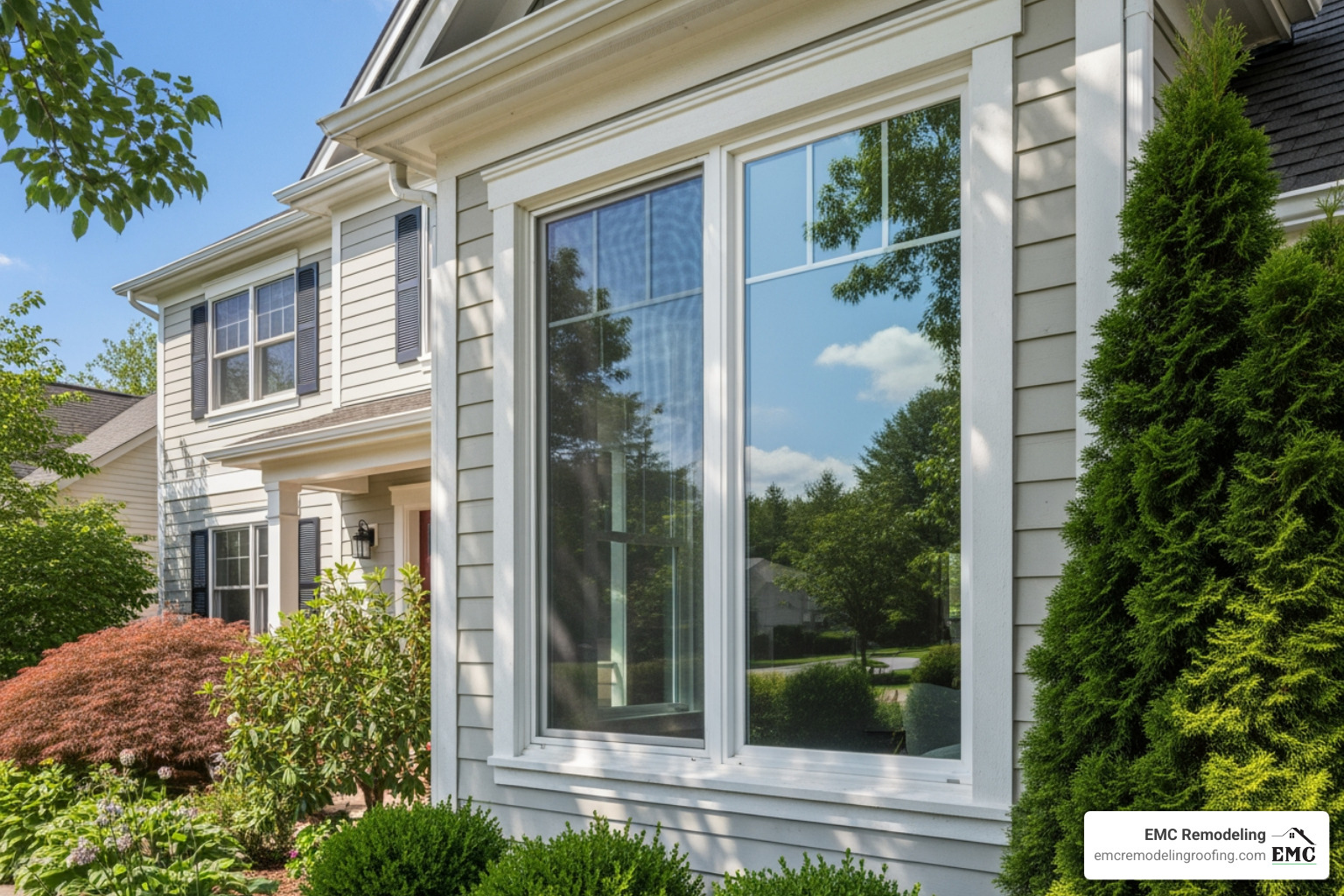
If your home still has its original aluminum-frame windows, you’re not alone. Aluminum was a common choice for windows in many older homes across Central Texas, prized at the time for being lightweight, strong, and low-maintenance. But decades later, those same windows are often quietly driving up energy bills and making your home harder to keep comfortable — without most homeowners realizing why.
Here’s what to look for, and why it happens.
Why Aluminum Windows Struggle With Temperature
Aluminum is a metal, and like most metals, it’s an excellent conductor of heat. In fact, the U.S. Department of Energy notes that aluminum conducts heat over 1,000 times faster than materials like vinyl or wood. That means an aluminum window frame does almost nothing to stop heat from moving through it — it just passes straight along, in either direction.
In the winter, that means the warm air inside your home is constantly being pulled out through the frame. In the summer — which in Central Texas is most of the year — it works in reverse, letting outside heat straight into your living space. Your HVAC system ends up working harder than it should just to keep up with the frame itself, not just the glass.
Signs Your Aluminum Windows Are the Problem
Your window frames feel hot or cold to the touch. If you press your hand against the metal frame on a summer afternoon and it’s noticeably hot, or on a winter morning and it’s ice cold, that’s the conductivity at work. A vinyl or fiberglass frame stays much closer to room temperature no matter what’s happening outside.
Certain rooms are harder to keep comfortable. If a room with older aluminum windows always runs warmer or colder than the rest of the house, the frames are likely a big part of why — no amount of adjusting the thermostat fully fixes a problem that’s happening at the window itself.
You’re seeing condensation on the inside of the frame. Because aluminum gets so cold on the interior side during cooler months, moisture in the air can condense right on the metal, sometimes even dripping down onto the sill. Over time, that moisture can lead to staining, mold, or damage to the surrounding wall.
Your energy bills feel high for the size of your home. Windows are one of the most common weak points in a home’s energy efficiency, and aluminum frames are one of the biggest offenders. If your bills seem out of proportion to your square footage, it’s worth having your windows evaluated.
The frames have visible pitting, corrosion, or fading. Aluminum can hold up structurally for a long time, but the finish doesn’t always age gracefully — especially after years of Texas heat and sun exposure.
What Homeowners Are Switching To
Most homeowners moving away from aluminum go with vinyl, which is far more resistant to heat transfer and typically the most budget-friendly upgrade. Others go with a wood-clad or fiberglass option from a brand like Andersen or Pella if they want a specific look or added durability. There’s no single “best” choice — it comes down to your budget, the style of your home, and what you’re hoping to get out of the upgrade.
If you’re noticing any of these signs, it’s worth getting your windows looked at before another Central Texas summer or winter puts even more strain on your energ