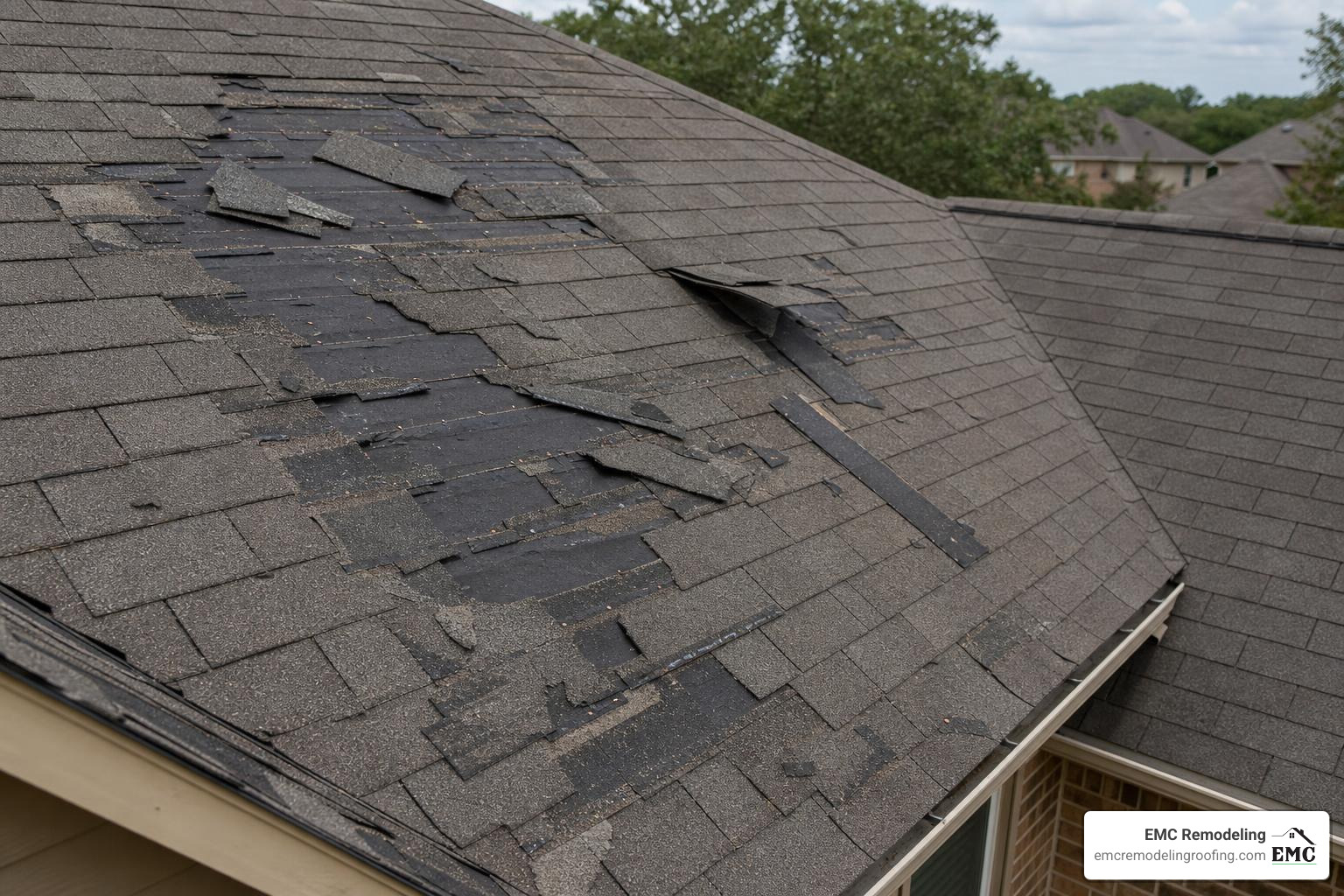
Your Roof Has an Expiration Date — Here’s What Central Texas Homeowners Need to Know
How often do roofs need to be replaced? For most Central Texas homes with standard asphalt shingles, the answer is every 15 to 25 years — though harsh Texas heat, hail, and UV exposure can push that timeline significantly shorter.
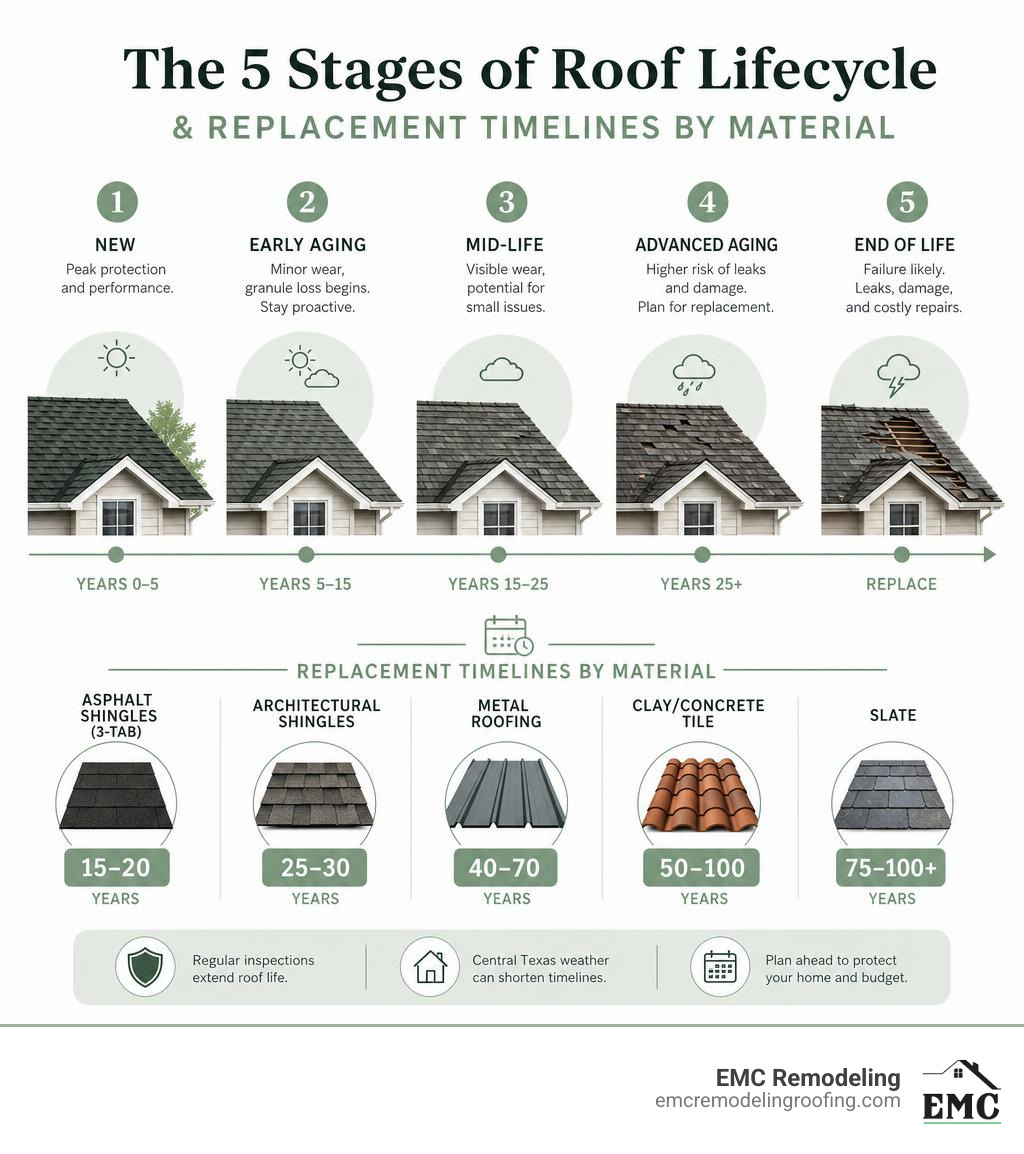
Here’s a quick reference by roofing material:
| Roofing Material | Typical Lifespan |
|---|---|
| Asphalt Shingles (3-Tab) | 15–20 years |
| Architectural Shingles | 25–30 years |
| Metal Roofing | 40–70 years |
| Clay/Concrete Tile | 50–100 years |
| Slate | 75–100+ years |
Most homeowners don’t think about their roof until water starts dripping from the ceiling. By then, the damage is already done — rotting decking, compromised insulation, and mold that spreads fast in the Texas humidity.
The truth is, roof failure is almost always gradual. Shingles lose their protective granules. Flashing corrodes. Attic heat cooks the shingles from below. None of this is visible from your living room couch. But by the time a leak appears, you’re likely looking at thousands of dollars in interior repairs on top of the cost of a new roof.
Central Texas homeowners face some of the most demanding roofing conditions in the country. Intense summer UV breaks down asphalt faster than in moderate climates. Sudden spring hailstorms can fracture shingles in minutes. And rapid temperature swings — scorching days followed by cool nights — cause constant expansion and contraction that shortens roof life by years.
Working with a trusted Central Texas roofing contractor before problems escalate is the smartest move a homeowner can make. If you want to understand the full process before getting started, our guide on replacing your roof walks through every step in plain language.
I’m Matthew Runyon, President of EMC Remodeling & Roofing, and in over 15 years of inspecting and replacing roofs across Central Texas, I’ve seen how often roofs need to be replaced far sooner than homeowners expect — simply because the warning signs went unnoticed. In this guide, I’ll show you exactly what to look for and when to act.
Simple guide to how often do roofs need to be replaced terms:
How Often Do Roofs Need to Be Replaced?
A standard residential roof needs to be replaced every 20 to 25 years. However, severe local weather patterns, inadequate attic ventilation, and poor maintenance can reduce this operational lifespan by 30% to 50%, forcing a replacement as early as the 12-to-15-year mark.
While manufacturers print bold “30-year” or “50-year” warranty labels on their packaging, these numbers represent ideal laboratory conditions. In the real world, most roofing systems achieve only 80% to 85% of their rated lifespan. As of May 2026, data from forensic roof inspections indicates that a standard 25-year shingle typically begins to experience structural failure between years 18 and 22, while a 30-year architectural shingle generally requires replacement around years 24 to 27.
The 20-25 Year Rule
The “20-25 year rule” is a structural benchmark for asphalt shingle roofing. Over two decades of continuous exposure to the elements causes the petroleum-based asphalt layers within shingles to undergo chemical and physical changes. As shingles age, the essential oils that keep them flexible gradually dry out.
Once these oils evaporate, the shingles become brittle, lose their adhesive bond, and can no longer expand and contract with daily temperature shifts. This natural aging process makes the entire system highly vulnerable to wind uplift and water penetration, even during minor rainstorms.
Physical Degradation Metrics
When assessing a roof’s structural integrity, we look for key physical degradation metrics that indicate a system has reached its end of life:
- Thermal Shock Fractures: Micro-cracks in the shingle surface caused by rapid temperature swings (such as a 100°F Central Texas afternoon followed by a sudden cold front).
- Loss of Elasticity: Shingles that snap or crack when gently lifted, indicating the asphalt core has completely dried out.
- Sealant Strip Failure: The adhesive line between shingle courses loses its grip, allowing entire sections of the roof to flutter in winds below 40 mph.
- Decking Softness: Spongy spots felt underfoot during an inspection, which indicate that moisture has bypassed the shingles and is actively rotting the underlying wooden deck.
To get a clearer picture of your roof’s current standing, you can estimate your remaining lifespan using this interactive Roof Lifespan & Replacement Calculator | National Calculator Authority. If you find that your roof is approaching these critical age limits, we recommend reviewing our Complete Roof Replacement Guide to plan your next steps proactively.
How Often Do Roofs Need to Be Replaced by Material?
The material protecting your home is the single largest factor in determining replacement frequency. While asphalt shingles are highly popular due to their affordable upfront cost, premium materials like metal, clay tile, and slate can last multiple generations.
Here is a comprehensive breakdown of typical lifespans, average installation costs, and performance metrics across the most common roofing materials:
| Roofing Material | Typical Lifespan | Average Cost per Sq. Ft. | Wind Resistance Rating | Key Pros & Cons |
|---|---|---|---|---|
| Asphalt Shingles (3-Tab) | 15–20 Years | $3.50 – $5.50 | Up to 60 mph | Lowest upfront cost; highly susceptible to wind damage and rapid UV wear. |
| Architectural Shingles | 25–30 Years | $4.50 – $7.00 | Up to 110–130 mph | Excellent cost-to-performance ratio; multi-dimensional look; highly wind-resistant. |
| Metal (Standing Seam) | 40–70 Years | $8.00 – $14.00 | Up to 140+ mph | Extremely durable; reflects solar heat; high upfront investment. |
| Clay / Concrete Tile | 50–100 Years | $10.00 – $18.00 | Up to 125+ mph | Fireproof; heavy weight resists wind; requires reinforced framing. |
| Slate | 75–150+ Years | $15.00 – $30.00 | Up to 150+ mph | Outlasts the home; beautiful natural aesthetics; very heavy and expensive. |
For most homeowners in Leander, Belton, and Temple, architectural shingles strike the perfect balance between long-term durability and budget friendliness. To understand why these multi-layered shingles outperform standard 3-tab options, read our Shingle Roof Replacement Complete Guide.
How Often Do Roofs Need to Be Replaced in Texas?
Roofs in Texas wear out 15% to 20% faster than the national average. A shingle roof that easily lasts 25 years in a moderate climate like the Pacific Northwest will often require replacement within 15 to 20 years in Central Texas. This accelerated aging is known as the “Texas Climate Tax.”
National Average Lifespan (Architectural): [====================] 25-30 Years
Texas Average Lifespan (Architectural): [================] 15-20 Years (Due to Heat & Storms)
The primary driver of this shortened lifespan is our intense, unrelenting UV radiation. During our long summer months, shingle surface temperatures can easily exceed 140°F. This extreme heat bakes the shingles, accelerating the loss of volatile oils and causing the protective granules to shed.
Additionally, Central Texas sits in a prime zone for severe weather. High winds, tornadoes, and sudden hailstorms can cause immediate, catastrophic damage. A single severe hailstorm in Temple or Leander can bruise or fracture a shingle’s fiberglass mat, rendering an otherwise young roof useless in a matter of minutes.
To help protect homeowners, the Texas Department of Insurance enforces strict windstorm building codes. In many coastal and high-wind regions of Texas, replacement roofs must be engineered to withstand wind speeds up to 110–130 mph, requiring specific fastening patterns and impact-rated materials.
If you are a local homeowner looking for a roof designed to survive these extreme conditions, check out our guide on Roof Replacement in Belton TX: Expert Solutions for Your Home. You can also read more about local weather challenges in our guides on How Often to Replace Your Roof: A Guide for Texas Residents and How Often Should You Replace Your Roof in Texas – New Ruf.
Key Factors That Determine Your Roof’s Real-World Lifespan
While you cannot control the weather, several controllable variables dictate whether your roof survives to its maximum rated age or fails a decade early. The physical lifespan of any roofing system is a direct result of installation quality, ventilation design, and material grade.
To keep your roof in peak condition, we recommend bookmarking our Roofing Knowledge Center for ongoing maintenance strategies.
The Role of Attic Ventilation and Insulation
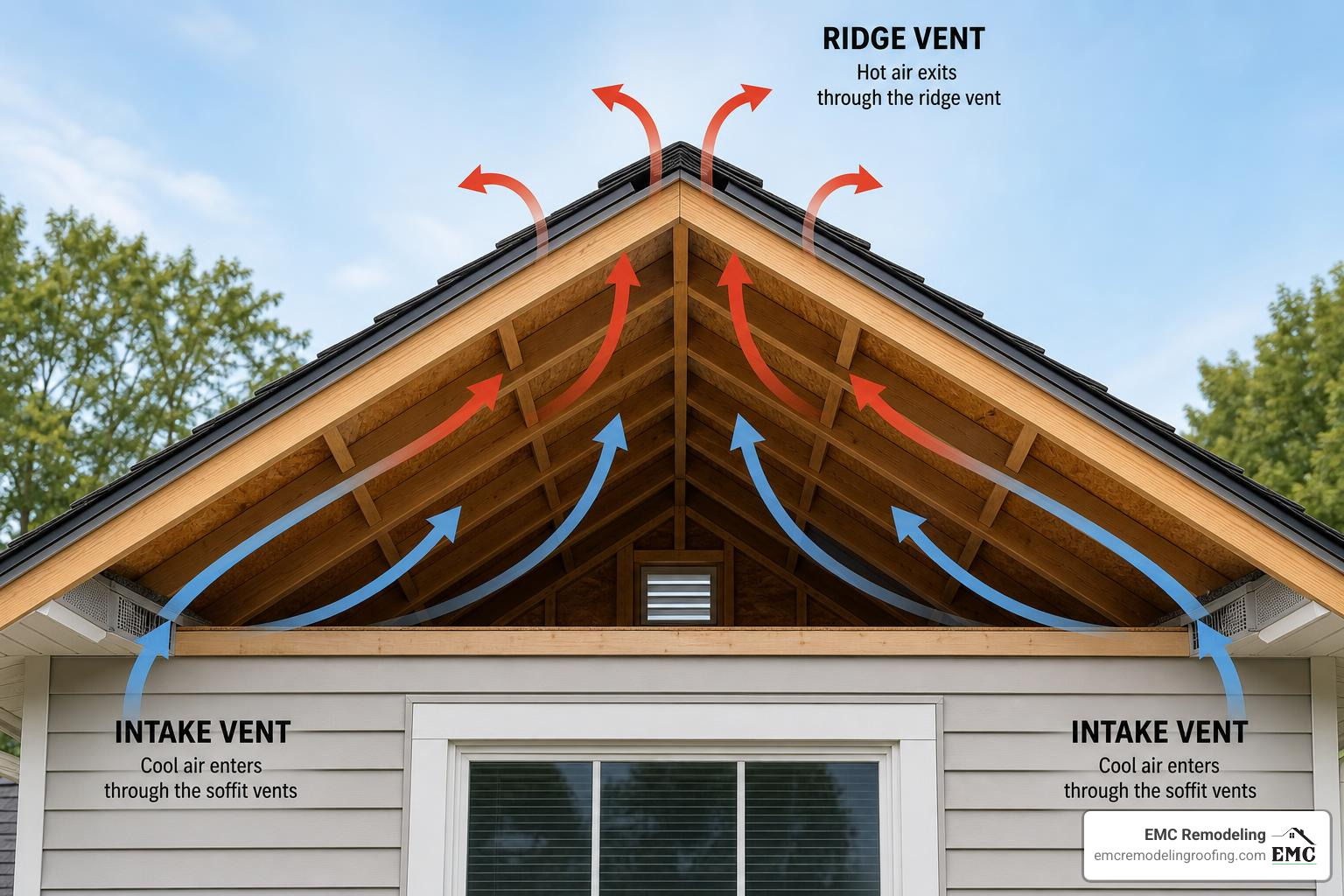
Attic ventilation is the single most important factor in determining the real-world lifespan of an asphalt shingle roof. According to the International Residential Code (IRC) Section R806, residential attics must maintain a minimum net free ventilating area (NFVA) ratio of 1:150 (1 square foot of ventilation for every 150 square feet of attic floor space).
When an attic lacks proper intake (soffit) and exhaust (ridge or box) vents, solar heat becomes trapped. On a 100°F day in Temple, TX, an unventilated attic can reach temperatures exceeding 150°F. This extreme heat radiates downward through the roof deck, baking the shingles from the underside. This process causes premature blistering, warping, and rapid loss of the shingle’s asphalt coating.
Furthermore, poor ventilation traps moisture during cooler months. Warm, humid air from your home rises into the cold attic, condensing on the underside of the roof deck. This constant moisture leads to:
- Decking Rot: The plywood or OSB sheets soften and lose their nail-holding strength.
- Mold Growth: Toxic mold spores can rapidly spread throughout your attic and enter your living spaces.
- Rusting Fasteners: Nails corroding over time can cause shingles to back out and blow away.
Workmanship and Installation Quality
Even the highest-grade, most expensive shingles will fail prematurely if installed incorrectly. Proper installation requires precision, attention to detail, and strict adherence to manufacturer specifications.
One of the most common installation errors is incorrect fastening. Most manufacturers require a minimum of 4 nails per shingle under normal conditions, and 6 nails for high-wind installations (Class H wind-rated zones). If a contractor uses too few nails, or places the nails too high above the designated nail line, the shingles can easily blow off during a storm.
Additionally, using cheap, organic underlayments instead of modern synthetic options increases the risk of water intrusion. High-quality synthetic underlayment acts as a critical secondary water barrier, protecting your home even if shingles are blown away.
To protect your investment and ensure your roof is installed to the highest standards, read The Ultimate Guide to Getting a New Roof Estimate Near You.
Warning Signs Your Roof Needs Immediate Replacement
If your roof exhibits structural sagging, widespread shingle curling, or consistent granule loss in your gutters, it requires immediate replacement to prevent catastrophic interior water damage. Waiting for a visible water leak to appear inside your home is a risky strategy that often results in expensive structural repairs.
Visual Shingle Damage and Granule Loss
Your shingles tell a visual story of their remaining life. When inspecting your roof from ground level using binoculars, or looking down from a second-story window, watch for these key warning signs:
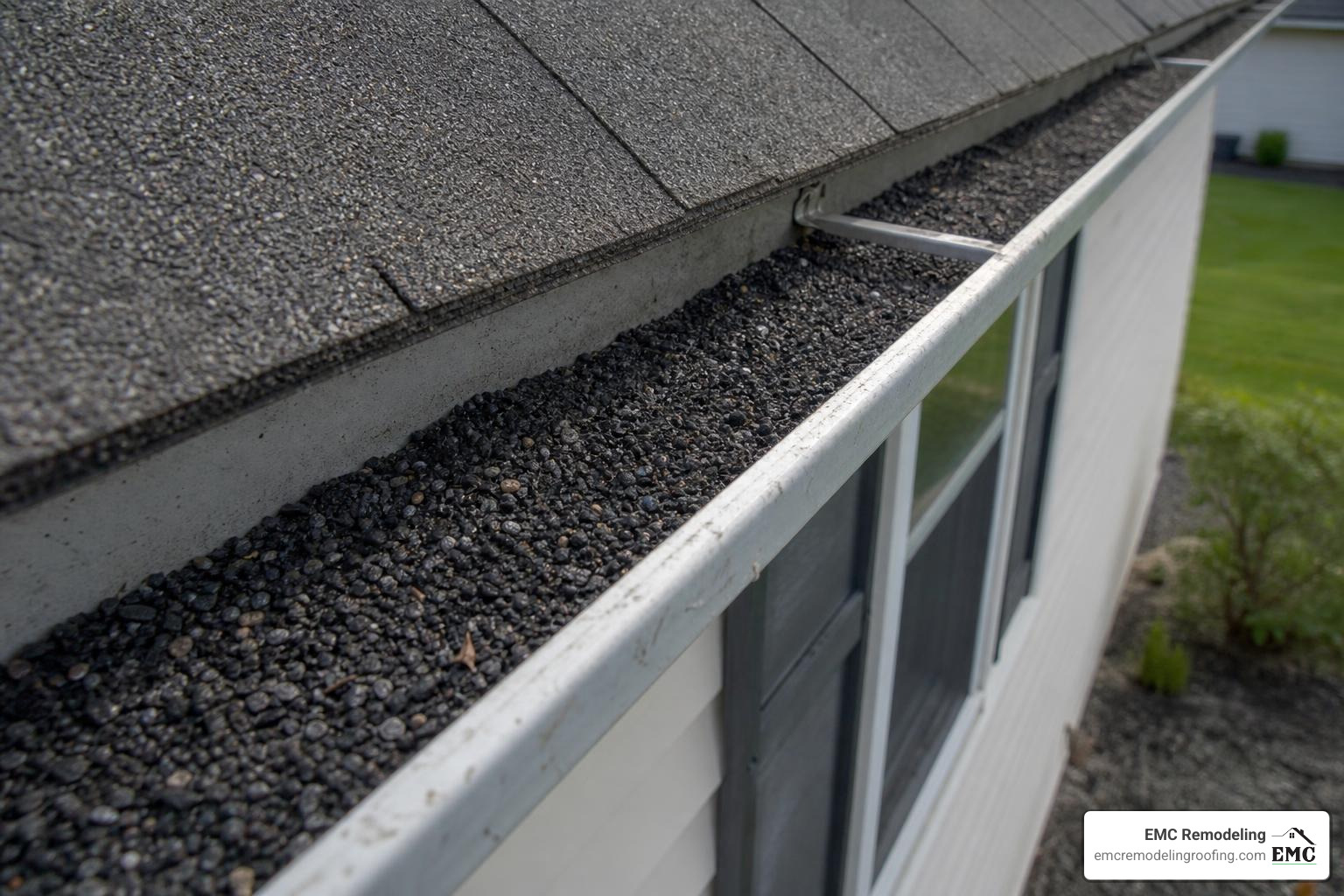
- Bald Spots and Granule Piles: Shingle granules protect the underlying asphalt from harmful UV rays. When these granules shed and accumulate in your gutters, the exposed asphalt quickly becomes brittle, cracks, and washes away.
- Curling and Cupping: If the edges of your shingles are curling upward (cupping) or the centers are bulging (clawing), the shingle backing is shrinking due to age and extreme heat. These distorted shingles are easily caught and torn away by the wind.
- Cracked and Missing Tabs: Brittle, aged shingles will crack under minor thermal stress. Missing shingles leave your roof deck completely exposed to the next rainstorm.
Structural Sagging and Water Damage
Structural sagging is a critical warning sign that requires immediate professional attention. A sagging roofline indicates that the roof deck, rafters, or support trusses have been severely compromised by rot, excess weight, or poor construction.
If you notice interior water stains on your ceilings, bubbling paint on your walls, or a musty odor in your attic, water is already bypassing your shingles. This moisture can quickly ruin your home’s insulation, rot structural framing, and foster toxic mold growth.
If you are dealing with active water intrusion during a storm, contact our Emergency Roof Repair Services immediately to secure your home.
Repair vs. Replacement: Making the Cost-Effective Choice
As a general rule, we use the 30% Rule to help homeowners decide between repair and replacement. If damaged shingles, rotten decking, or compromised flashing cover more than 30% of your total roof area, a full replacement is almost always the more cost-effective long-term choice.
To help you budget for these options, we have compiled comprehensive pricing guides in our resources on the Price of a New Roof and Changing Your Roof: The Price Tag You Need to Know.
When to Choose Roof Repair
Roof repairs are highly effective for younger roofs (under 15 years old) that have suffered localized, isolated damage. Common scenarios where repairs make sense include:
- Minor Storm Damage: Replacing a few shingles that were blown off during a high-wind event.
- Localized Flashing Leaks: Repairing or replacing the metal flashing around a chimney, vent pipe, or valley.
- Punctures: Patching small holes caused by fallen tree branches or foot traffic.
If your roof is otherwise healthy, we can perform targeted, professional Roof Repair Services to restore its watertight seal and extend its service life.
When Full Replacement Is Unavoidable
A full roof replacement becomes necessary when the system has reached the end of its physical lifespan, or when storm damage is widespread across multiple slopes. Attempting to repair an aged, brittle roof is often a waste of money, as the shingles are too fragile to nail down, and new leaks will likely develop nearby.
While a full replacement requires a larger upfront investment, it provides complete peace of mind, improves your home’s energy efficiency, and protects your property value. To understand the long-term return on this investment, read The Ultimate Guide to Roof Rebuild Costs From Shingles to Savings.
Frequently Asked Questions About Roof Replacement
Does homeowners insurance cover roof replacement?
Homeowners insurance typically covers roof replacement if the damage is caused by sudden, accidental perils like wind, hail, lightning, or fallen trees. Insurance policies generally do not cover replacement due to normal wear and tear, age, or lack of maintenance.
When filing a claim, it is important to understand the difference between Actual Cash Value (ACV) and Replacement Cost Value (RCV) policies:
- RCV Policies: The insurance company covers the full cost of replacing your roof with a new one of similar quality, minus your deductible.
- ACV Policies: The insurer depreciates the payout based on the age of your roof. For example, if your 20-year-old roof is damaged, you may only receive a small fraction of the replacement cost, leaving you to cover the remaining balance out of pocket.
If your roof has recently been damaged by severe weather, our team can help you navigate the claims process. Learn more about our Hail Damage Roof Repair Services.
How often should you schedule a professional roof inspection?
You should schedule a professional roof inspection at least once a year, and immediately following any major hailstorm or high-wind event.
Bi-annual inspections (conducted in the spring and fall) are the industry standard for maximizing roof life. These regular checkups allow professionals to identify and repair minor issues — such as loose flashing, backed-out nails, or small animal damage — before they turn into major interior leaks.
For more details on tracking your roof’s health, check out the Roof Lifespan: How Long Roofs Last & When to Plan Replacement | AHA.
What are the consequences of delaying a roof replacement?
Delaying a necessary roof replacement can quickly turn a straightforward roofing project into an expensive structural restoration. When water bypasses worn shingles, it saturates your attic insulation, rendering it useless and driving up your monthly energy bills.
Over time, this moisture rots the wooden roof decking, rafters, and ceiling joists. This structural rot can lead to a partial roof collapse and can double your eventual replacement costs, as your contractor will have to tear out and rebuild the wooden support structure before installing new shingles.
To avoid these costly surprises, we recommend reading our Roof Replacement Estimate Complete Guide to plan your project with confidence.
Conclusion
Don’t wait for water to drip through your ceiling to take action. Your roof is your home’s primary shield against the unpredictable Central Texas weather, and being proactive is the best way to protect your family, your property, and your hard-earned equity.
At EMC Remodeling, we are proud to be a family-operated, trusted local partner serving Temple, Belton, Leander, and the surrounding Central Texas communities. We bring direct owner involvement, exceptional craftsmanship, and 24/7 emergency support to every project, ensuring your home gets the premium protection it deserves.
If you suspect your roof is nearing the end of its lifespan or has suffered storm damage, let’s get it checked out. Visit our Roof Replacement Services page to schedule your comprehensive inspection today.
